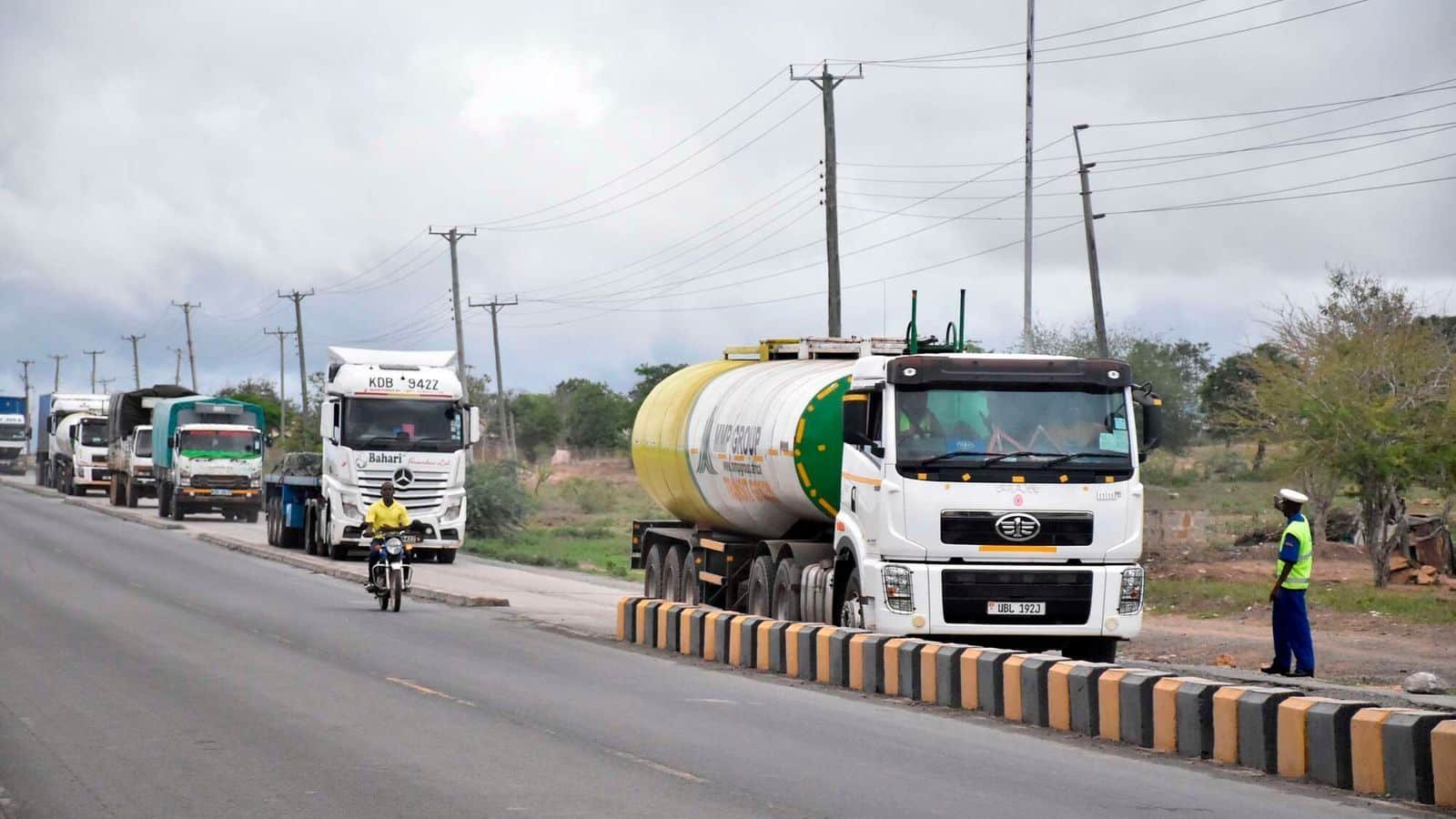
Kenya’s exports to the Democratic Republic of Congo (DRC) have surged, making it the fastest-growing export market within the East African Community (EAC) bloc. This impressive growth comes even amidst recent diplomatic tensions between Nairobi and Kinshasa.
In the first quarter of 2024, Kenya’s exports to the DRC jumped by 56.04%, reaching Ksh 8.62 billion ($66 million). This marked the highest year-on-year growth in over a decade. The Kenya National Bureau of Statistics (KNBS) credited this surge to a significant increase in wheat flour exports. This followed Kenya’s decision to reduce import duties on wheat from 35% to 10% in 2023, a move designed to balance local demand while protecting domestic farmers, according to Treasury Cabinet Secretary Njuguna Ndung’u.
Since the duty reduction, Kenyan exports to the DRC have remained strong, consistently exceeding Ksh 7 billion ($54 million) each quarter. In the nine months leading up to March 2024, Kenya exported nearly Ksh 23.88 billion ($185 million) worth of goods to the DRC, a 57.48% increase from Ksh 15.16 billion ($117 million) the previous year.
Despite these economic gains, relations between the two countries have been rocky. In December 2023, the DRC recalled its ambassador to Nairobi over disagreements about Kenya hosting Congolese opposition figures who supported the rebel group M23. However, relations improved in May 2024 after President William Ruto sent a high-profile delegation to Kinshasa, led by Prime Cabinet Secretary Musalia Mudavadi, to reaffirm Kenya’s commitment to regional peace and cooperation.
“My mission here in Kinshasa was to deliver to President Felix Tshisekedi a special message from President William Ruto of Kenya, that we are partners and, as countries within the East African Community, have to continue working together very cordially and closely,” Mudavadi said during his visit.
Even with this rapid growth, the DRC still ranks lower than other EAC destinations for Kenyan exports, with Uganda remaining the largest market. Uganda’s imports from Kenya grew by 7.39% to Ksh 33.34 billion ($258 million), mainly consisting of items like carboys, bottles, and flasks. However, Uganda’s share of Kenya’s exports to the EAC bloc slightly decreased to 41.56%.
Recent tensions between Kenya and Uganda arose due to Kenya’s restrictive import policies on Ugandan goods such as eggs, sugar, and milk powder. During a state visit in May, President Ruto and Ugandan President Yoweri Museveni pledged to resolve these issues and ensure that trade between the two countries remains free from tariffs and other barriers.
Kenya’s trade within the broader EAC region continues to grow. Imports by Tanzania increased by 18.01% to Ksh 16.74 billion ($129 million), while South Sudan’s imports rose by 25.69% to Ksh 9.27 billion ($71 million), supported mainly by household and laundry-type washing machines. Tanzania’s share of Kenyan exports remained steady, with jet fuel re-exports being a key component.
Overall, Kenya’s exports to EAC countries reached Ksh80.23 billion ($62 million) in the first three months of 2024, marking a 15.69% increase from the previous year. This strong performance highlights Kenya’s strategic economic moves within the EAC, positioning it as a vital trade partner and showcasing the potential for deeper regional economic integration.
photo source: Google
By: Montel Kamau
Serrari Financial Analyst
15th July, 2024