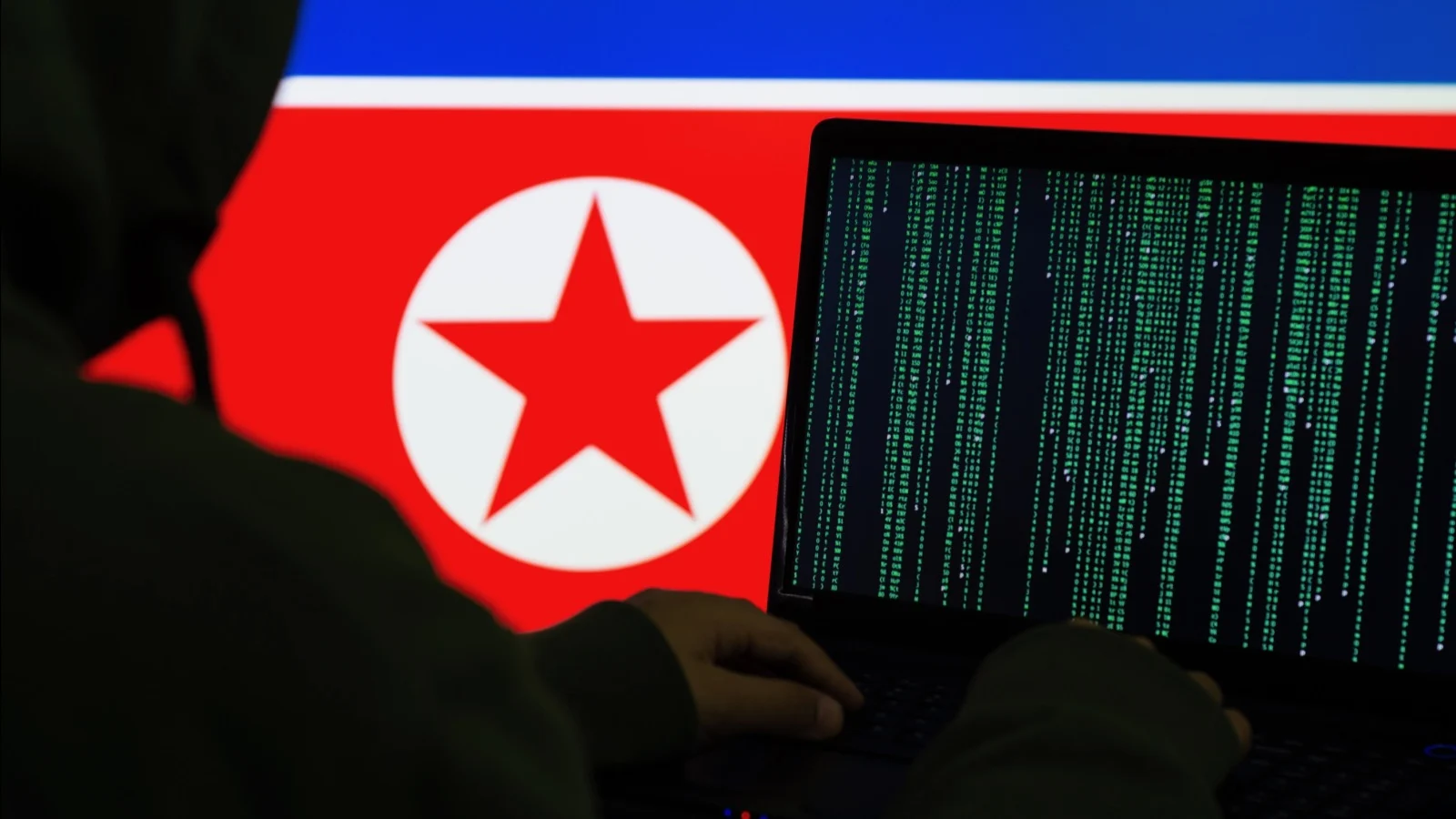
On September 18, Binance founder Changpeng Zhao (CZ) issued a stark warning to the crypto industry: North Korean hackers are deploying more advanced, stealthy strategies to infiltrate firms—especially through the hiring pipeline. The threats are no longer limited to phishing or direct network attacks, but increasingly target human processes, turning recruitment into a vector of compromise.
Build the future you deserve. Get started with our top-tier Online courses: ACCA, HESI A2, ATI TEAS 7, HESI EXIT, NCLEX-RN, NCLEX-PN, and Financial Literacy. Let Serrari Ed guide your path to success. Enroll today.
Infiltration via Hiring: How Attackers Are Gaining a Foothold
CZ’s caution came in a post on X, describing these hackers as “advanced, creative, and patient.” He warned that their preferred method now involves pretending to be job applicants—particularly targeting developer, security, and finance roles—to gain direct access inside firms. During the hiring process, attackers may plant malware under the guise of system updates, send malicious “sample code,” or simulate video-call “technical assessments” that exploit vulnerabilities.
This is mirrored in new journalism: Reuters recently reported that North Korean hackers are saturating the crypto field with credible job offers to siphon digital assets. Targets described elaborate hiring processes that mask malware alongside seemingly legitimate interview protocols. (Reuters)
Another tactic involves impersonating recruiters or employers: attackers pose as interviewers for existing employees, claim technical problems (e.g. “Zoom isn’t working”), and ask staff to download “patches” or updates—these in fact deliver malware. CZ also referenced schemes in which attackers pose as customer support or users, embedding malicious links in service tickets or requests.
In one detailed example cited by CZ, a compromised outsourcing firm in India resulted in more than $400 million lost from a U.S. crypto exchange. This shows how third-party channels are being weaponized to propagate attacks.
SEAL Reveals 60 Impostors: A Watchlist of Threat Profiles
The warning aligns with a new report from Security Alliance (SEAL), which has compiled over 60 fake IT worker profiles linked to North Korea. These impostors use forged identities, fake LinkedIn and GitHub pages, even purported government IDs, to appear legitimate to hiring managers. SEAL’s repository lists aliases, email addresses, tenure claims, and even which firms have engaged them. (Cointelegraph)
SEAL has conducted over 900 hack-related investigations in its first year, showing the scale of the problem. It was co-founded by white-hat hacker Samczsun and others who specifically track crypto infiltration efforts. Among their findings: in June, four North Korean operatives managed to pose as freelance developers across multiple crypto startups and steal a cumulative $900,000.
These 60 fake profiles are just the tip of the iceberg. SEAL’s public database enables firms to cross-check candidates. But because the data is public, attackers may rotate profiles. As Binance put it in its own post, fear over exposure is real, but the counterbalance is that firms now gain intelligence to defend themselves. (Binance Square post)
Tallying the Losses: From Bybit to Global Asset Theft
While recruitment techniques are evolving, these human-targeted attacks build upon a backdrop of massive North Korean crypto thefts. In 2024 alone, hackers linked to Pyongyang stole over $1.34 billion across 47 incidents—a 102% increase year over year. (Cointelegraph)
In 2025, the scale has only worsened. In a February advisory, the FBI attributed a $1.5 billion Ethereum hack of Bybit to North Korean actors, now termed “TraderTraitor.” The attackers funneled stolen assets through dozens of blockchains to obscure their trail, before converting to more stable cryptocurrencies for laundering. (FBI / IC3 announcement)
That puts the first half of 2025 well above prior years: Chainalysis data suggests over $2.17 billion was stolen globally, with a large portion traced to North Korean operations. (TechCrunch)
Attacks by the Lazarus Group remain central to the narrative. Wikipedia notes the Lazarus Group as a state-linked advanced threat actor since around 2010, responsible for countless cyberespionage, financial, and destructive operations. (Lazarus Group)
The Bybit hack is among the largest recorded single thefts. Beyond asset loss, it underscores how compromised access (e.g. key management, internal operations) can amplify the damage far beyond classic exploit vectors.
Evolving Attack Tools: Malware, Rust Implants & Exploit Kits
Beyond recruitment lures, North Korean hackers are integrating more sophisticated malware into their toolkits. According to The Hacker News, adversaries are now using tools like CHILLYCHINO (a Rust-based implant) and FadeStealer, which logs keystrokes, screenshots, and exfiltrates data in encrypted archives. Operators also deploy novel intermediate payloads like Rustonotto, and use classic backdoors like RokRAT. (The Hacker News)
The delivery chain often begins with spear-phishing or social engineering: compressed files containing LNK or CHM loaders drop the malware, which then fetches secondary implants from command-and-control servers. Once inside, the attackers maintain persistence, move laterally, and exfiltrate data in waves.
Further complicating matters, some threat groups (like APT37 / ScarCruft) have recently delivered ransom-style payloads in addition to classic data theft. Their aim is dual: extract value while sustaining long-term access.
In parallel, there’s evidence that North Korean hackers are employing AI tools to strengthen identity forgery. Business Insider reports that malicious actors have used ChatGPT or Claude to spin up bogus military IDs, résumés, and cover letters—improving their impersonation mechanics. (Business Insider)
Thus, the asymmetric advantage is growing: attackers can scale identity deception more cheaply and effectively than ever before.
One decision can change your entire career. Take that step with our Online courses in ACCA, HESI A2, ATI TEAS 7, HESI EXIT, NCLEX-RN, NCLEX-PN, and Financial Literacy. Join Serrari Ed and start building your brighter future today.
Reuters Labels the Strategy: “Contagious Interview” Scams
A recent Reuters investigation shed light on how entrenched fake-job tactics have become. The practice, dubbed “Contagious Interview,” involves impersonated recruiters offering what appear to be legitimate crypto job roles over LinkedIn or Telegram. After initial outreach, a candidate is asked to complete a video test or coding exercise. The “test” requires them to download software or run scripts, which silently install malware. (Reuters)
Victims say the sophistication has risen dramatically in the past year. Some reported being pitched on synthetic recruiter identities and fooled by convincing details like fake websites, job histories, or interview videos.
A blockchain analytics executive told Reuters, “It happens to me all the time,” attesting to how normalization of such attacks is pushing the industry to constantly vet even basic outreach.
Response from Exchanges: Coinbase & Others Crack Down
Coinbase has publicly addressed the threat. It has revised its onboarding process for roles with system-level access, enforcing in-person onboarding in the U.S., U.S. citizenship or security clearance, and biometric verification for new hires. Interview protocols now mandate persistent camera presence to counter impersonation or AI coaching. These changes are directly tied to protecting sensitive access layers. (CryptoPotato)
Other firms (especially startups) may lack such rigor. But the warning from CZ is loud and clear: firms must adapt or risk catastrophic breaches. As he put it, “Train your employees to not download files, and screen your candidates carefully.”
What Crypto Firms Should Do: Best Practices & Defense Layers
Given the sophistication of these attacks, surface defenses aren’t enough. Below is a roadmap for mitigation:
1. Harden Hiring and HR Pipelines
- Vet recruiters — Require outbound verification of recruiter identity (e.g. via corporate email domains, video calls, references).
- Restrict candidate file access — Don’t allow candidates to test code on internal systems or require downloads before vetted clearance.
- Code sandboxing — If “sample code” testing is necessary, run it in isolated, monitored environments, not on live systems.
2. Employee Education
- Conduct regular training on social engineering and phishing.
- Use “red teaming” drills: simulate fake interview attacks to test awareness.
3. Identity Intelligence
- Cross-check candidate profiles against known SEAL impersonator datasets.
- Use fraud detection and identity resolution services that flag suspicious resumes, domain registrations, or identity mismatches.
4. Endpoint and Network Safeguards
- Enforce least privilege: new accounts begin with minimal permissions, and elevated access is approved separately.
- Use endpoint detection and response (EDR) solutions that can intercept malicious payloads in real time.
- Log and audit developer and production operations heavily; any anomalous activity should trigger alerts.
5. Vendor & Third-Party Risk Management
- Audit all outsourcing or vendor firms that have access to your infrastructure.
- Require penetration testing, security attestation, and least privilege access for vendors.
6. Threat Intelligence & Collaboration
- Participate in industry sharing groups (e.g. ISACs) so that impersonator profiles and attack patterns propagate quickly.
- Leverage public threat feeds (e.g. SEAL’s repository) and maintain internal watchlists.
- Block transactions from known threat actor addresses (for example, addresses tied to “TraderTraitor” after the Bybit hack).
7. Legal, Response & Insurance Strategy
- Ensure contracts with third parties include breach liability, right to audit, and cyber insurance clauses.
- Prepare IR playbooks for insider compromise — including rapid account revocation, forensic isolation, and public disclosure plans.
Strategic & Geopolitical Implications
These infiltration tactics carry consequences far beyond individual firms:
- National security dimension: The proceeds from crypto theft are widely seen as supporting North Korea’s sanctioned weapons programs. The Bybit $1.5B hack is a high-profile example of how cybercrime funds geostrategic ambitions. (Guardian)
- Regulatory scrutiny: As attacks escalate, governments will pressure exchanges to adopt stricter security frameworks, possibly mandating background checks, AML controls, and supply chain audits.
- Erosion of trust: If hiring in crypto becomes synonymous with vulnerability, firms may struggle to hire talent. The industry’s talent pipeline could suffer under tightening security constraints.
- Defense as moat: Exchanges and projects with rigorous security, identity verification, and anti-fraud infrastructure may gain competitive advantage and reputational trust—especially among institutional investors.
In short, the attackers aim to make infiltration and sabotage easier than direct exploit. For the industry, the response must be holistic—mixing zero trust, identity intelligence, and security culture.
Final Thoughts
CZ’s warning is hardly alarmist. It reflects an inflection point: when threat actors shift from overt technical assaults to subtle infiltration through social engineering and identity theft. That shift raises the stakes considerably — now a fake resume or coding test becomes a battleground.
The methods are evolving, but so too must defense. Those who invest in hiring discipline, identity vetting, vendor hygiene, and employee awareness will have an edge. And those who dismiss the threat risk ending up in headlines—not just as victims, but as case studies.
Ready to take your career to the next level? Join our Online courses: ACCA, HESI A2, ATI TEAS 7 , HESI EXIT , NCLEX – RN and NCLEX – PN, Financial Literacy!🌟 Dive into a world of opportunities and empower yourself for success. Explore more at Serrari Ed and start your exciting journey today! ✨
Track GDP, Inflation and Central Bank rates for top African markets with Serrari’s comparator tool.
See today’s Treasury bonds and Money market funds movement across financial service providers in Kenya, using Serrari’s comparator tools.
Photo source: Google
By: Montel Kamau
Serrari Financial Analyst
24th September, 2025