China’s post-COVID economic recovery hit another roadblock in June, as consumer inflation figures came in lower than expected. The consumer price index (CPI) for June increased by just 0.2% year-on-year, down from May’s 0.3% rise and below the 0.4% predicted by a Reuters poll. This marks the slowest inflation growth in three months, highlighting ongoing struggles in domestic demand.
Persistent Domestic Demand Issues
Despite the government’s efforts to boost spending, fundamental problems like a prolonged housing slump and job insecurity continue to drag on economic activity. “The risk of deflation has not faded in China. Domestic demand remains weak,” said Zhiwei Zhang, chief economist at Pinpoint Asset Management.
Declining Food Prices
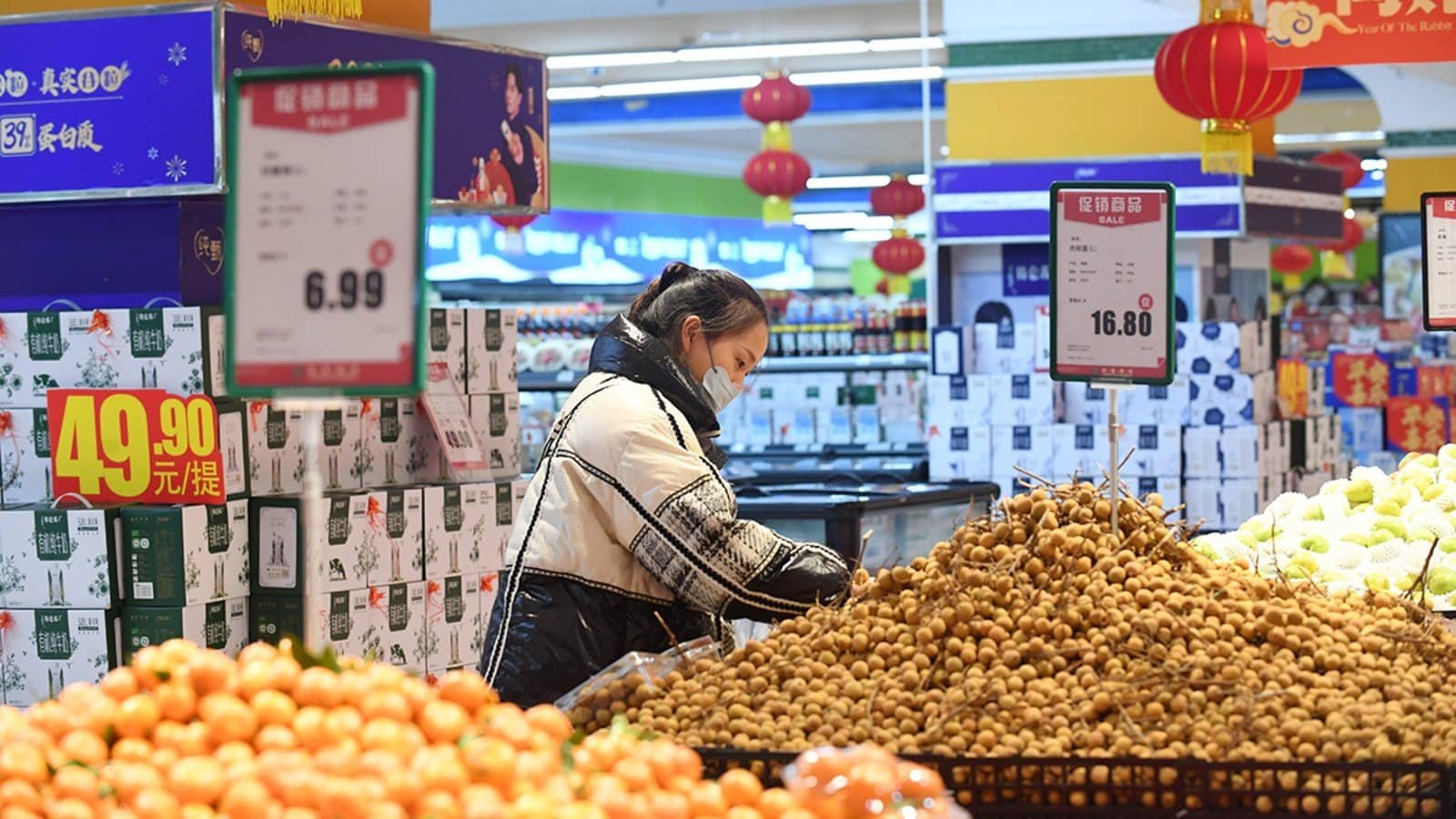
Food prices, which significantly impact consumer inflation, also saw a noticeable drop. In June, food prices fell by 2.1% year-on-year, worsening from May’s 2% decline. Fresh vegetable prices plummeted by 7.3%, reversing a 2.3% rise in May, while fresh fruit prices decreased by 8.7%, deepening the 6.7% fall from the previous month.
Producer Price Deflation
On the production side, the producer price index (PPI) fell by 0.8% year-on-year in June, a smaller decline than May’s 1.4% drop. Gabriel Ng, assistant economist at Capital Economics, noted, “The deeper declines in factory-gate prices of consumer durables highlight that excess manufacturing capacity is becoming a bigger problem.”
Market Reactions and Policy Responses
Following the subdued inflation data, Chinese shares stayed flat, and the yuan slipped to its lowest point in nearly eight months. Retailers have responded by discounting a variety of goods, from cars to coffee, as they navigate sluggish consumer spending.
In light of the weak Q2 inflation data, Goldman Sachs adjusted its full-year 2024 forecast for headline PPI inflation to -1.6%, down from a previously projected 1.1% decline, and maintained its below-consensus CPI forecast at 0.4%.
Looking Ahead
Government calls for increased consumer spending have met with limited success. The tepid response from consumers and the expectation of reduced borrowing by households and companies highlight the need for more robust policy support beyond current subsidies.
An anticipated overhaul of the consumption tax, potentially to be announced at an upcoming key leadership meeting, could shift focus towards boosting consumer spending rather than expanding manufacturing. Lynn Song, chief economist for Greater China at ING, emphasized the need for further monetary policy easing in the coming months, given the current economic indicators.
As China navigates these economic challenges, the world watches closely, understanding the significant global impact of China’s economic health.
Photo source: Google
By: Montel Kamau
Serrari Financial Analyst
10th July, 2024