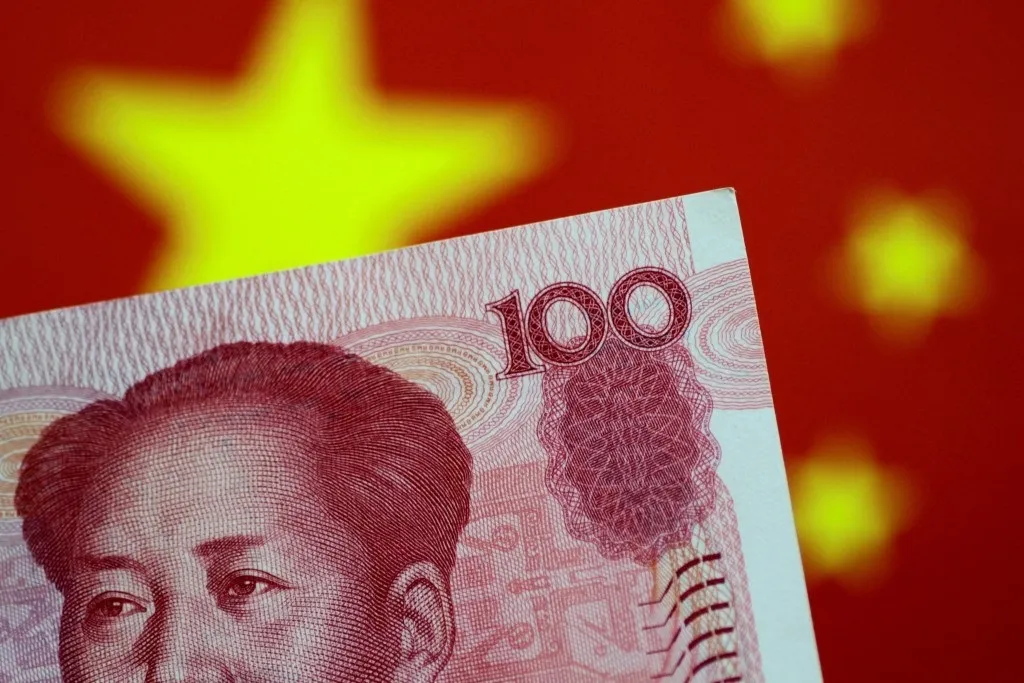
A new study by the influential German Economic Institute (IW) has ignited fresh concerns across Europe, alleging that China’s persistent currency undervaluation is placing immense pressure on European companies and deepening the Eurozone’s trade deficit with the Asian economic powerhouse. As European Union leaders converge in Beijing for a critical summit aimed at navigating escalating trade disputes, the report, seen by Reuters, serves as a stark reminder of the complex economic battle lines being drawn in the global marketplace.
The study, authored by Juergen Matthes of the IW, asserts that the yuan-euro exchange rate has remained remarkably stable in recent years, despite significant shifts in production costs and economic fundamentals between Europe and China. This stability, Matthes argues, strongly suggests deliberate currency manipulation by the Chinese central bank, providing an unfair competitive advantage to Chinese exporters.
The Mechanism of Undervaluation: How a Weak Yuan Shapes Global Trade
At its core, currency undervaluation occurs when a country’s currency is kept artificially low against other major currencies, making its exports cheaper and imports more expensive. For China, a weaker yuan (also known as the renminbi, or RMB) translates directly into more competitive pricing for its goods on the international market. This strategy can boost export volumes, stimulate domestic production, and contribute to economic growth by favoring export-oriented industries.
The German Economic Institute’s findings point to a crucial discrepancy: while producer prices in Germany and the wider Eurozone have surged since 2020 due to a confluence of factors including global supply chain disruptions and the energy crisis, prices in China have remained remarkably subdued. Normally, such a divergence in cost structures would lead to a natural appreciation of the yuan against the euro, as European consumers and businesses would demand more yuan to purchase increasingly attractive Chinese goods. However, the study highlights that the exchange rate has barely moved, leading to a “real appreciation” of the euro against the yuan of over 40% between early 2020 and spring 2025.
Real vs. Nominal Exchange Rates: Understanding the Discrepancy
To grasp the IW’s argument, it’s essential to differentiate between nominal and real exchange rates. The nominal exchange rate is simply the rate at which one currency can be exchanged for another (e.g., 1 euro = 7.8 yuan). The real exchange rate, however, adjusts for differences in price levels between countries. If prices in the Eurozone rise significantly while prices in China remain stable, the purchasing power of the euro effectively increases relative to the yuan, even if the nominal exchange rate stays the same. This makes Eurozone goods more expensive for Chinese buyers and Chinese goods cheaper for Eurozone buyers, creating a trade imbalance.
Matthes’ analysis suggests that this real appreciation of the euro, unreflected in the nominal exchange rate, is a direct consequence of China’s alleged currency management. He posits that the Chinese central bank intervenes in the foreign exchange market to prevent the yuan from strengthening, thereby maintaining the artificial price advantage for Chinese exports.
The Damaging Ripple Effect on European Industry
The consequences of this alleged undervaluation are profound for European companies. “The artificially low costs in China, driven by yuan undervaluation, are simply too attractive,” Matthes stated. This price disparity creates an irresistible pull for European firms to source intermediate goods – components and raw materials used in the production of final products – from China.
This trend, according to the study, is directly contributing to deindustrialization on the European continent. When European manufacturers opt for cheaper Chinese inputs, it reduces demand for domestically produced intermediate goods, potentially leading to factory closures, job losses, and a hollowing out of Europe’s industrial base. Companies that resist this trend and continue to source locally or from other non-Chinese suppliers find themselves at a severe disadvantage, struggling to compete on price and ultimately losing market share to rivals who “fully exploit China’s price advantages.”
The pressure on European companies is multifaceted. Beyond the yuan’s alleged undervaluation, they are also contending with a surge in Chinese exports that have been diverted from the United States. This diversion is partly a consequence of President Donald Trump’s trade policies, which included tariffs and other measures against Chinese goods, pushing Chinese exporters to seek new markets, including Europe. Simultaneously, the euro’s appreciation against the dollar, also influenced by U.S. trade policies, further exacerbates the competitive challenge for European exporters, making their products more expensive in dollar-denominated markets.
China’s Defense and the Veil of Non-Transparency
In response to persistent allegations of currency manipulation, China has consistently denied such claims. Beijing maintains that it is committed to implementing a “managed floating exchange rate regime, based on market supply and demand.” This framework allows the yuan to fluctuate within a narrow band against a basket of currencies, rather than being a free-floating currency. Chinese officials argue that their policies aim to maintain the renminbi exchange rate stable, asserting that they will not “engage in competitive currency devaluation.” They also frequently emphasize their commitment to “multilateralism and respects multilateral consensus” in global trade.
However, the IW study, and many Western economists, remain unconvinced by China’s explanations. Matthes specifically criticized the Chinese central bank’s behavior as “highly non-transparent.” He noted that while the yuan’s exchange rate is allowed to fluctuate within a narrow band, and its relationship with the U.S. dollar plays a central role, along with a currency basket, “how this is done, exactly, no one outside China knows.” This lack of clarity fuels suspicions of covert intervention designed to keep the yuan artificially weak.
The opacity surrounding China’s exchange rate policy makes it exceedingly difficult for external observers to definitively prove manipulation, even when economic indicators strongly suggest it. This information asymmetry puts European and other trading partners at a disadvantage, as they lack the full picture of the forces influencing the yuan’s value.
A History of Accusations: The US Precedent
The accusations of currency manipulation against China are not new. During his first term, then-U.S. President Donald Trump repeatedly labeled China a currency manipulator, a designation that carried significant economic and political weight. However, the U.S. Treasury Department controversially dropped this designation in January 2020, as Chinese officials arrived in Washington to sign the “Phase One” trade deal with the U.S. This move was widely seen as a diplomatic concession to secure the trade agreement, rather than a genuine change in China’s currency practices, as reported by Xinhua.
More recently, the U.S. has continued to voice concerns, albeit with a softer tone. Last month, the U.S. Treasury simply issued a “stern warning” to China, stating that it “stood out among key trading partners in its lack of transparency around its exchange rate policies and practices.” This continued scrutiny from the world’s largest economy underscores the persistent nature of the issue and the shared concerns among Western trading blocs.
The EU-China Summit: A High-Stakes Diplomatic Dance
The timing of the German study’s release is particularly poignant, coinciding with the arrival of EU leaders in Beijing for a top-level summit. This gathering is a crucial opportunity for both sides to engage in direct dialogue, but it also highlights the deep-seated trade grievances that continue to strain the relationship, as discussed in analyses from Real Instituto Elcano and ORF Online.
Beyond currency undervaluation, the EU has a litany of other trade complaints against China. These include:
- Excessive Subsidies: Concerns that vast state subsidies to Chinese industries, particularly in sectors like electric vehicles, steel, and solar panels, create unfair competition and lead to overcapacity that floods global markets. The EU has already launched anti-subsidy investigations, notably into Chinese electric vehicle imports, which could result in punitive tariffs, as detailed by the Fletcher Forum of World Affairs.
- Market Access Barriers: European companies frequently complain about unequal market access in China, facing restrictions and regulatory hurdles that Chinese firms do not encounter in Europe.
- Intellectual Property Theft: Long-standing concerns about the theft of intellectual property and forced technology transfer from European companies operating in China.
- Forced Labor: Growing concerns about the use of forced labor in certain Chinese supply chains, particularly in Xinjiang, leading to import restrictions and ethical dilemmas for European businesses. The European Parliament has passed resolutions on this issue, and the EU has introduced regulations to combat forced labor in supply chains, as reported by Skadden.
The EU leaders at the summit will aim to push for a more balanced and reciprocal trade relationship. However, the discussions are complicated by broader global trade uncertainties, including ongoing tensions between the U.S. and China, the war in Ukraine, and efforts by many nations to diversify supply chains away from over-reliance on any single country. The EU seeks to “de-risk” its economic relationship with China, reducing dependencies in critical sectors while avoiding outright “decoupling.” This delicate balancing act requires careful diplomacy and a united front from EU member states, which can sometimes be challenging given diverse national interests.
The Euro as “Collateral Damage”
Matthes’ stark assessment that the euro is “collateral damage” in China’s currency management strategy paints a clear picture of the unintended, yet significant, consequences for the Eurozone. The artificial suppression of the yuan’s value against the dollar, which plays a central role in China’s exchange rate adjustments, indirectly impacts the euro. If the yuan is kept weak against the dollar, and the euro strengthens against the dollar (as it has due to U.S. trade policies), then the euro will inevitably become stronger against the yuan, regardless of the underlying economic fundamentals between the Eurozone and China.
This dynamic means that even without direct manipulation of the euro-yuan exchange rate, the Eurozone faces a competitive disadvantage. Its exports to China become more expensive, and Chinese imports become even cheaper, exacerbating the trade deficit. Eurostat data and CEIC economic indicators show a persistent and often increasing trade deficit between the EU and China.
What Actions Can the EU Take?
The German Economic Institute’s call for the EU to “take action” raises the critical question of what effective measures the bloc can employ. The options are complex and fraught with potential for retaliation:
- Diplomatic Pressure and Dialogue: The ongoing summit is a prime example of this. EU leaders can use such high-level engagements to directly convey their concerns and push for greater transparency and market-based reforms in China’s exchange rate policy. However, past experience suggests that diplomatic pressure alone may not be sufficient to alter deeply entrenched economic strategies.
- Trade Defense Instruments: The EU has various trade defense instruments at its disposal, including anti-dumping duties and anti-subsidy investigations. While these are typically applied to specific products, the concept of “currency manipulation” as a form of unfair subsidy is a more complex legal and economic argument to make under World Trade Organization (WTO) rules. If the EU could successfully argue that yuan undervaluation constitutes an actionable subsidy, it could potentially impose countervailing duties across a broader range of Chinese imports. However, such a move would be highly controversial and almost certainly lead to Chinese retaliation.
- Strengthening Domestic Industries: The EU could focus on policies to enhance the competitiveness of its own industries, irrespective of external currency dynamics. This includes investments in research and development, innovation, automation, and skills training to improve productivity and reduce reliance on low-cost imports.
- Diversifying Supply Chains: The “de-risking” strategy involves actively encouraging European companies to diversify their supply chains away from China, reducing vulnerability to economic and geopolitical shocks. This could involve promoting near-shoring (bringing production closer to home) or friend-shoring (sourcing from politically aligned countries). However, this is a long-term and costly process, and many industries remain heavily reliant on China for critical components and raw materials.
- International Cooperation: The EU could seek to build a broader coalition with other concerned economies, particularly the United States, to exert collective pressure on China regarding its currency practices. A unified front from major global economies would carry more weight than individual actions.
The challenge for the EU lies in finding a balance between protecting its industries and maintaining a constructive relationship with China, a vital trading partner and a key player in addressing global challenges like climate change. Any aggressive action could trigger a full-blown trade war, with potentially severe economic consequences for all parties involved.
Conclusion: An Unresolved Economic Fault Line
The German Economic Institute’s study on China’s yuan undervaluation highlights an enduring and increasingly problematic fault line in global trade. The alleged artificial suppression of the yuan’s value, coupled with China’s opaque currency policies, is creating a significant competitive disadvantage for European companies, contributing to trade deficits, and fueling concerns about deindustrialization.
As EU leaders engage in delicate diplomatic maneuvers in Beijing, the underlying economic realities presented by this report will undoubtedly weigh heavily on their discussions. The issue of currency manipulation, whether explicitly acknowledged or implicitly managed, remains a major irritant in the complex relationship between Europe and China. Resolving this imbalance will require not only sustained diplomatic pressure and potential policy responses from the EU but also a greater degree of transparency and market orientation from China. The “collateral damage” to the euro underscores the interconnectedness of global finance and trade, making this a dispute with far-reaching implications for the future of the international economic order.
Ready to take your career to the next level? Join our dynamic courses: ACCA, HESI A2, ATI TEAS 7 , HESI EXIT , NCLEX – RN and NCLEX – PN, Financial Literacy!🌟 Dive into a world of opportunities and empower yourself for success. Explore more at Serrari Ed and start your exciting journey today! ✨
Photo source: Google
By: Montel Kamau
Serrari Financial Analyst
24th July, 2025