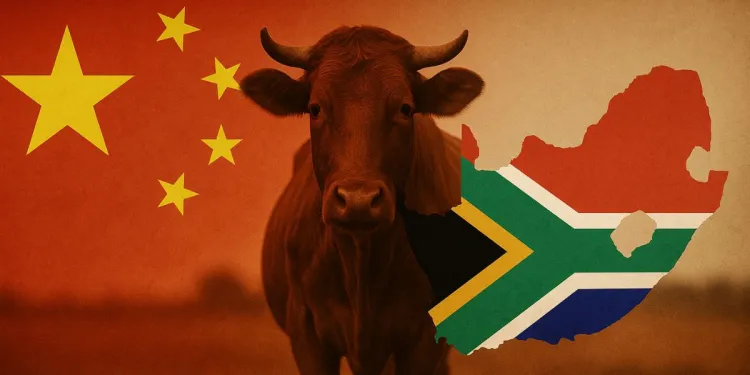
China has taken decisive action by suspending all imports of beef and related products from South Africa with immediate effect. This stringent measure follows the confirmation of ongoing and concerning outbreaks of Foot and Mouth Disease (FMD) in several key agricultural provinces within South Africa, namely Mpumalanga, Gauteng, and KwaZulu-Natal. The Red Meat Industry Services (RMIS), a crucial body representing the interests of the South African red meat sector, has voiced profound apprehension regarding the significant economic repercussions of this blanket ban. The RMIS warns of the far-reaching and detrimental effects that this suspension will have across the entire red meat value chain, impacting everyone from primary producers and feedlots to abattoirs and export businesses.
Industry Leaders Express Deep Concern Over Economic Fallout
Dewald Olivier, the Chief Executive Officer of RMIS, articulated the industry’s deep unease, stating, “This development is a stark reminder of the fragility of our export markets when faced with biosecurity threats. While we fully respect China’s stringent biosecurity protocols and their commitment to safeguarding their agricultural sector, the economic impact on South African farmers and the entire red meat value chain is severe and disheartening.” His comments underscore the vulnerability of South Africa’s agricultural exports to animal health crises and the potential for significant financial losses within the sector. The ripple effects of this ban are expected to extend beyond direct beef exporters, affecting related industries such as animal feed suppliers, transportation services, and even local employment within these agricultural regions. Understanding the intricacies of the Foot and Mouth Disease is crucial to grasping the severity of China’s response.
Frustration Amidst Existing Bilateral Agreements
The timing of this import suspension is particularly frustrating for the South African red meat industry, as it comes despite the signing of a significant Memorandum of Understanding (MoU) between South Africa and China in September 2024. This MoU was specifically designed to enhance bilateral trade between the two nations, with a particular focus on collaborative efforts in FMD prevention and control. A key objective of the agreement was to establish protocols that would allow for the continuation of beef exports from South African provinces that remained free of FMD outbreaks. This concept of “regionalisation” was intended to prevent the imposition of nationwide trade suspensions during localized outbreaks, thereby mitigating the economic damage to unaffected regions. You can learn more about bilateral trade agreements and their importance in international commerce.
Olivier further commented on the industry’s disappointment, noting, “We had hoped the MoU would pave the way for more nuanced responses to outbreaks—allowing beef exports from non-affected provinces to continue. Unfortunately, the current blanket suspension clearly demonstrates the inherent complexity of implementing these carefully constructed agreements effectively when faced with real-time crises and the immediate need for decisive biosecurity measures.”
Strategic Importance of the South Africa-China Trade Relationship
The previously established MoU held significant strategic importance for South Africa’s agricultural sector. It aimed to facilitate the expansion of South Africa’s beef exports to the lucrative Chinese market, with a specific emphasis on higher-value, processed beef products. Furthermore, the agreement underscored China’s position as South Africa’s largest overall trading partner, highlighting the deep economic ties between the two nations. The FMD-specific components of the MoU were intended to provide assurance to Chinese authorities that South Africa possessed robust and reliable disease control measures, thereby reducing the risk of widespread trade disruptions that could negatively impact both economies. The current ban serves as a stark reminder of the delicate balance required to maintain such crucial trade relationships, particularly when dealing with animal health concerns that can have significant economic ramifications. Exploring the broader economic relationship between South Africa and China provides context for the significance of this beef trade.
Urgent Need for Resilient Disease Management and Regionalisation
The current situation unequivocally highlights the urgent and critical need for the practical and effective implementation of the principle of regionalisation in South Africa’s approach to managing animal disease outbreaks. Moreover, it underscores the necessity for the development and strengthening of more resilient and adaptable disease management systems across the country. The ability to clearly demarcate and control disease outbreaks within specific geographical zones, while ensuring the continued trade from unaffected regions, is paramount to minimizing economic losses and maintaining the confidence of international trading partners.
Significant Export Volumes to the Chinese Market
The importance of the Chinese market to South African beef producers cannot be overstated. In the year 2024 alone, South Africa’s total beef exports experienced a substantial growth of 30%, reaching an impressive volume of 38,657 tonnes. Of this total, China accounted for a significant 14% of South Africa’s frozen beef exports. This substantial figure clearly illustrates the economic reliance of a segment of the South African beef industry on access to the Chinese market. The sudden cessation of these exports will undoubtedly create significant financial challenges for the affected producers and exporters who had come to rely on this demand. Understanding the dynamics of South Africa’s beef export market provides further insight into the impact of this ban.
Government Response and Industry Recognition
While expressing its deep concerns, the RMIS has also acknowledged the swift and decisive response undertaken by the South African Department of Agriculture in the wake of the FMD outbreaks. This response has included the implementation of immediate containment measures aimed at preventing the further spread of the disease, as well as the intensification of biosecurity efforts across affected and at-risk areas. Dewald Olivier specifically recognized the leadership and guidance of the deputy director-general, Dipepeneneng Serage, noting his instrumental role in providing support and direction to the sector as it navigates these exceptionally challenging circumstances. The effectiveness of these biosecurity measures in agriculture will be crucial in regaining China’s trust.
A Call for Innovative and Balanced Solutions
Looking ahead, the RMIS is strongly advocating for the adoption and implementation of innovative strategies that can effectively balance the critical need for robust disease control with the imperative of ensuring long-term economic sustainability for the South African red meat industry. To achieve this delicate balance, they are urging stakeholders to prioritize several key areas:
- Enhanced Traceability and Biosecurity Protocols: Implementing more sophisticated and rigorous traceability systems for livestock and beef products, coupled with significantly enhanced biosecurity protocols at all stages of the production and processing chain, is crucial to providing reassurance to international trade partners regarding the safety and origin of South African beef.
- The Practical Application of Regionalisation: The RMIS is emphasizing the urgent need to operationalize the concept of regionalisation effectively. This would involve establishing clearly defined disease-free zones within South Africa, supported by robust surveillance and monitoring systems, to allow for continued exports from these unaffected areas even during localized outbreaks.
- Stronger Public-Private Partnerships: Fostering more robust and collaborative partnerships between government agencies, industry bodies, and private sector stakeholders is deemed essential to improving disease surveillance capabilities, enhancing rapid response mechanisms during outbreaks, and ensuring a coordinated and effective approach to animal health management.
- A Comprehensive Review of Protocols: The RMIS is calling for a thorough and critical review of existing protocols related to animal disease outbreaks and trade suspensions. The aim of this review would be to identify potential improvements and develop more nuanced and targeted responses that minimize unnecessary disruptions to the industry while effectively safeguarding animal health.
Olivier concluded by emphasizing the critical need for a paradigm shift in approach, stating, “We urgently need to develop and implement solutions that effectively serve the dual objectives of protecting our domestic industry from the devastating impacts of disease outbreaks and simultaneously maintaining the confidence and trust of our valued international trade partners. Out-of-the-box thinking and a willingness to embrace innovative approaches are absolutely essential—not just to effectively manage current and future disease outbreaks, but fundamentally to protect the livelihoods of everyone involved in the red meat value chain and to secure the long-term viability and future growth of South African agricultural exports in a competitive global market.” The ability of South Africa to adapt and innovate in its disease management strategies will be key to navigating this challenging period and ensuring the future of its beef exports.
Ready to take your career to the next level? Join our dynamic courses: ACCA, HESI A2, ATI TEAS 7 , HESI EXIT , NCLEX – RN and NCLEX – PN, Financial Literacy!🌟 Dive into a world of opportunities and empower yourself for success. Explore more at Serrari Ed and start your exciting journey today! ✨
Photo source: Google
By: Montel Kamau
Serrari Financial Analyst
14th May, 2025