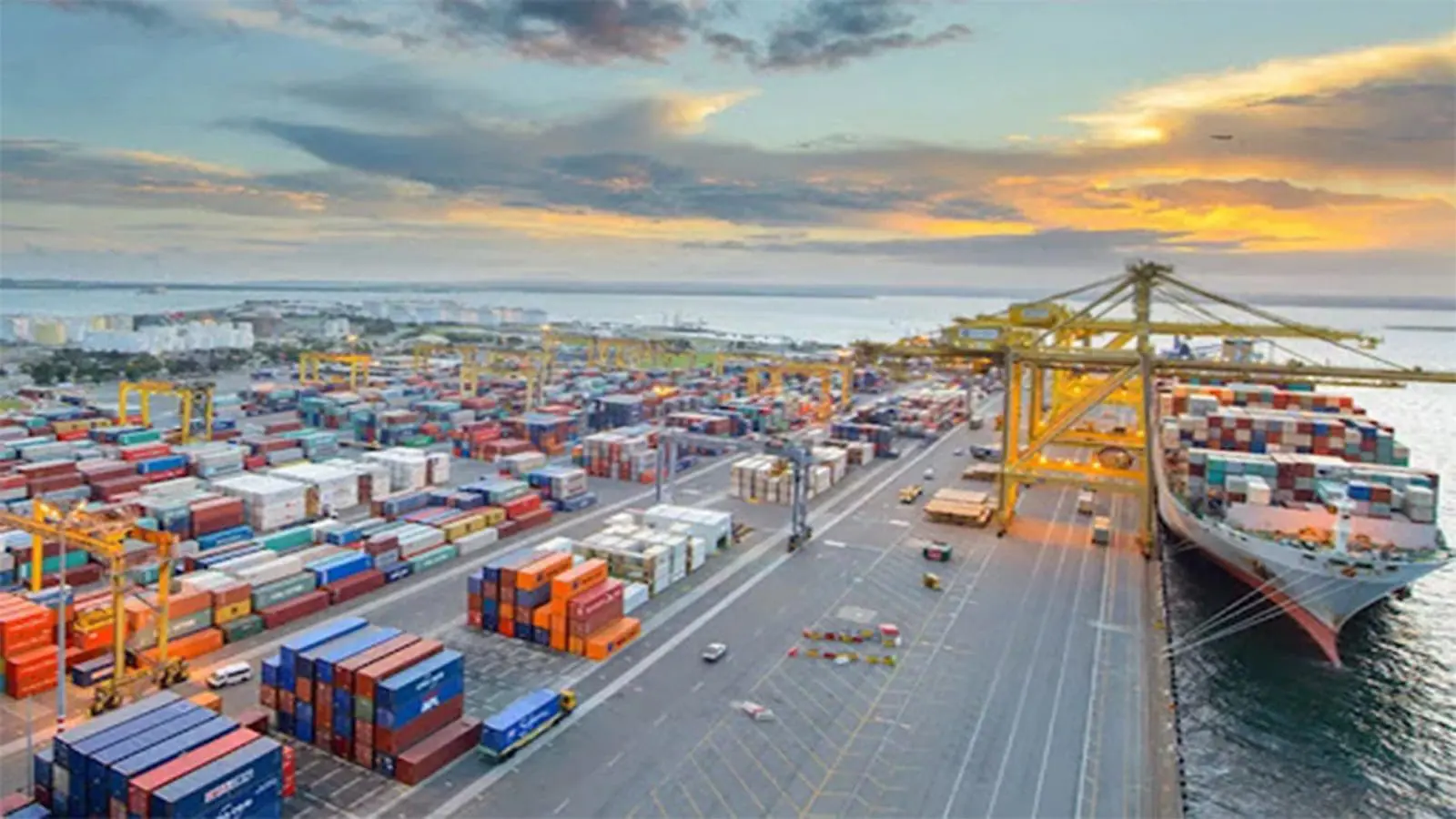
In a landmark move poised to reshape the Democratic Republic of the Congo’s (DRC) economic landscape, British International Investment (BII) has committed up to $35 million towards the development of the country’s first deepwater container port, the Port of Banana. This investment, in collaboration with global logistics giant DP World, marks a significant extension of an ongoing partnership aimed at modernizing and expanding port infrastructure across Africa.
A Catalyst for Economic Transformation
The DRC, Africa’s second-largest country by area and the fourth most populous, is set to witness a transformative shift in its trade and logistics capabilities with the development of the Port of Banana. This strategic port, located on the western coast of the DRC, is expected to serve as the single maritime gateway for all containerized imports and exports, providing the country with much-needed logistical independence and ensuring sovereignty over its foreign trade.
The significance of this investment cannot be overstated. The port’s development is expected to create approximately 85,000 jobs, catalyze around $1.12 billion in additional trade, and contribute $429 million in increased economic output annually. These figures represent a 0.65% increase in the DRC’s GDP, highlighting the port’s potential to drive substantial economic growth.
A Broader Vision for African Trade Infrastructure
This investment is not an isolated initiative but rather a continuation of a strategic partnership between BII and DP World. The collaboration began in 2021 with the modernization and expansion of ports in Dakar, Senegal; Sokhna, Egypt; and Berbera, Somaliland. These ports, which form critical nodes in Africa’s maritime trade network, are projected to improve access to essential goods for approximately 35 million people and support 5 million jobs, with the creation of 138,000 new positions. Additionally, they are expected to generate an additional $51 billion in total trade by 2035.
The strategic importance of these ports extends beyond their immediate economic impact. By reducing logistics costs and improving access to global markets, these ports are set to play a pivotal role in transforming the economies of their respective countries. The Port of Banana is expected to follow in these footsteps, further cementing Africa’s position in global trade.
Strategic Infrastructure Development
The Port of Banana is being developed in multiple phases, with its capacity expected to increase gradually over time. Upon completion, the port will feature a draft of 17.5 meters, enabling it to accommodate large container vessels from around the globe. This will position the port as a critical hub in the DRC’s trade infrastructure, connecting it to a network of additional infrastructure, including a free zone and multimodal logistics facilities that will link the port to the country’s largest urban centers, such as Kinshasa.
The 578-kilometer Banana-Matadi-Kinshasa trade corridor, home to about 54 million people, will directly benefit from this development. By enhancing connectivity and reducing trade costs by an estimated 12%, the port will significantly boost economic activity along this corridor. This development is not just about trade; it is about fostering economic inclusion and creating opportunities for millions of Congolese citizens.
A Boost to Agriculture and Rural Development
One of the most profound impacts of the Port of Banana will be on the agricultural sector, which is the backbone of the DRC’s economy. About one-third of the new jobs supported by trade through the port are expected to be in agriculture, benefiting thousands of farmers and sector workers. By facilitating the export of agricultural products and the import of essential farming inputs, the port will play a crucial role in enhancing the productivity and competitiveness of the DRC’s agricultural sector.
Furthermore, the increased containerized trade in Western DRC is expected to make essential imported goods, such as clothing, textiles, food, pharmaceuticals, and consumer products, more affordable and accessible to the local population. This will improve the quality of life for millions of Congolese, particularly those in low-income rural households.
Strategic Importance of the Port of Banana
The Port of Banana’s development is also of strategic importance to the DRC’s broader economic aspirations. As the single maritime window for all containerized goods transported by sea, the port will provide the DRC with the logistical infrastructure necessary to fully integrate into the global economy. This is particularly crucial for a country like the DRC, which has historically been hampered by inadequate infrastructure and a lack of direct access to international markets.
By unlocking the country’s trading potential, the port will enable the DRC to diversify its economy, reduce its dependence on raw material exports, and develop value-added industries. This is in line with the DRC government’s broader economic strategy, which aims to transform the country into a regional economic powerhouse.
UK-DRC Partnership: A Model for Sustainable Development
The commitment to the Port of Banana is a shining example of the UK-DRC partnership in action. The UK Minister for Africa, Lord Collins of Highbury, emphasized the transformative potential of this investment, stating that it will “help establish the DRC as a major trading hub on the continent and provide a significant boost to local sectors from infrastructure, logistics, and green energy.” This partnership reflects the UK government’s commitment to supporting sustainable economic growth in Africa through strategic investments in key infrastructure projects.
Chris Chijiutomi, Managing Director and Head of Africa for BII, echoed these sentiments, highlighting the “irrefutable development impact” of investing in ports. He noted that while Africa is home to one-sixth of the world’s population, it accounts for just 4% of global containerized shipping volumes. This disparity underscores the critical need for investments in port infrastructure to support the continent’s long-term prosperity and well-being.
The Port of Banana is poised to play a major role in supporting the economic aspirations of millions of Congolese citizens. By providing the DRC with the infrastructure necessary to participate fully in global trade, this investment will help to transform the country’s economy and improve the livelihoods of its people.
DP World’s Vision for Africa
DP World, a global leader in ports and logistics, has long recognized the untapped potential of Africa’s trade infrastructure. The company’s CEO of Sub-Saharan Africa, Mohammed Akoojee, expressed excitement about continuing the partnership with BII to develop the Port of Banana. He emphasized that the project is a “significant step towards enhancing the DRC’s trade infrastructure, unlocking economic potential, and creating jobs.”
Akoojee’s vision for Africa aligns with DP World’s broader strategy of investing in key trade infrastructure projects across the continent. By reducing trade costs and improving access to global markets, DP World aims to support Africa’s growth and prosperity. The Port of Banana is expected to have a positive impact not only on the DRC but also on the broader region, as it becomes a critical node in Africa’s trade network.
Future Prospects and Global Implications
As the DRC embarks on this ambitious project, the Port of Banana is expected to become a model for other African nations seeking to develop their trade infrastructure. The success of this project could encourage further investments in similar initiatives across the continent, leading to a more integrated and efficient African trade network.
Moreover, the Port of Banana’s development has global implications. As Africa continues to rise as a significant player in global trade, ports like Banana will play a crucial role in facilitating the flow of goods between Africa and the rest of the world. This will not only benefit African economies but also contribute to the stability and growth of the global economy.
The partnership between BII and DP World in the DRC serves as a testament to the power of strategic investments in infrastructure to drive economic growth and development. By focusing on sustainable, long-term projects like the Port of Banana, these organizations are helping to build a brighter future for Africa and its people. The impact of this investment will be felt for generations to come, as the DRC and its neighbors harness the full potential of their trade infrastructure to achieve lasting prosperity.
photo source: Google
By: Montel Kamau
Serrari Financial Analyst
19th August, 2024