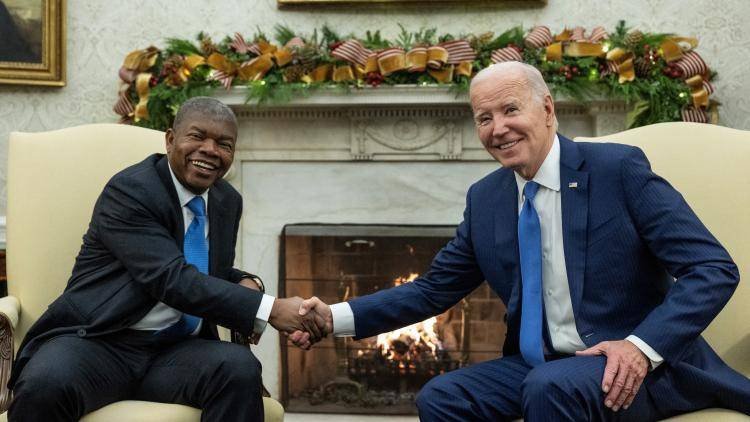
President Joe Biden’s visit to Angola on December 4 marks a pivotal moment in his administration’s commitment to enhancing global infrastructure through sustainable development, with the Lobito Corridor at the heart of this strategy. This ambitious $5 billion project exemplifies the U.S.’s effort to counter China’s Belt and Road Initiative (BRI) by investing in infrastructure to secure critical mineral supply chains and strengthen African economic resilience.
The Lobito Corridor: A Game-Changing Initiative
The Lobito Corridor project revives and extends the 1,300-kilometer Benguela railway line, connecting the Angolan Atlantic port of Lobito with the Democratic Republic of Congo (DRC) and, in its second phase, Zambia. By enhancing access to essential minerals like cobalt and copper—vital for electric vehicle manufacturing—the corridor promises to strengthen supply chain security for the U.S. and its allies. The project aligns with the Partnership for Global Infrastructure and Investment (PGII), a G7-led initiative aimed at mobilizing $600 billion by 2027 to provide transparent and sustainable infrastructure financing worldwide.
In October 2023, a landmark Memorandum of Understanding (MOU) was signed by the U.S., Angola, Zambia, the DRC, and key international partners such as the European Union and African Development Bank. This agreement underscores a collaborative approach to boosting trade, agriculture, and digital connectivity in the region.
Strategic Impact on Africa
The Lobito Corridor aims to cut transit times across Angola, Zambia, and the DRC from 45 days to under a week. This acceleration is expected to transform agriculture and mining industries by lowering transportation costs and improving access to international markets. The broader vision for the project includes integrating it into other regional networks, such as the Central Corridor, promoting African Union’s Agenda 2063 for economic integration.
Dr. Frances Brown, Senior Director for African Affairs at the National Security Council, emphasized the transformative potential of this project: “This isn’t just about a railroad or critical minerals. It’s about strengthening communities and fostering long-term economic resilience through sustainable partnerships,” she stated during a briefing.
Environmental and Social Considerations
The project places a strong emphasis on sustainable practices, with support from the Millennium Challenge Corporation (MCC) to enhance regional agriculture and rail systems. A $2 million grant from the U.S. Trade and Development Agency will fund environmental and social impact assessments, ensuring that development aligns with global sustainability standards. Critics of Chinese infrastructure investments often highlight their neglect of local environmental and societal concerns, a gap the PGII aims to fill.
A Broader U.S.-Africa Strategy
The Lobito Corridor complements President Biden’s broader Africa strategy, launched in 2022 to reframe the continent’s importance to U.S. national security. Biden has committed $55 billion to African development over three years, with investments spanning agriculture, energy, and digital innovation. While much of this funding builds on pre-existing initiatives, the Lobito Corridor stands out as a tangible symbol of U.S. commitment to African development.
The U.S.-China Rivalry
China’s Belt and Road Initiative, launched in 2013, remains the dominant force in global development financing, having committed $679 billion to infrastructure projects worldwide compared to the U.S.’s $76 billion over the same period. In Africa, Beijing’s significant investments have led to widespread Chinese influence, with some African schools even incorporating Mandarin into their curricula. However, Chinese projects have often been criticized for fostering debt dependency and failing to consider local impacts
Through the PGII, the U.S. aims to provide an alternative model focused on transparency, environmental stewardship, and community benefits. The Lobito Corridor’s public-private partnership framework showcases how such collaborations can attract private capital while prioritizing the needs of local populations.
Challenges and the Road Ahead
Despite its promise, the project faces challenges. The U.S. must overcome perceptions that its financial commitments lag behind China’s. Additionally, ensuring that local communities benefit equitably from the corridor’s development will be crucial. Civil society groups, such as Angola’s Social Observatory, stress the importance of inclusive planning to ensure long-term success
Looking forward, the U.S. hopes to expand this model to other regions. Plans for a new railway connecting the Lobito Corridor to Zambia are set to break ground in 2026, while future phases could connect the corridor to the Indian Ocean and other African trade hubs.
Conclusion
President Biden’s visit to Angola underscores his administration’s commitment to fostering equitable and sustainable development in Africa. The Lobito Corridor stands as a flagship initiative, offering a counterpoint to China’s BRI while laying the groundwork for a more connected and prosperous African continent. As the U.S. deepens its engagement with Africa, the success of this project will likely serve as a litmus test for its broader strategy to win hearts, minds, and markets on the continent.
Ready to take your career to the next level? Join our dynamic courses: ACCA, HESI A2, ATI TEAS 7 , HESI EXIT and NCLEX – RN !🌟 Dive into a world of opportunities and empower yourself for success. Explore more at Serrari Ed and start your exciting journey today! ✨
photo source: Google
By: Montel Kamau
Serrari Financial Analyst
2nd December, 2024