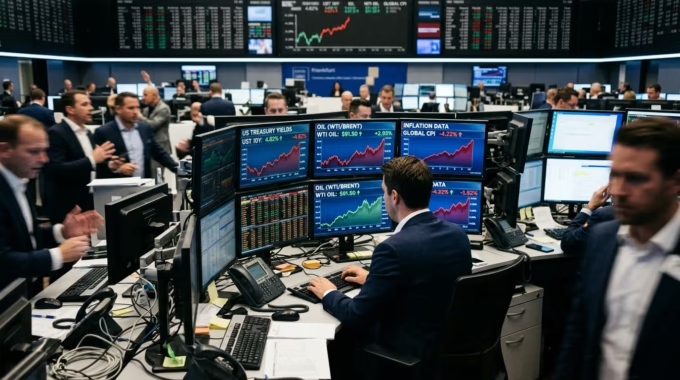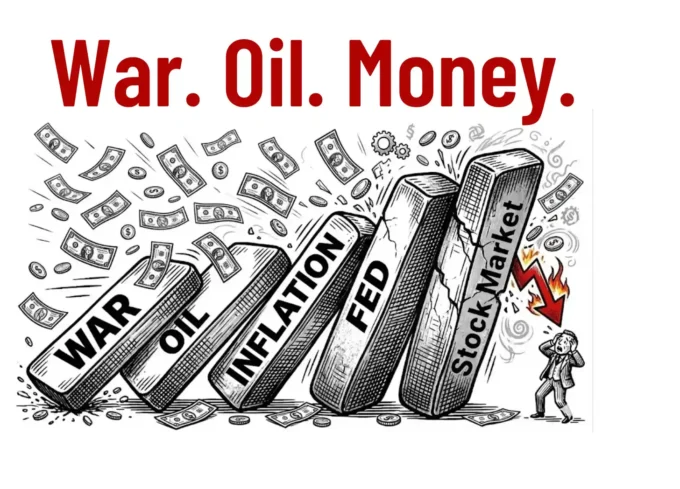

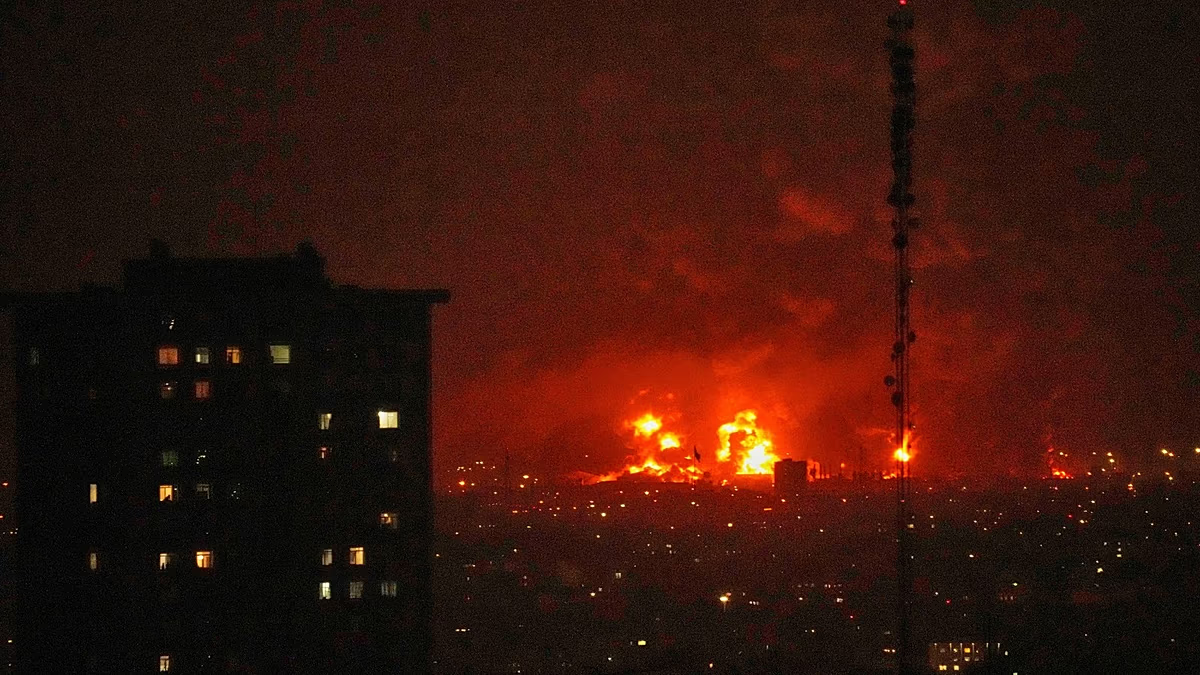
Stock markets across Asia surged after oil prices fell below $90 per barrel, boosting global investor confidence following signals that the conflict involving Iran may be nearing its conclusion. The rebound came after U.S. President Donald Trump stated that the war with Iran was “very complete,” a comment that markets interpreted as a sign that the crisis could soon de-escalate.
The easing of geopolitical tensions helped lift global equity markets that had been shaken by earlier volatility linked to the conflict. Investors responded positively as lower oil prices reduced concerns about inflation and economic disruption.
Among the biggest beneficiaries of the shift in sentiment was South Korea’s stock market, where the benchmark Kospi index surged more than 5 percent, reversing heavy losses recorded during the previous trading session.
The market rally was mirrored across several Asian financial centers, highlighting the strong influence geopolitical developments can have on global financial markets.
South Korea’s Kospi Leads Regional Gains
South Korea’s Kospi index posted one of the strongest performances in the region as investors returned to equities following the previous day’s sharp sell-off.
The index opened significantly higher at 5,523.21, representing a 5.17% increase from the previous session. Momentum continued in early trading, with the index climbing to 5,539.49, reflecting a 5.48% gain by 9:30 a.m.
At one point during the session, the index surged as much as 6.5%, illustrating the scale of the rebound.
The strong rally came just one day after the market experienced a steep decline of 5.96%, which had been triggered by global investor concerns about escalating tensions in the Middle East.
The quick reversal highlights how rapidly market sentiment can change when geopolitical risks appear to diminish.
Trading Volatility Triggers Market Safeguards
The sharp rise in South Korean equities prompted the activation of a sidecar trading curb, a mechanism designed to temporarily pause program trading during periods of extreme volatility.
Shortly after the market opened, a surge in Kospi 200 futures triggered the safeguard at 9:06 a.m., halting automated buy orders for five minutes.
Sidecar mechanisms are intended to stabilize markets by preventing sudden algorithmic trading surges from amplifying volatility.
Despite the brief trading halt, the rally continued once normal trading resumed.
Investor Activity in the Korean Market
The rebound in South Korea’s stock market was largely driven by foreign and institutional investors, while retail investors took the opportunity to reduce exposure after the previous day’s losses.
Retail Investors
Individual investors were net sellers, offloading approximately 447.7 billion won (about $305 million) worth of shares.
Foreign Investors
Foreign investors played a key role in supporting the rally, purchasing 366.9 billion won worth of equities.
Institutional Investors
Domestic institutions also contributed to the market recovery, buying approximately 106.4 billion won in stocks.
The buying activity by institutional and international investors helped restore confidence in the market.
Technology Stocks Drive Kosdaq Gains
South Korea’s technology-focused Kosdaq index also posted strong gains.
The index opened 4.15% higher at 1,147.99, reflecting strong investor demand for technology and growth-oriented companies.
By 9:30 a.m., the Kosdaq was trading at 1,134.52, representing a 2.92% increase from the previous trading session.
Technology stocks often react strongly to shifts in global economic sentiment because they are sensitive to both interest rate expectations and investor risk appetite.
Korean Won Strengthens
The improved investor sentiment was also reflected in currency markets.
The South Korean won strengthened against the U.S. dollar, signaling renewed confidence in the country’s financial markets.
The currency opened at 1,470.8 won per dollar, strengthening by 24.7 won compared with the previous session’s close.
By 9:30 a.m., the exchange rate had moved slightly to 1,470.18 won per dollar.
Currency appreciation often accompanies stock market gains when investors increase exposure to a country’s financial assets.
Regional Markets Join the Rally
The rebound was not limited to South Korea. Several other Asian markets also recorded gains as investors responded to easing geopolitical tensions.
India
India’s NSE Nifty index rose 0.8%, recovering some of the losses from the previous session, when the market had fallen 1.7%.
The Indian rupee strengthened 0.3%, reflecting improved investor sentiment.
Thailand
Thailand’s stock market rose nearly 2%, although the Thai baht weakened slightly by 0.2% to 31.70 per dollar.
Thai authorities have reportedly been exploring additional energy sources to secure fuel supplies amid global energy uncertainty.
Taiwan and Singapore
Equities in both Taiwan and Singapore gained more than 2%, reflecting broad-based regional optimism.
Indonesia
Stocks in Jakarta rose 1.2%, while the Indonesian rupiah strengthened 0.4% against the U.S. dollar.
Philippines
In the Philippines, equities rebounded after the previous day’s steep losses.
Manila’s stock market rose 2%, positioning it for its strongest daily performance since early January.
The Philippine peso, however, reversed earlier gains and was trading 0.2% lower.
Regional Index Performance
Across the broader region, equity markets showed significant improvement.
The MSCI Asia-Pacific Index excluding Japan rose 2.8%, recovering part of the losses recorded since the start of the Middle East conflict.
Japan’s Nikkei 225 index also climbed 2.7%, reflecting renewed investor risk appetite.
In China, the CSI 300 index increased 1.1% after new customs data showed that export growth accelerated during the January–February period.
Strong trade performance has helped maintain expectations that China could exceed its record $1.2 trillion trade surplus during 2026.
Oil Prices Drop as War Concerns Ease
One of the key catalysts behind the market rally was the sharp decline in oil prices.
Energy markets had surged earlier due to fears that the conflict in the Middle East could disrupt global oil supply.
However, signs of potential de-escalation caused oil prices to drop sharply.
Brent crude futures fell as much as 11%, dropping below $88.05 per barrel when trading resumed.
Although prices later trimmed their losses, Brent crude was still down 6.6% during the session.
Lower oil prices can have positive effects on financial markets because they reduce inflation pressures and lower costs for businesses and consumers.
U.S. Market Outlook
While Asian markets rallied strongly, U.S. equity futures showed more subdued movement.
S&P 500 e-mini futures were down around 0.2%, following a rebound in U.S. markets during the previous session.
Investors remain cautious as they continue to monitor developments in the Middle East conflict and its potential impact on global economic conditions.
Historical Context: Markets and Geopolitical Shocks
Financial markets have historically reacted strongly to geopolitical crises, particularly when conflicts involve major energy-producing regions.
Examples include:
- The Gulf War (1990–1991)
- The Iraq War (2003)
- The Russia–Ukraine conflict (2022)
In many cases, markets initially experience sharp declines due to uncertainty, followed by rapid recoveries once investors gain greater clarity about the situation.
The current market movements appear to follow a similar pattern.
Why This Development Matters
The recent market rebound highlights several important dynamics in global financial markets.
Sensitivity to Geopolitical Developments
Global markets remain highly responsive to geopolitical events, particularly those involving energy supply.
Importance of Oil Prices
Oil price fluctuations can significantly influence inflation expectations, central bank policies, and corporate profitability.
Investor Sentiment
Market sentiment can shift rapidly when investors perceive reduced geopolitical risk.
Regional Financial Stability
The quick rebound across Asian markets suggests that investors remain confident in the underlying economic fundamentals of the region.
Risks and Considerations
Despite the strong market rally, several uncertainties remain.
Unpredictable Geopolitical Developments
The situation in the Middle East remains fluid, and renewed tensions could quickly reverse market gains.
Energy Market Volatility
Oil prices may continue to fluctuate depending on developments in global energy supply.
Investor Behavior
Rapid shifts in investor sentiment can lead to sharp market swings.
Global Economic Uncertainty
Economic conditions such as inflation, interest rates, and growth prospects continue to influence financial markets.
Looking Ahead
Investors will closely monitor several factors in the coming weeks.
Diplomatic Developments
Progress toward a lasting resolution of the conflict could further stabilize financial markets.
Energy Market Trends
Oil price movements will remain a key indicator of global economic expectations.
Central Bank Policy
Monetary policy decisions in major economies will influence global market liquidity.
Economic Data
Indicators such as trade figures, employment data, and inflation readings will shape investor expectations.
Conclusion
Asian stock markets rebounded strongly after oil prices fell below $90 per barrel, easing investor concerns about the economic impact of the Middle East conflict.
South Korea’s Kospi index led regional gains, surging more than 5% as foreign and institutional investors returned to equities.
While the rally reflects renewed optimism among investors, markets remain sensitive to geopolitical developments and energy price fluctuations.
As the situation continues to evolve, global financial markets will remain closely tied to developments in both geopolitics and economic policy.
Track GDP, Inflation and Central Bank rates for top African markets with Serrari’s comparator tool.
See today’s Treasury bonds and Money market funds movement across financial service providers in Kenya, using Serrari’s comparator tools.
Photo Source: Google
By: Elsie Njenga
11th March,2026