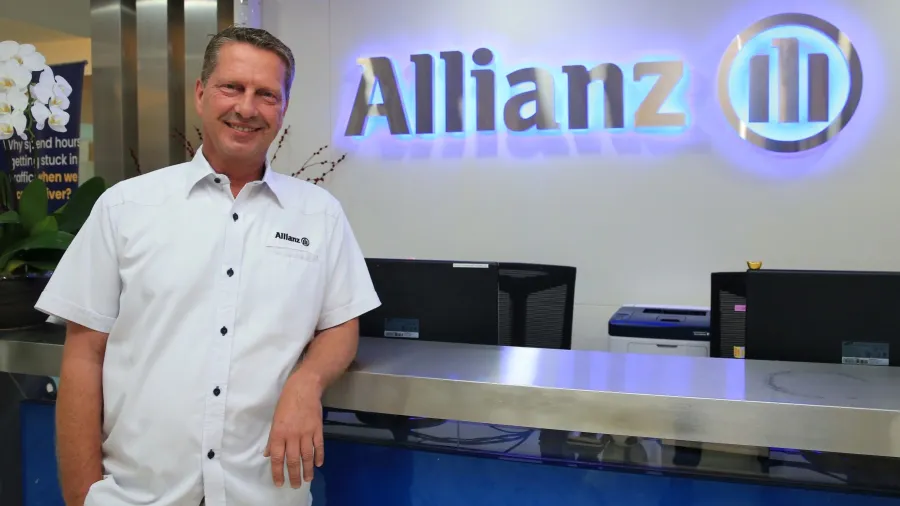
Malaysia’s small and medium enterprises (SMEs) form the backbone of the national economy, contributing nearly 40% of gross domestic product and employing almost half of the country’s workforce. Against this backdrop, Allianz General Insurance Company (Malaysia) Berhad has unveiled a targeted initiative aimed at strengthening financial resilience among SMEs and enhancing protection for foreign workers.
Under the new measures, corporate policyholders holding active Allianz Business Shield, Standard Fire, or Commercial Fire policies will be eligible for a one-off financial support payment of up to MYR20,000 (approximately $5,100) if a covered insured event forces business closure for 48 hours or more. In parallel, Allianz’s Foreign Workers Hospitalization and Surgical (FWHS) policy issued between February and December 2026 will include a complimentary one-year group personal accident coverage, offering up to MYR10,000 (over $2,500) for accidental death and permanent disablement.
At first glance, the offering appears to be a tactical promotional move. But when examined in context — amid rising operational risks, supply chain volatility, climate-linked disruptions, and tighter regulatory scrutiny — the initiative reflects broader structural shifts in risk management, insurance competition, and SME resilience frameworks in Malaysia.
To understand the significance of this announcement, it is important to examine Malaysia’s SME landscape, the evolution of commercial insurance products, and the strategic importance of foreign worker protection within the national economy.
Build the future you deserve. Get started with our top-tier Online courses: ACCA, HESI A2, ATI TEAS 7, HESI EXIT, NCLEX-RN, NCLEX-PN, and Financial Literacy. Let Serrari Ed guide your path to success. Enroll today.
SMEs as Malaysia’s Economic Engine
Small and medium enterprises in Malaysia are not peripheral contributors to economic growth. They represent a central pillar of the country’s economic architecture.
According to national data:
- SMEs contribute approximately 38–40% of GDP.
- They account for nearly half of total employment.
- They operate across manufacturing, retail, logistics, services, agriculture, and construction sectors.
Their economic footprint means that any systemic vulnerability affecting SMEs has macroeconomic consequences.
Business interruptions — whether caused by fire, flood, structural damage, or other insured events — can trigger cascading effects:
- Loss of wages.
- Supply chain disruptions.
- Contractual penalties.
- Liquidity shortages.
The fragility of smaller enterprises during operational interruptions has been highlighted repeatedly over the past decade — from pandemic lockdowns to extreme weather events.
In this environment, closure beyond 48 hours can be financially destabilizing.
The 48-Hour Threshold: Why It Matters
Allianz’s decision to anchor financial support to closures exceeding 48 hours is strategically significant.
Research across global SME markets shows that:
- Businesses without interruption coverage often struggle to survive beyond several days of forced closure.
- Fixed costs such as rent, salaries, and utilities continue even when revenue stops.
- Access to short-term credit is limited for many SMEs.
The MYR20,000 one-off support functions as:
- Immediate liquidity relief.
- Bridge capital during operational recovery.
- Signal of insurer partnership beyond claims settlement.
Importantly, this support applies to covered events under existing fire and business shield policies — reinforcing the relevance of commercial insurance as a resilience tool rather than a compliance exercise.
Foreign Worker Protection: Addressing a Structural Workforce Segment
Malaysia relies heavily on foreign workers in sectors such as:
- Construction.
- Manufacturing.
- Agriculture.
- Hospitality.
- Plantation industries.
The Foreign Workers Hospitalization and Surgical (FWHS) policy is a mandatory insurance product designed to ensure medical access for foreign employees.
By adding a complimentary one-year group personal accident coverage, Allianz enhances protection for this workforce segment.
The coverage of up to MYR10,000 for accidental death and permanent disablement:
- Reduces financial exposure for employers.
- Strengthens employee welfare frameworks.
- Aligns with increasing ESG (Environmental, Social, Governance) expectations.
This addition signals a broader shift toward embedding worker protection within corporate risk management strategies.
Insurance Industry Context: Competitive Dynamics
Malaysia’s general insurance market is competitive and evolving.
Major players compete across:
- Commercial property.
- Fire insurance.
- Liability products.
- Worker protection.
- SME-focused packages.
Pricing pressure, claims volatility, and climate-related risk escalation have reshaped underwriting approaches.
By offering complimentary support and coverage add-ons, Allianz:
- Differentiates its SME offerings.
- Enhances retention among existing policyholders.
- Signals confidence in underwriting discipline.
- Strengthens broker relationships.
In competitive insurance markets, value-added services often matter more than marginal pricing adjustments.
Historical Context: SME Vulnerability During Crises
The COVID-19 pandemic exposed structural vulnerabilities among SMEs globally.
In Malaysia:
- Extended lockdowns triggered liquidity shortages.
- Government support programs provided temporary relief.
- Business interruption coverage disputes emerged internationally.
Globally, insurers re-evaluated:
- Business interruption clauses.
- Pandemic exclusions.
- Catastrophe modeling frameworks.
While Allianz’s new offering is not pandemic-specific, it reflects lessons learned:
SMEs require faster liquidity support mechanisms.
Providing capped financial assistance for closure events may reduce reputational risk and enhance long-term client loyalty.
One decision can change your entire career. Take that step with our Online courses in ACCA, HESI A2, ATI TEAS 7, HESI EXIT, NCLEX-RN, NCLEX-PN, and Financial Literacy. Join Serrari Ed and start building your brighter future today.
Climate Risk and Business Interruption
Malaysia is increasingly exposed to:
- Flooding events.
- Extreme rainfall.
- Urban drainage challenges.
- Heat-related disruptions.
Climate volatility increases the probability of operational interruptions.
Insurance frameworks must evolve to address:
- Higher claim frequency.
- Infrastructure vulnerability.
- Business continuity planning.
By explicitly linking support to closures caused by covered events, Allianz acknowledges the growing centrality of climate and disaster resilience in SME survival.
Why This Matters for the Malaysian Economy
The broader implications extend beyond Allianz.
If major insurers prioritize SME resilience:
- Business continuity may improve.
- Economic shock absorption capacity strengthens.
- Employment stability increases.
- Informal risk exposure declines.
In macroeconomic terms, strengthening SME resilience enhances national economic stability.
SMEs often lack:
- Cash buffers.
- Sophisticated risk planning.
- Dedicated treasury teams.
Insurance-backed liquidity acts as a stabilizer.
Financial Implications for Insurers
From Allianz’s perspective, offering capped financial assistance introduces cost exposure.
However, the design likely reflects:
- Risk modeling confidence.
- Historical closure frequency data.
- Managed exposure caps.
- Marketing and retention benefits.
The MYR20,000 cap limits balance sheet impact while providing meaningful support.
Insurance firms increasingly compete not only on pricing but on ecosystem integration and resilience positioning.
Risks to Monitor
Despite the strategic appeal, several risks warrant attention.
1. Claims Surge Risk
If extreme weather events increase, closure claims may rise.
2. Moral Hazard
Firms may rely on closure support rather than strengthening operational resilience.
3. Pricing Adjustments
If loss ratios rise, premium adjustments may follow.
4. Regulatory Scrutiny
Insurance regulators may monitor promotional coverage add-ons for compliance alignment.
5. SME Awareness Gap
If awareness is low, uptake impact may be limited.
Long-Term Outlook: Resilience as a Competitive Advantage
The long-term trajectory suggests several structural shifts.
1. Embedded Business Continuity Coverage
Future policies may increasingly bundle liquidity relief components.
2. Integrated ESG Positioning
Foreign worker protection aligns with social responsibility mandates.
3. Climate-Adjusted Underwriting
Premiums may incorporate more granular catastrophe modeling.
4. Digital Claims Acceleration
Faster claim settlement processes will differentiate insurers.
5. SME Risk Education Expansion
Insurers may invest more heavily in risk awareness initiatives.
Strategic Interpretation
Allianz’s initiative can be interpreted through three lenses:
- Competitive differentiation.
- Economic stabilization support.
- Risk management evolution.
Rather than reactive crisis response, this move positions Allianz as a proactive partner in SME continuity.
Conclusion: A Tactical Offer with Structural Implications
Allianz Malaysia’s decision to offer up to MYR20,000 in closure support for SMEs and complimentary accident coverage for foreign workers reflects a strategic recalibration in commercial insurance.
In an environment marked by operational volatility, supply chain fragility, and climate unpredictability, resilience is becoming a competitive differentiator.
SMEs, representing nearly 40% of Malaysia’s GDP, require more than traditional indemnity products. They require liquidity bridges.
By embedding capped financial assistance into existing fire and business shield policies, Allianz strengthens its value proposition while reinforcing the central role of insurance in economic stability.
If similar initiatives spread across the industry, Malaysia’s SME sector may become better insulated from sudden disruptions.
In a world where operational shocks are increasingly common, resilience is not optional — it is strategic.
Ready to take your career to the next level? Join our Online courses: ACCA, HESI A2, ATI TEAS 7 , HESI EXIT , NCLEX – RN and NCLEX – PN, Financial Literacy!🌟 Dive into a world of opportunities and empower yourself for success. Explore more at Serrari Ed and start your exciting journey today! ✨
Track GDP, Inflation and Central Bank rates for top African markets with Serrari’s comparator tool.
See today’s Treasury bonds and Money market funds movement across financial service providers in Kenya, using Serrari’s comparator tools.
photo source: Google
By: Elsie Njenga
24th February,2026