
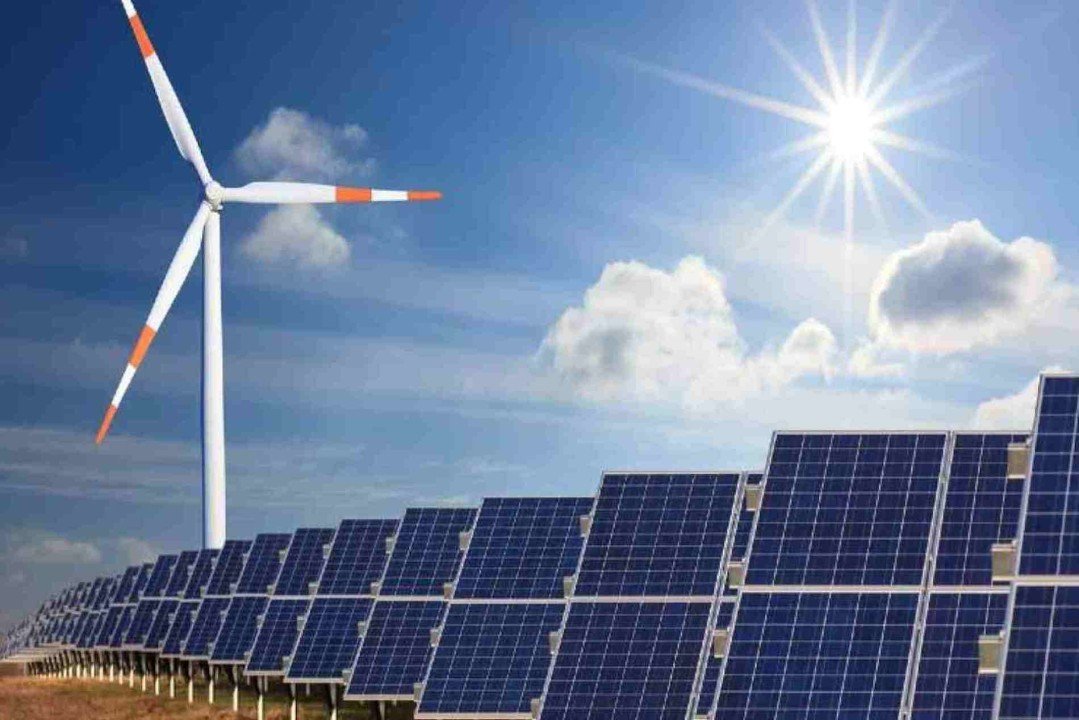
Africa, despite its pressing energy needs, is set to receive a mere 2% of the $2 trillion global clean energy investment projected for 2024, a recent report by the International Energy Association (IEA) reveals.
With clean energy investments worldwide expected to reach $2 trillion, Africa’s share amounts to approximately $40 billion, a fraction of the $110 billion anticipated for energy investments across the continent. Notably, a significant portion, around $70 billion, is earmarked for fossil fuel ventures, reflecting a lingering reliance on traditional energy sources.
This disparity is particularly concerning given Africa’s energy challenges, where over 600 million people lack access to electricity, and approximately 1 billion face inadequate access to clean cooking fuels. The continent’s energy investment, constituting 1.2% of GDP, trails behind the global average of 1.8%.
The IEA report underscores the urgency for Africa to substantially ramp up its energy investments. By 2030, the continent will require an estimated $200 billion annually to meet its energy and climate objectives, far exceeding current financing capabilities.
In contrast, global energy investments are poised for a historic surge, with the IEA’s World Energy Investment report projecting total energy investment to surpass $3 trillion for the first time in 2024. Of this sum, $2 trillion is designated for clean technologies, encompassing renewables, electric vehicles, nuclear power, grids, and storage solutions.
Leading the clean energy charge is China, with an anticipated investment of $675 billion, followed by Europe at $370 billion and the United States at $315 billion. Solar photovoltaic (PV) technologies are expected to attract substantial investment, reaching $500 billion in 2024, buoyed by declining solar module prices.
Despite the momentum towards clean energy, traditional sectors retain significance. Upstream oil and gas investments are poised for a 7% increase in 2024, reaching $570 billion, predominantly driven by national oil companies in the Middle East and Asia.
In addressing Africa’s energy deficit, the World Bank and the African Development Bank (AfDB) unveiled an ambitious plan during the World Bank/IMF spring meeting. The initiative aims to provide electricity access for 300 million Africans by 2030, requiring an estimated investment of $30 billion. Currently, 83% of the global population without electricity resides in Africa, a statistic the World Bank and AfDB aim to halve within the decade.
As Africa navigates the transition towards sustainable energy models, concerted global efforts are imperative to bridge the investment gap and propel the continent towards a greener, more energy-abundant future.
photo source: Google
By: Montel Kamau
Serrari Financial Analyst
7th June, 2024