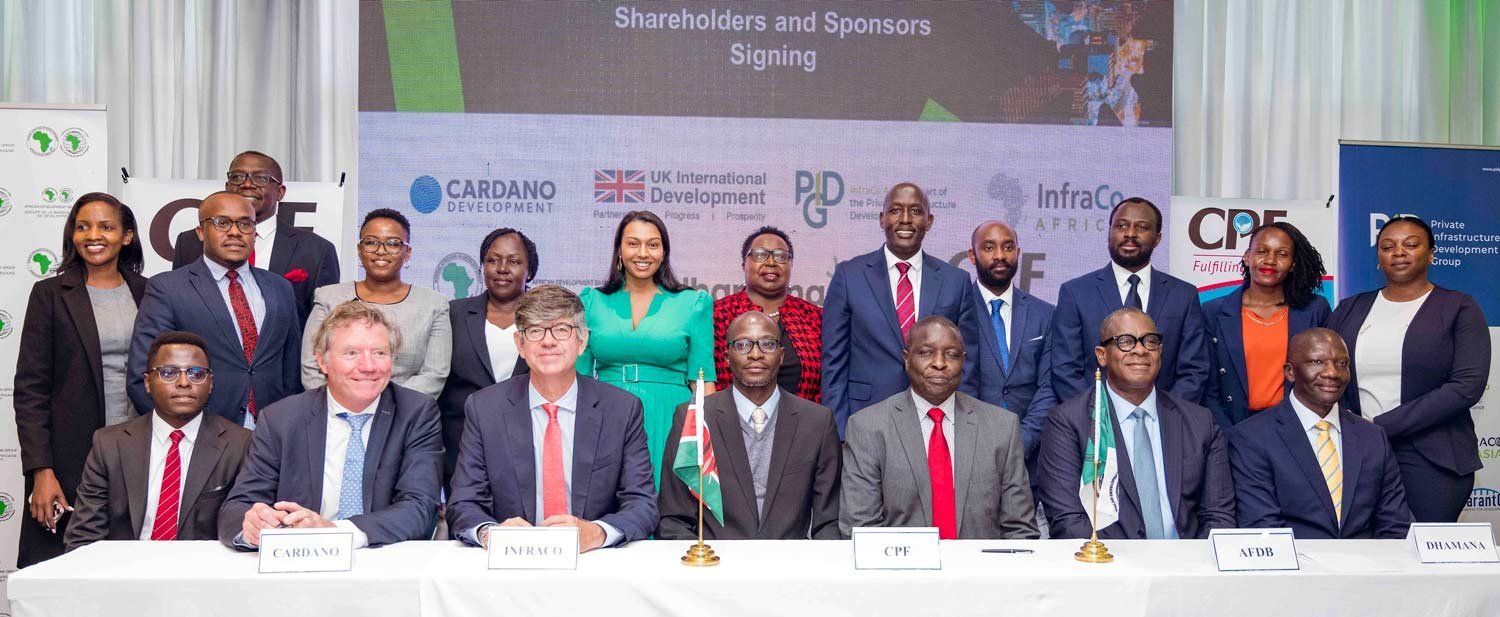
On September 30, 2024, the African Development Bank (AfDB) made a significant move in the infrastructure financing landscape by acquiring a $10 million equity stake in Kenya’s Dhamana Guarantee Company. This strategic investment follows an anchor investment by the UK-Government-backed Private Infrastructure Development Group (PIDG) through its subsidiary, InfraCo Africa. The signing ceremony took place in Nairobi, marking a significant step toward improving access to sustainable financing in East Africa.
Dhamana Guarantee Company: Enhancing Access to Financing for Key Sectors
Dhamana Guarantee Company is a Nairobi-based entity focused on providing guarantees that facilitate access to finance for businesses in crucial sectors like transport, water, renewable energy, and waste management. Its mission is to drive sustainable growth by offering credit guarantees, which will, in turn, attract private institutional investment into these vital sectors. The company also aims to play a key role in promoting green and sustainable financing across East Africa, making it a catalyst for regional development.
The AfDB’s investment is poised to significantly enhance Dhamana’s capacity to reduce the capital needed for projects, enabling businesses to gain access to affordable finance. This, in turn, will help achieve several of the Sustainable Development Goals (SDGs), including clean energy, sustainable cities, and infrastructure development.
The Role of the African Development Bank in Catalyzing Growth
Solomon Quaynor, the Vice President of Private Sector, Infrastructure & Industrialization at the African Development Bank, highlighted the importance of Dhamana in infrastructure financing. During the signing ceremony, Quaynor noted that the AfDB’s equity investment in Dhamana exemplifies the bank’s strategy to mobilize local currency financing through innovative credit enhancement models. “We intend to replicate this business model in other African markets in collaboration with partners such as PIDG,” Quaynor emphasized.
Quaynor also referenced the success of similar initiatives, such as Nigeria’s InfraCredit, which has shown the potential for credit enhancement companies to unlock local capital for infrastructure projects. This type of credit enhancement reduces the risks for investors by providing guarantees that facilitate access to long-term local currency funding. This is especially important in Africa, where access to affordable financing is often limited by high-interest rates and currency fluctuations.
Private Infrastructure Development Group: A Key Partner
The Private Infrastructure Development Group (PIDG), through its subsidiary InfraCo Africa, is a major player in the infrastructure investment landscape, focusing on unlocking private investment in sustainable projects across sub-Saharan Africa and Southeast Asia. PIDG’s CEO, Gilles Vaes, lauded Dhamana’s potential, noting that it builds upon the success of other credit enhancement facilities that PIDG has supported, particularly in Nigeria and Pakistan. These facilities have successfully mobilized private investment into infrastructure projects that address the climate crisis while promoting social and economic development.
Vaes noted, “Dhamana will engage new partners and investors to address the climate crisis and accelerate progress toward the UN Sustainable Development Goals.” The inclusion of climate-focused projects in Dhamana’s portfolio is a strategic move that aligns with global efforts to combat climate change and build resilient economies.
Building Local Capacity and Promoting Sustainable Growth
Dhamana CEO Christopher Olobo underscored the company’s mission to connect local institutional capital with East Africa’s real economy, particularly in the areas of green infrastructure and credit provision to businesses. With support from investors like AfDB, InfraCo Africa, CPF Financial Services, and Cardano Development, Dhamana aims to become a critical player in the region’s sustainable finance landscape.
Olobo highlighted that Dhamana’s guarantees will offer local investors opportunities to invest in projects that align with global climate goals, particularly those related to the Paris Agreement. “Dhamana’s local currency guarantees will make a tangible difference in people’s lives by reducing financial barriers for businesses that are delivering critical services like affordable housing, transportation, water, and energy infrastructure,” Olobo remarked.
Importance of Local Currency Guarantees in Infrastructure Financing
One of the standout features of Dhamana’s business model is its provision of local currency guarantees. This is crucial in a region like East Africa, where currency volatility can present significant risks to investors. By offering guarantees in local currency, Dhamana mitigates exchange rate risks, making it more attractive for both local and international investors to participate in infrastructure projects.
This model has already shown success in other markets, particularly Nigeria’s InfraCredit, which has mobilized domestic capital for infrastructure projects by providing local currency guarantees. The aim is to replicate this success in East Africa, starting with Kenya, and eventually expand to other countries in the region. By doing so, Dhamana will help unlock pools of untapped capital from institutional investors, such as pension funds and insurance companies, which have traditionally been hesitant to invest in infrastructure due to perceived risks.
Addressing the Infrastructure Gap in East Africa
The infrastructure gap in Africa remains one of the continent’s most pressing challenges. According to estimates by the African Development Bank, the continent needs between $130 billion and $170 billion annually to meet its infrastructure needs, with a current financing gap of $68 billion to $108 billion per year. This shortfall affects critical sectors such as transportation, energy, water, and sanitation, which are essential for economic growth and improving the quality of life for African citizens.
Dhamana’s focus on providing credit guarantees for projects in these key sectors is an important step toward addressing this gap. By reducing the financial risks associated with infrastructure investments, Dhamana will encourage more private sector participation, which is critical for closing the financing gap.
The Role of Institutional Investors in Infrastructure Development
One of the key objectives of Dhamana is to attract institutional investors, such as pension funds and sovereign wealth funds, into infrastructure projects. These investors often have large pools of capital that are well-suited for long-term investments like infrastructure, but they have traditionally been cautious due to the risks associated with such projects in emerging markets.
Dhamana’s credit guarantees will help de-risk these projects, making them more attractive to institutional investors. This aligns with the African Development Bank’s broader strategy of mobilizing financing from African institutional funds for infrastructure development. By doing so, Dhamana will not only help close the infrastructure financing gap but also create new investment opportunities for local institutions.
Conclusion
The African Development Bank’s $10 million equity investment in Dhamana Guarantee Company marks a significant milestone in the effort to unlock sustainable financing for infrastructure development in East Africa. By providing local currency guarantees, Dhamana will reduce the risks associated with infrastructure investments, making it easier for businesses to access the financing they need to deliver critical services. This, in turn, will contribute to the region’s economic growth and help achieve the Sustainable Development Goals.
With support from key partners like the Private Infrastructure Development Group, InfraCo Africa, and FSD Africa, Dhamana is well-positioned to become a leader in the East African sustainable finance space. Its innovative business model will not only enhance access to finance for businesses but also create new opportunities for local investors to participate in infrastructure projects that have a positive impact on the region’s economy and environment.
Photo source: Google
By: Montel Kamau
Serrari Financial Analyst
1st October, 2024