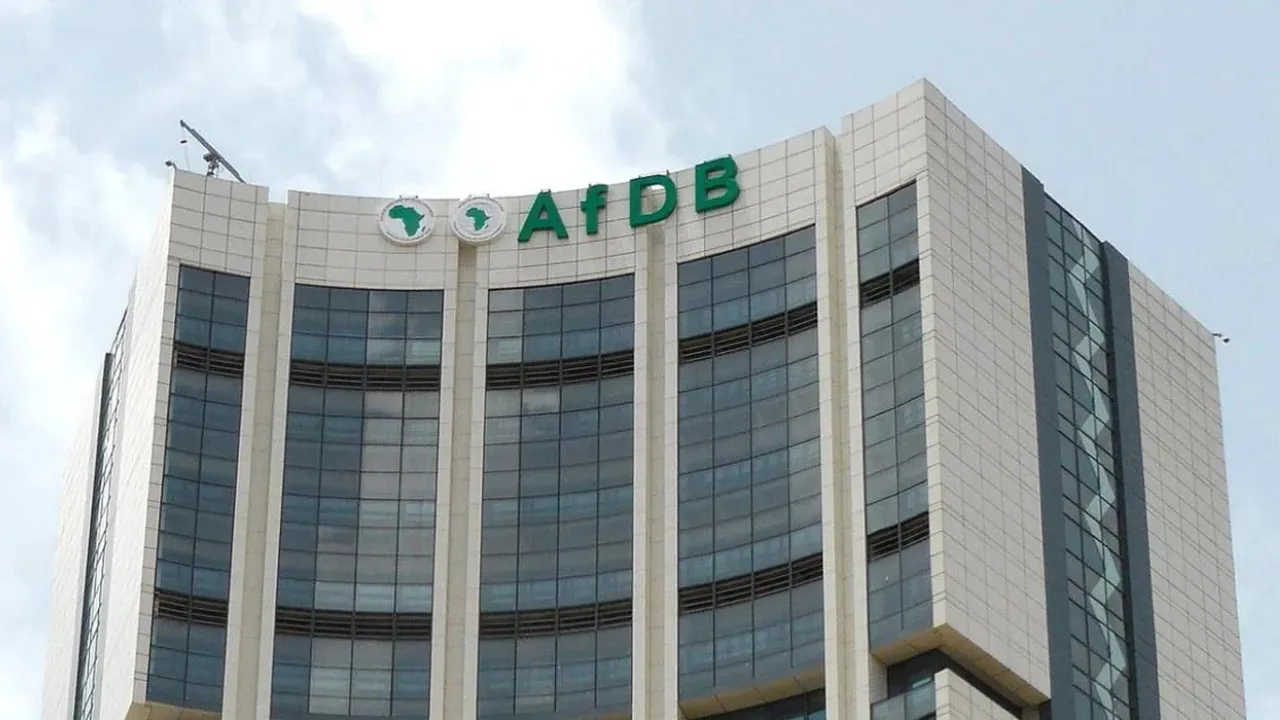
The African Development Bank Group (AfDB) has approved a €6.5 million investment in the Saviu II venture capital fund — a move that carries significance well beyond its headline figure. For a continent where early-stage venture capital remains alarmingly concentrated in four anglophone markets — Nigeria, Kenya, Egypt, and South Africa — this commitment represents a deliberate institutional attempt to redirect capital toward the chronically underserved Francophone corridor of West and Central Africa.
The decision, ratified by AfDB’s Board of Directors on February 27, 2026, at the Bank’s headquarters in Abidjan, structures the €6.5 million across two instruments: €4.5 million in direct equity and a €2 million first-loss hedging tranche deployed on behalf of the European Commission through the Boost Africa Programme. The fund is managed by Saviu Partners, a firm founded in 2018 that has built a track record as one of the few fully regulated independent venture capital managers focused exclusively on Francophone markets.
Build the future you deserve. Get started with our top-tier Online courses: ACCA, HESI A2, ATI TEAS 7, HESI EXIT, NCLEX-RN, NCLEX-PN, and Financial Literacy. Let Serrari Ed guide your path to success. Enroll today.
A Fund Built for a Neglected Region
Saviu Partners launched its first vehicle, Saviu I, in 2018 with €10 million in capitalisation, investing in 12 startups concentrated in French-speaking West Africa. Portfolio companies from that fund include Anka, Lapaire, Zanifu, and Paps — companies that reflect the kind of B2B-oriented, locally embedded businesses the manager prioritises. The second fund, Saviu II, is a material step up in both ambition and structure. It reached a €12 million first close in 2023 and a €25 million second close in early 2025, with institutional investors including the Dutch Good Growth Fund, Proparco, and AXIAN Investment. The fund is now targeting a final size of between €30 million and €50 million.
With the AfDB’s backing now formalised, Saviu II plans to invest between €500,000 and €3 million in approximately 20 startups with strong technological or digital components, primarily at the seed stage or during their first institutional fundraising round. At least 60% of the fund’s commitments are earmarked for French-speaking countries — Côte d’Ivoire, Cameroon, Benin, Senegal, Togo, Burkina Faso, and Mali. Current Saviu II portfolio companies include Julaya, Rubyx, Waspito, Workpay, and Userguest, pointing toward a consistent focus on B2B software, fintech infrastructure, and enterprise tools that digitise the regional economy from the ground up.
The fund is also licensed by the Mauritius Financial Services Commission, making it one of a small number of fully regulated independent VC managers focused on Francophone West Africa — a distinction that matters as institutional investors continue to scrutinise governance and regulatory standing before committing capital to frontier market funds.
The Structural Problem This Investment Is Trying to Solve
To understand why the AfDB’s move matters, it is necessary to look at the data on African venture capital distribution. According to the Mo Ibrahim Foundation’s 2025 analysis, Africa accounts for 18% of the global population and 5% of GDP, yet attracted just 0.6% of global venture capital in 2024. More troublingly, geographically, 84% of all 2024 VC funding on the continent flowed to just four countries: Nigeria, Kenya, South Africa, and Egypt.
Francophone markets, which collectively represent a substantial share of the continent’s population and economic output, have consistently lagged. In 2024, Francophone countries accounted for only 10% of total African VC investment, down from 15% in 2023, according to Partech Partners’ annual Africa tech venture capital report. While the Partech data for 2025 showed some improvement — with Francophone markets outside the top four capturing 68% of equity funding in the rest-of-Africa segment, up from 55% in 2024 — the absolute funding levels remain a fraction of what anglophone hubs attract.
The broader trend is one of stark concentration. A 2024 report by the African Private Capital Association (AVCA) found that local African investors are now the most active investor group, representing 31% of all investors — a maturation signal — but the dominance of the Big Four markets in absorbing larger ticket sizes has not fundamentally shifted. Startups in Francophone markets frequently access angel networks or informal capital, but struggle to bridge to the first institutional round that would allow them to scale into regional players.
This is precisely the gap — what many development finance practitioners call the “valley of death” between seed funding and Series A — that Saviu II is designed to navigate. The transition from pre-seed to first institutional fundraising is where the majority of Francophone African startups stall, unable to demonstrate the traction metrics that internationally oriented funds require and too small for the growth-stage capital that flows more readily to Lagos or Nairobi.
One decision can change your entire career. Take that step with our Online courses in ACCA, HESI A2, ATI TEAS 7, HESI EXIT, NCLEX-RN, NCLEX-PN, and Financial Literacy. Join Serrari Ed and start building your brighter future today.
How Blended Finance Unlocks Private Capital
The architecture of the AfDB’s investment reflects a deliberate use of blended finance tools that the development community has refined over the past decade. The €2 million first-loss tranche — mobilised through the Boost Africa Programme on behalf of the European Commission — is designed to absorb the initial losses on the fund’s riskiest positions. By doing so, it improves the risk-return profile of the remaining capital, making the fund more attractive to institutional limited partners who would otherwise perceive frontier market venture as too speculative.
The Boost Africa Programme, a joint initiative between the AfDB and the European Investment Bank (EIB), was launched in 2016 and has previously supported funds including Partech Africa and TLcom Capital using similar structures. By the end of 2023, the programme had invested €88 million and mobilised close to €400 million in new investment, supporting an estimated 15,000 jobs across the continent. The overall programme targets a leverage ratio that would convert public first-loss capital into more than €1 billion in downstream investment through financial intermediaries.
Critically, the Boost Africa model has a measurable track record: 94% of founders backed through the initiative have raised over $1 million in follow-on capital, signalling that the blended structure is not merely a subsidy mechanism but an effective pipeline for commercially viable businesses. For Saviu II, the AfDB’s participation as a limited partner — the first major venture commitment under new AfDB president Sidi Ould Tah, who succeeded Akinwumi Adesina — also carries institutional credibility that can unlock further capital from commercial investors who follow development finance institution signals.
Cross-Regional Integration and the AfCFTA Dimension
One of the more strategically interesting features of Saviu II is its co-investment mandate for East African startups. The fund has signalled its intent to back technology companies headquartered outside Francophone markets — including East African firms — on the condition that they establish a physical and operational presence in Francophone countries. This is an explicit attempt to accelerate cross-regional expansion of business models that have proven viable in one linguistic market but have struggled to replicate across the Francophone-Anglophone divide.
The rationale aligns with the broader ambitions of the African Continental Free Trade Area (AfCFTA), which seeks to lower trade barriers across 55 member states. Digital logistics platforms, payment infrastructure, and enterprise SaaS tools are among the most natural candidates for pan-African expansion — they often require limited physical infrastructure and can be adapted to new markets through localisation rather than wholesale product rebuilding. By incentivising East African startups to plant flags in Abidjan, Dakar, or Douala, Saviu II is effectively functioning as a market-integration vehicle as much as a financial instrument.
For economies operating within the CFA franc zone, the arrival of a scaled B2B tech sector would deliver compounding benefits. Digital payment platforms reduce the friction of informal commerce and expand the taxable base; supply chain and logistics tools improve the efficiency of agricultural value chains that remain foundational to CFA zone GDP; and HR and compliance software can help the growing number of SMEs in the region formalise their operations and access credit from the banking sector. Each of these effects, in aggregate, reduces reliance on primary commodity exports — increasingly vulnerable to global price volatility and climate disruption — as the dominant driver of government revenues.
A Larger Ecosystem Still Under Construction
The Saviu II commitment is significant, but it arrives in a context where the broader ecosystem constraints remain formidable. Infrastructure gaps — in broadband access, reliable electricity, and digital payment rails — continue to impose real costs on startups in many Francophone markets. Regulatory fragmentation across the CEMAC and UEMOA economic blocs means that a business operating in Côte d’Ivoire faces meaningfully different compliance requirements in Cameroon, even though both countries use the CFA franc. These are problems that venture capital alone cannot solve.
What institutional capital at the Saviu II level can do is create successful reference cases. The African venture capital market contracted sharply between 2022 and 2024, with deal value falling 28% year-on-year in 2024 as global interest rates tightened and international investors pulled back. The recovery in 2025 — with total equity funding rising to approximately $2.4 billion — showed that capital does return when risk-adjusted returns are credible. The challenge for Francophone markets is to generate the exits and the scale-up stories that reset investor perception.
Saviu I’s portfolio companies, which received hands-on support in business development, recruitment, international expansion, and fundraising alongside capital, provide a template. The manager’s model as an active minority investor, co-investing with local incubators and studios to build deal flow, is designed to produce businesses that can absorb the follow-on capital that Series A and B investors provide — precisely the segment where the Mo Ibrahim Foundation’s research found the deepest structural scarcity.
The AfDB’s decision to anchor Saviu II is therefore both a financial and a signalling intervention. It tells commercial investors — including development finance institutions from Europe, the Gulf, and Asia who are actively exploring African allocations — that a regulated, experienced manager with a proven thesis exists and has institutional backing. In markets where information asymmetry and first-mover hesitation are as much of a barrier as actual risk, that signal is itself a form of capital. If Saviu II deploys its target of €30–50 million, the resulting ecosystem infrastructure — networks of incubators, a pipeline of investable companies, and a cohort of founders with institutional fundraising experience — would outlast any single fund cycle and begin to close the gap that has kept Francophone Africa on the margins of the continent’s own innovation story.
Ready to take your career to the next level? Join our Online courses: ACCA, HESI A2, ATI TEAS 7 , HESI EXIT , NCLEX – RN and NCLEX – PN, Financial Literacy!🌟 Dive into a world of opportunities and empower yourself for success. Explore more at Serrari Ed and start your exciting journey today! ✨
Track GDP, Inflation and Central Bank rates for top African markets with Serrari’s comparator tool.
See today’s Treasury bonds and Money market funds movement across financial service providers in Kenya, using Serrari’s comparator tools.
photo source: Google
By: Montel Kamau
Serrari Financial Analyst
6th March, 2026