💡 Quick Answer:
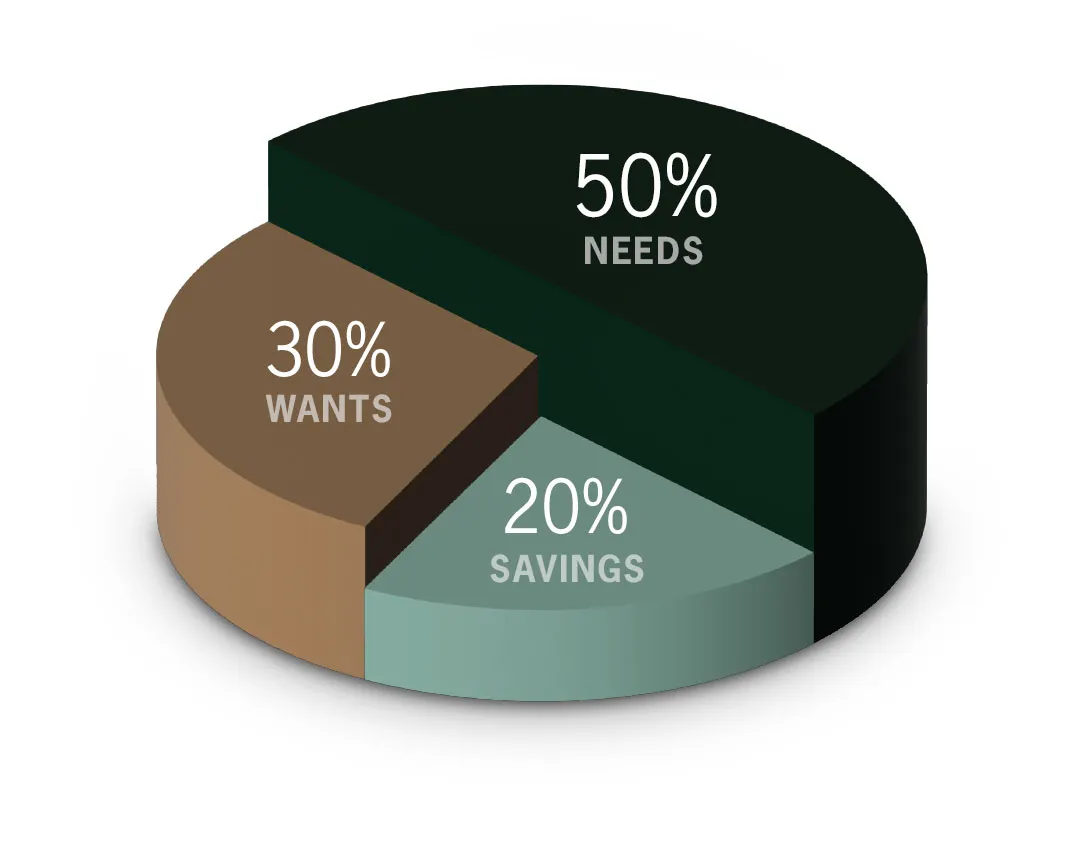
The 50-30-20 rule is a simple budgeting method where you divide your income into three parts:
- 50% for Needs (essential expenses)
- 30% for Wants (lifestyle spending)
- 20% for Savings and Investments
This rule helps you control spending, build savings, and avoid debt.
Imagine This
You earn:
💰 KSh 60,000 per month
Using the 50-30-20 rule, your money could be divided like this:
| Category | Percentage | Amount |
| Needs | 50% | KSh 30,000 |
| Wants | 30% | KSh 18,000 |
| Savings & Investments | 20% | KSh 12,000 |
This simple structure makes budgeting easier.
1️⃣ 50% – Needs (Essential Expenses)
Needs are things you must pay for to live and work.
Examples in Kenya include:
- rent
- food
- transport
- electricity and water
- school fees
- healthcare contributions such as Social Health Authority payments
Example:
| Expense | Example Amount |
| Rent | KSh 18,000 |
| Food | KSh 7,000 |
| Transport | KSh 3,000 |
| Utilities | KSh 2,000 |
Total needs:
💰 KSh 30,000
2️⃣ 30% – Wants (Lifestyle Spending)
Wants are things that improve your lifestyle but are not essential.
Examples include:
- eating out
- entertainment
- shopping
- travel
- subscriptions
Example:
| Spending | Example Amount |
| Eating out | KSh 4,000 |
| Shopping | KSh 5,000 |
| Entertainment | KSh 3,000 |
| Travel | KSh 6,000 |
Total wants:
💰 KSh 18,000
3️⃣ 20% – Savings and Investments
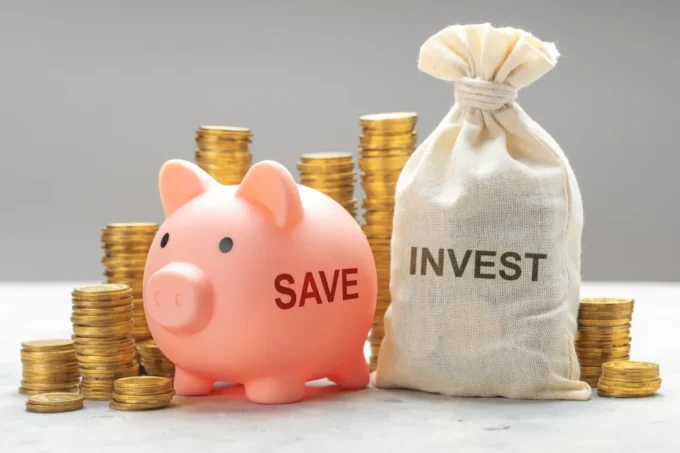
This portion goes toward building your financial future.
Examples include:
✔ emergency fund
✔ savings accounts
✔ money market funds
✔ retirement savings such as contributions to National Social Security Fund
Example:
| Saving Option | Amount |
| Emergency fund | KSh 5,000 |
| Investments | KSh 5,000 |
| Retirement savings | KSh 2,000 |
Total savings:
💰 KSh 12,000
Why the 50-30-20 Rule Works
This rule works because it:
✔ keeps spending under control
✔ ensures you save consistently
✔ balances needs and lifestyle choices
It is simple enough for beginners to follow.
Adjusting the Rule for Kenyan Salaries
Sometimes expenses such as rent may take a larger portion of income.
If that happens, you can adjust the rule slightly.
Example:
| Category | Possible Adjustment |
| Needs | 55–60% |
| Wants | 20–25% |
| Savings | 15–20% |
The key idea is consistent saving and controlled spending.
Example Budget
Imagine someone earning:
💰 KSh 80,000
Their budget could look like this:
| Category | Amount |
| Needs | KSh 40,000 |
| Wants | KSh 24,000 |
| Savings | KSh 16,000 |
Over a year, saving KSh 16,000 per month equals:
💰 KSh 192,000
Tips for Applying the Rule Successfully
✔ track your monthly expenses
✔ automate savings where possible
✔ reduce unnecessary spending
✔ review your budget regularly
Small adjustments can significantly improve financial stability.
Frequently Asked Questions
Does the 50-30-20 rule work for small salaries?
Yes. Even small savings can build financial security over time.
Should savings always be 20%?
If possible, yes. But even 10–15% is a good starting point.
Where should savings be kept?
Savings can be placed in accounts or investments depending on financial goals.
Final Thoughts
The 50-30-20 rule is one of the simplest ways to manage money.
By dividing income into needs, wants, and savings, individuals can build financial discipline and work toward long-term financial security.
Quick Tip
Try applying the 50-30-20 rule for one month and adjust it based on your real spending habits.
Photo Source: Google