

The $2 trillion private credit market is enduring its most significant stress test since the post-2008 expansion, as Morgan Stanley, BlackRock, and JPMorgan Chase each took extraordinary defensive action within weeks of one another in early 2026. While some observers are sounding alarms about the structural integrity of the asset class, industry insiders argue that the so-called “gating” of redemptions is functioning exactly as designed—a built-in stabilizer, not a sign of collapse.
Markets move fast; don’t get left behind. We’ve paired the Serrari Group Market Index with a curated Marketplace and a comprehensive Financial Literacy Course to ensure you have the data—and the skills—to act on it.
Morgan Stanley’s North Haven Fund: A Liquidity Dam Under Pressure
The latest flashpoint came when Morgan Stanley became the most recent Wall Street institution to cap investor withdrawals. According to a regulatory filing, investors sought to pull approximately 10.9% of outstanding shares from the firm’s $7.8 billion North Haven Private Income Fund (PIF) in the first quarter of 2026—equivalent to roughly $369 million.
Adhering to its pre-established 5% quarterly redemption cap, the fund returned only $169 million to shareholders, fulfilling just 45.8% of all requests. The bank defended the move as a structural necessity, stating it was designed to protect long-term investors from a “fire sale” of illiquid assets at distressed valuations.
This was not an isolated stumble. Pressure had been accumulating since late 2025, as rising interest rates and a slowdown in corporate earnings began squeezing mid-market borrowers—the backbone of most private credit portfolios. Morgan Stanley shares tumbled 4.1% on the day the filing became public, one of the sharpest single-day declines for the firm in months.
BlackRock’s HLEND Fund: The First Breach of Its Kind
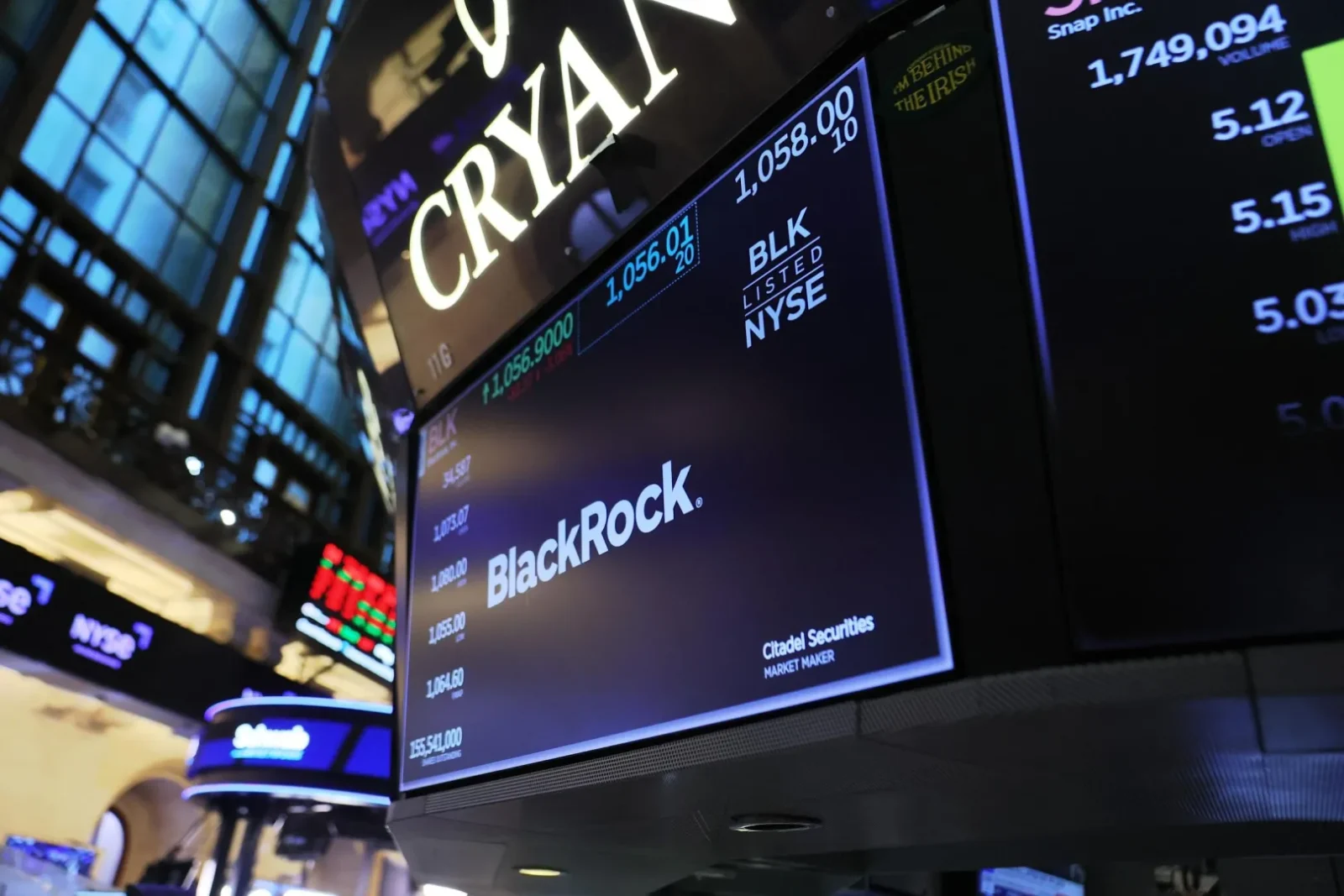
The gating wave at Morgan Stanley followed a similar—and arguably more consequential—move by BlackRock just days earlier. On March 6, 2026, the world’s largest asset manager disclosed that it was limiting withdrawals from its flagship $26 billion HPS Corporate Lending Fund (HLEND) after investors submitted redemption requests totaling 9.3% of the fund’s net asset value—nearly double the allowed quarterly threshold.
HLEND approved $620 million in redemptions out of the roughly $1.2 billion requested. The move was historic: it marked the first time in the fund’s history that withdrawal requests had breached the 5% cap since its inception. HLEND, a non-traded business development company (BDC), was acquired by BlackRock as part of its $12 billion purchase of HPS Investment Partners in 2024 and is designed primarily for wealthy individual investors seeking exposure to direct private lending.
BlackRock framed the restriction as a “foundational” feature of the investment vehicle. In a shareholder letter, HLEND stated that the 5% cap exists to prevent “a structural mismatch between investor capital and the expected duration of the private credit loans in which HLEND invests.” Evercore ISI analyst Glenn Schorr echoed that logic, writing in a note that HPS’s decision to hold the line at 5% “preserves the integrity of non-traded vehicles” and protects the fund from becoming a forced seller of assets.
BlackRock’s shares fell as much as 8.3% on the day of the announcement, while stocks of rival alternative asset managers including KKR, Ares Management, and Carlyle Group also plunged, amid their worst start to a year in a decade.
Despite the redemption shock, HLEND continued to post strong underlying metrics. Since launching four years ago, the fund has generated a 10.7% annualized total net return and ranked first among peers in three-year total return as of December 31, 2025. Some 96% of HLEND’s portfolio consists of first-lien senior secured debt with a weighted average loan-to-value ratio of 39%.
A Pattern Across the Industry
The BlackRock and Morgan Stanley moves did not happen in a vacuum. A wave of similar pressures has swept across the private credit landscape in recent months:
- Blackstone temporarily raised the redemption limit on its $82 billion credit fund from 5% to 7% and injected $400 million of firm and employee capital to meet a record $3.8 billion in Q1 withdrawal requests.
- Blue Owl Capital permanently froze redemptions on its $1.6 billion OBDC II fund in February 2026, effectively locking retail investors in.
- Cliffwater LLC became the latest firm affected when redemption requests from its $33 billion flagship fund exceeded 7% in Q1, following the wave of demand seen at BlackRock, Blackstone, and Blue Owl.
Greggory Warren, senior stock analyst at Morningstar, told Reuters that BlackRock’s actions “should serve as a warning sign for the industry and the rulemakers about the downside of illiquid funds for retail investors.” The events of the past several months, he noted, represent a fundamental shift in how individual investors are perceiving the asset class.
JPMorgan Tightens the Grip on Software Loans
Beyond fund-level restrictions, the tremors have now reached the financing infrastructure that underpins the entire private credit industry. JPMorgan Chase—the largest U.S. bank by assets—has begun marking down the value of certain loans in the portfolios of private credit funds, specifically those tied to software companies, and is restricting how much it will lend against that collateral.
Wall Street banks like JPMorgan act as so-called “back-leverage” providers—they lend money to private credit funds using the funds’ loan portfolios as collateral. By reducing the assessed value of software company loans, JPMorgan is effectively curtailing borrowing capacity for a critical cohort of fund managers, adding a second layer of pressure to an industry already grappling with retail redemption surges.
According to a Moody’s Ratings report based on Federal Reserve data, Wall Street banks had extended approximately $300 billion in financing to private credit funds as of late June 2025. JPMorgan alone carried $22.2 billion in exposure to the sector. The bank reviewed its portfolio name by name, sector by sector, and assigned steeper markdowns to loans with underlying software exposure. JPMorgan CEO Jamie Dimon publicly flagged the shift at the bank’s leveraged finance conference, telling investors that the bank was becoming more prudent when lending against software assets.
Crucially, unlike most of its rivals, JPMorgan had reserved the contractual right to revalue private credit assets at any time—without needing a discrete trigger such as a missed payment—making it an outlier with unusual preemptive flexibility. The markdowns have not triggered material margin calls so far, according to sources cited by Bloomberg, but the symbolic weight of the move cannot be understated.
Context is everything. While you follow today’s updates, use the Serrari Market Index and Marketplace to spot emerging shifts. Need to sharpen your edge? Our Financial Literacy Course turns these insights into a professional-grade strategy.
The AI Disruption at the Core of the Crisis
Understanding why software loans have become the pressure point requires context. Over the past decade, enterprise software companies became among the most prized borrowers in private credit, thanks to their recurring revenue models and relatively predictable cash flows. That calculus has shifted dramatically.
The rapid advancement of generative AI throughout 2025 has disrupted many traditional software business models. Analysts estimate that between 15% and 25% of many private credit portfolios are tied to software firms that now face existential competitive threats from AI-first startups—raising fears about their ability to service high-interest debt loads.
HLEND itself disclosed that roughly 19% of its portfolio is exposed to software companies, a sector that has faced aggressive selling pressure as investors fear disruption from AI-driven competitors. These fears have been compounded by several high-profile credit events: in late 2025, auto parts supplier First Brands Group and subprime auto lender Tricolor both filed for bankruptcy, the latter amid federal charges of systematic fraud.
The Default Picture and the “Shadow Default” Problem
Official default figures remain relatively contained—but critics argue they conceal deeper fragility. In January 2026, Proskauer released its latest Private Credit Default Index, which tracked a default rate of 2.46% for senior-secured and unitranche loans in Q4 2025, up from 1.84% in Q3 and 1.76% in Q2 of that year.
But those headline figures may significantly undercount true distress. A growing body of analysis points to the proliferation of “payment-in-kind” (PIK) debt arrangements—where borrowers are permitted to defer cash interest payments by rolling them into the loan balance—as a mechanism that can mask genuine credit deterioration. Under European banking standards, converting cash interest to PIK would constitute a default event. Many U.S. private credit managers do not treat it the same way, creating a significant divergence in how stress is measured and reported.
Proskauer’s index, for instance, does not include PIK-related amendments in its default calculations. Lincoln International’s equivalent default rate—which does include PIK amendments—jumps to 6% under that methodology. With PIK debt usage exceeding 6% across the industry, the actual health of these portfolios may be materially worse than headline figures suggest.
The “Stabilizer” Argument: Crisis or Structural Feature?
Despite the alarm, a number of seasoned credit market veterans argue that the gating mechanism is functioning precisely as intended—and that the alternative would be far more damaging.
John Cocke, deputy chief investment officer of credit at Corbin Capital Partners, put it plainly in comments to Bloomberg: “You cannot create liquidity from an illiquid asset class.” His argument underscores a fundamental tension in how private credit funds have been marketed to retail investors—offering periodic liquidity windows on investments that are structurally designed for multi-year horizons.
Louis Navellier, CIO of Navellier & Associates, echoed this view, noting that the BlackRock 5% quarterly redemption limit “is written into the Private Credit fund’s charter” as a deliberate long-term value protection mechanism. He added that anticipated Federal Reserve rate cuts should ease pressure on variable-rate loans, making a worst-case scenario of 15% default rates unlikely.
John Murillo, Chief Business Officer of B2BROKER, offered a broader market perspective: in the current environment, the redemption cap “functions less as a barrier and more as a stabilizer” for the private credit market as a whole—a structural dampener that prevents a cascade of forced asset sales.
The Global Rotation: Emerging Markets Fill the Void
As U.S. private credit faces its most severe scrutiny in years, capital flows are beginning to tilt toward markets perceived as offering better risk-adjusted yields without the same liquidity mismatches. India, in particular, has emerged as a standout destination.
Indian alternative asset manager 360 ONE Asset closed its fifth vintage private credit strategy in March 2026, raising total commitments of approximately $400 million—equivalent to ₹3,500 crore. The fund drew capital from a diversified pool including pension funds, insurance companies, family offices, and high-net-worth individuals. With this closing, 360 ONE Asset’s private credit platform now manages approximately ₹15,200 crore ($1.7 billion) in assets.
Aakash Desai, the firm’s CIO and Head of Private Credit, described India’s private credit market as being “at a structural inflection point, supported by strong economic growth, increasing formalisation of capital, and rising demand for flexible financing solutions.” For global investors looking for yield premiums with strong covenant protections, India’s underpenetrated credit market increasingly offers an attractive alternative to the increasingly constrained U.S. landscape.
Navellier has separately described the U.S. economy as an “oasis” relative to global peers, but acknowledges that the stress in private credit is real, and that investors should watch default rates closely through the rest of 2026.
What Comes Next
The central question facing the $2 trillion private credit market is whether the current liquidity stress is a temporary episode or the opening act of a more structural repricing.
The bull case holds that the quarterly redemption caps are performing their intended function, that underlying loan performance remains resilient in most categories, and that anticipated rate cuts will reduce the debt service burden on mid-market borrowers. HLEND, for instance, reported that its portfolio companies recorded 15% EBITDA growth over the past year—evidence, the fund argues, that underlying credit quality is intact.
The bear case centers on the concentration of software loans, the opacity of PIK-adjusted default rates, and the risk that retail investor confidence—once lost—proves difficult to restore. A $162 billion maturity wall looms across private credit in 2026, as loans originated during the low-interest-rate era come due for refinancing at materially higher costs.
The Q2 2026 redemption data across major BDCs will be the definitive tell. If withdrawal requests continue to outpace the 5% quarterly caps, a prolonged gating regime could take hold—triggering a repricing of the entire asset class and a fundamental reassessment of how illiquid private credit products are marketed to retail investors.
For now, the message from Wall Street’s largest credit managers is consistent and unambiguous: the exit is narrow, the queue is long, and the structural rules of the road have not changed—even if the road itself has become significantly more treacherous.
Don’t just read the news—navigate it. Track trends with the Serrari Group Market Index, discover your next move in the Serrari Marketplace, and master the “how” with our Financial Literacy Course.
photo source: Google
By: Montel Kamau
Serrari Financial Analyst
16th March, 2026