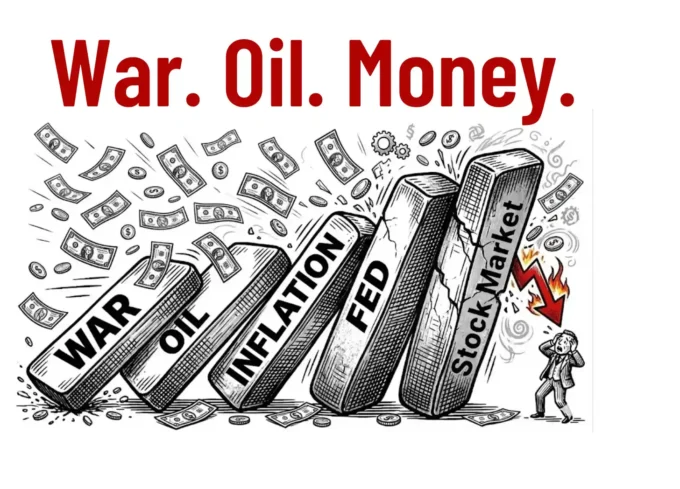

The foreign exchange markets have entered a period of unprecedented activity and volatility, marking a dramatic shift in how international capital flows and currency values respond to policy changes. According to the World Economic Forum’s latest financial analysis, daily currency turnover reached a historic high of $9.6 trillion in April 2025, representing a substantial 28% increase compared to trading volumes recorded in 2022. This extraordinary surge in forex activity reflects the profound impact of evolving trade policies and mounting geopolitical uncertainties on global markets.
Build the future you deserve. Get started with our top-tier Online courses: ACCA, HESI A2, ATI TEAS 7, HESI EXIT, NCLEX-RN, NCLEX-PN, and Financial Literacy. Let Serrari Ed guide your path to success. Enroll today.
The fundamental drivers behind this unprecedented volatility are rooted in significant policy shifts that have reshaped international commerce and investment patterns throughout 2025 and into 2026. The implementation of tariff-related restrictions and trade barriers has disrupted traditional supply chain networks and created substantial uncertainty regarding future business operations and profitability. Market participants have responded by intensifying their hedging activities and adjusting currency exposure to manage exposure to these potential economic disruptions. The resulting increase in trading volume demonstrates how interconnected global financial systems have become and how quickly markets react to perceived threats to international trade.
Despite the heightened volatility and trading activity, the U.S. dollar has maintained its position of dominance in global currency markets, accounting for 89% of all daily forex transactions. This overwhelming market share underscores the continued reliance of international financial institutions and investors on the dollar as a medium of exchange, unit of account, and store of value. The dollar’s dominance reflects not only its historical importance but also the depth and liquidity of dollar-denominated markets, which remain unmatched by any alternative currency. However, this concentration raises important considerations about global financial stability and the resilience of currency markets to shocks originating in the United States.
Central bank policies have played a crucial role in shaping currency market dynamics throughout 2025 and 2026. The Federal Reserve’s approach to monetary policy has included three rate cuts during 2025, which influenced investment flows and currency valuations across multiple markets. The Fed’s signaling of its future policy intentions has created ripple effects throughout global capital markets, as international investors adjust their portfolios in response to changing interest rate differentials between countries. When U.S. interest rates fall relative to other major economies, the relative attractiveness of dollar-denominated assets may decrease, potentially supporting demand for alternative currencies.
The European Central Bank and other regional monetary authorities have maintained different policy trajectories, creating divergent interest rate environments that influence currency trading patterns. The ECB’s cautious approach to monetary easing has helped support the euro despite economic headwinds affecting the eurozone. These policy differences between major central banks create persistent interest rate differentials that motivate currency traders to constantly reallocate capital in search of the highest risk-adjusted returns. The magnitude of these rate differentials has in some cases reached historically wide levels, intensifying pressure on currency markets.
Emerging market currencies have experienced considerable volatility as global financial conditions have shifted throughout 2025 and into early 2026. The relationship between developed market interest rates and emerging market currency performance remains one of the most important dynamics shaping international capital flows. When developed economy central banks maintain higher interest rates, capital tends to flow out of emerging markets toward higher-yielding developed market assets, placing downward pressure on emerging currency values. Conversely, when rate differentials narrow, emerging markets often attract renewed investor interest and currency appreciation pressure.
The cryptocurrency sector has emerged as an increasingly important component of global currency markets, particularly as institutional adoption accelerates. While cryptocurrencies remain a relatively small portion of total daily forex volumes, their growth trajectory and correlation with macroeconomic policy have become more pronounced. The interaction between traditional forex markets and digital asset markets has created new transmission channels for policy impacts and market shocks to propagate throughout the financial system. Some market observers suggest that cryptocurrency volatility may exacerbate broader currency market instability during periods of heightened economic uncertainty.
Looking forward to 2026, the outlook for global currency markets depends critically on the resolution of current trade policy uncertainties and the path of monetary policy across major economies. Market participants anticipate that continued policy clarity regarding tariff structures and international trade agreements would help reduce forex volatility from current elevated levels. However, the persistence of geopolitical tensions and the potential for additional policy surprises suggest that currency markets may remain volatile throughout 2026. Central bank communication and forward guidance have become increasingly important tools for managing market expectations and reducing unnecessary currency fluctuations.
The implications of elevated forex volatility extend beyond currency traders and international investors to affect multinational corporations, international travelers, and developing economy governments. Companies with significant international operations face heightened uncertainty regarding their future foreign currency earnings and costs, which can complicate planning and budgeting decisions. International travelers and workers remitting money home face less predictable exchange rates that can meaningfully impact the value of their transactions. Developing country central banks managing reserves denominated in multiple currencies face challenges in maintaining stable purchasing power across different reserve components.
The structural evolution of global currency markets continues to incorporate new participants and trading mechanisms that influence price discovery and market efficiency. High-frequency trading algorithms and automated execution platforms have increased the speed at which information is incorporated into currency prices, sometimes amplifying price movements in both directions. The participation of asset managers, hedge funds, and other sophisticated investors alongside traditional banks has diversified the composition of market participants but potentially increased the potential for momentum-driven price movements. Understanding these structural changes remains essential for policymakers tasked with monitoring financial stability.
As global economies navigate the complexities of 2026, the foreign exchange markets will likely continue serving as sensitive indicators of evolving economic conditions and policy expectations. The historically high turnover rates observed in recent months suggest that market participants remain engaged and ready to adjust positions as new information becomes available. The challenge for policymakers and financial regulators is to ensure that currency market dynamics support rather than hinder the adjustment of current account imbalances and the efficient allocation of global capital across borders. Maintaining stable but flexible currency markets will remain an important objective for central banks and financial authorities throughout 2026.
One decision can change your entire career. Take that step with our Online courses in ACCA, HESI A2, ATI TEAS 7, HESI EXIT, NCLEX-RN, NCLEX-PN, and Financial Literacy. Join Serrari Ed and start building your brighter future today.
The specific trading patterns observed in major currency pairs have revealed important information regarding investor expectations and market sentiment shifts. The euro-dollar exchange rate has remained particularly sensitive to interest rate differential expectations and economic growth differentials between the eurozone and the United States. When U.S. interest rates decline relative to ECB rates, investors typically reduce their euro-dollar short positions and support euro appreciation. Conversely, when eurozone economic data disappoints, investors typically shift toward dollar strength reflecting safety-in-crisis dynamics. The relationship between these macroeconomic variables and currency movements has become increasingly important for international investors managing multi-currency portfolios and seeking to optimize returns across different currency exposures.
The Japanese yen has maintained its traditional role as a safe-haven currency during periods of elevated global risk and uncertainty. When equity market volatility increases or when concerns regarding global growth intensify, international investors typically shift capital toward yen-denominated assets, supporting yen appreciation. The Bank of Japan’s maintenance of extremely low interest rates has created challenges for yen appreciation as interest rate differentials have attracted carry trade activity that suppresses yen strength. However, during periods when risk appetite declines sharply, the safe-haven characteristics of the yen have overcome the interest rate differentials and supported sustained yen appreciation. The balance between these competing forces has created important implications for Japanese exporters and the broader Japanese economy.
Emerging market currency performance has diverged substantially based on the specific economic circumstances and policy frameworks within different countries. Currencies from economies with strong fiscal positions, commodity export strength, or valuable natural resources have outperformed currencies from more vulnerable economies. The Central Bank of Brazil’s management of the Brazilian real has been complicated by the combination of inflation pressures and growth concerns creating divergent pressures on currency valuations. The Indian rupee has experienced periods of strength and weakness reflecting India’s solid growth prospects offset by periodic current account concerns and capital flow volatility. The diversity of emerging market currency performance emphasizes the importance of country-specific analysis rather than broad generalizations regarding emerging market currencies as a single asset class.
The relationship between commodity prices and currency valuations has remained important structural driver of foreign exchange markets. Countries that are substantial commodity exporters have experienced currency strength when commodity prices surge, reflecting improved terms of trade and economic fundamentals. Conversely, when commodity prices decline, commodity-exporting countries often experience currency weakness as export revenues decline and capital flows shift toward alternative opportunities. The crude oil market dynamics in particular have maintained important influence over currencies from petroleum-exporting countries including Russia, Mexico, and the Middle Eastern economies. The stable oil price environment in 2026 has created more predictable currency conditions for commodity-exporting countries compared to periods of extreme commodity price volatility.
The role of central bank intervention in currency markets has evolved throughout 2025 and into 2026, with some central banks becoming more active in managing currency valuations while others have adopted more passive approaches. The Swiss National Bank has periodically intervened in forex markets to prevent excessive currency appreciation that might undermine Swiss export competitiveness. The Bank of Japan has remained vigilant regarding yen appreciation that might impact Japanese export sectors. Conversely, the Federal Reserve has generally avoided active intervention in currency markets, instead allowing monetary policy to influence currency valuations through interest rate differentials and capital flow effects. The variation in central bank intervention approaches reflects different economic priorities and structural characteristics of different economies.
The implications of forex market dynamics for multinational corporations have remained substantial throughout 2025 and into 2026. Companies with significant international operations have experienced earnings volatility stemming from currency movements affecting the translation of foreign-currency denominated earnings back into home currency. Some multinational corporations have implemented sophisticated hedging programs designed to stabilize earnings from currency fluctuations, while others have accepted currency volatility as an inevitable component of international business operations. The hedging decisions made by multinational corporations have created important demand for currency derivatives and forward contracts, supporting active functioning of derivatives markets. The relationship between corporate hedging demand and currency volatility has created important feedback dynamics affecting currency markets.
The inflation implications of currency movements have received increasing attention from policymakers and market participants throughout 2025. In economies with substantial import dependence, currency depreciation can translate into imported inflation as the domestic currency cost of imported goods increases. The ECB has monitored exchange rate developments carefully, recognizing that excessive euro depreciation could import inflation into the eurozone. The Federal Reserve has similarly acknowledged that dollar depreciation could support inflation through the import channel. The inflation transmission mechanisms from currency movements have created important constraints on central bank policy flexibility and raised questions regarding the appropriate policy responses to currency fluctuations.
The long-term equilibrium exchange rates remain important reference points for evaluating whether current currency valuations represent temporary deviations or sustainable equilibrium levels. Economists have proposed various frameworks for assessing equilibrium exchange rates including purchasing power parity, real exchange rates adjusted for productivity differences, and current account sustainability approaches. The divergence between current market exchange rates and theoretical equilibrium levels has suggested that some currencies may be overvalued while others may be undervalued. However, the persistence of these deviations over extended time periods has challenged simple equilibrium assumptions and suggested that exchange rate dynamics involve complex interactions between supply and demand forces that may take many years to fully resolve.
Ready to take your career to the next level? Join our Online courses: ACCA, HESI A2, ATI TEAS 7 , HESI EXIT , NCLEX-RN and NCLEX-PN, Financial Literacy! 🌟 Dive into a world of opportunities and empower yourself for success. Explore more at Serrari Ed and start your exciting journey today! ✨
Track GDP, Inflation and Central Bank rates for top African markets with Serrari’s comparator tool.
See today’s Treasury bonds and Money market funds movement across financial service providers in Kenya, using Serrari’s comparator tools.
Photo Source: Google
By: Montel Kamau
Serrari Financial Analyst
9th March, 2026