Crypto Faces Its First Real Test of the Week
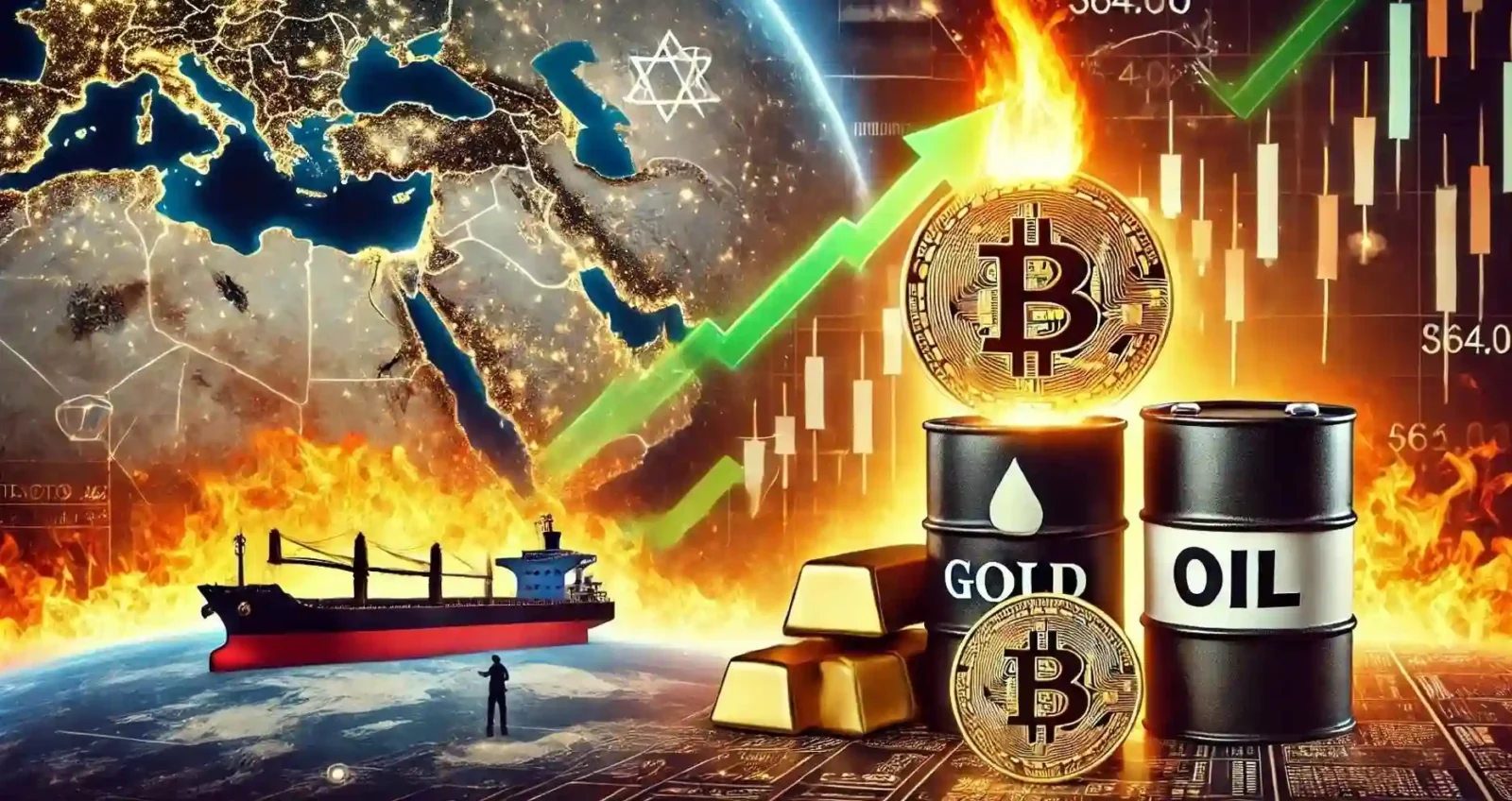
Bitcoin pulled back sharply to around $66,700 as global markets opened and digested the geopolitical developments that unfolded over the weekend. The military escalation in the Middle East triggered a wave of volatility across asset classes, with oil prices surging, Asian equities sliding, and safe-haven assets rallying.
While crypto markets trade continuously, traditional financial markets pause over the weekend. Monday’s opening therefore marked the first opportunity for equities, commodities, and futures markets to formally respond to the unfolding situation.
Bitcoin’s initial weekend rally quickly faded, highlighting the fragile balance between speculative momentum and macro-driven risk repricing.
Build the future you deserve. Get started with our top-tier Online courses: ACCA, HESI A2, ATI TEAS 7, HESI EXIT, NCLEX-RN, NCLEX-PN, and Financial Literacy. Let Serrari Ed guide your path to success. Enroll today.
Bitcoin’s Reversal: From $68,000 to the Mid-$66,000 Range
Over the weekend, Bitcoin briefly climbed toward $68,000 following confirmation of Iran’s leadership transition. The move reflected a short-term relief rally within crypto markets.
However, as broader financial markets reopened, the optimism proved temporary. Bitcoin fell approximately 1%, retracing most of its gains and settling back into the mid-$66,000 range—levels that prevailed before the escalation.
This retracement suggests that the earlier rally may have been driven more by speculative positioning than by durable macro conviction.
The rapid unwind highlights a recurring theme in crypto markets: sharp reactions to geopolitical headlines followed by normalization once liquidity deepens and cross-market flows stabilize.
Broader Crypto Market Performance: Mixed but Defensive
The pullback was not limited to Bitcoin.
- Ether declined 2.5% to $1,967
- Solana fell 4.1% to $84
- XRP dropped 3.6% to $1.36
On a weekly basis, the damage appeared more pronounced. Solana led losses among major digital assets, down 8.1% over seven days.
This divergence suggests that higher-beta crypto assets are absorbing more volatility than Bitcoin, which often behaves as the sector’s relative safe haven during periods of stress.
The pattern reflects a familiar structure in crypto cycles: when uncertainty rises, capital rotates toward larger, more liquid tokens.
Oil Markets Deliver the Loudest Signal
While crypto volatility was notable, the most dramatic moves occurred in energy markets.
Brent crude surged as much as 13% at the open before settling near $77.50 per barrel, still up 6.4% on the day. The jump represented the largest single-day move since the 2022 shock following Russia’s invasion of Ukraine.
The immediate catalyst was the effective closure of the Strait of Hormuz, a critical maritime chokepoint through which roughly 20% of global oil supply transits.
Disruptions to this corridor raise concerns about:
- Supply shortages
- Shipping insurance costs
- Energy inflation
- Global trade disruptions
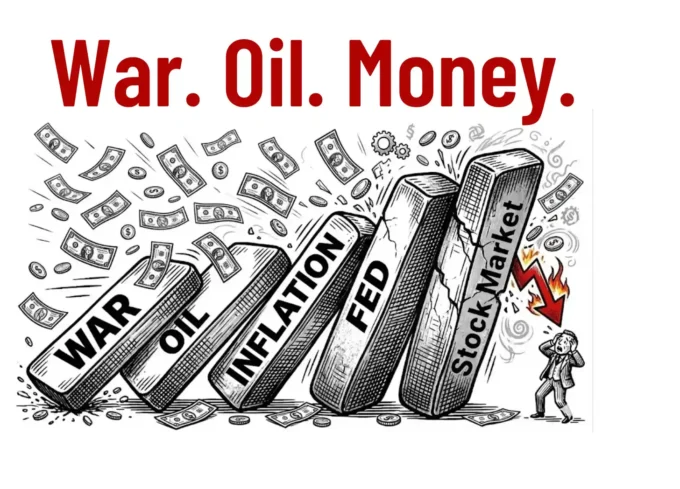
Oil price spikes often act as an early warning signal of broader macroeconomic stress.
Traditional Markets React: Equities Slide, Gold Climbs
The ripple effects were visible across global financial markets.
Asian equities dropped 1.4%, reflecting immediate risk aversion. U.S. equity futures fell 0.7%, indicating that Wall Street was preparing for a weaker open.
Meanwhile, gold climbed to $5,350 per ounce, reinforcing its traditional role as a defensive asset during geopolitical crises.
This synchronized movement—oil higher, equities lower, gold stronger—suggests that investors are repositioning toward safety.
Crypto’s performance in this context is revealing. While Bitcoin often markets itself as “digital gold,” its behavior remains partially correlated with broader risk assets during acute stress periods.
Is Bitcoin Acting as a Safe Haven?
The question resurfacing during every geopolitical crisis is whether Bitcoin truly functions as a hedge.
On one hand:
- Bitcoin trades continuously
- It is decentralized
- It operates outside traditional banking systems
On the other hand:
- It remains a risk-sensitive asset
- It reacts to liquidity conditions
- It is influenced by speculative leverage
The modest 1% pullback suggests that Bitcoin did not experience panic selling. However, it also did not behave like a pure safe haven in the way gold did.
Instead, Bitcoin appears to be stabilizing within a defined range rather than acting as a crisis hedge.
Historical Context: Crypto in Geopolitical Shocks
This is not the first time geopolitical escalation has tested crypto markets.
During Russia’s invasion of Ukraine in 2022:
- Oil surged sharply
- Equities sold off
- Bitcoin initially dropped before stabilizing
Similarly, during regional conflicts in the Middle East, Bitcoin has often shown short-term volatility followed by consolidation.
Historically, crypto markets have reacted to geopolitical shocks in three phases:
- Immediate volatility spike
- Correlation with broader risk assets
- Gradual decoupling as macro clarity improves
The current price action appears to fit this familiar pattern.
One decision can change your entire career. Take that step with our Online courses in ACCA, HESI A2, ATI TEAS 7, HESI EXIT, NCLEX-RN, NCLEX-PN, and Financial Literacy. Join Serrari Ed and start building your brighter future today.
Inflation Concerns and Oil’s Broader Impact
One of the key concerns surrounding oil price spikes is inflation.
Higher crude prices can:
- Increase transportation costs
- Raise manufacturing expenses
- Push up consumer prices
- Delay central bank rate cuts
If energy-driven inflation reaccelerates, it could influence:
- Federal Reserve policy
- Emerging market rate decisions
- Currency stability
- Bond yields
Jeff Mei, chief operating officer at BTSE, suggested that downside risk may be limited because Iran has already been largely isolated from global financial markets.
He also noted that global supply diversification—particularly from OPEC members and U.S. producers—could help stabilize oil prices if disruptions persist.
If oil supply remains manageable, the inflationary shock may be contained.
Why This Matters
1. Cross-Market Sensitivity
Crypto does not operate in isolation. Bitcoin’s price movements demonstrate sensitivity to energy markets, equities, and macro sentiment.
2. Oil and Inflation Dynamics
Energy shocks can reshape inflation expectations, potentially influencing global monetary policy and liquidity conditions—both critical for crypto performance.
3. Risk Asset Positioning
The synchronized drop in equities and higher-beta crypto assets suggests that investors are reducing exposure to risk-sensitive assets.
4. Liquidity Implications
Geopolitical uncertainty often tightens global liquidity, affecting leveraged positions in crypto markets.
5. Volatility Opportunities
Periods of geopolitical tension often create short-term trading opportunities, particularly in derivatives markets.
Risks Going Forward
- Prolonged Oil Disruption
The closure or sustained disruption of the Strait of Hormuz introduces a structural rather than temporary shock to global energy markets. Roughly one-fifth of the world’s oil supply passes through this corridor. Even if actual physical supply is not fully halted, elevated insurance premiums, shipping reroutes, and precautionary inventory stockpiling can create artificial scarcity.
If oil prices remain elevated above recent ranges—or spike further—several secondary effects could unfold:
- Persistent energy-driven inflation: Fuel and transportation costs feed directly into consumer prices. This could reverse recent progress on global disinflation trends.
- Corporate margin compression: Higher energy input costs reduce profitability for manufacturing, logistics, airlines, and heavy industry.
- Reduced consumer spending power: Higher fuel prices act as an indirect tax on households.
- Tighter financial conditions: Bond yields may rise if inflation expectations increase.
For crypto markets specifically, sustained oil-driven inflation can delay expected monetary easing cycles. Risk assets—including Bitcoin—have historically benefited from liquidity expansion and lower real yields. An inflation shock undermines that backdrop.
If energy markets fail to stabilize quickly, the risk shifts from short-term volatility to a medium-term macro headwind.
- Escalation Risk
Geopolitical conflicts rarely move in straight lines. The initial shock may be followed by diplomatic containment—or by retaliatory escalation.
An expanded conflict scenario introduces:
- Broader regional instability
- Direct involvement of additional state actors
- Sanctions expansion
- Cyberwarfare escalation
- Supply chain disruptions
In financial markets, escalation risk typically triggers:
- Capital rotation into U.S. Treasuries and gold
- De-risking of emerging markets
- Stronger U.S. dollar flows
- Equity drawdowns
For crypto, the outcome is less predictable. While Bitcoin is decentralized, it remains highly liquidity-sensitive. In global risk-off events, leveraged positions often unwind quickly, causing amplified price swings.
Moreover, if traditional banking rails become strained or sanctions intensify, crypto could see increased utility in certain regions. However, that utility narrative does not necessarily translate into immediate price support during systemic stress.
The risk here lies in volatility amplification—not necessarily directional collapse, but sharp, unstable price action.
- Monetary Policy Delay
One of the central pillars supporting risk assets in recent quarters has been the expectation of easing monetary policy from major central banks.
If oil-driven inflation reaccelerates:
- Central banks may pause or delay rate cuts.
- Real yields could remain elevated.
- Liquidity conditions may stay restrictive.
Bitcoin has shown sensitivity to real interest rates. Higher real yields increase the opportunity cost of holding non-yielding assets like gold and Bitcoin.
A delayed easing cycle would affect:
- Tech equities
- High-growth stocks
- Emerging markets
- Crypto markets
The danger is not just higher rates—it is uncertainty around policy timing. Markets often price future liquidity expansion well in advance. If that timeline shifts, repricing can be abrupt.
In that scenario, Bitcoin may struggle to sustain rallies without renewed liquidity support.
- Crypto-Specific Risk
Crypto markets are structurally leveraged environments. Even modest macro shocks can cascade through derivatives markets.
Key crypto-specific vulnerabilities include:
- High leverage in perpetual futures
- Automated liquidation cascades
- Thin weekend liquidity pockets
- Concentrated large-holder positioning
If Bitcoin were to break decisively below technical support levels—such as the mid-$66,000 range—liquidation engines could accelerate downside momentum.
Additionally, sentiment shifts can spread rapidly across social and trading platforms, magnifying volatility beyond macro fundamentals.
It is also worth noting that crypto volatility can become reflexive: price declines trigger liquidations, which trigger further declines.
The risk is not necessarily structural weakness—but mechanical amplification.
Market Outlook
- Monitoring the Strait of Hormuz
The first variable markets will watch is whether the Strait disruption proves temporary or prolonged.
If:
- Shipping resumes quickly
- Diplomatic channels stabilize tensions
- Oil supply diversifies smoothly
then crude prices may retrace much of the spike.
Energy stabilization would reduce inflation fears and restore some risk appetite.
However, even a partial disruption can maintain elevated volatility, as traders price geopolitical risk premiums into energy contracts.
Bitcoin’s trajectory may hinge on whether oil stabilizes near $77 or pushes significantly higher.
- Diplomatic Developments
Markets are highly sensitive to diplomatic signals in early-stage conflicts.
Statements from:
- Regional governments
- OPEC officials
- U.S. policymakers
- International alliances
can rapidly shift sentiment.
A de-escalation tone typically sparks:
- Equity rebounds
- Oil retracements
- Strengthening of risk assets
Conversely, retaliatory rhetoric can fuel further de-risking.
Crypto markets, given their 24/7 nature, may react ahead of traditional markets—but sustained direction often depends on broader macro confirmation.
- Oil Supply Signals from OPEC
OPEC and allied producers play a stabilizing role during energy disruptions.
If production quotas are adjusted upward to offset supply constraints, oil may normalize faster than feared.
In that case:
- Inflation expectations may ease
- Bond yields could stabilize
- Equity markets may recover
Bitcoin could benefit indirectly from improved macro sentiment.
However, if supply coordination proves insufficient, oil could remain structurally elevated—maintaining inflation pressure.
- Inflation Expectations
Bond markets will closely monitor inflation break-even rates.
If inflation expectations rise:
- Central bank easing bets may unwind
- Risk assets could face headwinds
If expectations remain contained despite oil’s spike, markets may treat the move as temporary.
Bitcoin’s medium-term outlook often aligns more with liquidity expectations than with isolated geopolitical events.
- Central Bank Commentary
Forward guidance from central banks will be critical.
If policymakers frame the oil spike as:
- Temporary
- Non-structural
- Manageable
markets may remain relatively stable.
However, if central banks signal concern about second-round inflation effects, rate-cut expectations could shift.
Bitcoin’s recent price structure suggests consolidation rather than panic. A supportive central bank tone could reinforce that stability.
Synthesis: Stabilization vs. Renewed Volatility
The next phase for markets hinges on whether this episode evolves into:
- A contained geopolitical shock with short-lived energy disruption
or - A prolonged macro event with inflationary spillovers
If stabilization occurs:
- Oil retraces
- Equities rebound
- Gold moderates
- Bitcoin resumes consolidation or gradual upward bias
If volatility intensifies:
- Risk assets face deeper drawdowns
- Liquidity tightens
- Crypto leverage unwinds
At present, Bitcoin’s ability to hold above the mid-$66,000 range suggests cautious positioning rather than panic.
Markets appear to be pricing uncertainty—not catastrophe.
The coming days will reveal whether the oil shock becomes an inflation catalyst or remains a geopolitical risk premium.
For crypto investors, the interplay between energy markets, inflation expectations, and monetary policy will likely remain the dominant macro narrative shaping price direction.
Conclusion
Bitcoin’s retreat to $66,700 underscores how digital assets respond to geopolitical uncertainty in tandem with broader financial markets.
While crypto trades around the clock, traditional markets’ reopening provided a fuller repricing of risk. Oil surged sharply, equities declined, and gold rallied—classic signals of risk aversion.
Bitcoin did not collapse, nor did it surge as a definitive safe haven. Instead, it stabilized within its prior range, reflecting a market still balancing macro uncertainty with structural crypto demand.
The coming days will determine whether this episode marks a temporary volatility spike or the beginning of a deeper macro-driven correction.
For now, the interplay between energy markets, inflation expectations, and global liquidity will likely dictate crypto’s next directional move.
Ready to take your career to the next level? Join our Online courses: ACCA, HESI A2, ATI TEAS 7 , HESI EXIT , NCLEX – RN and NCLEX – PN, Financial Literacy!🌟 Dive into a world of opportunities and empower yourself for success. Explore more at Serrari Ed and start your exciting journey today! ✨
Track GDP, Inflation and Central Bank rates for top African markets with Serrari’s comparator tool.
See today’s Treasury bonds and Money market funds movement across financial service providers in Kenya, using Serrari’s comparator tools.
photo source: Google
By: Elsie Njenga
3rd March,2026