
Africa’s economic story in March 2026 is one of compelling momentum set against significant structural headwinds. The continent is projected to outpace many advanced economies in growth terms, buoyed by a youthful labour force, improving institutional frameworks in key markets, and the deepening integration of intra-African trade. Yet for every headline growth figure, there is an equally sobering counterpoint: debt vulnerabilities in West Africa, a costly banking sector recapitalisation in Nigeria, and the persistent failure to convert vast natural resource wealth into broad-based prosperity.
Analysts, development economists, and institutional investors are united in their view that 2026 represents a pivotal juncture for the continent. The decisions that African governments make now — on fiscal sustainability, industrial policy, capital market development, and youth employment — will determine whether the projected growth trajectory delivers genuine improvements in living standards or merely adds another line to a long history of unrealised potential.
Build the future you deserve. Get started with our top-tier Online courses: ACCA, HESI A2, ATI TEAS 7, HESI EXIT, NCLEX-RN, NCLEX-PN, and Financial Literacy. Let Serrari Ed guide your path to success. Enroll today.
Continental Growth Outlook: 4.0% in 2026
According to projections from the United Nations and the African Development Bank, Africa’s aggregate GDP is forecast to grow 4.0% in 2026, accelerating to 4.1% in 2027. This builds on actual growth of 3.5% in 2024 and an estimated 3.9% in 2025, representing a steady upward trajectory. For context, this positions Africa as one of the world’s fastest-growing regions — outpacing the advanced economy average of approximately 1.8% and comfortably ahead of the global mean of 2.7%.
The fastest-growing economies on the continent are projected to be East African nations — Rwanda, Ethiopia, Tanzania, and Uganda among them — alongside select West African markets benefiting from commodity price tailwinds and public investment programmes. These high-growth markets are attracting increasing attention from emerging market investors and development finance institutions who see them as underpenetrated opportunities in an otherwise difficult global investment landscape.
However, the headline growth figure must be contextualised carefully. High debt servicing costs — a legacy of the aggressive borrowing cycle that many African sovereigns pursued in the 2015-2022 period — are consuming an increasing share of government revenues, leaving less fiscal space for investment in health, education, and infrastructure. Food inflation, exacerbated by climate disruptions and the global energy price shock, continues to erode real household incomes across the continent, undermining the poverty reduction progress of recent decades.
Africa GDP Growth Forecast 2026: 4.0%
Africa GDP Growth Forecast 2027: 4.1%
2025 Actual Growth (Estimated): 3.9%
South Africa’s R1 Trillion Infrastructure Commitment
The most headline-grabbing economic development in sub-Saharan Africa this week is South Africa’s 2026 national budget. President Cyril Ramaphosa declared the budget the beginning of South Africa’s economic recovery, and Finance Minister Enoch Godongwana’s allocation of over R1 trillion ($62 billion) to public infrastructure over three years represents one of the most ambitious infrastructure investment commitments in the country’s post-apartheid history.
The infrastructure programme spans electricity generation and transmission — addressing South Africa’s chronic load-shedding crisis — water and sanitation systems, transport networks, and digital infrastructure. The government is explicitly positioning the infrastructure drive as a job creation engine, with projections of hundreds of thousands of construction and maintenance jobs over the programme’s lifetime. However, economists and rating agencies have cautioned that the programme’s success will hinge critically on Eskom and Transnet — the state-owned enterprises responsible for power and logistics — demonstrating the operational capacity to absorb and deploy the capital effectively.
The 2026 budget also extends social grant support to 26.5 million South Africans — out of a total population of approximately 62 million — at a cost that continues to crowd out productive public investment. The dual challenge of funding both a major infrastructure programme and an extensive social protection net, while maintaining fiscal consolidation commitments, is placing South Africa’s fiscal framework under considerable strain. The IMF has called for structural reforms to state-owned enterprises, labour markets, and the energy sector as prerequisites for unlocking South Africa’s economic potential at a sustainable pace.
One decision can change your entire career. Take that step with our Online courses in ACCA, HESI A2, ATI TEAS 7, HESI EXIT, NCLEX-RN, NCLEX-PN, and Financial Literacy. Join Serrari Ed and start building your brighter future today.
Nigeria’s KSh 4.05 Trillion Banking Recapitalisation
Nigeria’s financial sector is navigating a watershed moment. Twenty of 33 commercial banks have successfully met the new minimum capital thresholds set by the Central Bank of Nigeria (CBN), collectively raising approximately 4.05 trillion Nigerian Naira (approximately $3 billion USD) through rights issues, private placements, and mergers. The recapitalisation is designed to strengthen the balance sheets of Nigerian banks, enabling them to fund the large-scale infrastructure and industrial projects that the government’s economic transformation agenda demands.
However, 13 lenders remain non-compliant with the new thresholds and now face the prospect of licence downgrades from commercial bank to regional bank status, or forced mergers with stronger peers. The banking sector rationalisation is expected to reduce the number of full-service commercial banks in Nigeria from 33 to a smaller, more capitalised group — a consolidation that many banking sector analysts view as a long-overdue correction for a market that has historically been over-banked relative to the size of its productive economy.
Senegal’s Hidden-Debt Crisis and Eurobond Pressure
Senegal presents one of the most acute sovereign debt stories on the continent. The West African nation faces a $485 million Eurobond maturity this year against a backdrop that has been fundamentally destabilised by the revelation of hidden public debt accumulated by the previous government. The IMF now estimates Senegal’s total public debt at 132% of GDP — a figure that shocked markets and rating agencies when it was disclosed, and that places Senegal among the most heavily indebted economies in sub-Saharan Africa on a debt-to-GDP basis.
To navigate its near-term financing pressure, the government has been aggressively mobilising funds on the regional West African Economic and Monetary Union (WAEMU) capital market, raising approximately 510 billion CFA francs (roughly $850 million) through short-term Treasury bills since January 2026. While the strategy has succeeded in bridging immediate liquidity gaps, it comes at the cost of high short-term borrowing rates and the risk of a maturity mismatch as rolled-over short-term debt accumulates.
Mozambique’s Return to Growth
In a small but symbolically significant development, Mozambique’s economy grew 4.7% in Q4 2025 — snapping two consecutive quarters of contraction. The country has endured years of political violence, cyclone damage, and the fallout from the earlier hidden-debt scandal that made it a cautionary tale for emerging market investors. The Q4 2025 expansion reflects a partial normalisation of conditions in northern Mozambique, where offshore gas extraction projects are gradually resuming, and a modest recovery in agricultural output following reduced cyclone-related disruption.
The $29.5 Trillion Mineral Wealth Imperative
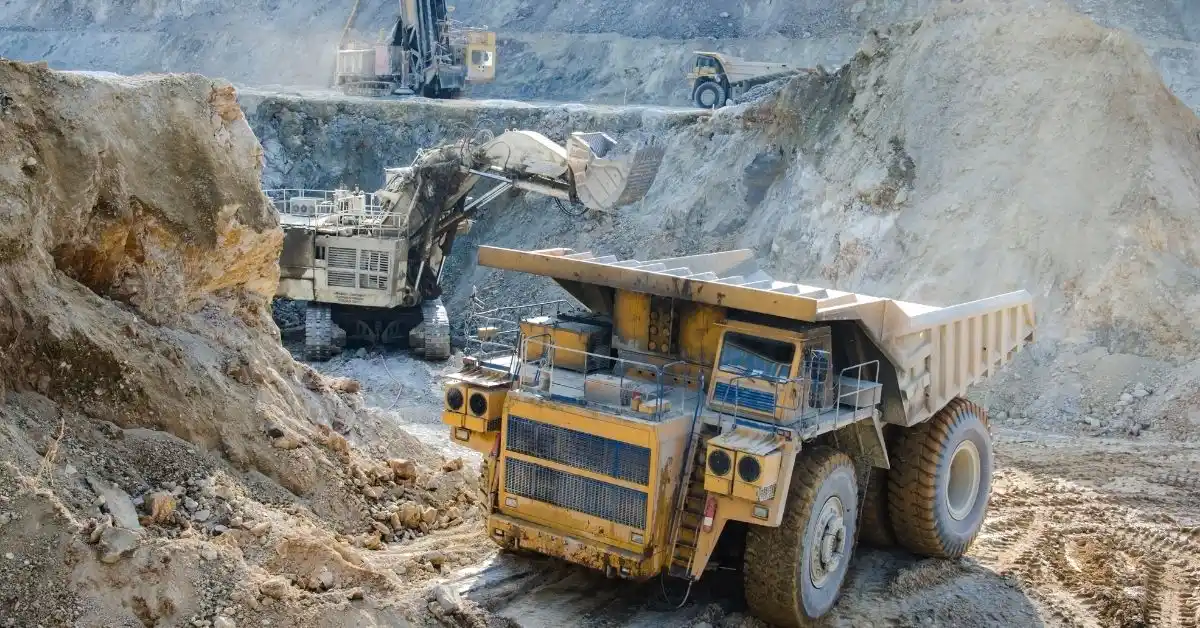
Perhaps the most strategically significant economic story for the continent’s long-term future is the growing consensus around Africa’s imperative to industrialise its mineral wealth. A landmark report published this week estimates that Africa holds $29.5 trillion in mine-site mineral value — approximately 20% of global mineral wealth — encompassing critical minerals such as cobalt, lithium, manganese, platinum-group metals, and copper that are at the heart of the global energy transition.
The report’s central argument is both stark and familiar: despite controlling one-fifth of the world’s mineral endowment, Africa captures only a marginal share of the economic value generated by the extraction and processing of these resources. The majority of Africa’s mineral output is exported as unprocessed ore or concentrate, with the value-addition stages — refining, smelting, battery manufacturing, and technology fabrication — occurring in China, Europe, and North America.
Changing this dynamic requires massive investment in industrial processing capacity, skilled workforce development, reliable power infrastructure, and the logistical connectivity to move refined products to global markets. Development economists argue that the window of opportunity created by the global energy transition — in which demand for African critical minerals will surge over the next two decades — may be the continent’s best chance in a generation to transform its natural resource endowment into sustained industrial development.
Africa’s Mineral Wealth Estimate: $29.5 trillion
Share of Global Mineral Wealth: ~20%
Key Critical Minerals: Cobalt, Lithium, Manganese, Platinum-group metals
Ready to take your career to the next level? Join our Online courses: ACCA, HESI A2, ATI TEAS 7 , HESI EXIT , NCLEX – RN and NCLEX – PN, Financial Literacy!🌟 Dive into a world of opportunities and empower yourself for success. Explore more at Serrari Ed and start your exciting journey today! ✨
Track GDP, Inflation and Central Bank rates for top African markets with Serrari’s comparator tool.
See today’s Treasury bonds and Money market funds movement across financial service providers in Kenya, using Serrari’s comparator tools.
photo source: Google
By: Montel Kamau
Serrari Financial Analyst
4th March, 2026