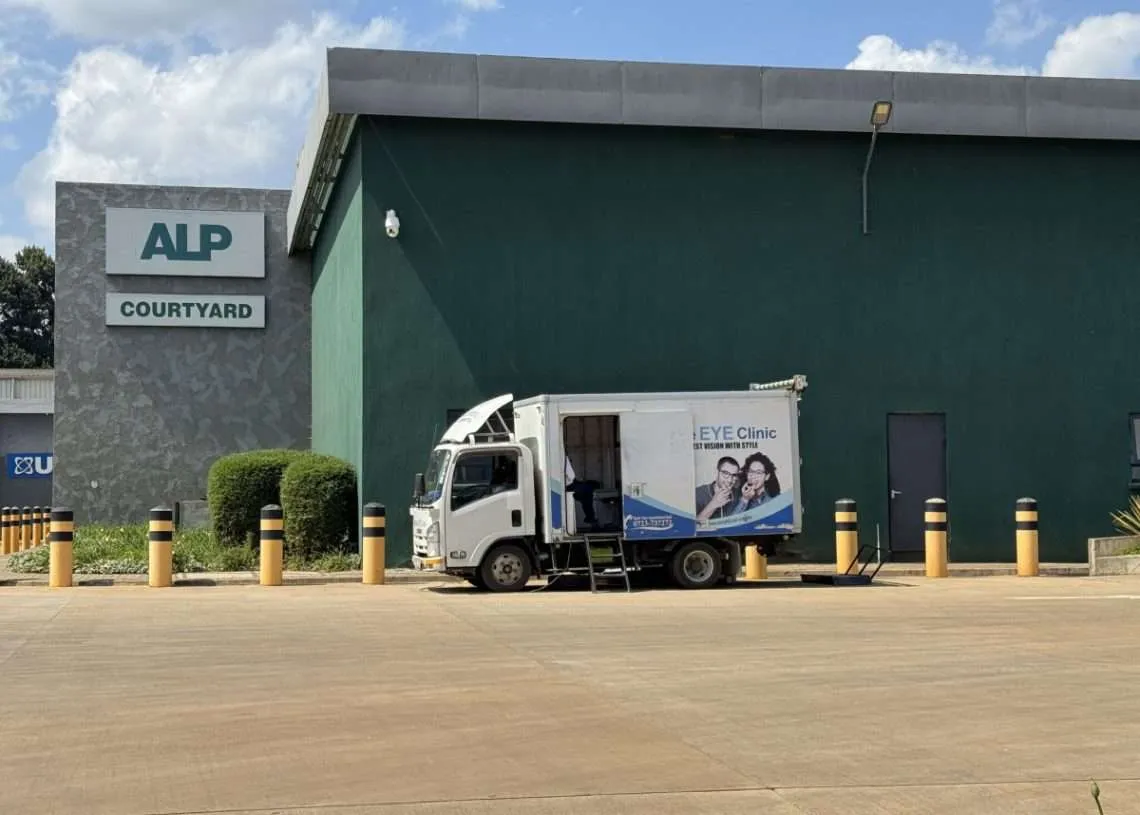
Kenya’s real estate market is undergoing a quiet but profound transformation. For decades, investment attention gravitated toward residential housing, retail malls, and office towers—often overlooking the industrial backbone that keeps trade, manufacturing, and distribution moving. That balance is now shifting.
The Private Infrastructure Development Group (PIDG) has approved an investment of up to USD 15 million (approximately KSh 1.9 billion) to anchor a newly established industrial real estate investment trust (REIT) in Kenya. The move, executed through PIDG’s project development arm InfraCo, positions the Africa Logistics Properties REIT (ALP REIT) as a landmark vehicle for channeling long-term institutional capital into the country’s fast-growing logistics and warehousing sector.
More than a single transaction, PIDG’s decision represents a structural vote of confidence in Kenya’s industrial real estate market—one rooted in trade growth, infrastructure investment, regional integration, and changing patterns of consumption. It also reflects a broader shift in how global development financiers and institutional investors view logistics infrastructure: not merely as support services, but as core, income-generating assets essential to economic resilience.
Build the future you deserve. Get started with our top-tier Online courses: ACCA, HESI A2, ATI TEAS 7, HESI EXIT, NCLEX-RN, NCLEX-PN, and Financial Literacy. Let Serrari Ed guide your path to success. Enroll today.
Why This Investment Matters
At first glance, a USD 15 million anchor commitment may appear modest. In reality, its significance lies not in absolute size, but in what it unlocks.
Anchor investors play a crucial role in REIT formation. By committing early capital, they:
- De-risk the structure for other investors
- Signal credibility and governance quality
- Help establish pricing benchmarks
- Accelerate capital raising
PIDG’s involvement therefore acts as a catalyst, encouraging pension funds, insurers, asset managers, and development finance institutions to allocate capital to a sector that has historically been underrepresented in Kenyan portfolios.
As Raghav Gandhi, CEO of Africa Logistics Properties, put it:
“The ALP REIT will increase the confidence of institutional investors to diversify their portfolios into the infrastructure asset class, whilst supporting the growth of Kenya’s industrial real estate sector.”
Understanding the ALP REIT
The ALP REIT officially began issuing units on 17 December, marking one of the most significant steps yet toward formalizing industrial real estate investment in Kenya.
Initial Asset Portfolio
The REIT’s initial portfolio consists of completed, income-generating logistics assets developed and owned by Africa Logistics Properties (ALP). These include:
- ALP North Park, Tatu City
- Approximately 35,000 square metres of modern logistics and warehouse space
- Approximately 35,000 square metres of modern logistics and warehouse space
- ALP West Park, Tilisi
- Around 20,000 square metres of industrial facilities
Together, these assets provide a diversified base across two of Kenya’s most strategically positioned mixed-use developments.
Crucially, the REIT is designed as a living portfolio, with additional ALP-developed projects expected to be transferred into the trust once they reach operational stabilization—a key safeguard that ensures assets generate predictable cash flows before inclusion.
One decision can change your entire career. Take that step with our Online courses in ACCA, HESI A2, ATI TEAS 7, HESI EXIT, NCLEX-RN, NCLEX-PN, and Financial Literacy. Join Serrari Ed and start building your brighter future today.
Why Tatu City and Tilisi Matter
The choice of locations is no accident.
Tatu City
Located just outside Nairobi, Tatu City has emerged as one of East Africa’s most successful mixed-use developments. It benefits from:
- Proximity to Nairobi’s consumer and industrial base
- Access to major transport corridors
- Reliable infrastructure and utilities
- Strong tenant demand from manufacturers, distributors, and logistics firms
Tatu City has become a magnet for companies seeking purpose-built industrial space, a segment long underserved by traditional real estate models.
Tilisi
Tilisi, located along the Nairobi–Nakuru corridor, offers strategic access to:
- Western Kenya markets
- Rift Valley agricultural zones
- Cross-border trade routes toward Uganda
As congestion and land scarcity increase within Nairobi, logistics operators are increasingly favoring peri-urban hubs like Tilisi, where scale, access, and cost efficiency intersect.
The Pipeline: Future Growth Built In
One of the ALP REIT’s most compelling features is its embedded growth pipeline.
As new developments reach stabilization—meaning they achieve consistent occupancy and cash-flow performance—they are expected to be transferred into the REIT. A key example is the upcoming:
- ALP West Kivu
- Approximately 10,500 square metres of industrial space
This pipeline approach ensures that the REIT can:
- Grow assets under management organically
- Maintain asset quality standards
- Offer investors visibility into future expansion
For institutional investors, this predictability is critical.
Why Industrial Real Estate Is Attracting Capital
Globally, industrial and logistics real estate has become one of the best-performing asset classes of the past decade. Kenya is now catching up to that trend.
Several structural forces are driving demand:
1. Trade and Regional Integration
Kenya is a gateway to East and Central Africa. As regional trade deepens, demand for:
- Warehousing
- Cold storage
- Distribution centers
- Light manufacturing space
has risen sharply.
2. E-Commerce and Modern Retail
Growth in e-commerce, FMCG distribution, and modern retail requires efficient logistics networks, pushing tenants toward professionally managed industrial parks.
3. Infrastructure Investment
Major public investments—including highways, ports, rail, and special economic zones—have reduced logistics friction, making industrial real estate more viable and attractive.
4. Institutional Portfolio Needs
Pension funds and insurers increasingly seek:
- Long-term, inflation-linked income
- Lower volatility than equities
- Assets tied to real economic activity
Industrial REITs check all these boxes.
PIDG’s Strategic Role in Kenya
PIDG is not new to Kenya’s real estate or infrastructure landscape. Through various vehicles, it has:
- Supported affordable housing REITs in Nairobi
- Invested in energy, transport, and infrastructure projects
- Worked closely with governments and regulators
As Claire Jarratt, Head of Investment Management at InfraCo (PIDG), noted:
“Having anchored the establishment of REITs for affordable housing in Nairobi, PIDG is familiar with the REIT structure, and we know that it works. We are delighted to expand this expertise into the industrial sector.”
This continuity matters. It suggests that PIDG sees REITs not as experimental instruments, but as proven vehicles capable of mobilizing large-scale capital into priority sectors.
Kenya’s REIT Market: Slow Start, Growing Momentum
Kenya introduced REIT regulations more than a decade ago, but uptake has been gradual. Early challenges included:
- Limited investor understanding
- Thin capital markets
- Unfamiliarity with income-focused vehicles
- Governance and transparency concerns
Recent years, however, have seen renewed momentum:
- Improved regulatory clarity
- Stronger asset pipelines
- Rising institutional participation
The ALP REIT enters this market at a moment when conditions are finally aligning.
Why Industrial REITs Are Different from Retail and Office
Industrial REITs offer several advantages over more traditional real estate segments:
- Lower vacancy volatility
- Longer lease terms
- Tenants with operational dependence on location
- Lower capex intensity after stabilization
In contrast, retail malls face e-commerce disruption, and office space remains vulnerable to hybrid work trends.
Industrial assets, by comparison, sit at the intersection of physical trade and digital commerce—making them structurally resilient.
Implications for Kenyan Pension Funds
Kenya’s pension sector controls hundreds of billions of shillings in assets, much of it invested in government securities.
Industrial REITs provide an alternative that:
- Diversifies away from sovereign risk
- Offers stable, long-term yields
- Aligns with infrastructure and development goals
PIDG’s anchor investment significantly lowers the perceived risk for local pension trustees considering first-time exposure to industrial real estate.
What This Means for Developers
For developers like Africa Logistics Properties, the REIT model:
- Frees up capital for new developments
- Reduces balance-sheet strain
- Creates a recycling mechanism for stabilized assets
This allows developers to focus on what they do best—building, while investors focus on owning and earning.
Over time, this separation of development and ownership is a hallmark of mature real estate markets.
The Broader Economic Impact
Beyond investors, the ALP REIT has implications for Kenya’s economy:
- Job creation in construction, logistics, and manufacturing
- Lower logistics costs through modern facilities
- Improved competitiveness for exporters and distributors
- Enhanced resilience of supply chains
Industrial real estate is not just an asset class—it is economic infrastructure.
Risks to Watch
No investment is without risk. Key considerations include:
Tenant Concentration
Industrial parks can be exposed if large tenants vacate or consolidate.
Economic Cycles
Demand for logistics space is tied to trade and consumption.
Infrastructure Bottlenecks
Access roads, utilities, and last-mile connectivity remain critical.
Regulatory Environment
REIT taxation and governance rules must remain stable to attract long-term capital.
PIDG’s involvement, however, mitigates many of these risks through governance standards and disciplined asset selection.
Why This Is a Turning Point
The PIDG-backed ALP REIT represents something Kenya has long needed: a credible, scalable bridge between global capital and domestic infrastructure.
It signals that:
- Industrial real estate has come of age
- Institutional investors are ready to participate
- REITs can work beyond housing and retail
- Kenya’s logistics sector is investable at scale
If successful, this model could be replicated across:
- Cold storage
- Light manufacturing
- Agri-logistics
- Regional distribution hubs
Looking Ahead: What Comes Next
As additional assets stabilize and are injected into the REIT, investors will be watching:
- Occupancy levels
- Rental growth
- Distribution yields
- Governance and transparency
Success will likely encourage:
- New industrial REITs
- Greater pension fund allocation
- Cross-border listings and partnerships
In that sense, the ALP REIT could become the template for a new generation of infrastructure-backed investment vehicles in East Africa.
Conclusion: From Concept to Catalyst
PIDG’s decision to anchor the ALP REIT with up to USD 15 million is more than a financial commitment—it is a strategic endorsement of Kenya’s industrial future.
By channeling patient, institutional capital into logistics and warehousing, the initiative strengthens supply chains, deepens capital markets, and opens a new frontier for real estate investment. As Kenya positions itself as a regional trade and manufacturing hub, vehicles like the ALP REIT will play an increasingly central role.
What was once an overlooked segment is now stepping into the spotlight—and with PIDG’s backing, Kenya’s industrial real estate market has taken a decisive step toward maturity.
photo source: Google
By: Elsie Njenga
26th January,2026