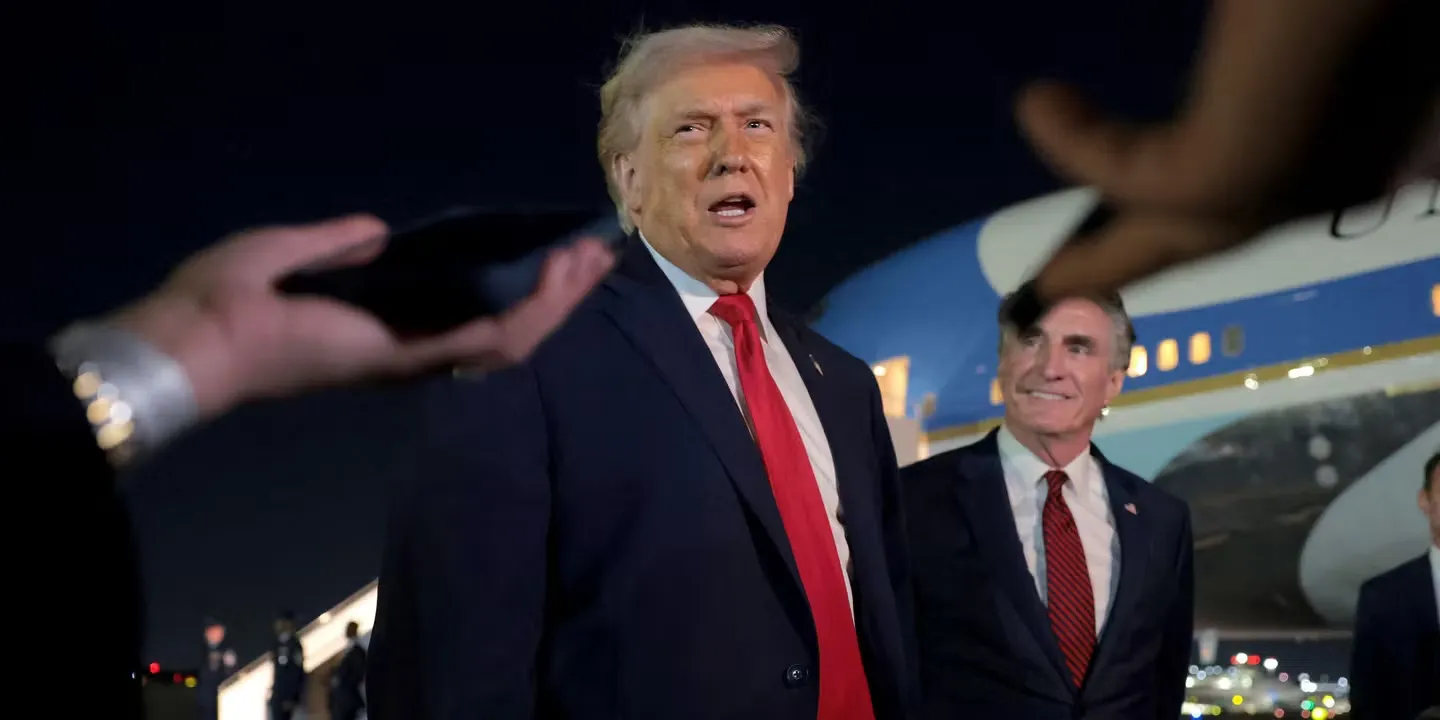
Former U.S. President Donald Trump has once again thrust transatlantic trade relations into uncertainty, issuing a stark warning that the United States could impose a 200 percent tariff on French wine and champagne. The threat, delivered in typically blunt fashion, marks a sharp escalation in tensions between Washington and Paris and underscores how Trump continues to fuse economic pressure with foreign policy objectives.
At the center of the dispute is Trump’s proposed “Board of Peace,” an ambitious international body he claims would play a decisive role in resolving global conflicts. While initially framed as a mechanism focused on the Middle East, recent developments suggest a far broader scope—one that now appears to span global security, diplomacy, and financial commitments from participating nations.
France’s apparent hesitation to participate in the initiative has become a flashpoint, with Trump framing resistance not merely as diplomatic disagreement, but as hostility warranting economic retaliation.
Build the future you deserve. Get started with our top-tier Online courses: ACCA, HESI A2, ATI TEAS 7, HESI EXIT, NCLEX-RN, NCLEX-PN, and Financial Literacy. Let Serrari Ed guide your path to success. Enroll today.
A Tariff Threat That Goes Beyond Trade
Trump’s warning of a 200 percent tariff on French wines and champagnes represents one of the most aggressive trade threats he has issued against a close U.S. ally in recent years. Such a duty would effectively price French sparkling wine out of the American market, devastating exports and reverberating across vineyards, distributors, and hospitality sectors.
Speaking to reporters, Trump suggested that French President Emmanuel Macron was resisting participation in the proposed peace board because of political weakness at home.
“Well, nobody wants him because he’s going to be out of office very soon,” Trump said, referring to Macron. “So you know, that’s all right. What I’ll do is, if they feel like [being] hostile, I’ll put a 200% tariff on his wines and champagnes, and he’ll join. But he doesn’t have to join.”
The remarks immediately sparked concern among trade analysts and diplomats, who warned that such measures could trigger retaliation from the European Union and further destabilize global trade at a time when inflationary pressures and geopolitical risks remain elevated.
Champagne: A Symbolic and Economic Target
French champagne occupies a unique position in global trade. Beyond its cultural significance, it represents a high-value export segment with strong brand recognition in the United States, one of its largest markets.
Despite broader challenges facing the wine industry—including changing consumer preferences and rising costs—champagne has remained a rare bright spot. It accounts for nearly 17 percent of global sparkling wine revenue and has continued to post growth, driven by premium positioning and demand from affluent consumers.
A 200 percent tariff would therefore strike at one of France’s most successful agricultural exports, disproportionately harming producers in the Champagne region while sending a political message far louder than the economic numbers alone might suggest.
One decision can change your entire career. Take that step with our Online courses in ACCA, HESI A2, ATI TEAS 7, HESI EXIT, NCLEX-RN, NCLEX-PN, and Financial Literacy. Join Serrari Ed and start building your brighter future today.
The Board of Peace: From Regional Concept to Global Ambition
At the heart of the confrontation lies Trump’s evolving vision for a global peace board. Initially described as a framework to stabilize conflict-prone regions, particularly in the Middle East, the proposal has since expanded dramatically.
According to documents reviewed by Reuters, the U.S. administration circulated a draft charter to approximately 60 countries, outlining a far more expansive mandate. Under the revised concept, the board would address global conflict resolution across multiple regions rather than focusing on a single geopolitical theater.
Perhaps most controversially, the charter would require member states to make a $1 billion cash contribution to secure membership lasting longer than three years. This financial requirement has raised eyebrows among diplomats and policymakers, many of whom question both the governance structure of the board and the justification for such a substantial entry fee.
Why France Is Hesitant
France’s reported reluctance to join the initiative reflects a mix of political, financial, and strategic considerations.
As a permanent member of the United Nations Security Council, France already plays a central role in global peacekeeping and conflict resolution. Committing to a U.S.-led board—particularly one requiring a billion-dollar contribution—could be seen as duplicative, politically sensitive, or even undermining existing multilateral frameworks.
Additionally, Macron’s administration faces domestic pressures ranging from economic reforms to social unrest. With his five-year presidential term ending in May 2027 and French law barring him from seeking a third term, Macron has limited political capital to deploy on controversial international commitments.
Trump’s suggestion that Macron’s impending departure makes him irrelevant was widely viewed in Paris as both dismissive and inflammatory.
Trade Pressure as a Diplomatic Tool
Trump’s tariff threat fits a broader pattern seen throughout his political career: the use of trade measures as leverage in diplomatic negotiations.
During his presidency, Trump frequently imposed or threatened tariffs on allies and adversaries alike, arguing that economic pressure was a legitimate tool to achieve foreign policy goals. Critics, however, countered that such tactics eroded trust, invited retaliation, and ultimately harmed U.S. consumers.
In this case, the proposed tariff would come on top of an existing 10 percent import duty Trump has already imposed on French goods and products from seven other countries. That earlier measure was linked to opposition from those nations to Trump’s controversial push to take over Greenland—a proposal that itself drew international criticism.
The cumulative effect is a trade relationship increasingly shaped by political brinkmanship rather than negotiated consensus.
The Greenland Factor and European Pushback
Trump’s earlier decision to levy a 10 percent tariff on France and other European countries stemmed from resistance to his Greenland initiative. While details of the proposal remain murky, it reportedly involved U.S. control or acquisition of the strategically located Arctic territory—an idea firmly rejected by Denmark and met with skepticism across Europe.
France’s opposition to the plan aligned it with other European states, placing it squarely in Trump’s crosshairs. The wine and champagne threat now appears to be an extension of that earlier dispute, layered atop the peace board controversy.
For European leaders, the escalation raises concerns about the predictability of U.S. trade policy and the broader implications for transatlantic cooperation.
Russia’s Inclusion Adds Another Layer of Complexity
In a move that further complicates the picture, Trump confirmed that he has invited Vladimir Putin to join the proposed peace board.
“He’s been invited,” Trump said when asked about Russia’s involvement.
The invitation has drawn scrutiny, particularly given ongoing tensions between Russia and Western nations over Ukraine and other geopolitical flashpoints. For European countries like France, the prospect of sitting on a U.S.-led peace board alongside Russia—under terms dictated by Washington—raises difficult questions about legitimacy, influence, and alignment.
Economic Fallout: Who Pays the Price?
While the tariff threat is aimed at France, its economic consequences would extend far beyond French vineyards.
American importers, distributors, restaurants, and consumers would face sharply higher prices or lose access to French wines altogether. Substitution with domestic or alternative European sparkling wines could soften the blow, but the unique branding of champagne makes replacement imperfect.
Moreover, retaliatory measures from the European Union could target U.S. exports, reigniting a cycle of tit-for-tat trade restrictions reminiscent of earlier trade wars.
The Broader Message to Allies
Beyond the immediate economic impact, Trump’s rhetoric sends a broader signal to U.S. allies: participation in American-led initiatives may come with explicit financial and political costs, and resistance could trigger punitive trade action.
For smaller countries invited to the peace board, the $1 billion contribution requirement alone could be prohibitive. For larger economies, the concern lies in precedent—whether economic coercion becomes normalized in diplomatic engagement.
Domestic Politics and International Posturing
Trump’s statements also resonate with his domestic political base, many of whom support a hardline approach to trade and foreign policy. By framing tariffs as tools to force compliance, Trump reinforces his image as a dealmaker willing to confront allies and adversaries alike.
At the same time, critics argue that such tactics risk isolating the United States and weakening alliances that have underpinned global stability for decades.
What Happens Next?
As of now, the tariff threat remains just that—a threat. No formal action has been taken to impose the 200 percent duty on French wine and champagne. Diplomatic channels remain open, and both sides may seek to de-escalate tensions behind the scenes.
However, the episode underscores the fragility of transatlantic trade relations in an era of politicized economics and personalized diplomacy.
Conclusion: A High-Stakes Game of Trade and Power
Trump’s warning of a 200 percent tariff on French wine and champagne is more than a trade dispute—it is a vivid illustration of how economic tools are increasingly intertwined with geopolitical ambition.
Whether the threat materializes or fades, it has already achieved one outcome: reigniting debate over the future of multilateral cooperation, the limits of economic coercion, and the role of the United States in shaping global governance structures.
For France, the stakes involve protecting a vital export sector and defending diplomatic autonomy. For the United States, the episode raises fundamental questions about credibility, leadership, and the costs of confrontation.
As global markets and governments watch closely, one thing is clear: the intersection of trade and diplomacy remains as volatile—and consequential—as ever.
photo source : Google
By: Elsie Njenga
26th January, 2026