For more than a decade, mobile money has been one of Africa’s quiet revolutions. It did not arrive through flashy financial instruments or global investment banks, but through simple mobile phones, text messages, and an idea that financial access did not have to begin with a traditional bank account. At the center of this transformation stands M-Pesa, a platform that reshaped how money moves across East Africa and beyond.
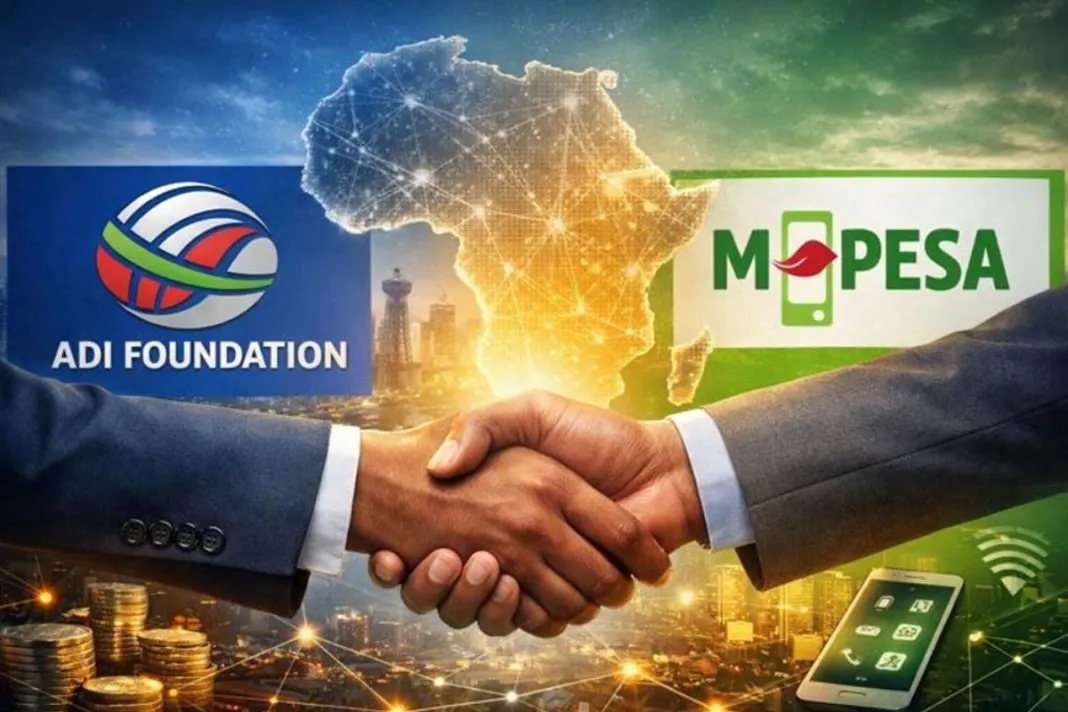
Now, M-Pesa is preparing for its next evolutionary leap. Through a strategic partnership with the Abu Dhabi–based ADI Foundation, the mobile money giant is laying the groundwork for integrating blockchain infrastructure and stablecoin payments into its ecosystem. The ambition is not incremental improvement, but structural change: faster settlements, cheaper cross-border transfers, and a financial system that can operate at continental scale without the friction that has long defined international payments.
This collaboration marks one of the most consequential intersections yet between Africa’s mobile money infrastructure and institutional-grade blockchain technology. If successful, it could redefine how individuals, small businesses, and enterprises across multiple African countries interact with the global financial system.
Build the future you deserve. Get started with our top-tier Online courses: ACCA, HESI A2, ATI TEAS 7, HESI EXIT, NCLEX-RN, NCLEX-PN, and Financial Literacy. Let Serrari Ed guide your path to success. Enroll today.
From Mobile Money Pioneer to Digital Finance Platform
When M-Pesa launched in Kenya in 2007, its objective was simple: allow people to store and transfer money using their mobile phones. The solution addressed a practical problem—millions of people lacked access to bank branches, documentation, or minimum balances required by traditional financial institutions. By sidestepping those barriers, M-Pesa unlocked financial participation for millions who had been excluded for generations.
Over time, the platform evolved far beyond peer-to-peer transfers. It became a foundation for savings products, micro-loans, merchant payments, utility bill settlement, and government disbursements. In several markets, M-Pesa effectively became the financial operating system for daily life.
Yet even as mobile money flourished domestically, cross-border transactions remained stubbornly inefficient. Sending money across national boundaries often involved correspondent banks, multiple intermediaries, currency conversions, and settlement delays stretching into days. Fees accumulated at each step, eroding value for both senders and recipients.
It is precisely this friction that blockchain technology promises to reduce.
Why Blockchain, and Why Now?
Blockchain adoption in Africa has often been framed as speculative or experimental, driven by retail cryptocurrency trading. That framing misses a deeper reality. Across the continent, blockchain has increasingly been used as financial infrastructure—particularly for stablecoins pegged to major currencies.
Stablecoins address a fundamental challenge in many African economies: currency volatility. For individuals and businesses exposed to fluctuating exchange rates, dollar-pegged digital assets offer a store of value and a medium of exchange that is both stable and programmable. This has made them especially attractive for cross-border trade, remittances, and business-to-business settlements.
Timing also matters. Despite years of progress in mobile money, approximately 42 percent of adults in sub-Saharan Africa remain outside the traditional banking system. This gap represents both a challenge and an opportunity. Digital finance solutions that build on existing mobile platforms—rather than replacing them—are uniquely positioned to scale quickly.
The partnership between M-Pesa and the ADI Foundation reflects this logic. Rather than disrupting what already works, the collaboration seeks to reinforce existing systems by adding new digital rails beneath them.
One decision can change your entire career. Take that step with our Online courses in ACCA, HESI A2, ATI TEAS 7, HESI EXIT, NCLEX-RN, NCLEX-PN, and Financial Literacy. Join Serrari Ed and start building your brighter future today.
Inside the M-Pesa–ADI Foundation Partnership
Under the agreement, M-Pesa Africa will deploy institutional-grade blockchain infrastructure developed by the ADI Foundation across eight African markets: Kenya, Democratic Republic of Congo, Egypt, Ethiopia, Ghana, Lesotho, Mozambique, and Tanzania.
These markets collectively represent more than 60 million users. Connecting them to the ADI Chain introduces a shared, regulatory-aligned settlement layer capable of handling high transaction volumes at low cost.
Crucially, the ADI Chain is not a public, permissionless blockchain designed for anonymous participation. It is a Layer 2 network purpose-built for governments, regulated financial institutions, and large enterprises operating in emerging markets. Its design prioritizes three principles: compliance with regulatory frameworks, operational efficiency at scale, and institutional-grade security.
This architecture is what makes integration with a platform like M-Pesa feasible.
Stablecoins as the Missing Link in Cross-Border Payments
Cross-border payments are among the most inefficient segments of global finance. According to industry estimates, fees on international transfers can exceed 7 percent, with settlement times ranging from several days to over a week. For small businesses and freelancers, these delays and costs are not just inconveniences—they are structural barriers to growth.
Blockchain-based stablecoins offer an alternative. By settling transactions on distributed ledgers, value can move across borders in near real time, with fees measured in cents rather than dollars. When combined with mobile money interfaces that users already understand, stablecoins become less a speculative asset and more a functional payment instrument.
Under the M-Pesa–ADI Foundation framework, stablecoins could be used behind the scenes to facilitate cross-border flows while preserving familiar user experiences. From the customer’s perspective, sending money may look no different than it does today. Underneath, however, settlement would occur on blockchain rails rather than through correspondent banks.
This distinction matters. It allows innovation without forcing users to navigate complex technical concepts or manage private keys directly.
Regulatory Alignment as a Strategic Advantage
One of the most persistent criticisms of blockchain adoption in financial services is regulatory uncertainty. Without clear rules, consumer protection can suffer, and systemic risks can emerge. The ADI Foundation’s approach attempts to address this challenge head-on.
A cornerstone of the ecosystem is the planned issuance of a UAE dirham-backed stablecoin by First Abu Dhabi Bank and IHC, under the supervision of the UAE Central Bank. This initiative establishes a regulatory blueprint for how digital assets can be issued, governed, and integrated into mainstream financial platforms.
For African regulators, such models provide a reference point. Instead of starting from scratch, policymakers can adapt frameworks that balance innovation with oversight. Clear rules around custody, compliance, consumer protection, and dispute resolution will be essential if stablecoin-enabled payments are to gain widespread trust.
M-Pesa’s decision to partner with a compliance-focused blockchain provider reflects an understanding that regulatory acceptance is not optional—it is foundational.
Africa’s Proven Appetite for Digital Assets
The case for blockchain integration in Africa is not hypothetical. Data consistently shows strong demand for digital asset infrastructure across the continent. According to figures from the Nigeria Securities and Exchange Commission, crypto transactions in Nigeria alone reached approximately $50 billion over a 12-month period ending in June 2024.
Meanwhile, research by blockchain analytics firm Chainalysis highlights substantial stablecoin usage in cross-border commerce. These transactions are particularly prominent in energy markets and merchant settlements linking Africa with the Middle East and Asia.
This activity underscores an important point: users are already adopting blockchain solutions where traditional systems fall short. The challenge is not demand, but integration—bringing these tools into regulated, scalable platforms that can serve both individuals and institutions.
Financial Inclusion Beyond Access
For years, financial inclusion was measured primarily in terms of access: could someone open an account, store money, or make payments? Today, the conversation has shifted. Inclusion now also encompasses quality—speed, affordability, reliability, and the ability to participate in global markets.
By embedding blockchain infrastructure into M-Pesa’s platform, the partnership aims to expand what inclusion looks like in practice. Small and medium-sized enterprises could receive international payments faster. Freelancers could invoice foreign clients without losing a significant portion of their earnings to fees. Traders could move value across borders without navigating opaque banking channels.
In this sense, blockchain does not replace mobile money. It extends its reach.
Risks, Challenges, and Open Questions
Despite its promise, the integration of blockchain and stablecoins into mainstream financial platforms is not without risk. Technical failures, cybersecurity threats, and operational complexities must be managed carefully. Consumer education will also be critical. Users must understand how disputes are resolved, what protections exist, and how digital assets are safeguarded.
There is also the question of interoperability. For blockchain-enabled payments to achieve their full potential, systems must communicate seamlessly across borders and platforms. Fragmentation could undermine efficiency gains.
Finally, regulatory harmonization across African markets remains uneven. While some jurisdictions have made significant progress in defining digital asset frameworks, others are still in early stages. Coordinated policy development will be essential to avoid regulatory arbitrage and ensure consistent protections.
ADI Foundation’s Broader Vision
The M-Pesa partnership is part of a larger strategy. The ADI Foundation currently maintains active collaborations across more than 20 countries, with over 50 institutional, enterprise, and government projects preparing to deploy on its network. The foundation’s stated ambition is to support one billion users in the digital economy by 2030, with existing ecosystem partnerships already reaching more than 500 million people.
This scale matters. Blockchain infrastructure designed for national and regional systems must operate reliably under heavy loads. Institutional adoption demands not just innovation, but resilience.
A Turning Point for Digital Finance in Africa
The integration of blockchain technology into M-Pesa’s ecosystem represents more than a technical upgrade. It signals a strategic shift toward a hybrid financial model—one that blends the accessibility of mobile money with the efficiency and programmability of distributed ledgers.
If executed effectively, this approach could redefine cross-border payments, deepen financial inclusion, and position African markets at the forefront of regulated blockchain adoption. It also challenges a persistent narrative that innovation flows only from developed economies outward. In this case, Africa’s mobile money experience is shaping how blockchain is deployed at scale.
The coming years will determine whether this vision translates into everyday reality. Much will depend on regulatory collaboration, technical execution, and user trust. But one thing is clear: the next chapter of Africa’s digital finance story is already being written—and blockchain is set to play a central role.
photo source: Google
By: Elsie Njenga
20th January, 2026