

The domestic money market in Kenya is currently experiencing a profound period of high liquidity and intense investor confidence in government debt, a sentiment underscored by the Central Bank of Kenya’s (CBK) latest Weekly Treasury Bills Auction. The auction witnessed a significant surge in bids, totaling KSh 44.812 billion against a targeted offer of KSh 24.000 million, resulting in a staggering oversubscription rate of 186.72%. This is not an isolated event but marks the eighth consecutive week of oversubscription, firmly establishing a trend where investors are actively chasing attractive returns in Government paper, even as the overall yield curve continues its marginal decline.
This relentless demand pressure provides the CBK, acting on behalf of the National Treasury, with a critical advantage: the ability to finance the government’s short-term domestic borrowing needs at increasingly lower rates. The Weekly Bulletin from the CBK confirmed that interest rates on the 91-day and 364-day Treasury bills declined marginally, while the yield for the 182-day instrument remained stable, showcasing the monetary authority’s successful campaign to manage the cost of short-term debt downwards in an environment flush with liquidity.
Build the future you deserve. Get started with our top-tier Online courses: ACCA, HESI A2, ATI TEAS 7, HESI EXIT, NCLEX-RN, NCLEX-PN, and Financial Literacy. Let Serrari Ed guide your path to success. Enroll today.
The Dynamics of Oversubscription and Yield Compression
The core of this market dynamic lies in the sheer volume of funds commercial banks and institutional investors are keen to deploy. The substantial oversubscription—with nearly KSh 45 billion chasing KSh 24 billion worth of paper—creates an immediate competitive environment among bidders, empowering the CBK to be selective and drive down the ultimate cost of borrowing.
A breakdown of the auction reveals the preferential treatment investors give to the highly liquid short-term paper:
- 91-day Treasury Bill: This instrument emerged as the most attractive, receiving bids worth KSh 17.943 billion against a modest offer of KSh 4.000 million. The oversubscription rate reached an astronomical 448.58%. The CBK, leveraging this demand, accepted KSh 17.938 billion at a weighted average interest rate of 7.7789%, marginally lower than the previous week.
- 364-day Treasury Bill: The one-year debt instrument also performed strongly, attracting bids of KSh 26.354 billion against an offer of KSh 10.000 million. The CBK accepted virtually the entire bid amount, KSh 26.350 billion, at a rate of 9.3759%, slightly down from the previous week’s closing yield.
- 182-day Treasury Bill: This paper was the outlier, recording the weakest demand. It received bids worth only KSh 515.21 million against a significant offer of KSh 19.000 billion. The CBK accepted the entire small amount offered, maintaining a stable yield of 7.8000%.
The differential in demand is strategic. Banks and money market funds prefer the 91-day paper for its superior liquidity and role in managing their short-term cash flow needs and meeting statutory liquidity ratios. The stability of the 182-day yield, combined with its dramatic undersubscription, suggests that investors may be signaling a lack of clear incentive to commit funds to this intermediate tenor when the more liquid 91-day paper offers a comparable, albeit slightly lower, return, and the 364-day paper provides a significantly higher yield for a relatively small extension of maturity.
Institutional Investors: The Driving Force
The sustained high demand is primarily fueled by institutional investors, a group encompassing commercial banks, fund managers, and pension funds. Commercial banks use T-Bills to park excess liquidity and meet regulatory requirements, often preferring the shortest maturities. Fund managers and pension funds seek secure, predictable returns to match future liabilities, finding the relatively higher yields on the 364-day paper attractive in a global environment characterized by low yields and volatility.
According to CFA Dedan Maina, an investment banker, the current yield structure remains highly attractive. He notes that the returns offered are compelling to local institutions, especially when viewed against international alternatives. The high quantum of accepted bids—which in the previous week saw the fiscal agent accept KSh 43.39 billion—further indicates that the government is maximizing the current low-cost borrowing environment to exceed maturity amounts, resulting in a net borrowing position that provides crucial budgetary support. The fixed income report from Standard Investment Bank (SIB) noted that the previous week’s net borrowing stood at KSh 4.34 billion, demonstrating the government’s ability to inject fresh funds into its operations through these auctions.
One decision can change your entire career. Take that step with our Online courses in ACCA, HESI A2, ATI TEAS 7, HESI EXIT, NCLEX-RN, NCLEX-PN, and Financial Literacy. Join Serrari Ed and start building your brighter future today.
The Global Interest Rate Differential and Foreign Capital
The allure of Kenyan T-Bills is significantly magnified when viewed through a global lens, particularly in comparison to the world’s benchmark, the US Treasury Securities. Investment banker Dedan Maina highlighted this disparity: “Given that US Treasury Securities are also earning low, the yield on our Treasury Securities is still very attractive to foreign investors.” While simulated US 1-Year Treasury yields might hover around the 5.0% range, the Kenyan 364-day paper offers a substantial premium, closing at 9.3759%.
This considerable interest rate differential attracts substantial “hot money”—short-term foreign capital seeking higher risk-adjusted returns. The influx of this foreign capital contributes to the Shilling’s stability and provides depth to the auction market. However, this source of funding comes with a palpable risk: capital flight.
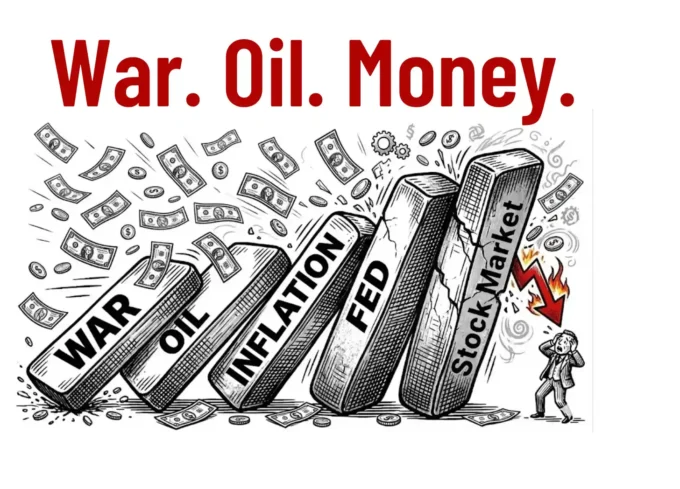
Market watchers are closely monitoring the US Federal Reserve (Fed). The current high demand for Kenyan paper relies heavily on the assumption that the Fed will either maintain its current rate policy or signal future rate cuts. If, however, the Fed were to halt rate cuts or, worse, hike the rates in response to persistent US inflation or robust economic data, the relative attractiveness of US Government paper would increase sharply. This shift would cause a rapid outflow of foreign capital from emerging markets like Kenya back to the perceived safety and now competitive returns of the US market. The CBK would then be forced to offer more competitive returns on T-Bills, potentially reversing the trend of declining yields and increasing the government’s debt servicing cost significantly.
Implications for Monetary Policy and the Commercial Sector
The high demand and resulting lower borrowing costs have dual implications for the CBK’s Monetary Policy Committee (MPC).
Firstly, the lower cost of short-term domestic borrowing provides a soft buffer against the fiscal pressures created by high-profile external obligations, such as the upcoming repayments on maturing Eurobond issues. By efficiently managing the domestic short end, the Treasury can focus its attention and resources on structuring the long-term debt and external repayments.
Secondly, the flattening of the short-end yield curve (where the 91-day and 182-day rates are close) suggests that the market expects monetary policy easing in the future, or at least no immediate rate hikes by the MPC. A falling T-Bill rate generally leads to a lower Kenya Banks’ Reference Rate (KBRR), which can eventually translate into lower lending rates for consumers and businesses, potentially stimulating private sector credit growth—a key goal of the CBK.
The commercial banking sector benefits from the high liquidity of T-Bills, providing a low-risk mechanism for generating interest income. However, if the rates continue to fall, banks may begin to redirect liquidity into higher-yielding, though riskier, private sector lending, which would be a welcome development for the broader economy seeking investment stimulus. The soft performance of the 182-day paper, which was barely subscribed, signals that investors have highly specific yield targets and liquidity preferences, and the CBK must be strategic in how it prices and offers the different tenors.
Looking Ahead: The Sustainability of the Trend
The current trend of consecutive oversubscriptions is fiscally advantageous for the Kenyan government, allowing it to borrow efficiently and build a strong cash position early in the financial year. The cumulative acceptance of bids, which has seen the government borrow far in excess of the offered amounts in recent weeks, demonstrates a sustained appetite for domestic borrowing over external issuance under current global conditions.
However, the trend’s sustainability hinges on internal economic factors, specifically inflation management and fiscal discipline. If inflation—driven by structural issues like volatile food and fuel prices—begins to erode the real return on these T-Bills, investor demand could wane, particularly for the longer-dated 364-day paper. The CBK must therefore maintain its vigilance in using the Monetary Policy Rate (MPR) to anchor inflation expectations, ensuring that the real yields on Treasury Bills remain attractive enough to warrant the current high levels of investor commitment.
The ongoing high subscription rates are a testament to the robust faith local and international investors have in the solvency of the Kenyan government and the stability of its fiscal management, enabling the CBK to execute its short-term financing strategy with remarkable success.
The consistent oversubscription trend is providing the government with a crucial fiscal buffer and facilitating the necessary short-term funding with reduced interest expenses. This efficient borrowing, however, is now intrinsically linked to the delicate balance of global capital flows and the domestic management of both inflation and liquidity. Any sudden shift in US Federal Reserve policy could quickly dissolve this advantage, forcing the CBK into a defensive posture of raising rates to protect the attractiveness of its debt instruments.
Catch Up With Our Other Headlines
4th December, 2025
South Africa’s Economic Growth Moderates to 0.5% in Q3 2025 as Mining Sector Propels Recovery
Kenya’s November 2025 Inflation Eases to 4.5% as Transport Costs Surge Despite Stable Fuel Prices
Ready to take your career to the next level? Join our Online courses: ACCA, HESI A2, ATI TEAS 7 , HESI EXIT , NCLEX – RN and NCLEX – PN, Financial Literacy!🌟 Dive into a world of opportunities and empower yourself for success. Explore more at Serrari Ed and start your exciting journey today! ✨
Track GDP, Inflation and Central Bank rates for top African markets with Serrari’s comparator tool.
See today’s Treasury bonds and Money market funds movement across financial service providers in Kenya, using Serrari’s comparator tools.
Photo source: Google
By: Montel Kamau
Serrari Financial Analyst
4th December, 2025