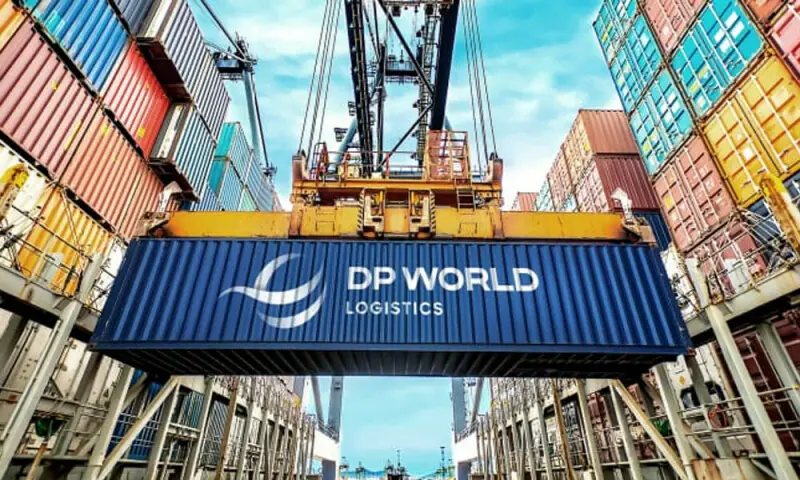
In a bold strategic move, global logistics major DP World has announced an additional investment of US $5 billion in India, a commitment made during the ongoing India Maritime Week 2025 that underscores its ambition to deepen its footprint in one of the world’s fastest-growing infrastructure markets. This fresh infusion is in addition to the roughly US $3 billion already deployed in India over the last three decades. (DP World)
The announcement comes at a moment when India’s maritime, port and logistics sectors are rapidly evolving, driven by government initiatives, rising trade volumes and shifting global supply chains. In this article, we explore the significance of DP World’s investment, the strategic partnerships unveiled alongside it, the broader Indian context, and the potential challenges and opportunities that lie ahead.
Build the future you deserve. Get started with our top-tier Online courses: ACCA, HESI A2, ATI TEAS 7, HESI EXIT, NCLEX-RN, NCLEX-PN, and Financial Literacy. Let Serrari Ed guide your path to success. Enroll today.
A Significant Financial Commitment
DP World’s announcement sets a clear marker: the company intends to play a major role in India’s logistics infrastructure. According to its official statement, the US $5 billion pledge will strengthen the country’s integrated supply-chain network — supporting both exports and domestic trade. (ETCFO.com)
What makes this figure notable is its layering onto DP World’s existing presence in India: more than US $3 billion invested over three decades, operating across 200+ sites and creating over 24,000 jobs. (DP World)
In the context of India’s maritime and logistics ecosystem, this signals both confidence and ambition. The company is not merely maintaining its status quo but doubling down on expansion and modernization in a key growth market.
Strategic Partnerships and MoUs
Alongside the investment pledge, DP World signed five major memoranda of understanding (MoUs) during the week-long maritime event. These span a range of activities that align with India’s national infrastructure agenda. (Port Technology International)
Key MoUs include:
- A pact between DP World’s subsidiary Unifeeder and Sagarmala Finance Corporation Limited for advancing green coastal and short-sea shipping. This supports India’s push towards environmentally sustainable maritime corridors.
- A heads-of-terms agreement between Cochin Shipyard Limited and DP World’s subsidiary Drydocks World to expand and operate an international ship-repair facility in Kochi.
- A tripartite MoU among Cochin Shipyard, Drydocks World and the Centre of Excellence in Maritime and Shipbuilding to develop skills in ship-building and repair – aligning with India’s talent-building drive.
- An agreement between DP World and the Cochin Port Authority to upgrade the handling facilities at DP World’s International Container Transshipment Terminal (ICTT) in Kochi, enhancing regional trade capacity.
- A tripartite agreement between DP World, the Deendayal Port Authority and Nevomo (of MagRail technology) to design and install a 750-metre MagRail Booster pilot track within the port, signalling a leap toward automation and low-emission operations.
These partnerships reflect a shift from standalone port operations toward integrated logistics, sustainability, skill development and technology-driven enhancements.
Why India? Why Now?
Several factors make India a compelling target for such a major investment.
1. Trade growth and capacity expansion
India’s container traffic and port handling capacity have been expanding rapidly as the country integrates further into global supply chains. The government’s infrastructure focus, including its flagship programmes, has underpinned this momentum. (The Maritime Executive)
2. Government policy alignment
Investments align with flagship government initiatives such as Sagarmala Programme and PM Gati Shakti, which aim to enhance port infrastructure, multimodal connectivity and manufacturing base. DP World’s statement explicitly referenced alignment with these programmes. (DP World)
3. Sustainability and skill imperatives
Global logistics firms are under pressure to decarbonize and adopt greener operations. India’s coastal-shipping, short-sea links and ship-repair hubs offer new avenues. Also, building domestic maritime skills and repair/ship‐building capacity supports a broader shift toward India as a maritime services hub.
4. Diversification of supply chains
With global trade tensions, shipping disruptions (pandemic, Red Sea, Suez, etc.), and rising labour/land costs in some regions, India offers a large, relatively cost-competitive platform. Having a strong local partner in DP World supports further growth in domestic and export logistics flows.
Economic and Sector Implications
For India’s logistics ecosystem
DP World’s investment will likely drive further infrastructure growth: more container terminals, hinterland connectivity (rail, road, inland waterways), more warehousing and possibly economic-zone linkages. Logistics costs in India remain higher than global peers, and such investments could help lower them.
For manufacturing and exports
Improved port and logistics infrastructure supports India’s goal of becoming a manufacturing hub. Faster turnaround, lower logistics cost, and stronger coastal shipping links support exports and supply-chain integration.
For regional development
Kochi (Kerala) and Deendayal (Gujarat) are already flagged as nodes in DP World’s MoU list. These regional centres will receive further investment, upgrading their status in the national port-logistics network.
For jobs and skills
The skill-development MoU indicates that job creation is a meaningful component of the investment. Over the years DP World’s India operations have already created 24,000+ jobs. (DP World) As infrastructure expands, the requirement for maritime talent, logistics professionals and specialised repair skills will grow.
For sustainability
Green coastal shipping, short-sea links and advanced automation (MagRail) reflect an orientation toward more sustainable, lower-carbon maritime logistics. The MoU with Sagarmala Finance Corporation is specifically geared toward greener shipping services. (business-standard.com)
Broader Strategic Context
Competition and regional dynamics
DP World is not the only global player active in India’s port-logistics space. Others like A.P. Moller‑Maersk have also announced investment plans, and domestic players are increasingly active. For DP World, this investment deepens commitment and may provide a competitive edge. (The Maritime Executive)
India’s global maritime ambition
India has signalled its intent to become a maritime power, boosting its ship-building, repair and coastal shipping capability, reducing dependence on foreign shipping lines and grinding out bottlenecks in its logistics chain. DP World’s investment aligns with that mindset and will likely be welcomed as part of the national narrative. (Lloyd’s List)
Supply-chain resilience
Global supply chains are under pressure from geopolitical risks, climate disruption and extreme weather. For firms, India offers an alternative production/logistics base. Investment in port and logistics infrastructure underpins this strategic shift.
One decision can change your entire career. Take that step with our Online courses in ACCA, HESI A2, ATI TEAS 7, HESI EXIT, NCLEX-RN, NCLEX-PN, and Financial Literacy. Join Serrari Ed and start building your brighter future today.
Potential Risks and Challenges
While the announcement is ambitious, realisation of such plans is not without hurdles.
Implementation and timeline risk
Transforming infrastructure at scale takes time. What matters is not just the pledge but execution across MoUs. Delays in permitting, land acquisition, regulatory bottlenecks and logistical coordination can slow down progress.
Regulatory and investment climate
Though India has been proactive, regulatory complexity remains—particularly across land/rail/sea interfaces, environmental clearances, labour laws and multimodal coordination. Foreign players sometimes cite these as constraints.
Demand-side constraints
While traffic growth is robust, the pace of growth must keep up. If container volumes or coastal shipping uptake underperform, returns may be muted. Additionally, competition from other ports or regional hubs could impact utilisation.
Sustainable business model
Green coastal shipping and short-sea logistics are still evolving. Achieving commercially viable operations with low carbon emissions, while establishing new routes and ecosystem, is challenging.
Currency and macro risk
Large investments carry exposure to currency fluctuations, inflation, construction cost escalation and changes in trade policy or duty structures. These macro risks can impact project economics.
What Comes Next?
What should industry watchers look for to judge early success of the investment?
- Progress of flagship terminal/repair-facility projects: For example, how quickly the Kochi ship-repair facility or the MagRail pilot track are implemented.
- Volume growth at DP World’s India terminals and new coastal/short-sea shipping routes being launched under the MoUs.
- Reduction in logistics cost indicators in India’s port/terminal ecosystem—e.g., improved vessel turnaround time, lower dwell time, greater hinterland rail/road connectivity.
- Jobs and skill-metrics: number of maritime-logistics professionals trained, ship-building/repair jobs created.
- Environmental/sustainability outcomes: uptake of green coastal shipping, emission reductions, use of automation like MagRail.
- Regional cluster development: whether cities like Kochi, Deendayal become stronger maritime/logistics hubs and whether this drives further private-sector spin-offs.
Implications for Stakeholders
For Indian government and regulators
This investment underscores the importance of ensuring regulatory clarity, land/hinterland access, ease-of-doing-business and incentives for green shipping. Ensuring timely execution will be critical.
For competing port/logistics firms
DP World’s deepening commitment may raise stakes in India. Other players will need to consider strategic responses, partnerships or niche positioning (e.g., inland logistics, warehousing, digital supply chain).
For manufacturing and export-oriented companies
Improved infrastructure and connectivity may reduce supply-chain costs, improve lead-times and offer more robust logistics routes. Companies should monitor terminal expansions, shipping-route launches and coastal-shipping options.
For investors
The pledge signals investor confidence in India’s logistics and infrastructure ecosystem. Opportunities may emerge in ancillary services (warehousing, multimodal connectivity, digital logistics), though execution risk remains.
Conclusion
DP World’s additional US $5 billion investment in India marks a significant milestone—not just for the company but for India’s maritime and logistics aspirations. By coupling capital commitments with strategic MoUs focused on green shipping, repair skills, automation and regional terminals, the company is tapping into both the growth narrative of Indian infrastructure and the global shift in supply-chain dynamics.
If executed successfully, this move can accelerate India’s transition from being a regional logistics market to a global maritime hub—lowering costs, building skill-ecosystems, enhancing trade flows and boosting sustainability. For DP World, it represents a bet on India’s long-term role in global trade. For India, it is an endorsement of its infrastructure ambition and an opportunity to leverage private capital and expertise. But as with all large-scale infrastructure plays, the real test lies in delivery.
Ready to take your career to the next level? Join our Online courses: ACCA, HESI A2, ATI TEAS 7 , HESI EXIT , NCLEX – RN and NCLEX – PN, Financial Literacy!🌟 Dive into a world of opportunities and empower yourself for success. Explore more at Serrari Ed and start your exciting journey today! ✨
Track GDP, Inflation and Central Bank rates for top African markets with Serrari’s comparator tool.
See today’s Treasury bonds and Money market funds movement across financial service providers in Kenya, using Serrari’s comparator tools.
Photo source: Google
By: Montel Kamau
Serrari Financial Analyst
31st October, 2025