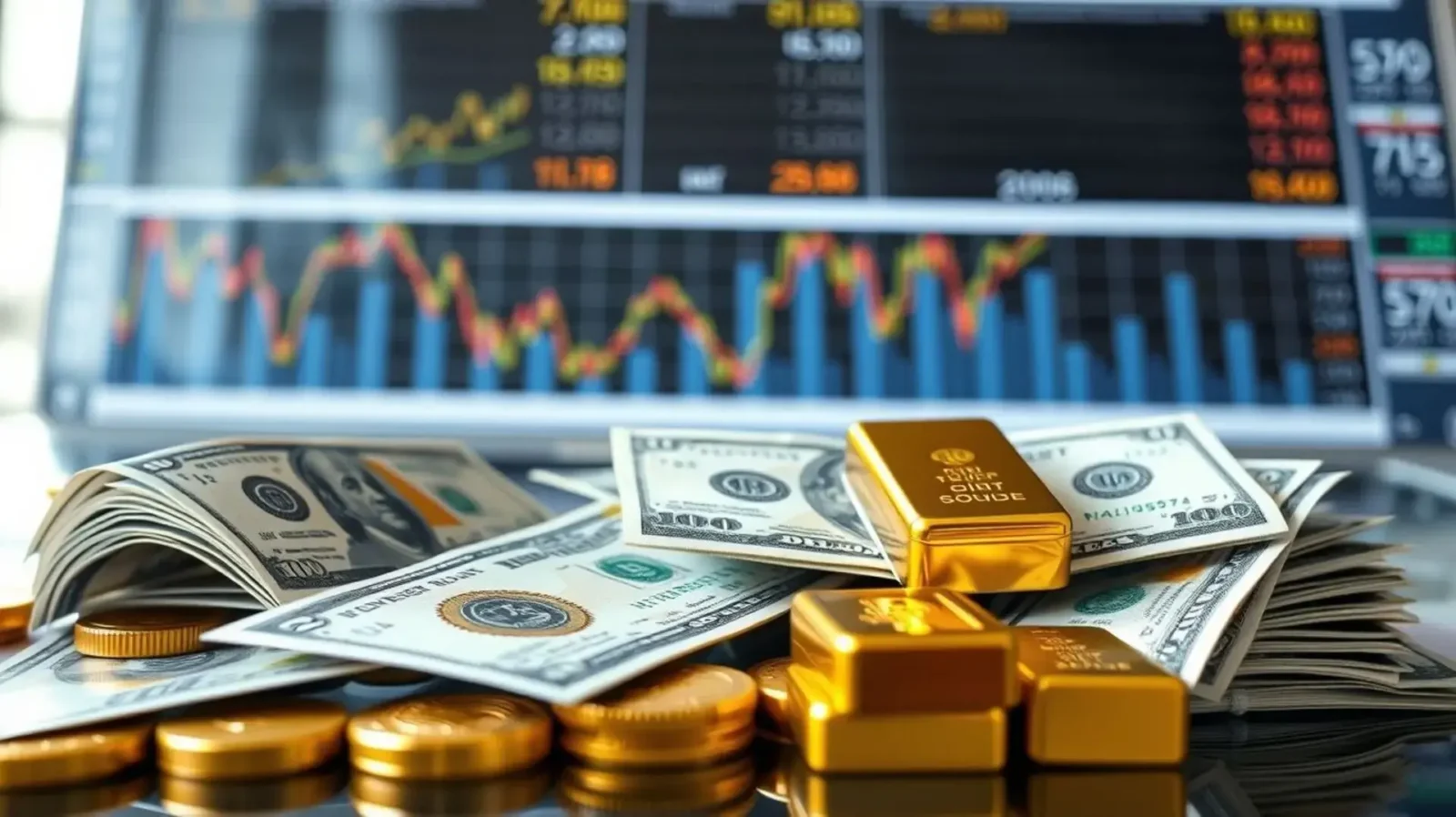
Mumbai, October 8, 2025 — In a historic moment for global financial markets, gold prices shattered the $4,000 per ounce barrier for the first time on October 7, 2025, marking a dramatic shift in investment patterns as traders and institutions worldwide seek refuge from economic turbulence, currency depreciation, and escalating geopolitical risks.
Gold futures settled at $4,004.40 per ounce on the COMEX exchange after reaching an intraday peak of $4,014.60, cementing the precious metal’s status as the year’s standout performer. The rally represents an extraordinary 50% gain since January, coinciding with a 10% decline in the US Dollar Index and mounting questions about the direction of American economic and monetary policy.
Build the future you deserve. Get started with our top-tier Online courses: ACCA, HESI A2, ATI TEAS 7, HESI EXIT, NCLEX-RN, NCLEX-PN, and Financial Literacy. Let Serrari Ed guide your path to success. Enroll today.
The Perfect Storm Driving Gold’s Historic Rally
The convergence of multiple economic forces has created an unprecedented environment for gold investment. The weakening dollar has made gold more attractive to international buyers, while persistent inflation concerns continue to erode confidence in traditional currency holdings. Simultaneously, ongoing trade disputes and geopolitical tensions have pushed both institutional and retail investors toward assets perceived as safe havens during periods of market instability.
Market analysts point to the dollar’s declining strength as a primary catalyst for gold’s ascent. As the world’s reserve currency loses purchasing power, investors across continents have redirected capital into tangible assets that historically maintain value during currency crises. The inverse relationship between the dollar and gold has rarely been more pronounced than in the current market environment.
Central Banks Lead the Charge in Gold Accumulation
A significant driver behind gold’s meteoric rise has been the aggressive accumulation strategy employed by central banks worldwide. China, in particular, has dramatically expanded its gold reserves while simultaneously reducing its holdings of US Treasury securities. This strategic pivot reflects a broader de-dollarization trend that gained momentum following the implementation of economic sanctions against Russia in 2022.
The sanctions demonstrated to many nations the potential vulnerability of holding dollar-denominated assets, prompting a fundamental reassessment of reserve composition strategies. Countries seeking to insulate themselves from potential economic coercion have increasingly viewed gold as a neutral, universally accepted store of value that cannot be frozen or seized through financial system mechanisms.
Beyond China, numerous emerging market economies have accelerated their gold purchases, viewing the precious metal as essential diversification away from Western financial instruments. This institutional demand has provided sustained upward pressure on prices, creating a floor beneath the market even during periods of temporary profit-taking by speculative traders.
Retail Investors Join the Gold Rush
While central bank purchases have provided crucial support, retail investor demand has surged to levels not seen since the financial crisis of 2008. Concerned about equity market volatility and the diminishing purchasing power of savings accounts, individual investors have flocked to gold through various vehicles including physical bullion, exchange-traded funds, and gold mining stocks.
The proliferation of accessible investment platforms has democratized gold ownership, allowing even small-scale investors to gain exposure to precious metals with minimal friction. Digital gold platforms and fractional ownership programs have removed traditional barriers to entry, enabling a new generation of investors to participate in the gold market without the logistical challenges of physical storage and security.
Consumer sentiment surveys indicate that inflation protection remains the primary motivation for retail gold purchases. With official inflation metrics showing persistent price pressures and many households experiencing even higher costs for essential goods and services, gold’s historical role as an inflation hedge has resonated powerfully with everyday investors seeking to preserve their wealth.
Federal Reserve Policy Shifts Fuel Momentum
The Federal Reserve’s decision to implement its first interest rate reduction of 2025 in September provided additional fuel to gold’s rally. The rate cut lowered the opportunity cost of holding non-yielding assets like gold, making the precious metal more attractive relative to short-term debt instruments such as Treasury bills and money market funds.
The federal funds rate currently ranges between 4.00% and 4.25%, representing a significant retreat from the restrictive monetary policy stance maintained throughout much of 2024. Market participants widely anticipate at least two additional rate reductions before year-end, with the next Federal Open Market Committee meeting scheduled for October 29 closely watched for further policy guidance.
Lower interest rates typically benefit gold by reducing the relative appeal of income-generating alternatives. When bonds and savings accounts offer diminishing yields, investors naturally gravitate toward assets that preserve purchasing power over time, even if they don’t generate regular income. This dynamic has been particularly pronounced in the current environment, where real interest rates remain barely positive or even negative when adjusted for inflation.
One decision can change your entire career. Take that step with our Online courses in ACCA, HESI A2, ATI TEAS 7, HESI EXIT, NCLEX-RN, NCLEX-PN, and Financial Literacy. Join Serrari Ed and start building your brighter future today.
Legendary Investors Champion Gold Allocation
The endorsement of gold by prominent investment figures has added credibility to the precious metal’s resurgence. Ray Dalio, founder of Bridgewater Associates, one of the world’s largest hedge funds, has been particularly vocal about gold’s role in a balanced portfolio. Dalio recommended that investors maintain approximately 15% of their portfolio in gold, arguing that traditional debt instruments have ceased to function effectively as wealth preservation vehicles.
“Gold is the one asset that does very well when the typical parts of your portfolio go down,” Dalio stated in recent commentary. His perspective reflects growing skepticism about the sustainability of debt-driven economic models and concerns about the long-term value of fiat currencies subject to unlimited expansion by central authorities.
Other influential investors have echoed similar themes, noting that gold serves as portfolio insurance against systemic financial risks. The precious metal’s lack of counterparty risk distinguishes it from virtually all other financial assets, which depend on the performance and solvency of institutions or governments for their value.
Cautionary Notes Amid Euphoria
Despite the bullish momentum, not all market observers share equal enthusiasm at current price levels. Bank of America strategists have counseled clients to exercise caution as gold approaches and exceeds the $4,000 threshold, warning of potential “uptrend exhaustion” that could trigger a meaningful correction later in 2025.
Technical analysts note that gold’s rapid appreciation has left the market vulnerable to profit-taking, particularly if any of the supportive factors begin to reverse. A surprise strengthening of the dollar, resolution of major geopolitical tensions, or unexpected economic strength could each serve as catalysts for a pullback from current elevated levels.
Options market data reveals increased hedging activity among gold holders, suggesting that even bulls are preparing for potential volatility. The cost of put options protecting against downside risk has risen substantially, indicating that investors recognize the possibility of a near-term correction even as they maintain long-term bullish convictions.
Structural Implications for Global Finance
Gold’s breakthrough above $4,000 represents more than just a numerical milestone. It signals a profound shift in how investors worldwide view risk, value, and the stability of the international monetary system. The move toward gold and away from traditional reserve assets reflects diminishing confidence in the frameworks that have governed global finance for decades.
The implications extend beyond individual portfolios to questions about the future architecture of international trade and finance. As more countries diversify away from dollar reserves and embrace alternative stores of value, the global monetary landscape may be entering a period of historic transformation comparable to the breakdown of the Bretton Woods system in the 1970s.
Trade Tensions and Geopolitical Uncertainty
Ongoing trade disputes between major economic powers have contributed significantly to gold’s appeal. Uncertainty about tariff policies, supply chain stability, and international economic cooperation has driven investors toward assets insulated from political decisions. Gold’s universal acceptance and independence from any single nation’s policies make it particularly attractive in an era of fragmented geopolitics.
Regional conflicts and diplomatic tensions have further supported demand for safe-haven assets. When traditional risk assessment models struggle to quantify potential outcomes, investors increasingly prefer the tangible certainty of physical assets over financial instruments dependent on complex webs of institutional relationships.
The Path Forward
As gold consolidates above $4,000 per ounce, market participants debate whether this level represents a temporary peak or merely a waypoint in a longer-term upward trajectory. Bulls point to structural factors including continued central bank buying, persistent inflation, currency debasement, and geopolitical instability as enduring supports for higher prices.
Bears counter that extreme sentiment readings, stretched valuations relative to historical norms, and the potential for policy normalization could conspire to produce a significant reversal. The resolution of this debate will likely depend on macroeconomic developments over the coming quarters, particularly the trajectory of inflation, currency markets, and geopolitical stability.
What remains clear is that gold has reclaimed its position at the center of global investment strategy. Whether viewed as insurance, speculation, or prudent diversification, the precious metal has demonstrated its enduring relevance in modern portfolios. The $4,000 milestone stands as testament to gold’s timeless appeal during periods when traditional assurances about economic stability and currency reliability come into question.
For investors navigating increasingly complex and uncertain markets, gold’s message is unambiguous: in an era of unprecedented monetary experimentation and geopolitical flux, the ancient store of value continues to offer what paper promises increasingly cannot—tangible security independent of any institution’s balance sheet or government’s policy choices.
Ready to take your career to the next level? Join our Online courses: ACCA, HESI A2, ATI TEAS 7 , HESI EXIT , NCLEX – RN and NCLEX – PN, Financial Literacy!🌟 Dive into a world of opportunities and empower yourself for success. Explore more at Serrari Ed and start your exciting journey today! ✨
Track GDP, Inflation and Central Bank rates for top African markets with Serrari’s comparator tool.
See today’s Treasury bonds and Money market funds movement across financial service providers in Kenya, using Serrari’s comparator tools.
Photo source: Google
By: Montel Kamau
Serrari Financial Analyst
8th October, 2025