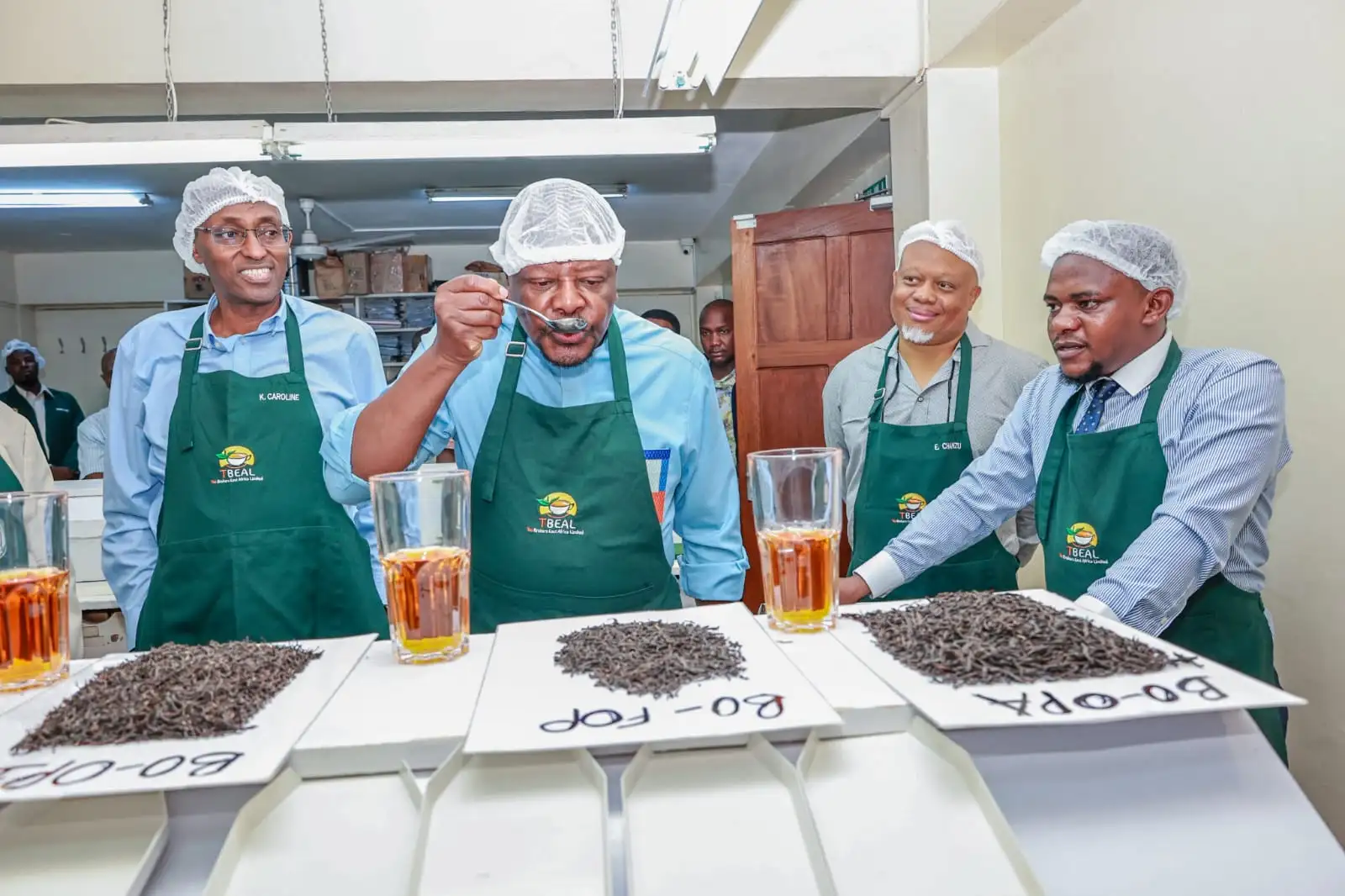
Kenya marked a historic milestone in its tea industry by launching its first orthodox tea auction in Mombasa, signaling a strategic shift toward premium specialty markets as the country seeks to maximize revenue from its position as the world’s largest tea exporter. The inaugural auction successfully traded 2,925 packages equivalent to 91,798 kilograms of orthodox teas, representing a decisive move away from the traditional black CTC (Cut, Tear, Curl) teas that have dominated Kenya’s exports for decades.
Agriculture Cabinet Secretary Mutahi Kagwe announced the diversification strategy during the launch ceremony, emphasizing Kenya’s commitment to capturing evolving global market opportunities. “We have decided to diversify markets by increasing capacity to produce orthodox teas in order to capture the ever-changing global market,” Kagwe stated, highlighting the premium pricing potential that orthodox varieties command over conventional CTC grades.
Build the future you deserve. Get started with our top-tier Online courses: ACCA, HESI A2, ATI TEAS 7, HESI EXIT, NCLEX-RN, NCLEX-PN, and Financial Literacy. Let Serrari Ed guide your path to success. Enroll today.
Strategic Market Repositioning
The orthodox tea auction represents a fundamental shift in Kenya’s tea marketing strategy, addressing longstanding concerns about the country’s heavy reliance on bulk commodity sales despite its dominant export volumes. While Kenya remains the world’s largest tea exporter by volume, exporting 595 million kilograms in 2024, the country has historically earned lower revenues per kilogram compared to competitors like Sri Lanka and India who focus on higher-value specialty markets.
The East African Tea Trade Association (EATTA), which operates the world’s largest black tea auction by volume in Mombasa, has created dedicated infrastructure for orthodox tea trading. This development follows sustained challenges facing the traditional CTC market, including oversupply conditions and depressed pricing that have created substantial unsold tea inventories over recent years.
Kenya has licensed 22 orthodox manufacturers as of 2024, with ambitious plans to double this number to 42 by 2027. The expansion targets dramatic capacity growth from 15 million kilograms in 2024 to 200 million kilograms by 2030, representing more than thirteen-fold increase in orthodox tea production capability.
Premium Pricing and Market Potential
Orthodox teas command significantly higher prices in international markets, with premium varieties fetching between $3.50 and $7.00 per kilogram compared to standard CTC grades. Some ultra-premium orthodox varieties can achieve even higher prices, with specialty producers like Emrok Tea Factory earning between $7 and $55 per kilogram for their finest tippy golden flowery orange pekoe grades, compared to an average of $2.75 for Kenyan CTC black teas.
At the recent Mombasa auction, traders expressed optimism that orthodox tea would trade between Sh390 and Sh1,300 per kilogram, representing substantial improvements over traditional CTC pricing of approximately Sh296 per kilogram. These price differentials highlight the significant revenue potential from successful market diversification.
Cabinet Secretary Kagwe emphasized that orthodox and specialty teas represent a lucrative niche market growing at 6% annually, currently dominated by traditional tea-producing countries including Sri Lanka, India, and China. Kenya’s entry into this premium segment aims to capture greater value from its high-quality tea production capabilities.
Production Infrastructure and Quality Assurance
Kenya has established comprehensive infrastructure to support orthodox tea production and quality assurance. The country has established a specialized tea quality assurance laboratory in Mombasa offering real-time quality advisory services, product testing, and food safety certification to ensure consistency with international premium market standards.
The Kenya Tea Development Agency (KTDA), which manages over 600,000 smallholder farmers through 70 processing facilities, has developed 34 factories dedicated to pure orthodox production. Major producers now manufacturing orthodox varieties include established operations such as Siomo Tea, Choimim, Nndarawetta, and Matunwa, alongside KTDA’s expanding network of smallholder-focused facilities.
Advanced processing facilities like Emrok Tea Factory in Nandi County have invested heavily in state-of-the-art orthodox production lines, with some operations achieving full automation to ensure consistent quality and minimize manual handling. These investments, typically costing approximately Sh30 million per processing line, demonstrate the industry’s commitment to meeting international premium market standards.
Global Market Context and Competition
Kenya’s orthodox tea initiative occurs within a global tea market valued at USD 35 billion in 2023, with increasing consumer awareness of health benefits driving demand for premium and specialty varieties. The market shows particular growth in organic and specialty tea segments, with green and herbal teas gaining popularity among health-conscious consumers seeking functional benefits including immune-boosting and detoxifying properties.
However, Kenya faces significant competitive challenges in premium markets. Current production remains heavily skewed toward CTC varieties, with specialty teas representing less than 1% of total export volumes compared to China’s 88% green tea export composition. This concentration in bulk commodity grades has historically limited Kenya’s ability to capture premium market value despite superior export volumes.
Major tea-consuming markets show distinct preferences that favor diversified production. European markets increasingly favor green tea, herbal tea, and fruit teas for their unique taste profiles and health benefits, while consumers express growing preference for natural, organic, and innovative tea products. These trends create substantial opportunities for Kenyan producers capable of meeting premium market requirements.
One decision can change your entire career. Take that step with our Online courses in ACCA, HESI A2, ATI TEAS 7, HESI EXIT, NCLEX-RN, NCLEX-PN, and Financial Literacy. Join Serrari Ed and start building your brighter future today.
Technological Innovation and Processing Methods
Orthodox tea production requires fundamentally different processing approaches compared to traditional CTC methods. While CTC processing uses mechanical crushing, tearing, and curling to create uniform small particles suitable for tea bags, orthodox processing preserves whole leaf integrity through careful rolling and controlled oxidation, resulting in more elegant flavor profiles with fruity and floral notes.
Kenya’s orthodox producers are implementing sophisticated processing technologies to ensure quality consistency. Modern facilities incorporate computer-controlled withering systems, precision rolling equipment, and automated color sorting machines that can grade tea into multiple categories based on appearance and quality characteristics. These investments enable Kenyan producers to compete effectively with established orthodox tea manufacturers in traditional producing regions.
The country has also developed unique specialty varieties including purple tea, which contains high levels of anthocyanin antioxidants and represents a completely novel product in global markets. Kenya remains the only country commercially producing purple tea, providing a distinct competitive advantage in specialty market segments seeking innovative healthy beverage options.
Digital Trading Platform and Transparency
The Mombasa Tea Auction is implementing digital transformation initiatives to enhance transparency and improve market access for international buyers. Kagwe announced that the auction platform is going online internationally to increase transparency, improve farmer returns, and ensure Kenya maintains global competitiveness in rapidly evolving tea markets.
Digital auction platforms provide several advantages including real-time price discovery, enhanced market access for smaller producers, and improved traceability throughout the supply chain. These capabilities become particularly important for orthodox and specialty teas where quality differentiation and origin authentication significantly impact pricing and market acceptance.
The East African Tea Trade Association manages the auction operations through its Tea Trade Centre facility, coordinating weekly sales that attract buyers from more than fifty countries globally. The association’s expansion into orthodox tea trading represents recognition of shifting market dynamics and the necessity of platform diversification to maintain relevance in evolving global tea commerce.
Economic Impact and Farmer Benefits
Kenya’s tea sector generated KES 215.21 billion ($1.66 billion) in 2024, including KES 181.69 billion from exports, according to Central Bank of Kenya and Tea Board of Kenya data. The industry directly supports over 600,000 smallholder farming families and provides employment for hundreds of thousands of additional workers in processing, transportation, and related services.
Orthodox tea production offers particular benefits for smallholder farmers who comprise the majority of Kenya’s tea producers. Higher unit values for orthodox grades can significantly improve farmer incomes while requiring minimal changes to existing cultivation practices. The Kenya Tea Development Agency has prioritized orthodox tea development as a key strategy for improving farmer livelihoods while reducing dependence on volatile commodity market pricing.
Cabinet Secretary Kagwe assured buyers that Kenyan farmers possess the capacity to meet rising global demand for specialty teas, citing the country’s year-round production capability and established quality standards. Kenya produced 7.51 million kilograms of orthodox tea in 2024, with 5 million kilograms exported, demonstrating existing production capabilities that can serve as foundation for planned capacity expansion.
Market Access and International Partnerships
Kenya’s orthodox tea faces the challenge of establishing market presence in segments traditionally dominated by established producers. However, the country’s reputation for consistent quality and year-round production provides competitive advantages in markets seeking reliable premium tea supplies.
Major international markets show distinct consumption patterns that create opportunities for Kenyan orthodox varieties. Pakistan, Kenya’s largest export market accounting for 34.7% of total volumes, primarily imports CTC black tea for its strong flavor preferences. However, emerging middle-class consumers in key markets increasingly seek premium and organic tea products, creating openings for higher-value Kenyan orthodox grades.
European markets represent particularly attractive targets for Kenyan orthodox expansion, given growing consumer preference for specialty teas with health benefits and ethical production practices. Kenya’s reputation for sustainable production methods and fair trade practices provides additional market access advantages in European premium tea segments.
Challenges and Future Outlook
Despite promising market opportunities, Kenya’s orthodox tea initiative faces several implementation challenges. Production capacity remains limited compared to CTC operations, requiring substantial additional investment in specialized processing equipment and technical expertise. The learning curve for orthodox tea production and quality consistency presents ongoing challenges for producers transitioning from traditional CTC methods.
Market development also requires sustained effort to establish brand recognition and customer relationships in premium tea segments where established producers enjoy decades of market presence. Successfully competing in orthodox markets demands consistent quality, reliable supply chains, and sophisticated marketing approaches that differentiate Kenyan products from established alternatives.
However, industry stakeholders express optimism about long-term prospects. The Tea Board of Kenya has formed specialized committees to drive specialty tea development, while processing innovations continue advancing product quality and consistency. Government support through policy frameworks and infrastructure development provides additional foundation for sector growth.
Strategic Significance
The launch of Kenya’s first orthodox tea auction represents more than market diversification; it signals the country’s commitment to moving up the global tea value chain while leveraging its established production strengths. Success in premium markets could provide a model for other African agricultural sectors seeking to capture greater value from commodity exports.
Kenya’s orthodox tea initiative occurs within broader agricultural transformation efforts aimed at increasing value addition and improving farmer incomes. The tea sector’s evolution toward premium markets demonstrates how established commodity producers can adapt to changing global consumer preferences while maintaining competitive advantages in quality and reliability.
As global tea consumption patterns continue evolving toward premium and health-focused products, Kenya’s orthodox tea auction positions the country to participate more effectively in higher-value market segments while maintaining its leadership in traditional bulk tea exports. The success of this diversification strategy will significantly influence Kenya’s ability to maximize returns from its substantial tea production capabilities in an increasingly competitive global marketplace.
Ready to take your career to the next level? Join our Online courses: ACCA, HESI A2, ATI TEAS 7 , HESI EXIT , NCLEX – RN and NCLEX – PN, Financial Literacy!🌟 Dive into a world of opportunities and empower yourself for success. Explore more at Serrari Ed and start your exciting journey today! ✨
Track GDP, Inflation and Central Bank rates for top African markets with Serrari’s comparator tool.
See today’s Treasury bonds and Money market funds movement across financial service providers in Kenya, using Serrari’s comparator tools.
photo source: Google
By: Montel Kamau
Serrari Financial Analyst
25th September, 2025