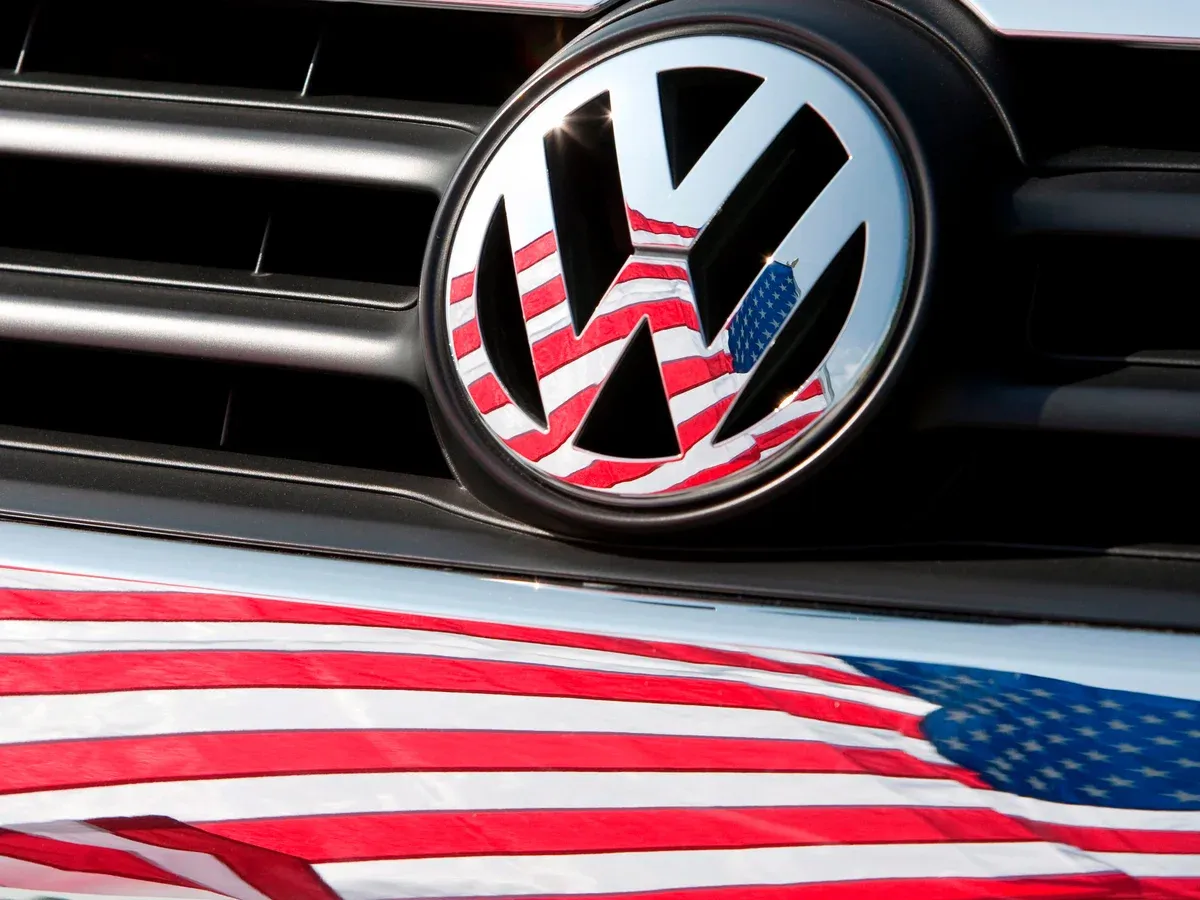
Volkswagen Group is engaged in high-stakes negotiations with the Trump administration, proposing a massive 10 billion investment package in the United States as the German automotive giant seeks relief from crippling tariffs that have already cost the company over $1.5 billion in the first half of 2025 alone.
The world’s second-largest automaker by sales volume has presented what CEO Oliver Blume describes as an “attractive investment package” to White House negotiators, with the ambitious proposal structured as a dollar-for-dollar offset against the company’s mounting tariff obligations. Under this framework, Volkswagen would receive one dollar in tariff relief for every dollar invested in American operations.
Build the future you deserve. Get started with our top-tier Online courses: ACCA, HESI A2, ATI TEAS 7, HESI EXIT, NCLEX-RN, NCLEX-PN, and Financial Literacy. Let Serrari Ed guide your path to success. Enroll today.
Record-Breaking Financial Impact Forces Strategic Pivot
The severity of the tariff impact became starkly apparent when Volkswagen reported second-quarter results in July, revealing that U.S. import duties alone cost the company €1.3 billion ($1.52 billion) in the first six months of the year. This represents a dramatic escalation from the €100 million ($117 million) tariff burden in the first quarter, highlighting how the 27.5% duties have intensified their financial impact on the company.
The tariff burden forced Volkswagen to slash guidance across multiple metrics, reducing expectations for operating return on sales from a previously forecast range of 5.5% to 6.5% down to just 4% to 5%. The company’s operating profit plummeted by 33% year-over-year to €6.7 billion ($7.88 billion), with tariffs accounting for the lion’s share of this decline.
Sales in North America collapsed by 16% primarily due to the tariff impact, creating a cascading effect across Volkswagen’s portfolio. The company’s premium brands, Audi and Porsche, have been particularly vulnerable since neither operates assembly plants on U.S. soil, making them entirely dependent on imports from European facilities.
“Asymmetrical” Trade Relations Fuel Corporate Frustration
Speaking at the prestigious IAA Munich show, CEO Oliver Blume didn’t mince words about what he characterized as fundamentally unfair trading conditions. Blume denounced the “asymmetrical” trade arrangement between the European Union and Washington, pointing out that while European car imports face tariffs of up to 27.5%, American industrial products enter Europe tariff-free.
This stark disparity has created what industry analysts describe as a competitive disadvantage that extends far beyond Volkswagen. The German automotive industry (VDA) has calculated that even under the recently negotiated U.S.-EU trade framework, which reduces automotive tariffs to 15%, the new tariff reality will cost domestic car companies billions annually.
Comprehensive Localization Strategy Takes Shape
Volkswagen’s proposed investment strategy represents a fundamental shift toward American manufacturing independence. The company’s multi-billion-dollar plan encompasses several key strategic initiatives designed to reduce import dependency while strengthening its competitive position in the world’s second-largest automotive market.
Potential Audi Manufacturing Hub
Central to the investment proposal is the potential construction of a dedicated Audi production facility within the United States. This would mark a historic expansion for the luxury brand, which currently lacks any manufacturing presence in North America. Industry sources suggest this facility could produce multiple Audi models specifically tailored for the American market, potentially including electric vehicles that would qualify for federal tax incentives under the Inflation Reduction Act.
Supply Chain Localization Initiative
Beyond manufacturing, Volkswagen is proposing substantial investments in localizing its supply chain infrastructure. This comprehensive approach would involve establishing partnerships with American suppliers, potentially creating a network of component manufacturers that could serve not only Volkswagen but other automotive companies operating in the region.
Strategic Job Creation Program
The employment aspect of Volkswagen’s proposal is particularly strategic, as job creation remains a key priority for the Trump administration. The company has indicated that its investment package would generate thousands of new American jobs across multiple skill levels, from manufacturing positions to high-tech engineering roles.
Existing U.S. Operations Provide Foundation for Expansion
Volkswagen already operates a significant manufacturing presence in the United States through its Chattanooga, Tennessee plant, where it produces the Atlas SUV and ID.4 electric crossover. This facility has served as a proving ground for the company’s American manufacturing capabilities and could potentially serve as a model for future expansion.
More significantly, Volkswagen is currently investing $2 billion in a South Carolina facility, where it plans to manufacture vehicles under the resurrected Scout brand. This 1,600-acre facility is expected to employ over 4,000 people and produce up to 200,000 vehicles annually when it reaches full capacity by 2027.
Scout Motors: The Electric Future Strategy
Scout Motors represents Volkswagen’s ambitious effort to create an authentically American electric vehicle brand, reviving the iconic Scout nameplate that was originally produced by International Harvester from 1961 to 1980. The South Carolina facility has been strategically designed to accommodate contract manufacturing, meaning it could potentially produce vehicles for other Volkswagen brands, providing maximum flexibility for the company’s American operations.
The Scout facility has benefited from a remarkable 1.3 billion incentive package from South Carolina, including infrastructure improvements such as a new Interstate 77 interchange, railroad bridge construction, and substantial upgrades to surrounding utilities and roads.
Fuel your success with knowledge that matters. Enroll in our Online programs: ACCA, HESI A2, ATI TEAS 7, HESI EXIT, NCLEX-RN, NCLEX-PN, and Financial Literacy. Join Serrari Ed now and take control of your future.
Trade Deal Progress Offers Cautious Optimism
The recent U.S.-EU trade framework has provided some relief for Volkswagen and other European automakers, though industry experts emphasize that challenges remain substantial. Under the trade deal announced in July 2025, automotive tariffs will be reduced from 27.5% to 15% once the European Union formally introduces legislation to eliminate its own tariffs on U.S. industrial goods.
The European Commission formally proposed elimination of tariffs on American industrial goods in late August, triggering the retroactive application of reduced automotive tariffs to August 1, 2025. While this development provides meaningful relief, industry analysts note that the 15% rate still represents “a significant burden” for automakers already dealing with compressed margins in a challenging market environment.
Broader Trade Framework Implications
The comprehensive trade agreement includes provisions for the EU to invest 600 billion dollars in the United States over President Trump’s term, while also committing to purchase $750 billion worth of U.S. energy. These broader economic commitments create a framework that could benefit companies like Volkswagen that are willing to make substantial American investments.
Critical Decision Timeline Pressures Leadership
CEO Oliver Blume has emphasized the urgency of the situation, indicating that investment decisions must be made quickly to effectively localize the business. The company faces what industry observers describe as a “perfect storm” of challenges, with Porsche particularly affected by being “sandwiched” between high U.S. tariffs and continued weakness in the Chinese market.
Leadership Structure Under Scrutiny
Adding complexity to the strategic decision-making process, Blume currently holds the unprecedented dual role of CEO for both Volkswagen Group and Porsche AG. He has acknowledged that this arrangement is not a long-term solution, though the group has not yet decided which position he will retain, a situation that has drawn criticism from shareholders and unions.
Competitive Landscape Intensifies Pressure
Volkswagen’s strategic pivot comes as the American automotive market undergoes rapid transformation, particularly in the electric vehicle segment. The company faces intensifying competition from both traditional Detroit automakers like General Motors and Ford, as well as electric-focused companies such as Tesla and Rivian.
The tariff impact has extended across the automotive sector, with General Motors reporting $1.1 billion in tariff-related losses over the second quarter alone, while Stellantis expects $2.7 billion in first-half losses partially attributed to U.S. duties.
Electric Vehicle Market Dynamics
The transition to electric vehicles adds another layer of complexity to Volkswagen’s American strategy. The Inflation Reduction Act’s requirements for domestic content and final assembly mean that imported electric vehicles face significant disadvantages in the American market, both from tariffs and lost consumer incentives.
Strategic Implications and Industry Outlook
Volkswagen’s proposed $10 billion investment represents more than a response to tariff pressures—it signals a fundamental strategic realignment toward American manufacturing independence. This shift reflects broader trends in the global automotive industry, where geopolitical tensions and trade policies are increasingly driving localization decisions.
Technology Transfer and Innovation
The investment proposal could facilitate significant technology transfer between Volkswagen’s global operations and its American facilities. This includes advanced manufacturing techniques, electric vehicle technologies, and software development capabilities that could enhance the competitiveness of American automotive manufacturing.
Supply Chain Resilience
By localizing production and supply chains, Volkswagen would be building resilience against future trade disruptions while positioning itself to benefit from American industrial policy initiatives. This strategy aligns with broader governmental objectives of reshoring critical manufacturing capabilities.
White House Response and Next Steps
White House spokesman Kush Desai indicated that “the Trump administration is always ready to encourage and support new investment into the United States,” while emphasizing that “the best way to avoid tariffs is to build your product in the USA”.
The administration’s response suggests receptiveness to Volkswagen’s proposal, particularly given its alignment with the “America First” manufacturing priorities that have characterized Trump’s trade policy. However, the specific terms of any agreement will likely depend on detailed negotiations about investment timelines, job creation commitments, and technology transfer requirements.
Regulatory and Legal Considerations
Volkswagen’s direct sales model for Scout Motors has already generated legal challenges, with the National Automobile Dealers Association and various state dealer groups filing lawsuits alleging violations of franchise laws. Resolving these issues will be crucial for the company’s broader American expansion strategy.
Conclusion: A Pivotal Moment for Transatlantic Automotive Trade
Volkswagen’s $10 billion investment proposal represents a watershed moment in the evolution of transatlantic automotive trade. The company’s willingness to make such a substantial commitment underscores both the severity of current tariff impacts and the strategic importance of the American market for global automotive success.
The outcome of these negotiations will likely influence how other international automakers approach the American market, potentially setting precedents for future trade relationships between the United States and its major trading partners. For Volkswagen, success could transform the company from a European manufacturer with American operations into a truly binational automotive powerhouse.
As the negotiations continue, industry observers will be watching closely to see whether this bold investment strategy can successfully navigate the complex intersection of trade policy, automotive manufacturing, and geopolitical considerations that will define the future of the global automotive industry.
This story continues to develop as negotiations between Volkswagen and the Trump administration progress. Further updates will be provided as additional details become available.
Ready to take your career to the next level? Join our Online courses: ACCA, HESI A2, ATI TEAS 7 , HESI EXIT , NCLEX – RN and NCLEX – PN, Financial Literacy!🌟 Dive into a world of opportunities and empower yourself for success. Explore more at Serrari Ed and start your exciting journey today! ✨
Track GDP, Inflation and Central Bank rates for top African markets with Serrari’s comparator tool.
See today’s Treasury bonds and Money market funds movement across financial service providers in Kenya, using Serrari’s comparator tools.
Photo source: Google
By: Montel Kamau
Serrari Financial Analyst
9th September, 2025