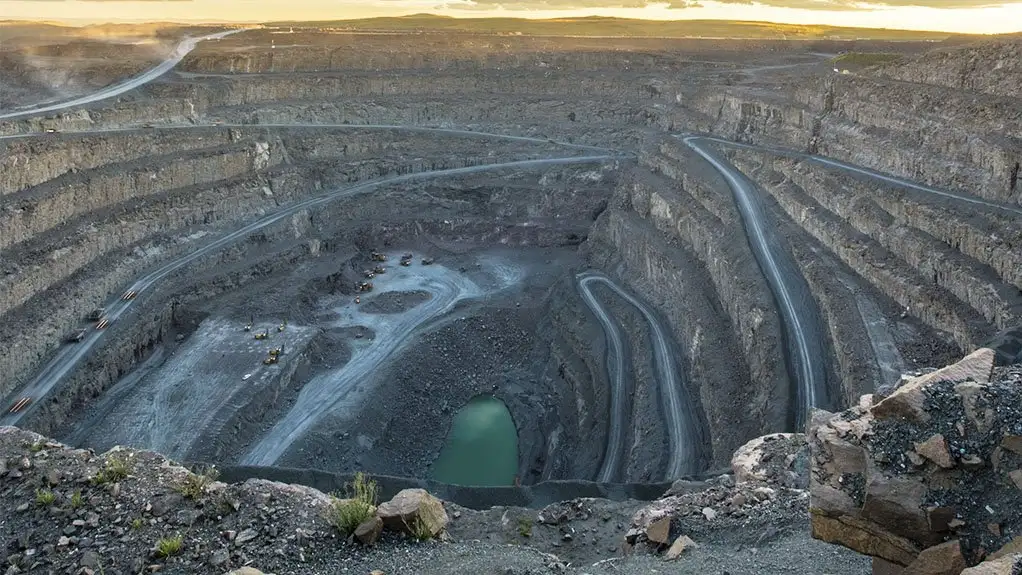
Lesotho’s biggest diamond mine, Letseng, has laid off 240 workers, a fifth of its workforce, as it battles persistently low gem prices due to weak demand and an uncertain global economic environment, parent company Gem Diamonds said on Thursday, highlighting the deepening crisis engulfing the global diamond industry.
One decision can change your entire career. Take that step with our Online courses in ACCA, HESI A2, ATI TEAS 7, HESI EXIT, NCLEX-RN, NCLEX-PN, and Financial Literacy. Join Serrari Ed and start building your brighter future today.
Economic Significance for Lesotho
Diamonds are vital to Lesotho’s economy, with the sector contributing up to 10% of its GDP and providing employment for thousands in the country of just over 2 million people. Diamonds are also Lesotho’s major export commodity, along with textiles and clothing, making the industry’s health critical to the nation’s economic stability.
The small landlocked kingdom, completely surrounded by South Africa, has historically relied on natural resources and water exports to drive economic growth. Despite possessing some of the world’s highest-quality diamonds, Lesotho remains one of Africa’s poorest countries, with unemployment exceeding 30% and significant social challenges including one of the world’s worst HIV/AIDS epidemics.
Mine Operations and Financial Impact
Gem Diamonds said its Letseng mine, which produces some of the world’s largest and most valuable gems such as the 910-carat “Lesotho Legend”, had revised its mine plan and cut jobs to reduce costs in response to market pressures.
“Sustained pricing pressure, softer demand in key markets, ongoing macroeconomic and geopolitical uncertainty, and tariff uncertainties in respect of India, combine to create difficult trading conditions,” Gem Diamonds CEO Clifford Elphick said in a statement.
The company’s financial results paint a stark picture of the industry’s challenges. Gem Diamonds reported a half-year loss of $11.7 million, compared to a $2.1 million profit a year earlier, after revenue plunged 42% on the back of weaker prices. The company booked a $10.7 million impairment on the value of Letseng due to the weak diamond prices.
Production and Pricing Decline
The company realized an average price of $1,008 per carat in the six months to June 30, 26% lower than last year. Its half-year production was 47,125 carats, compared to 55,873 carats during the same period last year, reflecting broader industry struggles.
Despite the challenging market conditions, Letseng continues to recover significant diamonds, including recent recoveries of stones over 100 carats. The mine is renowned for producing large, top-color, exceptional white diamonds, making it the highest average dollar per carat kimberlite diamond mine in the world.
Global Diamond Industry Crisis
Diamond prices have fallen about 35% from early 2022 highs due to changing consumer preferences and the rise of lab-grown gems, according to the Zimnisky Global Rough Diamond Price Index. The crisis represents more than a cyclical downturn—it reflects fundamental structural changes in the industry.
Unlike previous industry crises stemming primarily from external economic factors, the current situation involves direct competition from synthetic diamonds that poses a threat to the industry’s core value proposition. The challenge is compounded by aggressive marketing campaigns by lab-grown diamond producers that not only emphasize their advantages but also delegitimize natural diamonds.
Lab-Grown Diamond Market Disruption
The lab-grown diamond market reached nearly $9 billion in sales in 2024, representing a massive disruption to traditional diamond mining. Research shows the global lab-grown diamonds market is expected to reach $97.85 billion by 2034, expanding at a compound annual growth rate of 14.15%.
The rise of cheaper, lab-made gems is having profound effects across diamond-producing nations. Botswana, the world’s second-largest diamond producer, is experiencing its worst economic crisis in decades as lab-grown diamonds undermine the revenue that has made its people among the richest in sub-Saharan Africa.
McKinsey research indicates that younger consumers, particularly Gen Z, are increasingly drawn to sustainable and ethically sourced products, with one-third of fine jewelry purchases expected to be influenced by environmental, social, and governance (ESG) factors by 2025.
Build the future you deserve. Get started with our top-tier Online courses: ACCA, HESI A2, ATI TEAS 7, HESI EXIT, NCLEX-RN, NCLEX-PN, and Financial Literacy. Let Serrari Ed guide your path to success. Enroll today.
Industry-Wide Response and Casualties
Miners across the globe have responded by curbing output, cutting jobs and halting projects. The crisis has created casualties throughout the industry:
De Beers, the world’s largest producer by value, saw a 44% drop in revenue in Q1 2025 and is sitting on $2 billion in unsold inventory. The company plans to cut over 1,000 jobs at its Debswana joint venture in Botswana.
Russia’s Alrosa, hampered by sanctions, reported a 77% plunge in profits and has halted production at key sites. Lucapa entered voluntary administration in Australia, while Sierra Leone’s Koidu Limited shuttered operations and laid off more than 1,000 employees after losing $16 million to labor strikes.
Regional Economic Impact
The crisis extends beyond individual companies to entire regional economies. IndustriALL Global Union’s diamond network recently met in Botswana to address the deepening crisis affecting diamond-dependent economies across Africa.
Africa remains a cornerstone of global diamond production, with 15 countries—including Botswana, South Africa, Angola, Namibia, and Lesotho—accounting for a significant share of global output. However, the current downturn threatens revenue streams that have funded crucial social services and infrastructure development.
US Trade Policy Complications
The situation has been further complicated by US trade policies. Reports indicate that the threat of US tariffs has already affected Letseng’s sales performance. In April 2025, the US imposed 50% tariffs on Lesotho, later temporarily reduced to 10% with an additional 40% suspended until August 1, but the effects continue to impact the diamond trade.
During the first quarter of 2025, Gem Diamonds’ performance declined significantly, selling 20,470 carats compared to 26,356 in the previous quarter, while revenues fell to $21.6 million from about $32 million.
Operational Adjustments and Future Outlook
In response to market conditions, Gem Diamonds has shortened the life of its Letseng mine by four years, scaling back waste mining at the main pipe’s cut 4 area to reduce costs. The company now plans to continue operating through 2035 rather than the previously targeted 2039, though it retains flexibility to extend operations should market conditions improve.
The mine has implemented comprehensive cost-cutting measures, including temporary salary reductions for board and senior management, in addition to the workforce reductions. These measures aim to position the operation for sustainability during the downturn while maintaining the capability to ramp up when conditions improve.
Structural Market Changes
The current crisis represents more than cyclical market volatility. Industry analysts note that manufacturers face a dual challenge: traditional thin margins have been completely eroded, often turning negative, while they must deal with structural gaps between purchasing and sales patterns.
Rough diamonds are sold in parcels with wide ranges of sizes, colors, and clarities—a result of the mining process—while polished demand has become increasingly focused and narrow. This forces manufacturers to purchase complete parcels even when lacking marketing channels for significant portions of their inventory.
Consumer Preference Evolution
The shift in consumer preferences reflects broader social trends, with younger generations prioritizing sustainability and ethical sourcing. Rising awareness of ESG factors and growing concerns about the ethical implications of mining natural stones have resulted in decreasing demand for natural diamonds in Western markets.
However, the lab-grown diamond market itself faces challenges, including loss of perceived value as prices decline, stricter regulations on labeling and marketing, and increasing market saturation. These factors may create opportunities for natural diamond producers to differentiate their products.
Economic Diversification Imperatives
For diamond-dependent economies like Lesotho, the crisis underscores the urgent need for economic diversification. Lesotho’s economy has historically been shaped by integration into South Africa’s regional economy, heavy reliance on labor migration, and natural resource exports.
The country participates in the Southern African Customs Union (SACU) and uses the South African rand as its common currency, making it economically integrated with South Africa while maintaining its own currency, the loti. This integration provides some stability but also exposes Lesotho to regional economic fluctuations.
Looking Forward
The diamond industry faces an inflection point requiring comprehensive reforms beyond simply addressing synthetic diamond competition. Industry experts suggest that effective marketing, supply chain optimization, and value proposition restructuring will be essential for natural diamond producers to remain competitive.
For Lesotho and other diamond-dependent nations, the crisis highlights the vulnerability of resource-dependent development models. The challenge ahead involves not only weathering the current downturn but also building more diversified, resilient economies that can provide sustainable employment and growth beyond the diamond sector.
As Glen Mpufane of IndustriALL noted, “retrenchments are not the solution to the crisis facing the diamond industry.” The path forward will require coordinated efforts from governments, industry stakeholders, and international partners to support affected workers and communities while building foundations for long-term economic sustainability.
The unfolding crisis at Letseng represents more than just another cyclical downturn in commodity markets—it signals a fundamental transformation in how value is created and perceived in the global diamond industry, with profound implications for the millions of people whose livelihoods depend on this glittering but increasingly precarious sector.
Ready to take your career to the next level? Join our Online courses: ACCA, HESI A2, ATI TEAS 7 , HESI EXIT , NCLEX – RN and NCLEX – PN, Financial Literacy!🌟 Dive into a world of opportunities and empower yourself for success. Explore more at Serrari Ed and start your exciting journey today! ✨
Track GDP, Inflation and Central Bank rates for top African markets with Serrari’s comparator tool.
See today’s Treasury bonds and Money market funds movement across financial service providers in Kenya, using Serrari’s comparator tools.
photo source: Google
By: Montel Kamau
Serrari Financial Analyst
5th September, 2025