
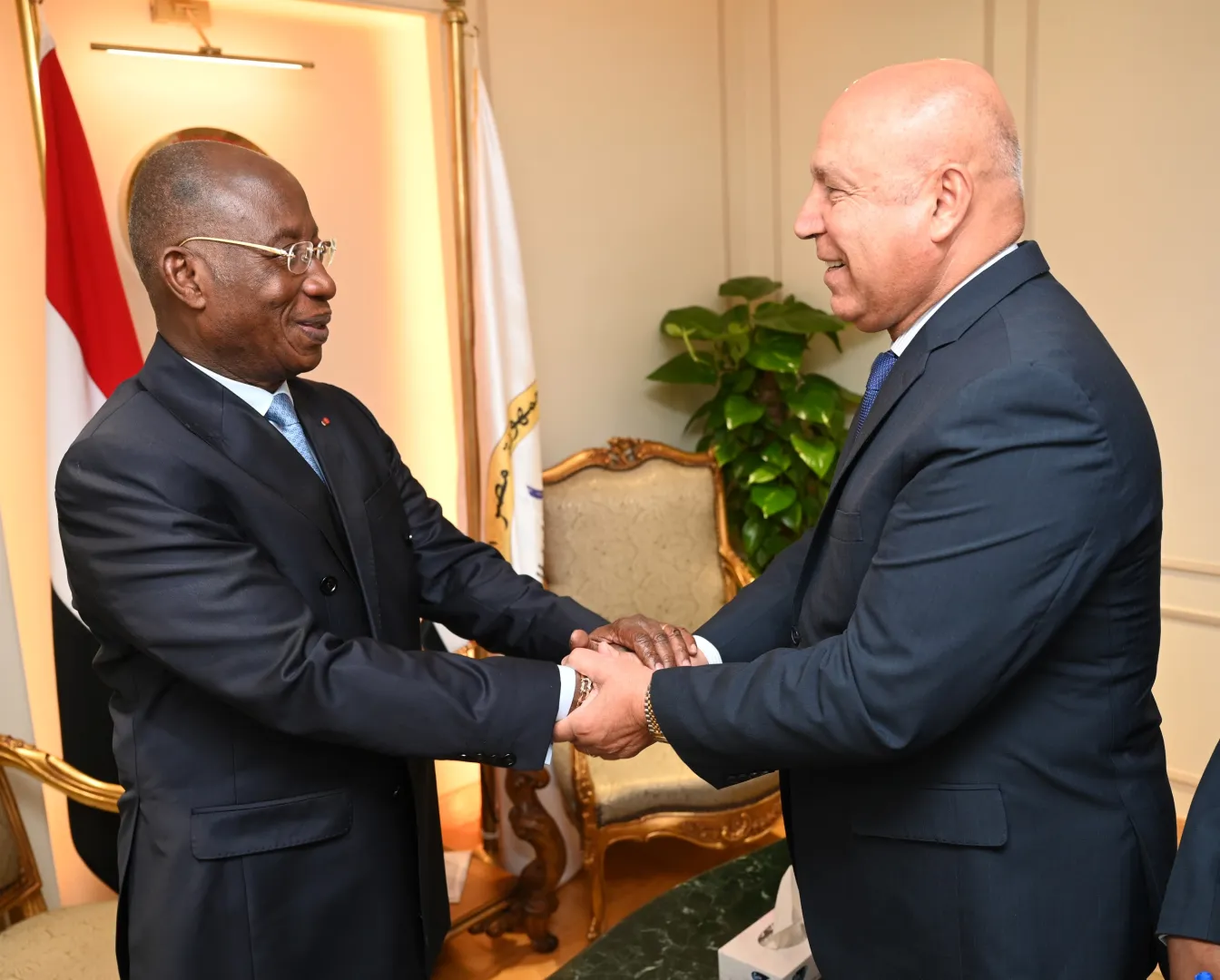
The recent high-level talks between Minister of Investment and Foreign Trade Hassan El-Khatib and Ivorian Minister of Foreign Affairs Kacou Houadja Léon Adom mark a significant moment in the burgeoning relationship between Egypt and Côte d’Ivoire. The discussions, which centered on strengthening economic and investment cooperation, signal a strategic effort to move beyond traditional diplomatic relations toward a deeper, more integrated economic partnership. This collaboration is set against the backdrop of a continent-wide push for economic integration, particularly through initiatives like the African Continental Free Trade Area (AfCFTA). This article will provide an in-depth analysis of the key drivers, opportunities, and strategic implications of this renewed bilateral focus, aiming to highlight the profound potential for growth and mutual benefit.
Build the future you deserve. Get started with our top-tier Online courses: ACCA, HESI A2, ATI TEAS 7, HESI EXIT, NCLEX-RN, NCLEX-PN, and Financial Literacy. Let Serrari Ed guide your path to success. Enroll today.
Understanding the Economic Landscapes
To fully grasp the significance of this partnership, it is crucial to understand the economic profiles of both nations. While both are key players in their respective regions, they possess distinct strengths that are highly complementary.
Egypt: The Gateway to North Africa and the Middle East
Egypt, as the Arab world’s most populous nation, has a diverse economy with significant contributions from services, industry, and agriculture. The service sector is dominant, driven by tourism, the Suez Canal, and a rapidly growing information and communication technology (ICT) industry. Industrially, Egypt is strong in textiles, food processing, chemicals, and construction. The country is also a major producer and exporter of energy products, including refined petroleum and natural gas. With its strategic location and well-developed infrastructure, Egypt positions itself as a natural gateway for trade and investment between Africa, the Middle East, and Europe. This is a crucial point highlighted by Minister Adom, who described Egypt as a “strategic partner and gateway to Africa,” a role it is actively seeking to expand.
Côte d’Ivoire: West Africa’s Economic Powerhouse
Côte d’Ivoire is widely considered the economic engine of the West African Economic and Monetary Union (UEMOA) and is a crucial hub within the Economic Community of West African States (ECOWAS). Its economy is heavily reliant on agriculture, which employs nearly 70% of the population and accounts for a significant portion of its GDP. The country is the world’s largest producer and exporter of cocoa beans, and it is a major player in the global markets for coffee, cashew nuts, and natural rubber. In recent years, the nation has also experienced rapid growth in its industrial and services sectors, particularly in construction, telecommunications, and finance. The Ivorian government has been implementing ambitious development plans, such as the National Development Plan (2021-2025), to diversify its economy and attract foreign investment beyond traditional agriculture.
The Pillars of a Renewed Partnership
The recent discussions between the two ministers were not just about high-level pleasantries; they were a roadmap for concrete collaboration across several key sectors.
1. Reinvigorating the Egyptian-Ivorian Business Council
A central theme of the talks was the reactivation of the Egyptian-Ivorian Business Council. This body is crucial for fostering direct, investor-led trade and investment. Historically, such councils serve as a platform for private sector leaders to network, identify opportunities, and address obstacles to bilateral commerce. The reactivation of this council signals a shift from government-centric to business-driven cooperation, empowering the private sector to be the primary engine of growth. This aligns with Egypt’s broader strategy to encourage private sector participation in its economy and with Côte d’Ivoire’s push for private investment to create higher-quality jobs and stimulate sustainable growth.
2. Doubling Bilateral Trade Volume
Currently, the bilateral trade volume between the two nations stands at a modest $300–$350 million. This is a small fraction of what is possible, given their combined economic strength. The stated goal of doubling this volume is ambitious but achievable. It will involve not only increasing the quantity of goods exchanged but also diversifying the types of products. Egypt, with its more advanced manufacturing base, can export industrial goods, chemicals, and pharmaceuticals, while Côte d’Ivoire can supply raw materials and agricultural products like cocoa, coffee, and timber. This exchange of raw materials for industrial products creates a balanced and mutually beneficial trade relationship, adding value at every stage of the supply chain. This is a fundamental principle of modern economic diplomacy.
Fuel your success with knowledge that matters. Enroll in our Online programs: ACCA, HESI A2, ATI TEAS 7, HESI EXIT, NCLEX-RN, NCLEX-PN, and Financial Literacy. Join Serrari Ed now and take control of your future.
3. A Focus on Key Sectors: Energy, Mining, and Agriculture
The discussions specifically highlighted three sectors with immense potential for collaboration:
- Energy: Both nations are actively pursuing energy development and diversification. While Côte d’Ivoire has a developing oil and gas sector and is investing in renewables, Egypt has significant experience in large-scale energy projects, including power plants and renewable energy farms. Egyptian companies could play a crucial role in building and managing energy infrastructure in Côte d’Ivoire, while both countries could explore joint ventures in oil and gas exploration.
- Mining: Côte d’Ivoire’s mining sector, though secondary to agriculture, is a significant and growing industry. The country is a major producer of gold and manganese, with recent discoveries of oil and gas promising to boost its extractive sector further. This presents a golden opportunity for Egyptian mining and engineering firms to invest in exploration and processing projects, bringing their technical expertise and capital to the table. Such cooperation can help Côte d’Ivoire add value to its raw materials, a key objective of its economic strategy.
- Agriculture: As a global leader in agricultural exports, Côte d’Ivoire is a natural partner for Egypt. Beyond the raw materials, there is significant potential for collaboration in agro-industries. Egyptian companies can invest in food processing facilities in Côte d’Ivoire, turning cocoa beans into chocolate, or raw cashews into processed nuts. This not only creates jobs and adds value but also strengthens food security within the region. Additionally, knowledge transfer on modern irrigation techniques and sustainable farming practices, in which Egypt has significant expertise, could be highly beneficial to the Ivorian agricultural sector.
4. Infrastructure and Logistics: Building the Backbone of Trade
A major challenge to intra-African trade is often a lack of robust infrastructure. The talks addressed this directly, with a proposal to redevelop Egypt’s state-owned building in Côte d’Ivoire into a logistics hub or permanent exhibition. This seemingly small step has powerful implications. A logistics hub would streamline the flow of goods, reducing costs and transit times. A permanent exhibition, meanwhile, would provide a consistent showcase for Egyptian products, making them more accessible to the Ivorian market and the wider West African region. The involvement of successful Egyptian companies like Arab Contractors and Orascom Construction in Ivorian infrastructure projects further underscores the practical application of this cooperation. These companies, with their extensive experience in building roads, bridges, and energy facilities, are perfectly positioned to help construct the physical arteries of this new trade partnership.
The Strategic and Geopolitical Dimension
The economic partnership between Egypt and Côte d’Ivoire must also be viewed through a wider strategic lens. This is not just a commercial arrangement; it is an important geopolitical move for both nations.
Egypt’s “Look South” Strategy
For Egypt, this partnership is a key component of its “Look South” strategy, aimed at deepening its engagement with the rest of Africa. For decades, Egypt’s foreign policy has been primarily focused on the Middle East and its immediate neighborhood. However, in recent years, there has been a conscious shift towards strengthening political, diplomatic, and economic ties with sub-Saharan African nations. This is driven by several factors, including the immense economic potential of the continent, the need to diversify trade partners, and a desire to assert its leadership role within the African Union. The partnership with Côte d’Ivoire, a stable and influential economic power in West Africa, is a perfect embodiment of this strategy.
Côte d’Ivoire’s Role as a Regional Hub
For Côte d’Ivoire, partnering with Egypt solidifies its role as a regional economic hub. By attracting investment from a major North African economy, it demonstrates its attractiveness as a destination for foreign capital and its potential as a manufacturing and logistics base for accessing the wider West African market. This partnership also strengthens its hand in regional trade negotiations and enhances its strategic position on the continent. The Ivorian government’s pledge to provide all possible facilities to Egyptian companies is a clear sign of its commitment to this strategic alignment.
Future Outlook and a Path Forward
The path to doubling trade and deepening economic ties is not without its challenges. It will require sustained political will, a commitment to streamlined regulations, and continuous communication between the private sectors of both nations. The reactivation of the business council is a crucial first step, but it must be followed by tangible actions, such as joint trade missions, investment forums, and the creation of a clear framework for dispute resolution.
The upcoming official visit of Minister El-Khatib to Côte d’Ivoire is a prime opportunity to move these discussions from aspiration to reality. It is a chance to sign concrete agreements, finalize investment plans, and set clear, measurable targets.
This renewed focus on collaboration between Egypt and Côte d’Ivoire is a microcosm of the broader trend of intra-African trade and investment. As the continent moves toward greater economic integration under the AfCFTA, partnerships between regional powerhouses will be key to unlocking the full potential of a unified market. This relationship serves as a model for how a stable, consumption-driven economy like Egypt can partner with a resource-rich, agriculture-based economy like Côte d’Ivoire to create a new, mutually beneficial economic reality. The future of this partnership looks bright, and its success will serve as a beacon for what is possible when African nations work together for shared prosperity.
Ready to take your career to the next level? Join our Online courses: ACCA, HESI A2, ATI TEAS 7 , HESI EXIT , NCLEX – RN and NCLEX – PN, Financial Literacy!🌟 Dive into a world of opportunities and empower yourself for success. Explore more at Serrari Ed and start your exciting journey today! ✨
Track GDP, Inflation and Central Bank rates for top African markets with Serrari’s comparator tool.
See today’s Treasury bonds and Money market funds movement across financial service providers in Kenya, using Serrari’s comparator tools.
Photo source: Google
By: Montel Kamau
Serrari Financial Analyst
15th August, 2025