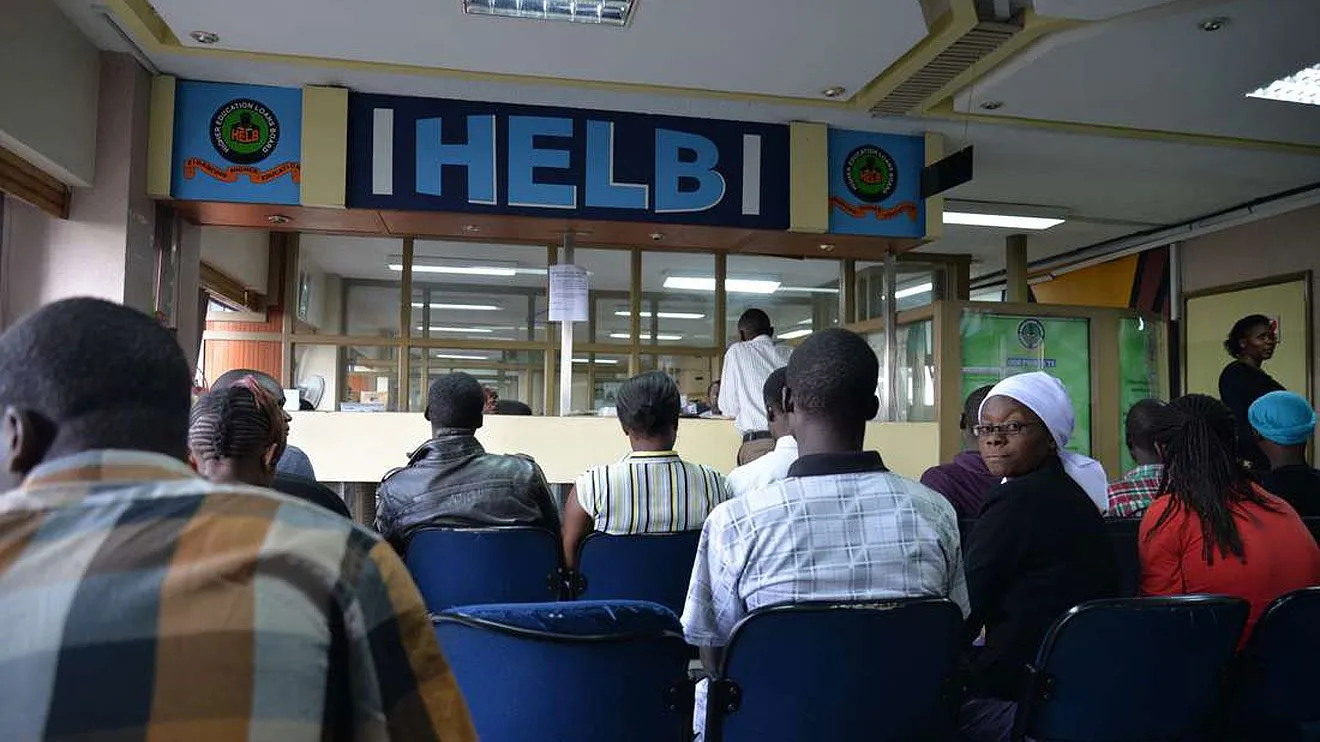
The Higher Education Loans Board (HELB) plays an indispensable role in Kenya’s education system, serving as the primary financier for thousands of university and technical college students. The board’s recent assurance that it has enough funds to cover the upcoming September university intake, despite a reported deficit for the 2025/2026 financial year, has been met with both relief and cautious optimism. This commitment, made by HELB Chief Executive Officer Geoffrey Monari to the National Assembly Committee on Implementation, is a critical development for students, parents, and the country’s educational future. It underscores the government’s renewed focus on student welfare under a new funding model, while also highlighting the persistent challenges of securing adequate and timely financing for a rapidly growing student population.
Push boundaries, reach goals, achieve more. Whether it’s ACCA, HESI A2, ATI TEAS 7, HESI EXIT, NCLEX-RN, NCLEX-PN, or Financial Literacy, we’ve got the course to match your ambition. Start with Serrari Ed now.
The Context: HELB’s Critical Role in Kenya’s Education System
Established in 1995, HELB’s mandate is to provide affordable loans, bursaries, and scholarships to Kenyans pursuing higher education. For decades, it has been a lifeline for countless students from low and middle-income backgrounds, enabling them to access university education that would otherwise be beyond their reach. The success of HELB is often measured not just by the amount of money it disburses but by the social mobility it facilitates, transforming lives and contributing to the nation’s human capital development.
However, HELB’s operations have long been fraught with challenges. The most significant among these are persistent funding deficits, low loan recovery rates, and delays in disbursement, which have often left students in precarious financial situations. The government’s decision to increase the allocation for the 2025/2026 fiscal year from the previous year’s Ksh36 billion to Ksh41 billion is a clear indication of its commitment to strengthening the board. Yet, as Monari acknowledged, this figure still leaves a gap that must be filled. The CEO’s confidence in the National Treasury’s promise to cover the deficit in the first supplementary budget provides a glimmer of hope, but it also places a heavy reliance on a process that is not always guaranteed to be swift.
The parliamentary inquiry itself is a testament to the high stakes involved. Members of the National Assembly Committee on Implementation, led by Kajiado East Member of Parliament Elijah Memusi, were rightly concerned about the readiness of the new funding model and the availability of funds. Their questioning was not merely an administrative exercise but a direct response to the anxieties of millions of students and their families who are preparing for a new academic year.
Decoding the New University Funding Model
A major shift in Kenya’s higher education financing came with the introduction of the new funding model. This model, a departure from the traditional approach, is designed to be student-centred and needs-based. Under the previous system, government funding for universities was a block grant, and students were given a uniform loan amount, regardless of their family’s financial situation.
The new model operates on a more nuanced approach, categorizing students into different funding tiers or bands based on an assessment of their socio-economic background. The assessment is conducted using a rigorous process that takes into account factors such as family income, size, and location. This tiered approach aims to ensure that students from the most vulnerable backgrounds receive the largest proportion of government support, while those from more affluent families are expected to shoulder a larger share of the cost. The funding for each student is now split into three parts: a scholarship component from the government, a loan from HELB, and a contribution from the family. This tripartite arrangement is at the heart of the new model’s philosophy.
While the new model is designed to be more equitable, it has introduced a new layer of complexity. The original news article provides a clear breakdown of the upkeep funds for each band:
- Band 1: Ksh60,000 for the year (Ksh30,000 per semester)
- Band 2: Ksh55,000 for the year (Ksh27,500 per semester)
- Band 3: Ksh50,000 for the year (Ksh25,000 per semester)
- Band 4: Ksh45,000 for the year (Ksh22,500 per semester)
- Band 5: Ksh40,000 for the year (Ksh20,000 per semester)
These figures, however, represent only the upkeep funds, which are intended to cover a student’s living expenses, food, and other personal needs. The separate scholarship component, which is processed differently, is meant to cover a portion of the tuition fees. This separation of funds is a significant change that has raised questions among students, who are used to receiving a single, consolidated disbursement.
The Elephant in the Room: HELB’s Funding Deficit
The core of the matter remains the funding deficit. Monari’s assurance is dependent on a commitment from the National Treasury to address the shortfall in the first supplementary budget. A supplementary budget is an adjustment to the main budget, typically used to provide funds for unforeseen expenses or to top up allocations that proved insufficient. While this is a common practice in government, relying on it for a critical service like student financing can be risky. Delays in the supplementary budget approval can lead to delays in disbursement, a recurring problem that the new funding model was meant to solve.
The increase in allocation from Ksh36 billion to Ksh41 billion is a positive step, but it must be viewed in the context of the ever-increasing number of students joining universities and the rising cost of living. A higher allocation does not automatically translate to a better-funded system if the demand for loans and scholarships has grown at an even faster rate. This is where the new funding model’s efficiency will be truly tested. By differentiating between students’ needs, the model is designed to stretch the available funds further, ensuring that the most deserving students get the support they need. However, if the overall funding is insufficient, even a well-designed model will struggle to meet the demand.
The issue of loan recovery is also a major factor. HELB’s sustainability depends on its ability to recover loans from past beneficiaries to fund new students. The HELB Act mandates the board to recover loans to create a revolving fund. For years, the number of loan defaulters has been a source of concern, with many struggling to find employment after graduation or to meet the repayment terms. The new funding model’s success will, in part, be judged by its ability to create a more robust and sustainable repayment system.
Build the future you deserve. Get started with top-tier courses in ACCA, HESI A2, ATI TEAS 7, HESI EXIT, NCLEX-RN, NCLEX-PN, and Financial Literacy. Let Serrari Ed guide your path to success. Enroll today.
A Deeper Look at the Disbursement Structure
The recent change in the disbursement structure, where the scholarship and upkeep components are now processed separately, has been a point of confusion for continuing students. Previously, students would receive a single lump sum that included both their fees and living allowance. The new system, as clarified by HELB, keeps the scholarship component for fees and the upkeep funds separate, with only the upkeep amount currently reflected in students’ accounts.
This separation of funds may have its benefits, such as allowing for more transparent accounting and ensuring that the tuition fee component is directly paid to the university, reducing the risk of misuse. However, it also creates a logistical challenge for students who are accustomed to managing a single payment. For a student with a Ksh60,000 yearly allocation for upkeep, receiving Ksh30,000 per semester might seem like a small amount when faced with the realities of rent, food, transport, and academic materials. The need to wait for the scholarship component, which is processed differently, adds an element of uncertainty. This is where communication becomes crucial, and HELB’s decision to clarify the change was a necessary step to address student concerns.
The Impact on Student Livelihoods
The new funding model and the associated disbursement changes will have a direct impact on the day-to-day lives of students. The band structure, which allocates different amounts for upkeep, means that students from different socio-economic backgrounds will have varying levels of support for their non-academic expenses.
For Band 1 students, who will receive Ksh60,000 per year, the funding might be sufficient to cover most of their basic needs, especially if they are in a university with affordable accommodation and a low cost of living. However, for Band 5 students, who receive Ksh40,000 per year, the amount may barely cover rent in some of the more expensive cities, leaving very little for food, transport, and other essential expenses. This disparity highlights the model’s core principle of targeting support where it is most needed, but it also raises questions about whether the lower bands receive enough to sustain them.
The fact that the upkeep funds are paid in two equal installments, one for each semester, is a double-edged sword. While it ensures a steady flow of income, it also means students have to be very careful with their budgeting to ensure the money lasts for the entire semester. The delays in disbursement, a historical problem, are a major concern in this context, as a late payment of even a few weeks can disrupt a student’s ability to pay for accommodation or food.
The Path Forward: Sustainability and Accountability
The assurances from HELB’s CEO, Geoffrey Monari, are a positive sign. However, the long-term success of the new funding model and the sustainability of HELB’s operations depend on a few key factors.
First, the National Treasury must honour its commitment to address the funding deficit in the supplementary budget. This is non-negotiable for a smooth intake in September. Second, HELB must continue to streamline its processes to ensure timely disbursement of funds, both for the upkeep and scholarship components. Clear and consistent communication with students is also paramount to avoid anxiety and confusion.
Third, a concerted effort is needed to improve loan recovery rates. This could involve innovative approaches to repayment, such as more flexible payment plans or engaging with employers to facilitate deductions. Fourth, the government, through the National Assembly Committee on Implementation, must provide consistent oversight to ensure that the new funding model is working as intended and that the most vulnerable students are not being left behind. The model is a bold step, but its effectiveness will be judged by its ability to meet the needs of all students and ensure that access to higher education in Kenya remains both equitable and sustainable.
Ready to take your career to the next level? Join our dynamic courses: ACCA, HESI A2, ATI TEAS 7 , HESI EXIT , NCLEX – RN and NCLEX – PN, Financial Literacy!🌟 Dive into a world of opportunities and empower yourself for success. Explore more at Serrari Ed and start your exciting journey today! ✨
photo source: Google
By: Montel Kamau
Serrari Financial Analyst
11th August, 2025