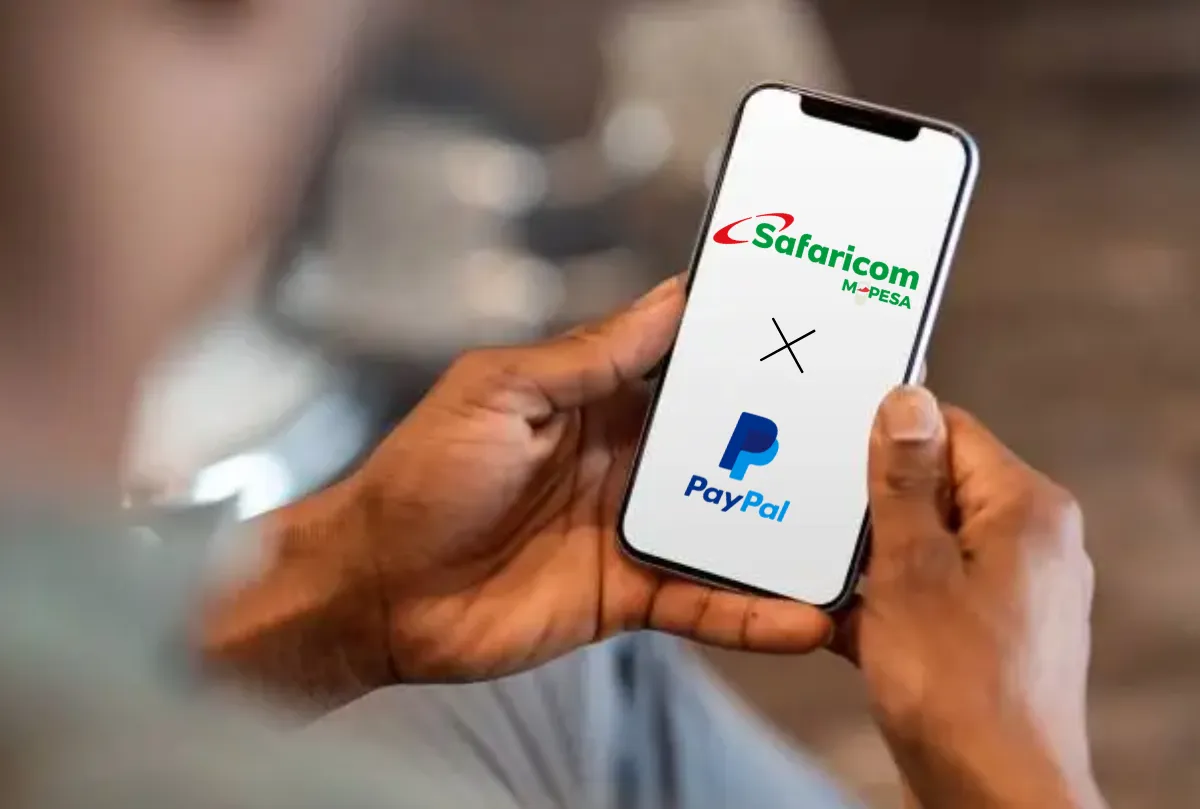
In a move set to significantly reshape Kenya’s digital financial landscape, Safaricom and PayPal have announced a groundbreaking strategic partnership. This collaboration is designed to enable seamless fund transfers between M-Pesa and PayPal accounts, unlocking a new era of global digital connectivity for millions. The alliance is poised to benefit over 35 million M-Pesa users and two million businesses and micro-traders across Kenya, granting them unprecedented access to PayPal’s extensive global network, which spans over 200 markets.
This partnership allows users to directly link their M-Pesa and PayPal wallets, facilitating convenient and secure fund transfers in both directions. The immediate focus is on enhancing the transactional experience for both individual customers and burgeoning businesses within Kenya. While the service is currently available to M-Pesa users in Kenya, there are ambitious plans to expand this offering to additional M-Pesa markets across Africa in the near future, signaling a broader vision for financial inclusion and cross-border commerce on the continent.
The Powerhouse of Mobile Money: M-Pesa’s Enduring Legacy
To truly grasp the significance of this partnership, one must understand the monumental impact of M-Pesa in Kenya and across Africa. Launched in 2007 by Vodafone and Safaricom, M-Pesa (M for mobile, Pesa is Swahili for money) was initially conceived to allow microfinance borrowers to conveniently receive and repay loans via mobile phones. However, it quickly evolved into a comprehensive mobile phone-based money transfer, payments, and micro-financing service that has profoundly transformed financial access in the developing world.
M-Pesa’s growth has been nothing short of revolutionary. By 2024, M-Pesa’s transaction volume in Kenya alone exceeded $100 billion, and it has been credited with significantly increasing financial inclusion in the country, from a mere 19% in 2006 to an impressive 84.8% by 2024. This platform now supports over 35 million active customers and handles an astonishing 4,500 transactions per second, contributing over 8% to Kenya’s GDP. Its pervasive agent network, with nearly 299,000 active M-Pesa agents, has brought financial services to remote rural areas where traditional banking infrastructure is scarce. For more detailed statistics, you can often find reports from Safaricom or financial inclusion surveys.
M-Pesa’s impact extends far beyond simple money transfers. It has become the financial backbone for millions, enabling a wide array of services including:
- Peer-to-peer transfers: Sending and receiving money quickly and affordably.
- Bill payments: Facilitating utility payments, school fees, and other essential services.
- Digital lending and savings: Services like M-Shwari and Fuliza (a credit line) provide access to credit and encourage savings, particularly for those previously excluded from formal financial systems.
- International remittances: Simplifying the process of receiving money from abroad.
- Business payments: Empowering small businesses and informal traders to conduct transactions digitally.
The platform’s evolution has seen the introduction of features like Pochi La Biashara, a business wallet for micro and small enterprises, and M-Ratiba, a personal financial management tool. These innovations underscore Safaricom’s commitment to delivering customer-centric products that cater to the diverse needs of the Kenyan population, from individual consumers to micro-entrepreneurs. M-Pesa’s success story is frequently cited by global development institutions as a prime example of how digital finance can drive economic empowerment and poverty reduction.
PayPal’s Global Footprint and Strategic Expansion
On the other side of this powerful partnership is PayPal, a global leader in online payments with a vast network spanning over 200 markets and more than 400 million active users. PayPal’s core mission revolves around enabling individuals and businesses to make and receive payments securely and conveniently across borders, making it a critical player in the global e-commerce and digital economy landscape.
PayPal’s strategy in emerging markets, particularly in Africa, has increasingly focused on interoperability and digital financial inclusion. The company recognizes the immense potential of mobile money platforms as a gateway to connect local economies with the global financial system. Its recent unveiling of PayPal World further illustrates this vision, aiming to connect many of the world’s largest payment systems and digital wallets on a single platform to transform cross-border commerce. This initiative seeks to provide consumers with access to shop at millions more businesses globally using their domestic payment systems and local currencies, while offering businesses expanded reach into new markets.
For PayPal, partnering with M-Pesa is a strategic move to tap into Africa’s booming mobile money ecosystem. While PayPal has had a presence in Africa, direct integration with dominant local mobile money services has been a key missing piece for many users. This partnership addresses that gap, providing a direct conduit to a massive, active user base that relies heavily on mobile money for daily transactions.
Seamless Connectivity: How the Partnership Works
The core of the Safaricom-PayPal partnership lies in its ability to create a seamless bridge between two distinct yet complementary digital payment ecosystems. Users in Kenya will now be able to:
- Link their M-Pesa and PayPal wallets: This integration allows for direct and secure transfers between the two accounts.
- Transfer funds from PayPal to M-Pesa: This is particularly beneficial for freelancers, online merchants, and individuals receiving remittances from abroad. Funds received in a PayPal account can now be quickly and easily withdrawn to an M-Pesa wallet, making them instantly accessible for daily use, bill payments, or cash withdrawals through M-Pesa agents.
- Transfer funds from M-Pesa to PayPal: This functionality empowers M-Pesa users to fund their PayPal accounts directly, enabling them to make online purchases on international platforms that accept PayPal, participate in the global gig economy, or send money to other PayPal users worldwide.
This bidirectional flow of funds is critical. Previously, users might have faced cumbersome processes, high fees, or delays when attempting to move money between these platforms, often relying on third-party services. This direct integration significantly reduces friction, making cross-border transactions faster, more affordable, and more secure. The partnership directly responds to the rise of the gig economy in Africa, where workers are increasingly earning income from online freelance jobs for global clients.
Transforming Kenya’s Digital Economy: A Ripple Effect
The implications of this partnership for Kenya’s digital economy are far-reaching and transformative:
Enhancing Financial Inclusion
Kenya has made remarkable strides in financial inclusion, largely thanks to M-Pesa. However, a significant portion of the population, particularly in rural areas, still operates predominantly in cash or has limited access to international financial services. This partnership extends the reach of formal financial systems by connecting M-Pesa users directly to the global digital economy. It empowers individuals who may not have traditional bank accounts to participate in international e-commerce, receive payments from overseas, and manage their finances with greater flexibility. This move aligns with Safaricom’s broader mission to unlock opportunities and transform lives through the power of M-Pesa, as highlighted by Esther Waititu, Safaricom’s Chief Financial Services Officer.
Boosting E-commerce and Cross-Border Trade
For Kenya’s burgeoning e-commerce sector and its two million businesses and micro-traders, this partnership is a game-changer. Small and medium-sized enterprises (SMEs) can now more easily:
- Accept international payments: Businesses selling goods or services online to a global customer base can seamlessly receive payments via PayPal directly into their M-Pesa accounts.
- Access global marketplaces: Kenyan entrepreneurs can expand their reach to international markets by leveraging PayPal’s widespread acceptance, fostering export growth and diversifying revenue streams.
- Source goods internationally: Businesses can also use their M-Pesa funds to load their PayPal accounts and pay for imports or supplies from international vendors, streamlining their supply chains.
Kenya’s digital economy is already on a strong growth trajectory, with projections indicating it could reach US$180 billion by 2025. This growth is supported by significant ICT investments, a vibrant startup ecosystem, and government initiatives like the Digital Superhighway Project aimed at expanding fiber optic networks. You can find more data on Kenya’s digital economy from sources like the Kenya National Bureau of Statistics (KNBS). The PayPal-M-Pesa link will further accelerate this growth by removing a significant barrier to cross-border digital transactions, enabling more businesses to participate in the global marketplace.
Streamlining Remittances
Remittances from Kenyans living abroad are a vital source of income for many households and a significant contributor to the national economy. This partnership simplifies the process of receiving funds from the diaspora. Family members or friends sending money from countries where PayPal is widely used can now send funds directly to an M-Pesa wallet, bypassing intermediaries and potentially reducing transfer costs and delays. This direct access to funds can have a profound impact on the livelihoods and financial well-being of recipient households. Safaricom has already been exploring partnerships to broaden access to remittances, including collaborations with entities like Mastercard to enhance cross-border services for M-Pesa merchants.
A Broader African Context: Mobile Money’s Ascendancy
The Safaricom-PayPal partnership is not an isolated event but a reflection of the broader trends shaping Africa’s digital financial landscape. Mobile money has become the cornerstone of financial inclusion across the continent, transforming how hundreds of millions of people manage their finances.
According to the GSMA’s State of the Industry Report on Mobile Money 2025, Africa now dominates the global mobile money landscape, processing 74% of global transactions, amounting to an astounding $1.1 trillion in 2024 alone. The continent boasts over 1.1 billion registered mobile money accounts, with a market projected to grow from $804.9 million in 2024 to $3.93 billion by 2033. East Africa, particularly Kenya, has led this charge, thanks to early regulatory backing and extensive agent networks.
This widespread adoption of mobile money has created a fertile ground for fintech innovation. Across Africa, fintech companies are addressing critical gaps in financial services, from digital lending to insurance and cross-border payments. The partnership between Safaricom and PayPal exemplifies a growing trend of interoperability between fintech providers, where companies are forming alliances to integrate capabilities and meet the evolving customer demand for flexibility and global accessibility in financial services.
However, challenges remain. These include ensuring regulatory clarity and consistency across diverse African markets, addressing infrastructure gaps (especially in remote areas), and navigating the complexities of cross-border payment regulations. Despite these hurdles, initiatives like the African Development Bank-backed Institutional Support for Digital Payments and E-commerce Policies for Cross-Border Trade (IDECT) project aim to create a unified payment infrastructure across Africa, making it easier, faster, and cheaper for businesses to get paid across borders. The Safaricom-PayPal collaboration serves as a powerful testament to the potential of such global partnerships to overcome these challenges and drive digital transformation.
Leadership Vision and Future Outlook
Esther Waititu, Safaricom’s Chief Financial Services Officer, emphasized the strategic importance of this collaboration: “As globalization and digitization continue to redefine how individuals and businesses interact, our collaboration with PayPal marks a bold step in delivering seamless, worry-free, secure, and inclusive digital payments. This partnership empowers more than thirty-five million customers and two million enterprises and micro-entrepreneurs in Kenya to engage in the global digital economy by facilitating easy and convenient payments across more than 200 markets.” Her statement highlights the dual focus on security and inclusivity, critical for fostering trust and widespread adoption of digital financial services.
Echoing this sentiment, Otto Williams, PayPal’s Regional Head and General Manager for the Middle East and Africa, commented, “Establishing seamless links between the global economy and local financial systems is vital for expanding digital financial inclusion. We are excited to make it easier for millions of M-Pesa customers across Africa to connect with PayPal’s worldwide user base.” This reflects PayPal’s strategic interest in leveraging mobile money as a key enabler for its global expansion and commitment to broader financial access.
The partnership represents a major advancement in integrating mobile money services with global online payment systems, granting Kenyans broader and more direct access to the global digital economy. The stated plans to expand this offering to additional M-Pesa markets in the near future are particularly exciting. This could mean similar integrations for M-Pesa users in Tanzania, Mozambique, Democratic Republic of the Congo, Lesotho, Ghana, Egypt, Ethiopia, and other regions where M-Pesa or its affiliates operate, further solidifying mobile money’s role as a primary gateway to global commerce for millions across the continent. Such expansion would not only boost financial inclusion but also foster regional economic integration by simplifying cross-border transactions within Africa.
In essence, the Safaricom-PayPal partnership is more than just a business deal; it’s a significant step towards a more interconnected and financially inclusive global digital economy, with Kenya at its forefront. It validates the power of mobile money as a foundational layer for advanced financial services and sets a precedent for future collaborations that will continue to bridge the gap between local financial ecosystems and the vast opportunities of the global marketplace.
Ready to take your career to the next level? Join our dynamic courses: ACCA, HESI A2, ATI TEAS 7 , HESI EXIT , NCLEX – RN and NCLEX – PN, Financial Literacy!🌟 Dive into a world of opportunities and empower yourself for success. Explore more at Serrari Ed and start your exciting journey today! ✨
photo source: Google
By: Montel Kamau
Serrari Financial Analyst
6th August, 2025