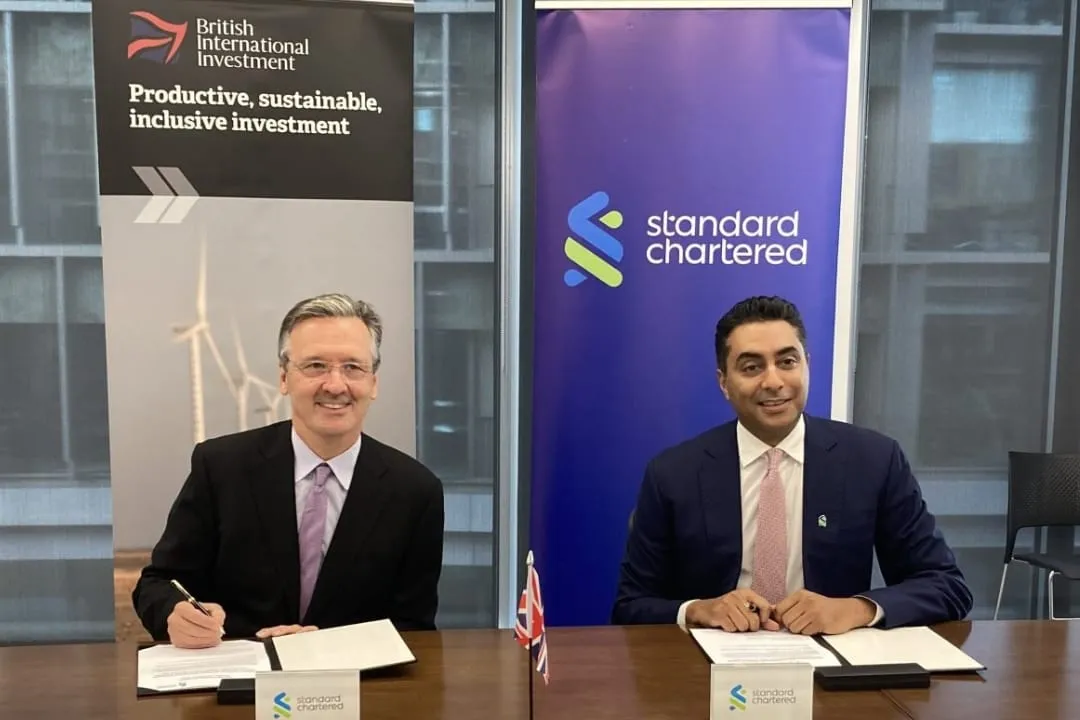
In a significant boost for economic development and trade across East Africa, global banking giant Standard Chartered and British International Investment (BII), the UK’s development finance institution, have jointly launched a substantial $100 million trade finance facility. This landmark initiative is specifically designed to enhance access to crucial capital for businesses operating in Kenya and Tanzania, aiming to unlock a projected $450 million in trade flows over its operational lifetime.
The facility represents a strategic intervention to address persistent financing gaps, particularly for local corporates and Small and Medium-sized Enterprises (SMEs) that form the backbone of these dynamic economies. With a keen focus on women-led ventures, this partnership underscores a commitment not only to economic growth and job creation but also to fostering diversity and inclusion within the region’s burgeoning business landscape.
Announced at the high-profile East Africa Trade and Investment Forum, this collaboration signals a powerful alignment with global efforts to support economic participation and resilience amidst evolving international trade dynamics.
The Critical Need for Trade Finance in East Africa
Trade finance is the lifeblood of international commerce, providing the necessary liquidity and risk mitigation that enables businesses to engage confidently in cross-border trade. For East African economies, which are heavily reliant on imports for essential goods and exports for revenue generation, access to robust trade finance facilities is paramount.
Persistent Financing Gaps for SMEs
Despite their vital role in job creation and economic output, SMEs in East Africa, and indeed across the continent, face significant hurdles in accessing adequate financing. Traditional banking institutions often perceive SMEs as high-risk due to factors such as:
- Limited Credit History: Many SMEs, especially newer or informal ones, lack the established financial records required by conventional lenders.
- High Collateral Requirements: Banks frequently demand substantial collateral, which many small businesses struggle to provide.
- Perceived Risk: The inherent volatility of emerging markets and the smaller scale of SME operations can lead to higher risk perceptions among financiers.
- High Cost of Financing: When financing is available, it often comes with high interest rates and prohibitive transaction fees, eroding profit margins.
- Complex Regulatory Environment: Navigating diverse compliance requirements, documentation processes, and cross-border trade restrictions can be daunting for smaller players.
The African Development Bank (AfDB) has consistently highlighted a substantial trade finance gap in Africa, which has at times exceeded $90 billion annually. This gap disproportionately affects SMEs, with only about 28% of banks’ total trade finance portfolios benefiting them. This facility directly tackles this issue, providing much-needed liquidity and risk mitigation that enables businesses to engage more confidently in cross-border trade. As detailed in a report on Trade Finance and Banking Challenges in Tanzania and Africa, these challenges include limited access, high costs, and inadequate banking infrastructure.
The Role of Trade Finance in Economic Development
Trade finance facilitates various critical aspects of commerce:
- Import of Essential Goods: It enables businesses to import raw materials, machinery, and finished goods necessary for production and consumption.
- Export Expansion: It provides exporters with working capital, allowing them to fulfill orders, manage cash flow, and penetrate new markets.
- Risk Mitigation: Instruments like Letters of Credit and guarantees reduce payment and performance risks for both buyers and sellers across borders.
- Supply Chain Efficiency: By ensuring timely payments and smooth transactions, trade finance enhances the efficiency of global supply chains.
Without adequate trade finance, businesses struggle to grow, diversify, and compete internationally, stifling economic progress. This new $100 million facility is therefore not just a financial injection but a strategic enabler for broader economic development in East Africa.
Empowering the Backbone: Women-Led SMEs
A distinguishing feature of this new facility is its explicit focus on women-led ventures. This is not merely a social objective; it is a strategic economic imperative, recognizing the immense, yet often untapped, potential of women entrepreneurs in driving economic growth and social development.
The Economic Power of Women Entrepreneurs
Women are undeniably a driving force behind Africa’s economic development. They constitute a significant share of the workforce, particularly in SMEs, which account for an estimated 80% of jobs across the continent. Their contribution is crucial in ensuring food security, economic stability, and sustainable growth. For instance, the IFC estimates that women-owned businesses account for over 50% of all SMEs in Africa.
Despite this pivotal role, women entrepreneurs face even greater barriers to accessing finance than their male counterparts. The International Finance Corporation (IFC) estimates a staggering $42 billion financing gap for women-owned businesses in Africa. This disparity is due to various factors, including:
- Discriminatory Lending Practices: Women often face implicit biases and stricter collateral requirements from financial institutions.
- Lack of Collateral: Women typically have less access to land and other assets that can serve as collateral.
- Limited Networks: They may have fewer connections to formal financial institutions and business networks.
- Cultural and Social Norms: In some contexts, cultural norms can limit women’s participation in formal business or their ability to independently manage finances.
The Impact of Targeted Investment
By specifically targeting women-led businesses, the Standard Chartered and BII facility aims to:
- Promote Diversity and Innovation: Empowering women entrepreneurs brings new perspectives, ideas, and business models to the market, fostering innovation.
- Create Inclusive Growth: When women thrive economically, the benefits ripple through their families and communities, leading to improved health, education, and overall quality of life.
- Unlock Untapped Potential: Addressing the financing gap for women-led SMEs can unlock significant economic output that would otherwise remain unrealized. The AfDB’s Affirmative Finance Action for Women in Africa (AFAWA) programme, for example, has demonstrated how targeted financial facilities can unlock millions in loans for women-owned businesses, leading to expansion and job creation. Reports like “Unlocking Africa’s Potential: Why Investing in Women is a Game-Changer” from the AfDB Blogs underscore this imperative.
- Strengthen Economic Resilience: Diverse and inclusive economies are often more resilient to shocks. Supporting women-led businesses enhances the overall robustness of the East African economy.
John Ngari, Managing Director & CEO of Kenya and Africa at Standard Chartered, emphasized this dual focus, stating that the facility “further empowers local businesses, especially those owned or led by women, by providing them with the capital they need to scale, trade, and thrive.”
The Powerhouse Partnership: Standard Chartered and BII
The collaboration between Standard Chartered and British International Investment (BII) brings together complementary strengths, creating a powerful synergy designed for maximum impact.
British International Investment (BII): A Development Finance Powerhouse
BII is the UK’s Development Finance Institution (DFI) and impact investor, with a clear mandate to support sustainable economic growth, reduce poverty, and mobilize private capital in developing countries, primarily across Africa, Asia, and the Caribbean. DFIs like BII are publicly owned organizations willing to take on greater commercial risks than private sector investors to support businesses or sectors that can deliver significant positive development impact. They play a crucial role in:
- De-risking Investments: By providing patient capital and taking on initial risks, DFIs make projects more attractive to commercial investors.
- Mobilizing Private Capital: BII aims to leverage its investments to attract additional private funding, often at a ratio of $1 of DFI investment mobilizing $4 or $5 from commercial sources.
- Focusing on Impact: Beyond financial returns, BII prioritizes investments that create jobs, improve working conditions, combat climate change, and promote gender equality.
- Long-Term Partnership: Unlike short-term investors, BII is known for providing patient capital, staying with partners to help them achieve their long-term vision.
In 2024, BII committed £1.09 billion to African companies, a nearly 40% increase from the previous year, demonstrating its unwavering commitment to the continent despite macroeconomic headwinds. A significant portion of its investments (41% in 2024) is directed towards climate finance, and it is a founding member of the 2X Challenge, which has raised over $33 billion to empower women’s economic development globally. This aligns perfectly with the focus of the new trade finance facility.BII’s new CEO, Leslie Maasdorp, has reaffirmed Africa as BII’s largest regional focus, emphasizing investments in energy, infrastructure, digital access, and agriculture, all of which are supported by robust trade.
Standard Chartered: Deep Roots in Africa
Standard Chartered boasts a rich history and extensive network across Africa, with a presence in many key markets, including Kenya and Tanzania. The bank has a deep understanding of local market dynamics, regulatory environments, and the specific needs of businesses in the region.
Standard Chartered is also a strong proponent of sustainable finance, actively directing capital towards projects that promote environmental and social development. Their 2024 Sustainability Progress Report, for instance, revealed significant growth in climate-linked lending and operational impact, with nearly KES 3 billion (approximately $23 million) in sustainable finance income. Their commitment to sustainable finance is articulated through various product frameworks and a comprehensive approach to managing environmental and social risks, as detailed on their Sustainable Finance – Standard Chartered Kenya page. This makes them an ideal partner for BII, whose mandate is inherently focused on developmental impact.
The continuous expansion of their partnership highlights a shared strategic vision. Standard Chartered’s ability to originate and manage trade finance transactions, combined with BII’s mandate to support sustainable economic growth and mobilize private capital, creates a powerful synergy that can significantly impact regional trade dynamics and foster inclusive growth.
Unlocking Economic Potential: Projected Impact
The $100 million trade finance facility is not just a sum of money; it’s a catalyst for significant economic activity. The projection that it will unlock $450 million in trade transactions illustrates its multiplier effect, providing a substantial boost to East African economies.
How Trade Finance Multiplies Impact
The $100 million facility acts as a revolving fund, enabling multiple trade cycles. For example:
- A business receives financing to import raw materials.
- It uses these materials to produce goods.
- It sells these goods, generating revenue.
- It repays the initial finance, allowing the capital to be redeployed for new transactions.
This continuous recycling of capital through various trade transactions is how a $100 million facility can support a much larger volume of trade.
Sectoral Benefits and Job Creation
The facility is expected to fund various projects across vital sectors, including:
- Agriculture and Food Production: These sectors are the bedrock of East African economies, employing a large percentage of the population and contributing significantly to GDP. Trade finance here can support the import of essential inputs like fertilizers, improved seeds, and farm machinery, as well as facilitate the export of cash crops and
Ready to take your career to the next level? Join our dynamic courses: ACCA, HESI A2, ATI TEAS 7 , HESI EXIT , NCLEX – RN and NCLEX – PN, Financial Literacy!🌟 Dive into a world of opportunities and empower yourself for success. Explore more at Serrari Ed and start your exciting journey today! ✨
photo source: Google
By: Montel Kamau
Serrari Financial Analyst
21st July, 2025