

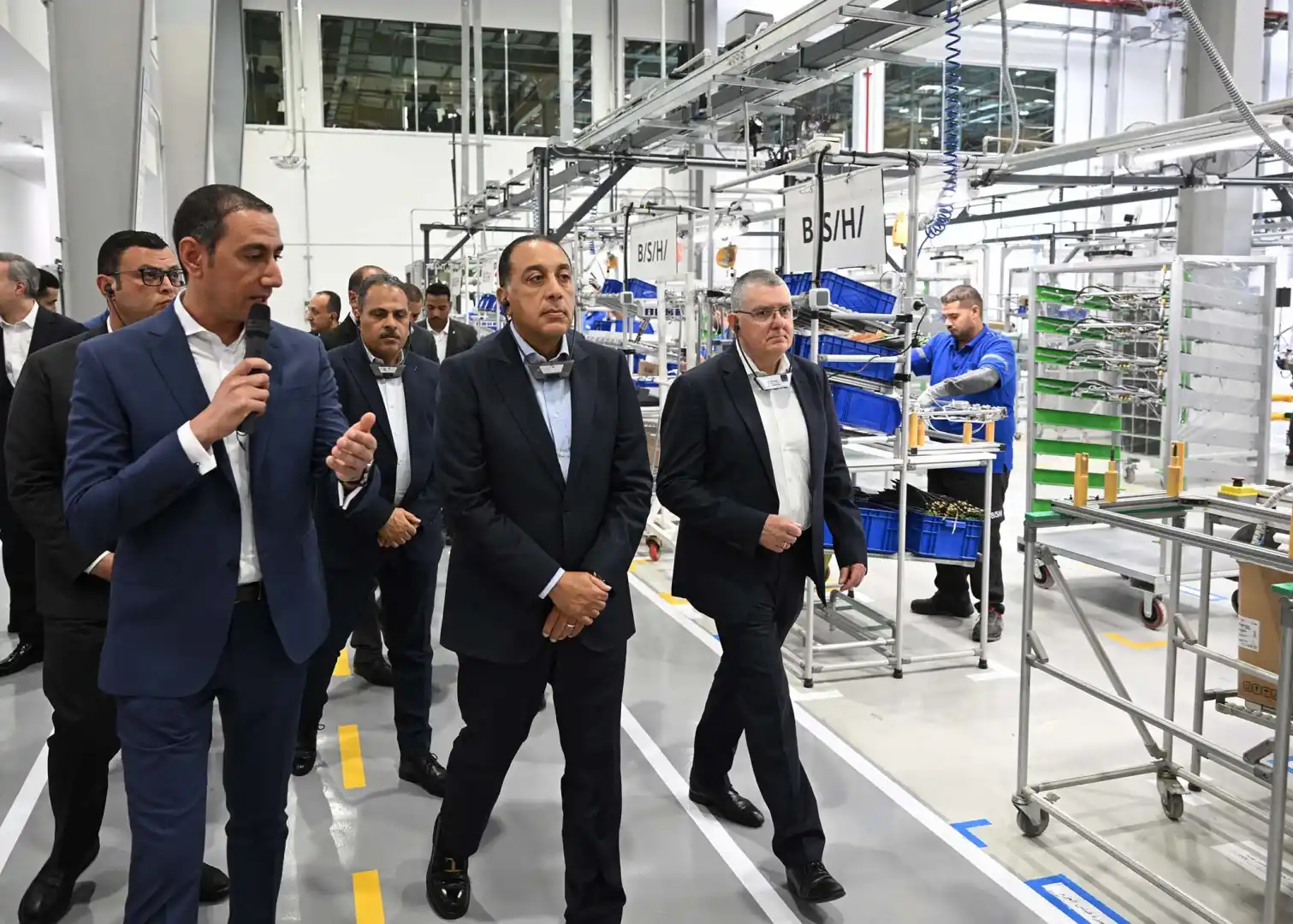
In a momentous stride for its industrial and economic landscape, Egypt has officially inaugurated the first home appliance factory for BSH Hausgeräte GmbH – the German-owned giant behind the globally renowned Bosch brand – on the African continent. This landmark facility, representing a substantial investment exceeding €55 million (approximately $64.50 million USD), marks a pivotal expansion for BSH and a significant boost for Egypt’s burgeoning manufacturing sector.
The inauguration ceremony, led by Egypt’s Prime Minister Mostafa Madbouly, underscored the government’s unwavering commitment to attracting major global industrial players and positioning the nation as a strategic manufacturing and export hub for the wider region. Beyond the gleaming new factory, the day also saw the opening of Jumia’s largest logistics warehouse in Egypt, further solidifying the country’s ambitions in e-commerce and digital infrastructure. Together, these investments paint a clear picture of Egypt’s multi-faceted approach to economic growth and modernization.
Egypt’s Ambitious Industrial Strategy: Laying the Foundation for Growth
The establishment of BSH’s cutting-edge facility is a direct outcome of Egypt’s proactive economic reforms and investor-friendly policies, championed at the highest levels of government. Prime Minister Madbouly emphasized that these efforts have successfully created an environment conducive to attracting significant foreign direct investment (FDI). This strategic approach is deeply rooted in Egypt’s Sustainable Development Strategy: Vision 2030.
Vision 2030 aims to transform Egypt into a competitive, balanced, diversified, and knowledge-based economy characterized by stable macroeconomic conditions and sustainable inclusive growth. A key pillar of this vision is the revitalization and expansion of the industrial sector. The government has implemented various incentives for foreign investors, including streamlined procedures, tax benefits, and direct land allocation, all designed to de-risk investments and encourage long-term commitment.
Egypt’s geographic advantage is a recurring theme in discussions of its economic potential. Situated at the crossroads of Africa, the Middle East, and Europe, with the vital Suez Canal facilitating global trade, Egypt offers unparalleled access to diverse markets. The Bosch plant is specifically envisioned to leverage this strategic positioning, serving as a launchpad for regional expansion across Africa and the Middle East, capitalizing on Egypt’s skilled labor force and its own rapidly growing domestic market. This confluence of strategic location, supportive policies, and a ready workforce makes Egypt an increasingly attractive destination for global manufacturing.
BSH’s Landmark Investment: Tapping into Egypt’s Industrial Hub
BSH Hausgeräte GmbH, a powerhouse in the home appliance sector, is the largest manufacturer of home appliances in Europe and a leading player worldwide. The company, which stemmed from a joint venture between Robert Bosch GmbH and Siemens AG, has a vast global footprint, operating approximately 40 factories across Europe, the US, Latin America, and Asia, with a presence in over 60 countries. The new Egyptian plant now proudly becomes BSH’s 40th production facility globally, marking a significant milestone in its expansion strategy.
The decision to locate this pioneering facility in 10th of Ramadan City is highly strategic. This bustling new urban community, established in 1977, has evolved into Egypt’s largest industrial zone. Its strategic location, just 55 km from Cairo, ensures excellent connectivity to the capital’s labor pool and provides access to an expanding infrastructure base of roads, railway networks, airports, and ports. 10th of Ramadan City is already home to over 1,000 factories, producing a wide range of goods from textiles and food to chemicals and engineering products, making it a proven industrial hub with a supportive ecosystem.
Luis Alvarez, Chairperson of BSH Egypt and Morocco, highlighted the long-term strategic vision behind choosing Egypt for BSH’s first African factory. He emphasized the country’s immense potential as a gateway to both continental and regional markets. For BSH, integrating this new facility into its global network means strengthening its supply chains and enhancing its ability to serve emerging markets across the Global South. The move is a testament to Egypt’s growing appeal not just as a consumer market, but as a reliable base for international operations.
Forging Quality: Egyptian Hands, German Engineering
The newly inaugurated factory, spanning an impressive 80,000 square meters, will initially focus on manufacturing more than 350,000 gas ovens annually. A distinctive feature of this new facility is its production model: it champions the integration of a 100% Egyptian labor force, rather than relying heavily on automation. This approach is specifically designed to capitalize on Egypt’s labor cost advantage while rigorously upholding Bosch’s globally recognized quality standards.
This commitment to local employment is expected to generate approximately 1,000 direct and indirect job opportunities, providing vital livelihoods and contributing to national employment goals. The emphasis on local labor means significant investment in training and skill development for the Egyptian workforce, equipping them with the expertise required to meet advanced German engineering specifications. This transfer of knowledge and skills is invaluable for Egypt’s industrial development, enhancing the capabilities of its manufacturing workforce and fostering a culture of precision and quality.
Furthermore, the project highlights a strong drive towards strengthening local supply chains. The factory begins with a commendable local component ratio of 50%, with ambitious plans to exceed 70% within two years. This increased localization has several significant economic benefits: it reduces dependency on imported raw materials and components, lowers production costs, supports local industries, and creates a more resilient manufacturing ecosystem within Egypt. By integrating local suppliers, BSH is not only investing in its own operations but also stimulating growth and development across the broader Egyptian manufacturing base. Prime Minister Madbouly’s tour of the production lines and meeting with workers reinforced the government’s dedication to supporting such industrial investments, emphasizing their role in fortifying local supply chains and facilitating technology transfer.
Beyond Borders: Egypt as a Launchpad for Regional Appliance Markets
A significant strategic element of BSH’s new Egyptian factory is its strong export orientation, with 50% of its production designated for export to markets across Africa, the Middle East, Australia, Canada, and Latin America. This highlights Egypt’s pivotal role as a gateway to these diverse and growing consumer bases.
The Middle East & Africa household cooking appliance market, in particular, presents immense growth opportunities. It is projected to reach a revenue of US$25,770.0 million by 2030, demonstrating a robust Compound Annual Growth Rate (CAGR) of 9.4% from 2024. This growth is fueled by factors such as increasing urbanization, rising disposable incomes, and a growing consumer preference for modern, technologically advanced home appliances.
For instance, trends in the Saudi Arabia home appliances market indicate a strong shift towards energy-efficient and smart home appliances, driven by both economic growth and a focus on sustainability under initiatives like Vision 2030. The Egyptian factory is well-positioned to serve these evolving consumer demands across the region.
A key factor in BSH’s strategy is also product customization. Ahmed Riad, Executive Board Member and CFO of BSH Home Appliances Egypt, revealed that the factory’s 90 cm cookers were developed specifically to match Egyptian consumer preferences. This deep understanding of local tastes and needs, coupled with the ability to tailor products accordingly, is critical for achieving strong market penetration and customer satisfaction in diverse regional markets. This bespoke approach ensures that the appliances are not just manufactured in Egypt, but truly designed with the regional consumer in mind.
Looking ahead, BSH has confirmed its intention to expand the facility in future phases, further increasing both production capacity and employment opportunities. The company is also actively exploring the possibility of diversifying its product line beyond ovens and cookers. These future plans underscore BSH’s long-term confidence in Egypt as a sustainable and growing regional manufacturing hub, capable of supporting a broader range of home appliance production for both domestic consumption and international export.
Building Green: Sustainability as a Core Principle
Beyond its economic and industrial contributions, the new Bosch factory in 10th of Ramadan City stands as a testament to modern sustainable manufacturing practices. Designed with strict sustainability standards, the facility embodies a forward-thinking approach to industrial development that prioritizes environmental responsibility.
While specific details of all sustainable features are not fully disclosed, general sustainable manufacturing practices typically involve:
- Resource Efficiency: Minimizing the consumption of raw materials, water, and energy throughout the production process. This often includes implementing advanced monitoring systems to track resource usage and identify areas for improvement.
- Waste Reduction and Recycling: Designing processes that generate less waste and incorporating comprehensive recycling programs for production by-products and packaging materials. This can extend to adopting circular economy principles where materials are reused or repurposed.
- Energy Management: Utilizing energy-efficient machinery and lighting, optimizing heating, ventilation, and air conditioning (HVAC) systems, and exploring renewable energy sources for power. Many modern factories aim for significant reductions in their carbon footprint.
- Pollution Prevention: Implementing technologies and practices to minimize air emissions, wastewater discharge, and hazardous waste generation. This ensures that industrial operations have a minimal negative impact on local ecosystems and communities.
- Sustainable Materials: Prioritizing the use of environmentally friendly, recycled, or responsibly sourced materials in the manufacturing process.
By integrating these principles, the BSH factory aims to not only produce high-quality appliances but also to do so in a manner that minimizes its environmental footprint, aligning with global trends towards greener industrial operations. This focus on sustainability reinforces BSH’s corporate social responsibility and contributes to Egypt’s broader environmental goals.
Catalyst for E-commerce: Jumia’s Mega Logistics Hub
Adding another layer of significance to Egypt’s economic trajectory, Prime Minister Madbouly also inaugurated Jumia’s largest logistics warehouse in Egypt on the same day. This parallel development highlights Egypt’s dual focus on traditional manufacturing and the rapidly expanding digital economy.
The new Jumia facility, spanning an expansive 27,000 square meters, is a state-of-the-art logistics center designed to significantly enhance the company’s service quality and operational efficiency. Equipped with advanced technologies, it is set to accelerate delivery times, improve storage efficiency, and support Jumia’s growing e-commerce operations, particularly in regions like Upper Egypt, which are crucial for inclusive economic development.
This investment in logistics infrastructure is poised to create approximately 10,000 direct and indirect jobs, providing substantial employment opportunities within the rapidly growing e-commerce sector. This aligns seamlessly with Egypt’s ambitious goal to become a regional digital hub, a key component of Vision 2030. The national strategy emphasizes expanding digital services, boosting youth employment through tech-driven development, and fostering an innovative digital economy.
Dr. Amr Talaat, Egypt’s Minister of Communications and Information Technology, highlighted a particularly impressive aspect: the software powering Jumia’s platform within Egypt was developed locally by talented Egyptian engineers. This underscores the nation’s growing capabilities in technology and software development, moving beyond just infrastructure to intellectual capital.
Abdellatif Olama, CEO of Jumia Egypt, further emphasized Egypt’s strategic importance within Jumia’s regional operations. He noted that Egypt hosts one of Jumia’s largest tech hubs in Africa, playing a pivotal role in exporting digital solutions across the continent. This reinforces Jumia’s commitment to enhancing Egypt’s role in Africa’s digital transformation and supporting the local manufacturing and logistics ecosystems that underpin successful e-commerce.
The Egyptian e-commerce market is on a robust growth trajectory, estimated at USD 10.39 billion in 2025 and projected to reach USD 20.72 billion by 2030, at a impressive CAGR of 14.8%. This growth is driven by rising internet penetration, improved infrastructure, and a rapidly expanding base of online shoppers, positioning Egypt to become Africa’s largest e-commerce market. Jumia’s investment directly supports and benefits from this surging digital economy.
Egypt’s Dual Momentum: A Future Forged in Industry and Digital Innovation
The twin inaugurations of the Bosch home appliance factory and Jumia’s logistics warehouse on the same day serve as powerful symbols of Egypt’s dynamic economic strategy. They demonstrate a concerted effort to diversify the economy, move up the value chain in manufacturing, and firmly establish the country as a leader in both traditional industry and the digital realm.
The Bosch factory represents a significant vote of confidence from a global industrial giant in Egypt’s manufacturing capabilities, its strategic location, and its skilled workforce. It signals a new era where “Made in Egypt” will increasingly signify high-quality, German-engineered home appliances destined for markets far beyond its borders. The focus on local labor and component integration ensures that the economic benefits of this investment will ripple through the national economy.
Concurrently, Jumia’s mega logistics hub underscores Egypt’s rapid ascent in the digital economy. It highlights the country’s commitment to building the infrastructure necessary to support the booming e-commerce sector and its ambition to be a digital solutions provider for Africa. The creation of thousands of jobs and the development of local tech talent are critical dividends of this digital transformation.
Together, these projects illustrate Egypt’s proactive approach to economic development – leveraging its strategic assets, fostering a pro-business environment, and investing in both its industrial base and its digital future. As Egypt continues to implement its Vision 2030, these landmark inaugurations serve as strong indicators that the nation is not just preparing for the future, but actively building it, solidifying its position as a burgeoning industrial and digital powerhouse in the region and across the Global South.
Ready to take your career to the next level? Join our dynamic courses: ACCA, HESI A2, ATI TEAS 7 , HESI EXIT , NCLEX – RN and NCLEX – PN, Financial Literacy!🌟 Dive into a world of opportunities and empower yourself for success. Explore more at Serrari Ed and start your exciting journey today! ✨
photo source: Google
By: Montel Kamau
Serrari Financial Analyst
30th June, 2025