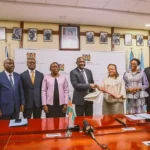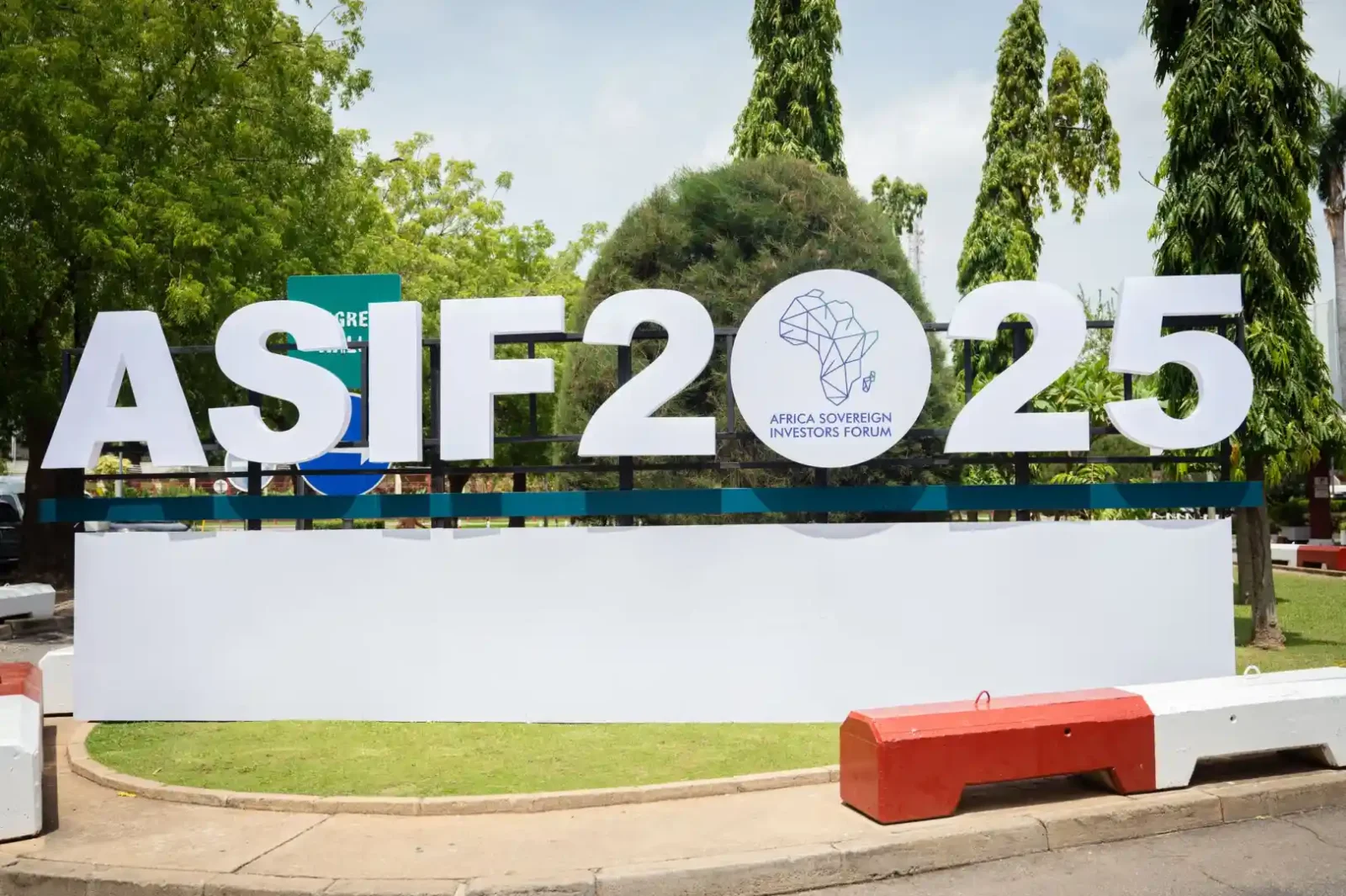
In a landmark move poised to reshape Africa’s economic and environmental landscape, the Nigerian Sovereign Investment Authority (NSIA) has officially launched an ambitious pan-African investment platform. This groundbreaking initiative aims to mobilize a staggering $50 billion in blended finance by 2030, specifically targeting critical sectors such as infrastructure, agriculture, and climate-resilient projects across the continent. The announcement, a highlight of the 2025 Africa Sovereign Investors Forum (ASIF) held recently in Abuja, signals a concerted effort by African nations to harness their collective financial power for transformative development.
The ASIF 2025 summit, a prestigious gathering of African political leaders, sovereign wealth fund managers, and private sector stakeholders, convened under the pivotal theme: ‘Leveraging African Sovereign Wealth Funds to Mobilise Global Capital for Transformative Development in Africa’. The forum served as a powerful platform for dialogue and commitment, setting the stage for a new era of intra-African investment and partnership with international capital.
The Bold Vision: Mobilizing $50 Billion for a Sustainable Africa
The core of the NSIA’s announcement revolves around the establishment of a robust investment platform designed to funnel significant capital into areas crucial for Africa’s sustainable growth. The $50 billion target by 2030 is not merely an arbitrary figure but a strategic response to the continent’s immense developmental needs and the escalating impacts of climate change.
Understanding Blended Finance: A Powerful Catalyst
At the heart of this initiative is the concept of blended finance. This innovative financial mechanism involves strategically combining capital from various sources – typically public or philanthropic funds – with private sector investment. The public or philanthropic component is often used to absorb first-loss risks, provide concessional loans, or offer guarantees, thereby making projects more attractive and de-risking them for private investors who might otherwise perceive them as too risky.
For Africa, where traditional aid flows are often insufficient and purely commercial financing can be challenging to secure for large-scale, long-gestation projects, blended finance is a game-changer. It allows for the leveraging of relatively smaller amounts of public money to unlock significantly larger pools of private capital. This model is crucial for bridging the substantial funding gaps in infrastructure, climate adaptation, and agricultural transformation, areas vital for economic growth and human development.
Addressing Africa’s Funding Deficit
Africa faces a monumental infrastructure deficit, estimated by the African Development Bank (AfDB) to be as high as $130-$170 billion annually, with a financing gap of $68-$108 billion. This lack of adequate roads, power, water, and digital connectivity directly hampers economic growth, trade, and social development. Similarly, the costs of climate adaptation alone for Africa could reach $50 billion per year by 2050, even if global warming is limited to 2°C, according to the United Nations Environment Programme (UNEP). The $50 billion target by the NSIA is therefore a crucial step towards addressing these immense financial requirements, demonstrating a proactive approach from within the continent.
The funds mobilised through this platform are earmarked for:
- Infrastructure: Power generation and transmission, transportation networks (roads, rail, ports), digital infrastructure (broadband, data centers), and urban development projects. These are the arteries of economic activity.
- Agriculture: Investments in climate-smart agriculture, modern farming techniques, value chain development, storage facilities, and irrigation projects to enhance food security and agricultural productivity, especially in the face of changing weather patterns.
- Climate-Resilient Projects: This includes renewable energy initiatives (solar, wind, hydro), sustainable land management, early warning systems for extreme weather events, and resilient urban planning, all designed to help African communities and economies adapt to and mitigate the effects of climate change.
A Forum for Collective Action: ASIF 2025 in Focus
The Africa Sovereign Investors Forum (ASIF) has rapidly emerged as a critical convener for fostering collaboration among African Sovereign Wealth Funds (SWFs) and attracting global capital. The 2025 edition in Abuja underscored the continent’s commitment to self-driven development.
Presidential Endorsement and Pan-African Unity
President Bola Tinubu, represented by Vice President Kashim Shettima, officially opened the summit. In his address, the Vice President delivered a powerful charge for African countries to forge stronger ties and collectively invest in their long-term development goals. “The time has come for African nations to harness our collective sovereign wealth as engines for pan-African prosperity,” Shettima declared. This statement highlights a growing sentiment across the continent for greater economic integration and the strategic deployment of Africa’s own resources to drive its future, rather than solely relying on external aid or foreign direct investment. It speaks to a new narrative of self-reliance and intra-continental collaboration.
NSIA’s Leadership and Strategic Commitments
Aminu Umar-Sadiq, the Chief Executive Officer of the NSIA, provided further insights into the initiative’s mechanics. He revealed a significant commitment from participating African sovereign wealth funds: they have pledged to allocate 30 percent of their portfolios to climate-resilient projects by 2030. This commitment is a substantial demonstration of African SWFs aligning their investment strategies with global sustainability goals, recognizing the dual imperatives of development and environmental protection.
Umar-Sadiq articulated the broader philosophy behind the platform: “By uniting our sovereign wealth, we’re not just preserving assets but building Africa’s future.” He emphasized that the investment platform is envisioned as a catalyst for long-term, transformational projects across the continent. This implies a strategic approach where the platform’s initial investments are designed to unlock further private sector participation and create a ripple effect of development.
Bridging the Gap: Grassroots Realities and Data Imperatives
A pivotal segment of the summit featured a compelling fireside conversation between Fola Aiyesimoju, Group Managing Director of UAC Nigeria, and Farouk Gumel, Vice Chairman of TGI Group. Their discussion illuminated a critical disconnect: the gap between high-level climate discussions and the tangible realities faced at the grassroots, particularly by African farmers.
Gumel poignantly remarked, “Farmers don’t ask about COP29; they ask if it’s rained enough to plant.” This statement underscores the urgent, practical concerns that define daily life for a vast majority of Africans, especially those dependent on rain-fed agriculture. He cited recent devastating floods, highlighting the immediate need for adaptive farming strategies, such as a potential shift towards dry-season farming. This necessitates practical solutions, innovative agricultural techniques, and access to water management infrastructure, rather than abstract climate policy debates.
A central theme of their conversation, and a critical takeaway from the forum, was the indispensable role of data. Gumel asserted, “We always say we don’t have data, but data itself is a commodity. You have to invest in getting that primary data to enable investors to put their money there.” This point cannot be overstated. For investors, both domestic and international, robust and reliable data is the bedrock of informed decision-making. Without comprehensive data on soil conditions, climate patterns, market prices, supply chain efficiencies, and local demographics, projects often appear riskier than they are, deterring much-needed capital. Investing in data collection, analysis, and dissemination infrastructure is thus a fundamental step in de-risking agricultural and other investment opportunities across Africa. This includes everything from remote sensing and satellite imagery for crop monitoring to ground-level surveys and digital platforms for market information.
Expanding the Network: ASIF’s Growing Influence
The ASIF 2025 summit also celebrated its expanding membership, welcoming new sovereign wealth funds into its fold. Notable additions included Ghana’s Petroleum Fund and Zimbabwe’s Mutapa Investment Fund. These new members bring the total participation to 17 African countries, signifying a growing recognition of ASIF’s importance as a collaborative platform. This expanding network amplifies the collective investment power of African SWFs, allowing for larger, more impactful joint ventures and a stronger unified voice in global financial discussions.
The forum concluded with the formation of three dedicated working groups, tasked with driving concrete outcomes in key areas:
- Agricultural Development: Focusing on strategies to modernize agriculture, enhance productivity, improve food security, and build resilience to climate shocks.
- Climate Finance: Dedicated to accelerating the flow of capital into climate adaptation and mitigation projects, exploring innovative financial instruments, and streamlining access to global climate funds.
- Data Infrastructure: Aimed at developing robust data collection, analysis, and sharing mechanisms to improve investment decision-making, enhance transparency, and reduce perceived risks across sectors.
The Broader Context: Sovereign Wealth Funds and Africa’s Future
Sovereign Wealth Funds (SWFs) are state-owned investment funds that typically derive their capital from a country’s surplus revenues, often from natural resources (like oil or minerals), or from balance of payment surpluses. Africa’s SWFs, though relatively nascent compared to some global counterparts, are rapidly growing in sophistication and strategic importance. They embody a long-term investment horizon, enabling them to fund projects that might not yield immediate returns but are critical for sustained national and continental development. The NSIA, for instance, manages Nigeria’s excess crude oil revenues, investing them in a diversified portfolio for future generations.
Overcoming Investment Challenges in Africa
Despite its immense potential, Africa has historically faced challenges in attracting sufficient foreign direct investment (FDI) and mobilizing domestic capital for large-scale projects. These challenges often include:
- Perceived Risk: Investors sometimes perceive African markets as high-risk due to factors like political instability (though often localized and over-generalized), regulatory uncertainties, or macroeconomic volatility.
- Lack of Bankable Projects: A common issue is the scarcity of well-structured, financially viable projects with clear returns, ready for investment. This often stems from weak project preparation capacity.
- Infrastructure Deficits: Poor infrastructure can increase the cost of doing business, making investments less attractive.
- Data Gaps: As highlighted by Gumel, insufficient or unreliable data makes due diligence difficult for potential investors.
The NSIA-led initiative, utilizing blended finance and emphasizing data infrastructure, is a direct attempt to mitigate these challenges, lower the risk profile of crucial projects, and present a more compelling investment case for both domestic and international capital.
The Imperative of Climate Resilience
Africa is disproportionately vulnerable to the impacts of climate change, despite contributing minimally to global greenhouse gas emissions. Rising temperatures, erratic rainfall patterns, prolonged droughts, and severe floods are already wreaking havoc on agricultural systems, water resources, and human settlements. These impacts threaten to reverse decades of development gains. Therefore, the commitment by African SWFs to allocate a significant portion of their portfolios (30% by 2030) to climate-resilient projects is not just environmentally responsible but also an economic necessity. Investing in adaptation and mitigation projects ensures the long-term sustainability of economies and the well-being of populations. This includes investments in renewable energy to transition away from fossil fuels, climate-smart agricultural practices to ensure food security, and resilient infrastructure that can withstand extreme weather events.
Conclusion: A New Dawn for African Investment
The NSIA’s unveiling of a $50 billion pan-African investment platform, catalyzed by the Africa Sovereign Investors Forum, marks a pivotal moment in the continent’s development trajectory. It underscores a growing determination among African nations to take charge of their economic destiny, leveraging their own sovereign wealth to attract and de-risk global capital for essential projects.
The focus on infrastructure, agriculture, and climate resilience reflects a deep understanding of Africa’s most pressing needs and largest opportunities. By embracing blended finance, committing to significant investments in climate action, and recognizing the critical role of data, African sovereign wealth funds are not just accumulating assets; they are actively shaping a more prosperous, resilient, and sustainable future for the entire continent. The journey to mobilize $50 billion by 2030 will require sustained political will, strong institutional collaboration, and innovative financial engineering, but the momentum generated at ASIF 2025 suggests that Africa is ready to meet the challenge head-on. This initiative is a beacon of hope, demonstrating Africa’s capacity to lead its own transformation and offer compelling investment opportunities to the world.
Ready to take your career to the next level? Join our dynamic courses: ACCA, HESI A2, ATI TEAS 7 , HESI EXIT , NCLEX – RN and NCLEX – PN, Financial Literacy!🌟 Dive into a world of opportunities and empower yourself for success. Explore more at Serrari Ed and start your exciting journey today! ✨
photo source: Google
By: Montel Kamau
Serrari Financial Analyst
26th June, 2025