
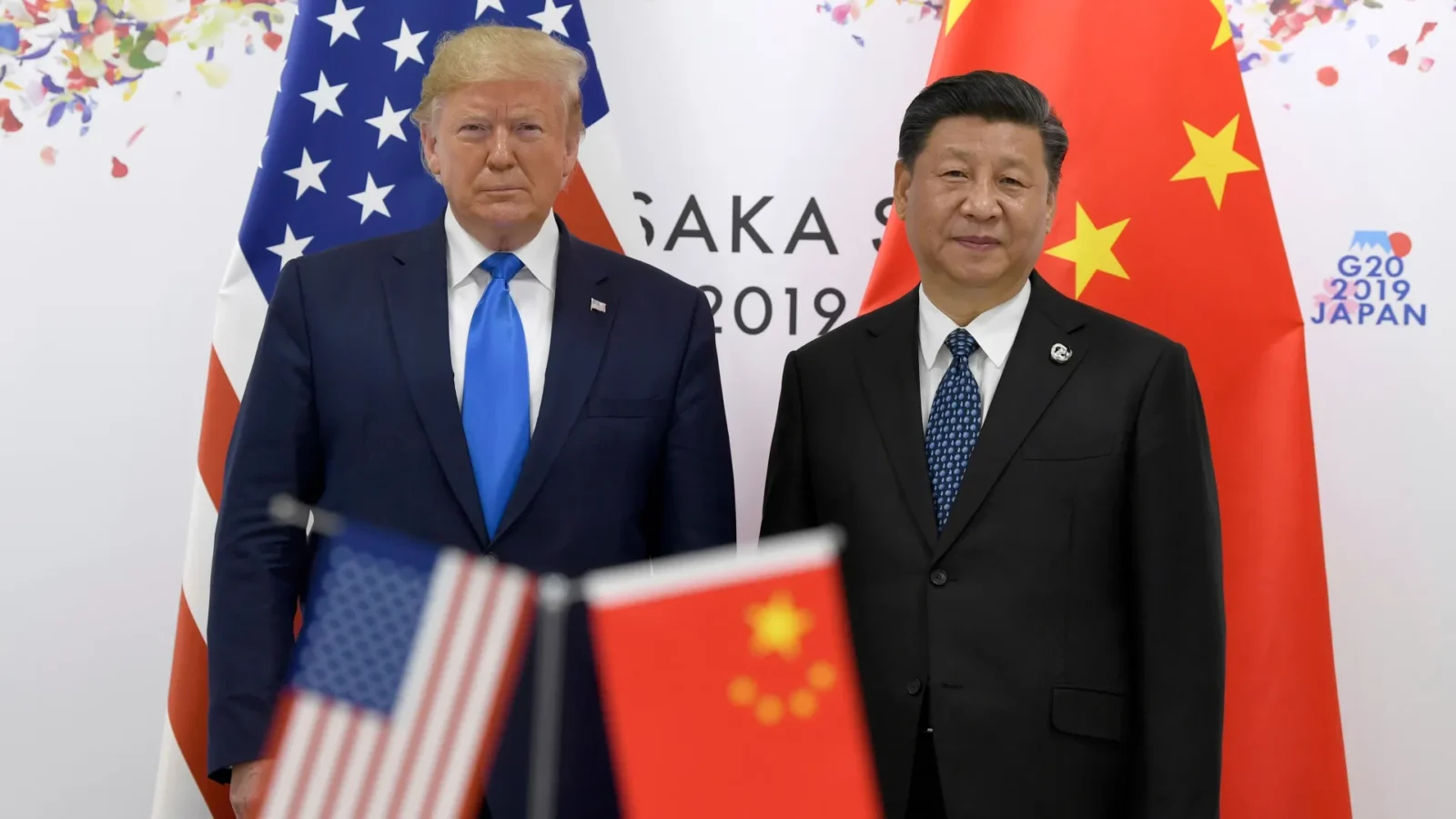
What’s Happening?
A pivotal round of trade discussions between the United States and China is scheduled for Monday, June 9, 2025, in London. According to U.S. President Donald Trump, the delegation will include Treasury Secretary Scott Bessent, Commerce Secretary Howard Lutnick, and Trade Representative Jamieson Greer. From China, Vice Premier He Lifeng will lead the delegation (reuters.com).
These talks aim to solidify a fragile 90-day tariff truce agreed to in Geneva last month, address escalating export-control disputes, advance rare-earth mineral access, and resolve software and semiconductors’ export issues.
Background: The Geneva Truce
On May 12, 2025, U.S. and Chinese diplomats reached a 90-day suspension of most tariffs, reducing U.S. duties on Chinese goods from over 100% down to around 30%, while Beijing eased its own tariffs from 125% to approximately 10% on American exports (apnews.com).
This truce followed weeks of escalating retaliatory moves:
- Trump’s sweeping import tariffs in early April hit 145% on some goods;
- China reciprocated with up to 125% markup;
- Beijing also applied export controls on rare-earth minerals that disrupted global manufacturing supply chains (m.economictimes.com).
Despite this temporary easing, both nations accuse the other of breach due to new curbs and unmet commitments—making London’s talks a critical juncture.
Who’s at the Table—and Why It Matters
American Delegation
- Scott Bessent (Treasury Secretary): Spearheading U.S. economic strategy and pressing for structural change in Chinese economic practices.
- Howard Lutnick (Commerce Secretary): Brings influence over export control policy—especially regarding semiconductors and aerospace tech.
- Jamieson Greer (USTR): Oversees trade policy, involved since the Geneva talks.
Chinese Side
- Vice Premier He Lifeng: In charge of economic and financial affairs, including foreign trade and industrial strategy since 2023; he’s been China’s lead negotiator from Geneva to Beijing’s dialogues with the U.S.
The Core Debate: Tariffs vs Export Controls
Even as tariffs took a backseat during the Geneva truce, export controls took center stage in London.
- Rare-earth minerals: China holds 69–70% of global reserves vital for EV batteries, electronics, aerospace, and defense. Washington wants stable access, while Beijing has restrained exports, causing high-profile manufacturing disruptions (theguardian.com).
- High-tech goods: The U.S. continues to enforce heavy export controls on semiconductors and advanced aerospace components. It is seeking partial reversals, but China is resisting, citing national security .
These are no mere trade squabbles—they touch on national security, economic sovereignty, and technological supremacy.
What’s at Stake—Economically and Strategically?
Global Markets
Despite the truce, U.S.-China trade fell nearly 25% year-on-year during Q1 2025. However, indirect exports via third countries like Vietnam and Mexico masked some of that decline (washingtonpost.com).
Market heads are attuned to how London talks will influence global supply chains and technology sectors. A stable deal could boost stock indices that rebounded after Geneva’s announcement .
Domestic Pressure
- U.S. manufacturing is under pressure from higher material costs; consumer goods and retailers (Walmart, Target, Home Depot) have flagged tariff pain .
- China is coping with deflation and rising unemployment; recurring factory protests numbered 645 in H1—an 86% year-on-year increase.
Each side seeks domestic wins—price relief in the U.S. and economic stability in China.
Possible Outcomes and Scenarios
Analysts anticipate London may yield:
- Unstructured agreements: Increased rare-earth exports, practical cooperation on fentanyl trafficking, and increased Chinese U.S. imports
- Temporary extensions of the 90-day tariff pause—delaying a broader deal into late summer.
- Continued impasse on deeper reforms: China’s “dual circulation” policy and state-directed economy appear intact, leaving systemic transformation unlikely.
Recent Trade Data: Context Ahead of Talks
- China’s May exports rose 4.8% year-on-year, while imports fell 3.4%—a sign the truce hasn’t fully rejuvenated trade flows.
- Rare-earth exports grew 23% month-on-month to 5,864.6 tons in May—suggesting Beijing may be easing curbs.
- Foreign firms in China recorded a 4% increase in trade activity in May—marking sustained improvements amidst overall slowdown.
These data point to mixed signs—trade recovery with persistent frictions and supply-side controls.
UK as Host – Neutral Facilitator
Although UK officials are not negotiating, London plays a strategic hosting role. The venue choice shows the global importance of these talks, and UK leaders, including Prime Minister Keir Starmer, back the initiative as a platform for the U.S. and China to resolve differences—especially around critical minerals and green tech cooperation.
Broader Issues on the Table
Although tariffs and export controls dominate, other security-related flashpoints may surface. These include:
- Cooperation on limiting Chinese fentanyl precursor exports
- U.S. concerns over visa restrictions for Chinese STEM students
- China’s warning against U.S. encroachment on how it manages Taiwan.
Any frank conversations on these front lines may signal readiness to tackle more challenging geopolitical issues.
Looking Ahead: What’s a Success?
Short term:
- Clear export license schedules for rare-earth minerals
- Confirmation of no new escalation in tariffs or export bans
- Agreement to extend or revisit the tariff truce before August expiration
Mid term:
- Confidence-building around semiconductor and tech exports
- Expanded cooperation on strategic minerals, green technology, and supply-chain security
- Collaborative frameworks on public health (fentanyl) and educational exchange (visa stability)
Long term:
- Continued dialogue around systemic economic reform
- A groundwork for sustainable US–China economic coexistence, aligned on global competition and co-dependence
Final Word
London’s talks are a necessary but imperfect fix. The atomic elements of tariffs, export controls, and supply security are intertwined with broader issues of economic philosophy, national security, and ideological competition. While a symbolic agreement could stabilize markets—and relieve short-term pressure—even deeper resolutions may require political courage well beyond trade negotiators’ remit.
With tariffs paused, rare-earth access partially restored, and high-level communication resumed, this week may mark the tipping point between a temporary thaw and a path toward managed détente.
Ready to take your career to the next level? Join our dynamic courses: ACCA, HESI A2, ATI TEAS 7 , HESI EXIT , NCLEX – RN and NCLEX – PN, Financial Literacy!🌟 Dive into a world of opportunities and empower yourself for success. Explore more at Serrari Ed and start your exciting journey today! ✨
photo source: Google
By: Montel Kamau
Serrari Financial Analyst
9th June, 2025