Introduction
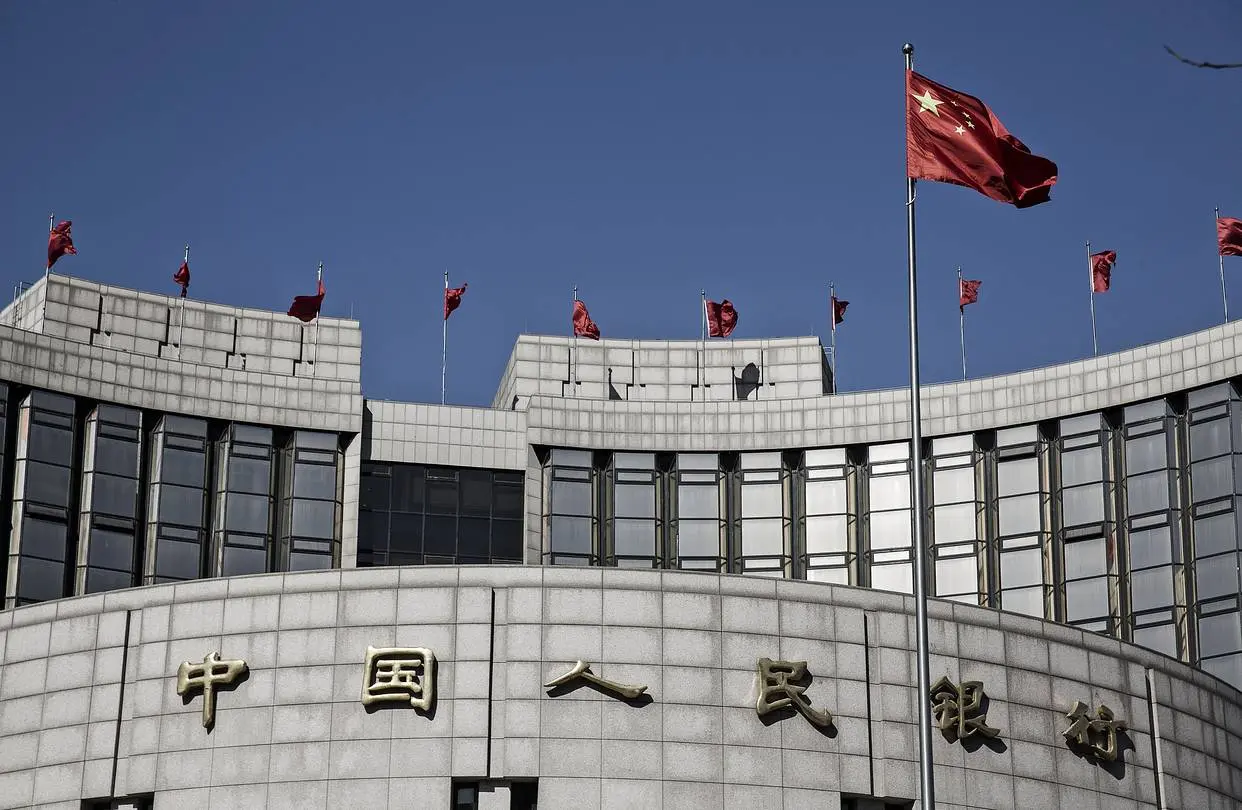
In a bid to bolster China’s economic recovery amid domestic headwinds and external uncertainties, the People’s Bank of China (PBOC) on Monday injected 382 billion yuan (approximately US $53 billion) into the banking system via seven-day reverse repurchase agreements at a rate of 1.40 percent . After 135 billion yuan of maturing repos rolled off the books, the net liquidity infusion amounted to 247 billion yuan, underpinning the PBOC’s pledge to keep funding “ample and reasonable” for high-quality growth .
This operation follows a 500-billion-yuan, one-year medium-term lending facility (MLF) conducted last Friday, as well as a 0.5 percentage-point cut in banks’ reserve requirement ratio (RRR) on May 15 that unlocked nearly 1 trillion yuan of long-term funds . Against the backdrop of slowing manufacturing activity and uneven domestic demand, these coordinated moves—part of a broader policy package unveiled on May 7—demonstrate Beijing’s resolve to deploy both structural and aggregate tools to stabilize the financial environment .
Why Liquidity Matters: Reverse Repos Explained
A reverse repurchase agreement, or reverse repo, is a short-term operation in which the central bank buys securities from commercial banks with a commitment to sell them back at a later date. By setting the repo rate—in this case, 1.40 percent—the PBOC influences short-term funding costs and anchors broader money-market rates. This day-to-day liquidity management ensures that banks have sufficient cash to lend, preventing shortages that could stifle credit growth and push up borrowing costs for businesses and households.
“Reverse repo operations are a fine-tuning tool,” says Zhao Xijun, co-president of the China Capital Market Research Institute at Renmin University. “They help maintain cash abundance without unleashing excessive leverage or inflationary pressures,” he told the Global Times .
Medium-Term Lending Facility and RRR Cuts: Building a Policy Synergy
On Friday, the PBOC conducted a 500-billion-yuan MLF operation, extending one-year loans to eligible lenders at 2.50 percent. Unlike reverse repos, which address short-term gaps, the MLF bolsters medium-term funding, helping banks lock in cheaper financing for up to 12 months.
Complementing the MLF was the 0.5 percentage-point reduction in the RRR for most banks—except the largest state-owned lenders—effective May 15. According to PBOC estimates, this move released roughly 1 trillion yuan of long-term liquidity into the economy . As Pan Gongsheng, Governor of the PBOC, remarked during the May 7 policy briefing, “By combining RRR cuts, reverse repos, and targeted lending facilities, we achieve both breadth and precision in monetary support” .
Economic Backdrop: Signs of Slowdown
Despite a 5.4 percent year-on-year expansion in Q1 2025 GDP, beating forecasts of 5.1 percent, quarter-on-quarter growth slowed to 1.2 percent, down from 1.6 percent in Q4 2024 . Industrial profits grew a modest 3.1 percent in the first four months of 2025, and new credit issuance dipped amid tighter regulation of shadow banking activities .
Manufacturing activity has also cooled. April’s official Purchasing Managers’ Index (PMI) fell to 49.0, its lowest reading since December 2023, signaling contraction in the sector . Meanwhile, the non-manufacturing PMI dipped to 50.4, just above the 50-point threshold, indicating tepid expansion in services and construction .
External pressures have compounded the slowdown. U.S. tariffs on Chinese goods exceed 100 percent in certain categories, prompting retaliatory measures and disrupting global supply chains . Exports grew by 6.9 percent in Q1 2025, but imports fell 6.0 percent, reflecting weak domestic demand .
Market Reaction: Bond Yields, Credit Spreads, and the Yuan
Following Monday’s liquidity injection, the yield on China’s 10-year government bond eased 3 basis points to 2.75 percent, while interbank rates such as the 7-day repo fell by 5 basis points to 1.45 percent . Corporate bond spreads over sovereign debt narrowed by 8 basis points, reflecting improved risk sentiment.
On the foreign-exchange front, the offshore yuan (CNH) traded near 7.18 to the U.S. dollar, stabilizing after a bout of volatility driven by divergent monetary policies between Beijing and Washington. Analysts at Nomura expect that continued PBOC support, coupled with China’s attractive real yields, could keep the yuan range-bound through mid-2025 .
The Broader Toolkit: Innovation and Structural Measures
Beyond open-market operations and RRR adjustments, the PBOC has expanded its structural toolkit:
- Targeted Medium-Term Lending Facilities for small and medium-sized banks to support credit flow to private enterprises.
- Relending and Rediscounting programs totaling 1.3 trillion yuan to back agricultural credit, scientific innovation, elder care, and green finance .
- Municipal Bond Swap window to help local governments replace high-cost debt with cheaper PBOC loans.
These instruments allow Beijing to steer funds toward strategic priorities without flooding the entire financial system with cheap money. As Zhao Xijun of Renmin University notes, “We’ve moved beyond blunt aggregate easing to a more surgical approach that maintains stability while addressing specific pain points” .
Fiscal Policy and Beyond: A Coordinated Push
Monetary accommodation alone may not be enough to sustain momentum. On the fiscal side, Beijing has pledged to front-load 2.5 trillion yuan of special government bonds issuance in H1 2025, earmarked for infrastructure, environmental projects, and social welfare. Provinces have also been instructed to raise local tax rebates and accelerate project approvals to support local economies. The synchronization of monetary and fiscal policy—as outlined in the Politburo’s April 25 communiqué—seeks to generate a “policy multiplier” effect, reinforcing demand across investment, consumption, and trade .
Risks and Challenges Ahead
Despite the robust policy framework, risks remain:
- Property Sector Slump: New home prices in 70 major cities fell 0.8 percent in April, intensifying pressure on local government finances and household wealth.
- Debt Sustainability: Local government debt stands at 63 percent of GDP, with contingent liabilities from off-balance-sheet vehicles.
- Global Headwinds: Continued U.S. trade restrictions and geopolitical frictions could dampen export growth and hamper technology transfers.
- Financial Stability: Excess liquidity risks feeding non-performing loans if credit is misallocated to “zombie” firms.
To mitigate these challenges, Beijing has signaled greater tolerance for bank stress tests, tighter supervision of shadow banking, and enhanced coordination with regulatory bodies to balance growth with financial stability.
What Comes Next?
Analysts at Goldman Sachs forecast that China will cut its one-year Loan Prime Rate (LPR) by 10 basis points in Q3 2025, following the PBOC’s lead on backward-looking market rates . Meanwhile, Premier Li Qiang has urged provincial governors to “treat every percent of growth as precious,” underscoring the political imperative of meeting the full-year target of around 5 percent GDP expansion.
With the global economy wobbling from post-pandemic adjustments, escalating trade tensions, and tightening monetary conditions in the United States and Europe, China’s ability to maintain stable domestic demand will be closely watched. If the PBOC’s liquidity injections translate into stronger credit growth—particularly to private enterprises—and fiscal spending accelerates, China may well navigate the intricate path between stimulus and stability.
Conclusion
Monday’s 247-billion-yuan net liquidity injection via reverse repos is more than a routine market operation—it is a signal of Beijing’s proactive stance in defending growth, jobs, and social welfare against a backdrop of slowing manufacturing, property market fragilities, and external uncertainties. By combining open-market operations, targeted lending facilities, RRR cuts, and coordinated fiscal support, China aims to create a resilient financial ecosystem that fuels high-quality development.
Yet, the true test will be in the transmission mechanism: whether state-owned and private banks alike channel these funds into productive lending rather than speculative bets, and whether local governments can deploy infrastructure spending efficiently. As global investors recalibrate their China exposure, all eyes will be on the PBOC’s next moves—and on data pointing to credit flows, industrial output, and household consumption. In the delicate dance between stimulus and overreach, Monday’s liquidity push may prove a crucial step in keeping China’s growth engine humming.
Ready to take your career to the next level? Join our dynamic courses: ACCA, HESI A2, ATI TEAS 7 , HESI EXIT , NCLEX – RN and NCLEX – PN, Financial Literacy!🌟 Dive into a world of opportunities and empower yourself for success. Explore more at Serrari Ed and start your exciting journey today! ✨
Photo source: Google
By: Montel Kamau
Serrari Financial Analyst
26th May, 2025