From Aid to Investment: A New Chapter in EU-Africa Relations
In a clear signal that Europe’s approach to Africa is evolving, the European Union has announced a €40 million investment to modernize the Douala–N’Djamena trade corridor. This milestone, wrapped within the EU’s Global Gateway initiative, emphasizes sustainable infrastructure and signals a broader strategic pivot: Africa is no longer merely a recipient of development aid but a partner for long-term investment and shared growth.
Historically, European engagement in Africa focused heavily on grants and concessional financing for health, education, and governance. While these sectors remain vital, Brussels now recognizes that unlocking trade and private-sector development will yield more resilient economies—benefiting African communities and European businesses alike. The Douala–N’Djamena corridor project exemplifies this philosophy, blending public guarantees with private capital under an EU-IFC guarantee mechanism designed to de risk bank financing and crowd in institutional investors.
Why the Douala–N’Djamena Corridor Matters
Stretching some 1,800 kilometers from Cameroon’s Atlantic coast at Douala to Chad’s landlocked capital, N’Djamena, this corridor serves as the commercial artery for Central Africa. Nearly 70 percent of Chad’s import-export volume traverses these roads and rails, making any bottleneck here a regional headache. Over the years, wear and tear, flooding in the rainy season, and insufficient maintenance have led to delays, higher transport costs, and fluctuating commodity prices for both consumers and businesses.
With the injection of €40 million, the project will:
- Upgrade key segments of the highway to all-weather standards, improving surface quality and increasing speeds by up to 30 percent.
- Rehabilitate rail spurs connecting mineral-rich regions to ports, unlocking Chad’s potential as an exporter of gold, uranium, and agricultural goods.
- Install intelligent traffic systems—including tolling and weigh-in-motion sensors—to reduce overloading and enhance safety.
These improvements are expected to cut freight costs by as much as 15 percent, boost the corridor’s annual throughput by 20 percent, and shave transit times by up to 48 hours on certain stretches. For local farmers and small traders, this translates into fresher produce at market, fewer spoilage losses, and improved competitiveness on regional shelves.
The EU-IFC Guarantee: Mobilizing Private Capital
Rather than simply handing over grants, the EU’s funding package leverages an EU-IFC guarantee mechanism, unlocking up to €200 million in commercial credits from partner banks. By covering up to 50 percent of potential default losses, the guarantee de-risks loans and encourages participation from institutions wary of perceived political and operational risks in emerging markets.
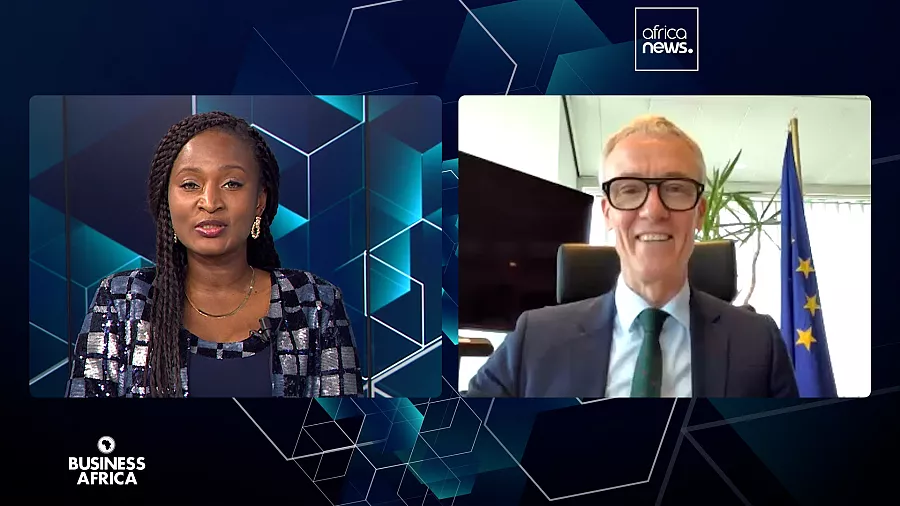
Koen Doens, Director-General for International Partnerships at the European Commission, emphasized this model’s success:
“Our guarantee approach transforms limited public funds into magnified impact, turning dozens of millions into hundreds—all while nurturing local financial ecosystems.”
This blended-finance structure not only accelerates project rollout but also ensures that national authorities, private operators, and multilateral agencies collaborate closely on governance, environmental safeguards, and community engagement.
Beyond Trade: Jobs, Integration, and Stability
Modern infrastructure does more than move goods—it connects people. As roads improve and cross-border delays shrink, informal economies along the corridor spring to life: roadside markets flourish, logistics hubs create warehouse and trucking jobs, and ancillary services—mechanics, eateries, lodging—benefit local entrepreneurs. Early estimates suggest up to 50,000 new jobs could be supported directly or indirectly by the corridor upgrades over the next decade.
Furthermore, smoother mobility deepens regional integration. Cameroon and Chad already belong to the Economic Community of Central African States (ECCAS), but logistical hurdles have hampered trade harmonization. With a reliable corridor, tariff revenues rise, customs procedures become more predictable, and both governments can pursue joint initiatives such as joint border management posts to streamline processes even further.
Crucially, improved connectivity also bolsters resilience in times of crisis. When drought, floods, or security challenges strike, humanitarian aid can flow faster, reducing response times and saving lives. By investing in hard assets, the EU and its partners are laying the groundwork for peace and prosperity across Central Africa.
Nigeria’s Stand-Off with Facebook: Rethinking Big Tech’s Role
While Europe cements its role as an infrastructure investor, African governments are increasingly flexing regulatory muscle in the digital realm. Nigeria’s recent demand that Facebook pay $290 million in alleged unpaid taxes and penalties for data and competition violations has captured headlines—and ignited debate.
The Nigerian Federal Inland Revenue Service (FIRS) argues that Facebook’s revenue from ad sales and digital services in Nigeria has long escaped the full tax net, potentially costing the treasury hundreds of millions annually. Moreover, concerns over user data privacy and content moderation have prompted calls for stricter licensing requirements—mirroring moves in Uganda and Kenya.
Facebook (now Meta Platforms, Inc.) has signaled its reluctance to acquiesce, warning that onerous financial and operational demands could force it to reconsider its presence in Africa’s largest market by population. Such a withdrawal would carry heavy costs:
- For consumers: reduced access to free basic‐internet services (e.g., Free Basics), and potential blackouts of Facebook, WhatsApp, and Instagram.
- For businesses: loss of a key advertising channel that reaches over 90 million Nigerians monthly—critical for SMEs and digital entrepreneurs.
- For regulators: weaker leverage to enforce local content quotas and data‐localization rules.
Analysts warn that punitive tax assessments risk backfiring, pushing platforms into legal battles and stoking public-relations crises. Yet, governments insist that digital giants must play by local rules, contribute fair shares, and safeguard citizen data. As this standoff unfolds, it will set precedents for digital governance across the continent.
The Wider Tech-Tax Landscape in Africa
Nigeria’s case is far from isolated. In recent years:
- Kenya imposed a 1.5 percent digital services tax on revenue from online platforms.
- Uganda introduced a 12 percent excise duty on “over-the-top” services, including social media apps.
- Ghana proposed a 9 percent digital levy covering various e-commerce activities.
These measures reflect a broader trend: African states, grappling with budget deficits and service-delivery pressures, view tech levies as low-hanging fruit. But the balancing act is delicate—over-taxation could drive platforms to restrict services, hurting connectivity and digital literacy goals under initiatives like the Smart Africa Alliance and the African Continental Free Trade Area (AfCFTA).
Bridging Togo’s Gender Finance Gap
In West Africa, Togo is tackling a different but equally pressing challenge: the under-financing of women-led businesses. The Togolese government, in partnership with Ecobank, has launched a 1 billion CFA Franc (approx. $1.6 million) credit line aimed at women entrepreneurs. Early beneficiaries include small‐scale agro-processors, textile designers, and digital startups led by female founders.
Despite this welcome injection, the Women’s World Banking estimated that Togo’s female entrepreneurs face a $45 million financing shortfall—driven by collateral requirements, high interest rates, and limited awareness of formal banking channels. The Ecobank facility offers:
- Reduced collateral (down to 25 percent of loan value).
- Flexible repayment terms aligned with cash-flow cycles.
- Capacity-building workshops on financial literacy and business planning.
Local businesswomen, like Awa Kossi, who runs a soap-manufacturing cooperative in Lomé, praise the initiative but caution that deeper reforms are needed:
“Access to credit is a lifeline, but we also need mentorship, market linkages, and digital tools to scale sustainably.”
Experts echo this: credit alone won’t close the gap. Strengthening property rights, simplifying registration, and incentivizing private-equity investments in women-focused funds are equally critical.
A Holistic Approach to Inclusive Growth
Togo’s effort sits alongside similar gender-finance programs across Africa—from the African Development Bank’s Affirmative Finance Action for Women in Africa (AFAWA) to the Tony Elumelu Foundation’s entrepreneurship grants. These initiatives share a recognition: empowering women entrepreneurs yields outsized dividends in poverty reduction, job creation, and community uplift.
Yet the success stories are mixed. In markets where digital payments and mobile-money platforms (e.g., Tigo Cash, MTN Mobile Money) flourish, female-led microenterprises often outpace male counterparts due to ease of transaction. Conversely, in cash-dependent regions, women struggle with transactional risks and credit scoring gaps.
By pairing credit lines with digital finance and policy reforms—like Burkina Faso’s move to accept movable assets (e.g., livestock) as collateral—governments can close the loop, ensuring that today’s headlines become tomorrow’s growth engines.
What Lies Ahead for Africa’s Finance and Infrastructure
These three stories—Europe’s €40 million bet on Central African roads, Nigeria’s brewing clash with Meta, and Togo’s gender-finance push—underscore a continent at a crossroads. African economies are diversifying, digitalizing, and demanding partnerships that deliver tangible results.
- Infrastructure as Investment: The EU’s corridor project demonstrates that when international institutions treat roads and rails as investable assets (rather than aid projects), private capital floods in, boosting scale and sustainability.
- Digital Sovereignty: As tech giants loom larger, African governments are carving out their own rules sometimes with friction. Crafting frameworks that protect revenues and data, without choking innovation, will be a defining challenge of the next decade.
- Inclusive Finance: Whether through gender-focused credit lines or pan-African fintech platforms, closing financing gaps remains imperative. Success hinges on blended approaches—merging public guarantees, private capital, and digital delivery.
Across all fronts, Africa’s narrative is shifting: from aid dependency to co-investment, from regulatory catch-up to policy innovation, from narrow credit fixes to systemic reform. For businesses, investors, and policymakers, the message is clear: partnering on Africa’s terms—aligning with local priorities, harnessing technology, and prioritizing inclusivity—will unlock the continent’s true potential.
Ready to take your career to the next level? Join our dynamic courses: ACCA, HESI A2, ATI TEAS 7 , HESI EXIT , NCLEX – RN and NCLEX – PN, Financial Literacy!🌟 Dive into a world of opportunities and empower yourself for success. Explore more at Serrari Ed and start your exciting journey today! ✨
photo source: Google
By: Montel Kamau
Serrari Financial Analyst
23rd May, 2025