Key Points:
- SSE trims its five-year capital expenditure plan from £20.5 billion to £17.5 billion, a 15% reduction reflecting project slippages and economic headwinds.
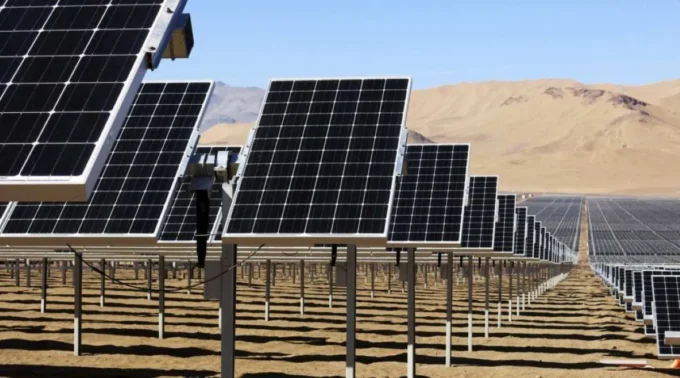
- The renewables division bears the brunt, with a £1.5 billion downgrade, affecting flagship schemes like the Berwick Bank offshore wind farm, the Coire Glas pumped storage project and Ireland’s Arklow Bank wind park.
- Broader supply-chain frictions, planning bottlenecks and policy uncertainties—including U.S. trade tariffs on green technology—are hammering green-energy rollouts across the sector.
- Rival National Grid took a £303 million impairment charge on a paused U.S. wind project, underscoring global investors’ caution amid shifting regulatory landscapes.
- SSE highlights the UK Labour government’s new planning regime as a silver lining, aiming to decarbonise the power system by 2030, while calling for stable market frameworks to underpin net-zero goals.
SSE’s revised investment blueprint
British utility SSE announced on Wednesday that it will scale back its planned capital investment over the next five years by approximately £3 billion (about $4.04 billion), trimming total spending from £20.5 billion to £17.5 billion (Reuters). This 15% reduction reflects a confluence of factors—project delays, supply-chain disruptions, and a more cautious economic outlook—that have reshaped the company’s near-term strategy.
Unsurprisingly, SSE’s renewables division suffered the most significant cut, with its budget pared by £1.5 billion. The remaining £1.5 billion reduction spans thermal-power upgrades and transmission-grid enhancements, areas that SSE had earmarked for steady, regulated-return investments (The Guardian).
Flagship projects on pause
Berwick Bank offshore wind farm
The Berwick Bank development, poised to become one of the world’s largest offshore wind farms with up to 4.1 GW of capacity, has been pushed back due to planning delays and lengthy environmental assessments (Berwick Bank). Initially slated to begin construction in 2024, its full commercial operation was targeted for 2027. Once complete, Berwick Bank is expected to power over six million homes and drive Scotland toward its 2030 renewable-generation targets.
Coire Glas pumped-storage scheme
In the Scottish Highlands, the Coire Glas project—a 600 MW pumped-storage hydro plant—has also encountered setbacks. Despite completing an exploratory tunnel in August 2024, SSE has deferred its final investment decision as it awaits greater clarity on how the UK’s regulated market will reward large-scale storage assets. A full go-ahead would involve a £1.5 billion commitment and could see the scheme enter service by 2031.
Arklow Bank wind park (Phase 2)
Off Ireland’s County Wicklow coast, Arklow Bank Wind Park is another casualty. While the original seven-turbine, 25 MW Phase 1 has operated since 2004, Phase 2—ambitious plans for up to 800 MW of new turbines—has stalled amid planning delays and rising costs. SSE Renewables secured a Maritime Area Consent in December 2022, but construction has yet to commence, with commercial operation pushed toward 2029 (SSE Renewables, Power Technology).
Root causes: Policy and supply chain headwinds
Planning bottlenecks in the UK
SSE’s CEO, Alistair Phillips-Davies, pointed to protracted planning timelines as a key obstacle. “Delays to the planning processes… over the last twelve months” have disproportionately affected large-scale renewables and grid-infrastructure projects, he explained in a media briefing (Reuters). The UK government’s new Net-Zero Planning Regime, introduced by the Labour administration, aims to streamline approvals for green-energy schemes by 2030—an initiative Phillips-Davies welcomed as a positive development.
Global supply-chain disruptions
Across the sector, supply-chain snarls—ranging from turbine-blade backlogs to a global shortage of specialized vessels—have driven up equipment lead times and costs. U.S. trade policy under President Donald Trump, notably tariffs on steel and aluminium imports, has rippled through the industry, inflating input prices for offshore platforms and subsea cabling.
Peer dynamics: National Grid’s impairment
SSE is not alone in recalibrating its investment focus. National Grid, SSE’s FTSE 100 peer, reported an adjusted operating profit of £5.36 billion for its latest fiscal year—edging past consensus forecasts—but took a £303 million impairment charge on a paused U.S. offshore wind venture in New York, developed jointly with RWE. The project, known as Community Offshore Wind, was shelved amid “unfavourable market conditions” and policy uncertainty.
CEO John Pettigrew stressed that the setback was “only a small part” of National Grid’s broader £60 billion network investment plan through 2029, yet it illustrates the heightened risk environment confronting multinational utilities (The Times).
Financial performance and market reaction
Despite the downward revision in capital spending, SSE’s adjusted operating profit held steady at £2.42 billion for the year ended 31 March 2025, virtually flat compared to the prior period (£2.43 billion) (Reuters). The market responded positively to the disciplined approach: SSE’s shares rose 1.2% by 08:43 GMT on Wednesday, reflecting investor relief that the company is safeguarding cash flows amid uncertain conditions.
Government targets and the clean-power challenge
The UK government has set ambitious goals: a 95% fossil-fuel-free power system by 2030, which hinges on doubling onshore wind, tripling solar and quadrupling offshore wind capacity within five years. SSE initially planned to boost its renewable output five-fold to 50 TWh by 2030, having already delivered an 18% jump to 13.3 TWh in the last financial year (The Guardian). The trimmed investment roadmap raises questions about whether SSE alone can underpin the national decarbonisation push.
Inflation, interest rates and investor sentiment
The UK’s inflation rate surged to 3.5% in April, driven in part by rising energy and utility bills, the highest in the G7. Core inflation (which strips out volatile items) rose to 3.8%, prompting speculation that the Bank of England may delay interest-rate cuts (The Guardian). Higher borrowing costs amplify project financing challenges for capital-intensive ventures like offshore wind, reinforcing the need for clear, long-term policy signals.
SSE’s path forward
While SSE scales back discretionary spending, the company emphasises it will maintain an investment pace of £8 million per day, albeit refocused toward regulated-return assets such as high-voltage transmission and local distribution networks—areas less susceptible to planning and policy flux (The Guardian).
Phillips-Davies urged policymakers to deliver a stable market framework, warning against proposals like zonal electricity pricing, which he argues would introduce “a postcode lottery” in retail bills and inflate the cost of net-zero by tens of billions of pounds.
Conclusion
SSE’s £3 billion scaling-back of capital commitments underscores the delicate balancing act utilities face: advancing the energy transition while navigating planning inertia, supply-chain pinch points and macroeconomic headwinds. As peers like National Grid confront similar impairments, the industry’s medium-term momentum hinges on government action—streamlining approvals, safeguarding supply chains and insulating green-energy investments from geopolitical volatility. If enacted effectively, the Labour government’s planning reforms could unlock the next wave of clean-power expansion, keeping the UK on track for its 2030 net-zero milestones.
Ready to take your career to the next level? Join our dynamic courses: ACCA, HESI A2, ATI TEAS 7 , HESI EXIT , NCLEX – RN and NCLEX – PN, Financial Literacy!🌟 Dive into a world of opportunities and empower yourself for success. Explore more at Serrari Ed and start your exciting journey today! ✨
photo source: Google
By: Montel Kamau
Serrari Financial Analyst
22nd May, 2025