
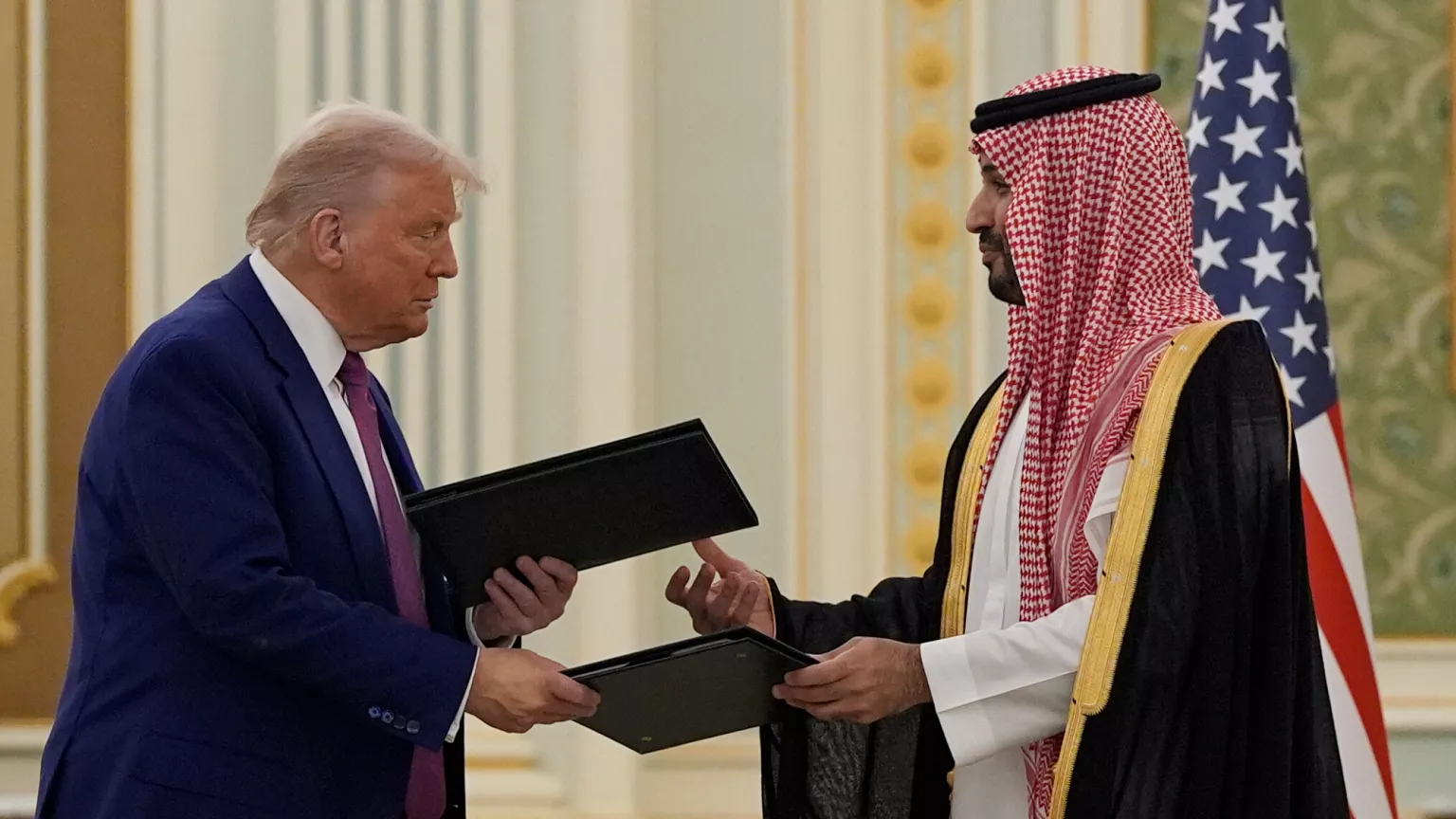
President Donald Trump’s recent state visit to Riyadh has culminated in a landmark announcement, marking a significant turning point in the economic and strategic relationship between the United States and Saudi Arabia. The Kingdom has pledged to invest a staggering $600 billion in a series of strategic deals with the U.S., a move that promises to reshape the landscape of their bilateral engagement. This monumental pledge, unveiled during a high-profile U.S.-Saudi investment forum, signifies a deepening of economic ties and underscores the strategic importance of this partnership in the ever-evolving global political and economic climate.
Trump’s Diplomatic Overture and Syria Policy Shift: A Regional Pivot?
During his address at the investment forum, President Trump not only lauded the Saudi leadership for their commitment but also made a significant foreign policy announcement. He declared his intention to order the immediate cessation of all U.S. sanctions against Syria, stating that this decision aims to “give them a chance at greatness.” This policy shift, which has garnered significant attention from global observers, marks a potential recalibration of U.S. foreign policy in the Middle East. It signals a departure from previous U.S. positions that emphasized sanctions as a tool to pressure the Syrian regime. The potential ramifications of this decision on regional stability and the broader geopolitical landscape are yet to unfold. The complex geopolitics of the Middle East will play a large role in the outcome of this change.
This decision raises numerous questions about the U.S.’s long-term strategy in the region, particularly regarding its relationships with key allies and adversaries. Analysts are speculating on the potential impact of this move on the balance of power, the ongoing efforts to combat terrorism, and the future of diplomatic relations in the area. The shift could potentially open new avenues for dialogue and cooperation, but it also carries the risk of destabilizing the region further.
Defense Deals and Strategic Military Partnership: A Look at the Arms Trade
A cornerstone of the bilateral agreements signed during Trump’s visit is a nearly $142 billion defense sales deal. This agreement will provide Saudi Arabia with “state-of-the-art warfighting equipment and services from over a dozen U.S. defense firms,” according to the White House. This substantial investment in Saudi Arabia’s defense capabilities, nearly doubling the kingdom’s 2025 defense budget, underscores the strategic military partnership between the two nations. However, the absence of a specified timeline for the completion of this extensive defense deal has raised questions about the logistical and financial implications. The scale of this deal highlights the significant role that the U.S. defense industry plays in the global arms trade and its importance to the U.S. economy.
The defense deal is expected to create thousands of jobs in the U.S. and boost the profits of numerous defense contractors. It also solidifies the U.S.’s position as a leading arms supplier to the Middle East. However, critics argue that such large-scale arms sales can exacerbate regional tensions and contribute to the proliferation of weapons. The long term effects of this deal could have lasting impacts on the region.
Crown Prince’s Vision for a Trillion-Dollar Partnership: Ambitious Goals and Economic Diversification
Crown Prince Mohammed bin Salman, speaking before President Trump at the investment conference, articulated a bold vision for the future of the U.S.-Saudi partnership. He stated that the aim is to elevate the partnership to a staggering $1 trillion across a broad spectrum of sectors, including military, security, economic, and technological domains. This ambitious goal underscores the kingdom’s commitment to diversifying its economy and deepening its strategic alliance with the United States. It also reflects the growing recognition of the interconnectedness of global economies and the importance of fostering mutually beneficial partnerships.
The Crown Prince’s vision aligns with Saudi Arabia’s broader efforts to transform its economy and reduce its dependence on oil. The Vision 2030 program, which aims to diversify the kingdom’s economy and create new opportunities for growth, is a key component of this strategy. The $1 trillion partnership with the U.S. is seen as a crucial step in achieving these goals.
Economic Realities and the Vision 2030 Challenge: Navigating Financial Hurdles
However, economists have raised concerns about the feasibility of fulfilling this ambitious investment pledge. They point to the significant financial challenges facing Saudi Arabia, including the sky-high costs associated with its own Vision 2030 investment ambitions. The kingdom’s Vision 2030 program, a comprehensive plan to diversify its economy away from oil, requires substantial financial resources. Furthermore, lower global oil prices and large-scale public spending projects have contributed to widening budget deficits for Riyadh. These economic realities raise questions about the kingdom’s capacity to deliver on its $600 billion investment commitment to the U.S. The success of this investment partnership will depend on a number of factors, including the global economic climate, the stability of oil prices, and the successful implementation of Saudi Arabia’s ambitious Vision 2030 program. Understanding the potential economic challenges facing the Kingdom is crucial.
The Kingdom will have to navigate a number of financial hurdles to meet its investment goals. Diversifying the economy, creating jobs, and attracting foreign investment will be key challenges. The successful navigation of these challenges will determine the success of the $600 billion investment.
Digital Infrastructure and the AI Revolution: A Technological Leap
In addition to the defense deal, the White House announced commitments from Saudi digital infrastructure business DataVolt to pursue a $20 billion investment in artificial intelligence data centers in the U.S. This investment underscores the growing importance of the digital economy and the strategic role that artificial intelligence plays in shaping the future of both nations. The development of AI data centers will not only create jobs and stimulate economic growth but also foster technological innovation and collaboration between the two countries. The rapid growth of the AI industry is a key trend to be aware of.
The total investment figure also includes a combined $80 billion in commitments from DataVolt, along with technology giants Google, Oracle, Salesforce, AMD, and ride-hailing company Uber, to invest in both the U.S. and Saudi Arabia. These investments span a range of sectors, including artificial intelligence, cloud computing, and transportation, highlighting the diverse areas of potential collaboration between the two nations. The involvement of these technology giants underscores the strategic importance of the digital economy and the potential for technological innovation to drive economic growth and development. This influx of capital and technology could have long lasting impacts on both nations.
Expanding on the AI Investment and its Implications
The $20 billion investment by DataVolt in U.S.-based artificial intelligence data centers is particularly noteworthy given the burgeoning importance of AI across various industries. These data centers will provide the crucial infrastructure needed to power AI research, development, and deployment. This collaboration could position both the U.S. and Saudi Arabia at the forefront of AI innovation. The transfer of knowledge and technology in this sector could be mutually beneficial, fostering advancements in areas such as machine learning, natural language processing, and computer vision. This investment also signals Saudi Arabia’s commitment to diversifying its economy beyond traditional sectors and embracing the opportunities presented by cutting-edge technologies. The ethical considerations surrounding AI development and deployment will also be an important aspect of this collaboration.
The Role of Technology Giants in the Bilateral Partnership
The commitment of major technology companies like Google, Oracle, Salesforce, AMD, and Uber to invest in both the U.S. and Saudi Arabia further strengthens the technological ties between the two nations. These investments span critical areas of the digital economy, including cloud computing infrastructure, enterprise software solutions, advanced semiconductor manufacturing, and transportation technology. This level of engagement from leading tech firms underscores the attractiveness of both markets and the potential for synergistic growth through collaboration. These partnerships can drive innovation, create skilled jobs, and enhance the competitiveness of both economies in the global digital landscape. The regulatory environments and data privacy laws in both countries will play a significant role in shaping the success of these ventures.
Geopolitical Ramifications and Regional Stability
Beyond the economic implications, the strengthening of the U.S.-Saudi partnership through these substantial investments has significant geopolitical ramifications for the Middle East. The alliance between the two nations has long been a cornerstone of regional security and stability. This enhanced economic cooperation could further solidify this strategic partnership, influencing regional dynamics and potentially impacting ongoing conflicts and diplomatic efforts. The approach taken towards Syria, as indicated by the lifting of sanctions, will be closely watched by other regional actors. The delicate balance of power in the Middle East requires careful consideration of the potential consequences of these policy shifts and economic alignments. The perspectives of other key players in the region will be crucial in understanding the broader impact.
Conclusion: A Transformative Partnership
The announcement of the $600 billion Saudi investment in the U.S. during President Trump’s visit to Riyadh represents a potentially transformative moment in the bilateral relationship between the two nations. The sheer scale of the investment, coupled with the strategic focus on key sectors such as defense and technology, signals a deepening of economic ties and a commitment to long-term collaboration. While economic challenges and geopolitical complexities remain, the potential benefits of this strengthened partnership for both the U.S. and Saudi Arabia are significant. The world will be watching closely to see how these ambitious plans unfold and the lasting impact they will have on the global economic and political landscape. The human element, the relationships forged and the collaborations fostered, will ultimately be key to the success of this endeavor.
Ready to take your career to the next level? Join our dynamic courses: ACCA, HESI A2, ATI TEAS 7 , HESI EXIT , NCLEX – RN and NCLEX – PN, Financial Literacy!🌟 Dive into a world of opportunities and empower yourself for success. Explore more at Serrari Ed and start your exciting journey today! ✨
Photo source: Google
By: Montel Kamau
Serrari Financial Analyst
14th May, 2025