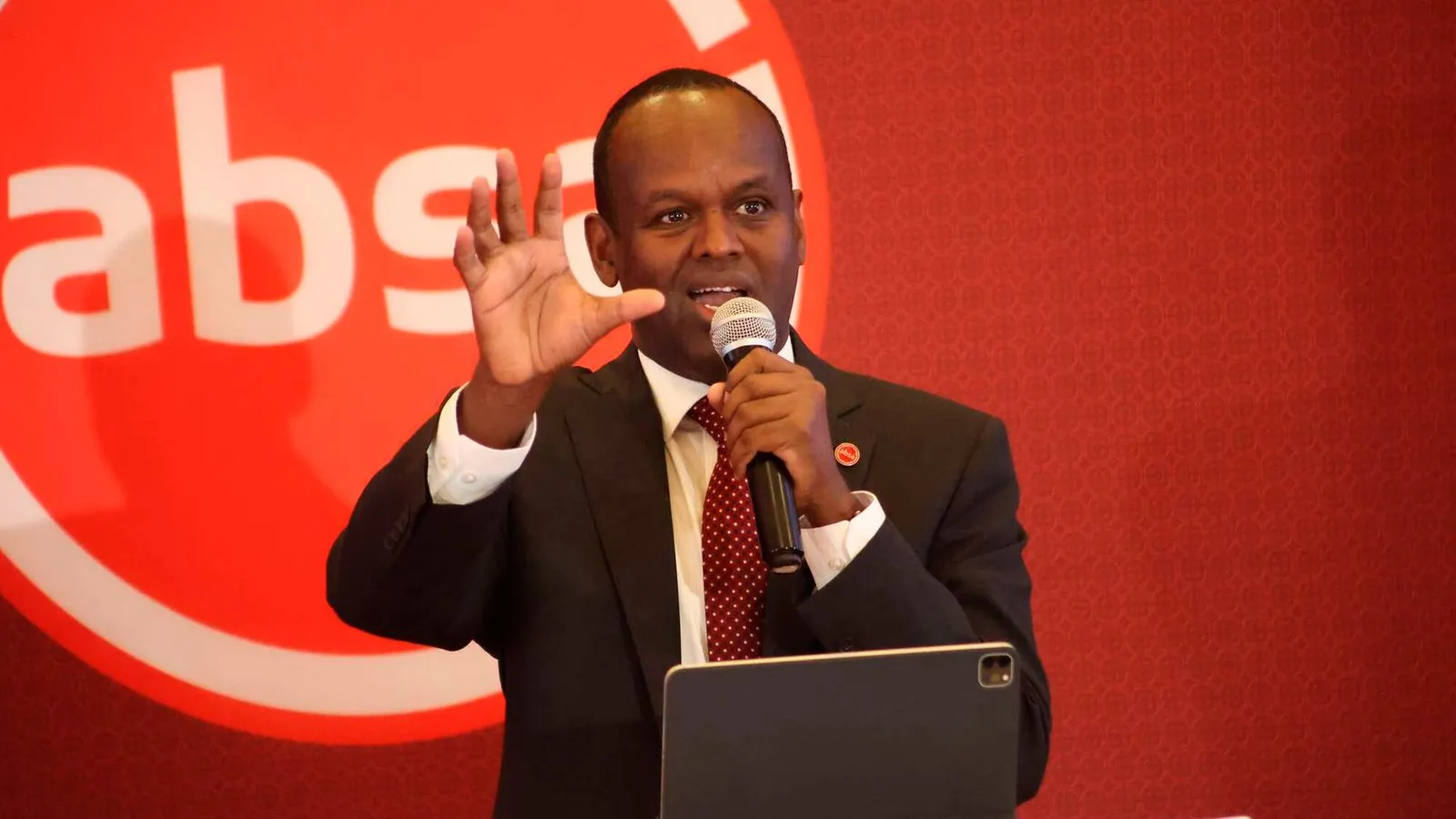
Absa Bank Kenya has stepped in to ease the burden on its most vulnerable customers, announcing the restructuring of Ksh 3.4 billion (approximately $26.35 million) in loans during 2024. Faced with the twin challenges of surging costs of doing business and squeezed household budgets, many Kenyans found themselves teetering on the edge of default. Absa’s loan‑restructuring initiative offers a vital lifeline: revamped repayment schedules, interest holidays, and extended loan tenors designed to restore financial breathing room to a diverse clientele, from small‑scale traders to mid‑sized manufacturers.
Tightening Belts in a Stressful Economy
Over the past two years, Kenya’s economic landscape has been anything but gentle. High energy prices, supply‑chain disruptions, and duty hikes on imported inputs have driven up production costs across industries. Meanwhile, households have felt the pinch of rising food and fuel prices, with discretionary spending on everything from school fees to medical care under strain. In this environment, personal loan and mortgage repayments compete for priority alongside essentials, leaving many borrowers to choose between servicing debt and meeting daily needs.
On the corporate side, manufacturing firms grapple with expensive imported raw materials, while traders contend with unpredictable foreign‑exchange swings that erode margins. The cumulative effect has been a marked slowdown in credit uptake: private‑sector credit growth contracted to just 1.4 percent by December 2024. Against this backdrop, Absa’s decision to restructure troubled loans was both a pragmatic response to rising non‑performing loans (NPLs) and a strategic move to safeguard long‑term customer relationships.
Absa Bank Kenya’s 2024 Performance Snapshot
In its latest annual report, Absa Bank Kenya acknowledged that headwinds from the operating environment dented the health of its loan book, pushing the gross NPL ratio up to 12.3 percent in 2024—still below the industry average of 16.4 percent, yet a significant jump from 9.6 percent a year earlier. Despite this, the bank remained a key player in financing productive sectors, approving over Ksh 180 billion ($1.39 billion) in fresh credit to businesses and individuals. Net loans and advances contracted by eight percent to Ksh 309 billion ($2.39 billion), largely reflecting reduced borrowing appetite in the face of high interest rates and an appreciating shilling.
Absa highlighted that trade finance, mortgages, overdrafts, and its burgeoning virtual‑lending platform all recorded respectable year‑on‑year gains. By balancing new lending with targeted relief for distressed clients, the bank aimed to maintain credit discipline while cushioning those most at risk of default.
How Loan Restructuring Works
At its core, loan restructuring involves renegotiating the terms of a loan agreement to prevent outright default. Absa’s programme offered borrowers several concessions:
Revised repayment schedules, spreading principal and interest over an extended period to lower monthly outlays.
Interest‑rate freezes or reductions, giving borrowers temporary reprieve from soaring borrowing costs.
Principal moratoriums, letting customers defer paying down the original loan amount for a specified interval.
Tailored mix of cash and in‑kind arrangements, for agricultural clients who could offset part of their interest through produce deliveries.
These measures aim to preserve the borrower‑lender relationship and allow a return to normal servicing once the customer’s cash flow recovers. For entrepreneurs running family‑owned businesses or informal traders whose incomes ebb and flow with market cycles, the flexibility can mean the difference between staying afloat and insolvency.
Sectoral Impact: Who Benefits Most?
The restructuring programme cut across multiple segments:
Households: Families burdened by school fees, medical bills, and utility hikes found breathing room when monthly repayments dropped by up to 30 percent. Parents juggling mortgage payments for modest homes could defer principal for six months, preventing forced sales or late‑payment penalties.
Manufacturing: Mid‑sized factories in Nairobi and Thika, producing everything from textiles to plastics, saw their working‑capital loans restructured to smooth out cash‑flow mismatches caused by late payments from distributors. Spreading interest over a longer tenor freed cash for raw‑material procurement.
Trade and Retail: Small traders in open‑air markets, many of whom borrowed via Absa’s digital lending arm, used temporary interest holidays to restock goods before ramping up sales ahead of festive seasons.
Energy and Infrastructure: Companies involved in solar‑installation projects and water‑pumping initiatives, hit by delayed government payments, negotiated grace periods to avoid project stoppages and job losses.
By offering these concessions, Absa effectively underwrote resilience across critical nodes of Kenya’s economy, ensuring that production lines kept turning and shopkeepers remained open for business.
Central Bank Policy and Its Ripple Effects
Monetary policy over the past two years has amplified the financing squeeze. In January 2023, the Central Bank of Kenya’s benchmark lending rate stood at 8.75 percent. By December, policymakers had raised it to 12.5 percent to tame inflationary pressures. A further hike to 13 percent by mid‑2024 made borrowing prohibitively expensive for many small and medium enterprises (SMEs). Facing signs of economic deceleration and forecasts of easing inflation—thanks to stable energy costs and a steadier exchange rate—the central bank began trimming rates in early 2025, reaching 10 percent by its April 8 meeting. While this move is designed to stimulate private‑sector credit, lenders like Absa have been cautious, mindful that lowering rates too quickly could re‑energize borrowing without addressing underlying vulnerability among heavily indebted customers.
Absa’s restructuring efforts dovetail with the central bank’s pragmatic approach: banks maintain capital buffers and sound underwriting standards even as they lend more cheaply. By working with borrowers to manage existing exposures, the financial system gains resilience against interest‑rate volatility and avoids a wave of distressed sales that would impair asset values.
High Debt Burden and Fiscal Strains
Kenya’s public‑debt profile adds another layer of complexity. As of June 2024, total public debt reached Ksh 10.6 trillion ($82.17 billion), up from Ksh 10.3 trillion ($79.84 billion) the previous year. Official projections indicate that by 2027, government borrowings could swell to nearly Ksh 13 trillion ($100.77 billion). Rapid debt accumulation—driven by infrastructure spending on roads, railways, and energy projects—has stoked concerns among global credit‑rating agencies, leading to successive downgrades and higher sovereign‑borrowing costs.
The country’s grey‑listing by the Financial Action Task Force (FATF) in 2024 spotlighted deficiencies in anti‑money‑laundering controls, prompting international banks to levy additional compliance fees on Kenyan transactions. These fees have trickled down to end customers through steeper remittance charges and higher trade‑finance costs.
Against this backdrop, Absa’s loan‑restructuring programme eases private‑sector distress while indirect fiscal pressures—higher transaction levies and regulatory compliance costs—continue to weigh on economic actors. The bank’s approach of combining new loan approvals (Ksh 180 billion in 2024) with relief for existing borrowers represents a calibrated response to both macroeconomic headwinds and micro‑level hardships.
Absa Group’s Broader Strategy and Digital Push
Absa Bank Kenya operates under the umbrella of Absa Group Limited, one of Africa’s largest diversified financial services conglomerates. Across 12 countries, the group has invested heavily in digital platforms, mobile‑first banking, and data‑driven credit assessments. In Kenya, Absa’s proprietary mobile app now serves over six million registered users, offering instant loan approvals, real‑time account alerts, and AI‑powered financial‑planning tools.
This digital infrastructure proved invaluable during the loan‑restructuring rollout. Borrowers received automated notifications when they qualified for relief measures, and a streamlined online form enabled swift renegotiation of terms without in‑branch visits. For rural customers with limited internet bandwidth, Absa deployed USSD‑based menus on basic phones, ensuring inclusivity.
Looking ahead, Absa plans to roll out a credit‑scoring pilot that draws on alternative data—from utility‑bill payments to mobile‑money transaction histories—to fine‑tune risk assessments for low‑income clients. This initiative, coupled with targeted financial‑literacy workshops in county towns, aims to reduce future NPL build‑ups by equipping borrowers with budgeting tools and early‑warning alerts.
Feet on the Ground: Borrowers’ Stories
Behind the headlines are real lives transformed by Absa’s intervention. Take Mary Wanjiku, a single mother of three who took out a mortgage on a modest townhouse in Kiambu County. When her teaching position at a private school was made redundant in mid‑2024, her income plummeted. Faced with the prospect of losing her home, Mary applied for a principal moratorium. Absa granted her a six‑month freeze on capital repayments and trimmed her interest rate by two percentage points. “It was like someone reached out and held my hand,” she says. “I could focus on finding a new job without the fear of eviction.”
In Eldoret, smallholder maize farmer Joseph Otieno leveraged a restructured agricultural loan to expand his yield. With seasonal revenues falling short, he had been unable to settle planting costs. Absa reorganized his repayment into a harvest‑linked schedule: smaller pre‑harvest installments, followed by larger payments after his harvest sale. Joseph invested the savings into better seeds and fertilizers, resulting in a 20 percent bump in yield.
Similarly, a mid‑sized plastics manufacturer in Nairobi used an overdraft extension to fulfill a large order from East African retailers. Previously constrained by lump‑sum interest payments, the firm now enjoys monthly amortization, smoothing its cash flow and enabling the purchase of new molding equipment. “That restructuring kept our production lines running and safeguarded 45 jobs,” notes the company’s director, highlighting the ripple effects beyond the balance sheet.
Industry Context and Comparative Responses
Absa’s peers have also rolled out restructuring schemes, but often with narrower scopes or shorter tenors. Some smaller banks have focused solely on SME portfolios, leaving personal‑loan customers to fend for themselves. International banks, mindful of global capital‑adequacy rules, have been slower to compromise on interest margins. Against this patchwork of responses, Absa’s comprehensive programme—covering retail, corporate, agricultural, and digital‑loan segments—stands out for its inclusivity.
Regulators have encouraged such initiatives, with the Central Bank of Kenya issuing guidelines on responsible restructuring and minimum disclosure standards. Yet, compliance remains voluntary. Absa’s publicly reported figures suggest that nearly one in ten of its loan accounts benefited from relief measures in 2024, a testament to the programme’s scale and operational reach.
Outlook: Balancing Growth with Prudence
As Kenya’s economy shows tentative signs of stabilization, the demand for new credit may recover—especially if interest rates continue to ease and private‑sector confidence picks up. Absa aims to sit at the forefront of this resurgence, leveraging its hybrid branches‑plus‑digital network to onboard new clients swiftly. Yet the bank remains wary of overdue risk: fresh lending will be accompanied by stress‑testing under various macro scenarios, ensuring that new borrowing does not sow the seeds of tomorrow’s NPL cycle.
For borrowers still navigating tight margins, Absa plans a second wave of targeted support in 2025, focusing on women‑owned enterprises and youth‑led startups. The bank’s goal is to combine competitive lending rates with proactive monitoring, so that emerging vulnerabilities are flagged and addressed before they become defaults.
A Measured Path Forward
Absa Bank Kenya’s restructuring of Ksh 3.4 billion in distressed loans represents a pragmatic blend of compassion and commercial foresight. By recalibrating loan terms for those in genuine need, the bank has cushioned thousands of households and businesses against economic shocks, while preserving its own asset quality and capital buffers. As Kenya charts a course through high public debt, shifting monetary policy, and ongoing global uncertainties, such targeted relief measures will be crucial in shoring up the financial ecosystem.
Ultimately, the success of this initiative will be judged by how many borrowers emerge from their restructures back on a firm footing, with renewed capacity to invest, expand, and contribute to national growth. If Absa’s examples—teachers safeguarding homes, farmers boosting harvests, manufacturers preserving jobs—are any guide, then the effort stands as a blueprint for how banks and customers can weather hardship together, turning crisis into an opportunity for more resilient, inclusive prosperity.
Ready to take your career to the next level? Join our dynamic courses: ACCA, HESI A2, ATI TEAS 7 , HESI EXIT , NCLEX – RN and NCLEX – PN, Financial Literacy!🌟 Dive into a world of opportunities and empower yourself for success. Explore more at Serrari Ed and start your exciting journey today! ✨
photo source: Google
By: Montel Kamau
Serrari Financial Analyst
6th May, 2025