As Africa’s digital economy flourishes, an increasing number of freelancers, remote workers, and businesses across the continent are securing international opportunities. However, one of the biggest challenges they face is receiving payments from foreign clients and employers. Traditional banking infrastructure in many African nations remains cumbersome, with barriers such as high transaction fees, foreign exchange difficulties, and slow processing times.
Lagos-based fintech startup Raenest has stepped up to address this challenge by offering multi-currency virtual accounts, enabling seamless cross-border transactions for freelancers and businesses. Now, in a major development for Africa’s fintech ecosystem, Raenest has secured an $11 million Series A funding round led by QED Investors, one of the world’s top fintech venture capital firms.
This funding will enable Raenest to expand its services across Africa, strengthen its regulatory compliance, and enhance its product offerings to cater to an even broader customer base. With more than 700,000 freelancers and 300 businesses already using its platform, the startup is rapidly positioning itself as a key player in the continent’s financial technology landscape.
The Growing Need for Seamless Cross-Border Payments in Africa
As Africa’s digital workforce grows, platforms like Upwork, Fiverr, and Toptal have opened doors for African professionals to work remotely for international companies. However, getting paid remains a major hurdle. Many African freelancers lack access to banking systems that support international transactions, and even when they do, the fees for currency conversion and international wire transfers can be prohibitively high.
For businesses, the challenge is even greater. Many African startups struggle to raise foreign capital or process payments from international clients due to banking restrictions, regulatory bottlenecks, and limited financial tools. This creates inefficiencies and slows down economic growth across the region.
Raenest has positioned itself as a solution to this growing problem by offering multi-currency accounts, allowing users to receive payments in USD, GBP, and EUR. Through its Geegpay product, freelancers can invoice clients, receive funds, and convert currencies seamlessly, eliminating the need for complex banking workarounds.
On the business side, Raenest for Business helps companies streamline international remittances, ensuring they can pay employees, process cross-border transactions, and manage foreign capital efficiently.
Raenest’s Evolution: From Employer of Record to Fintech Pioneer
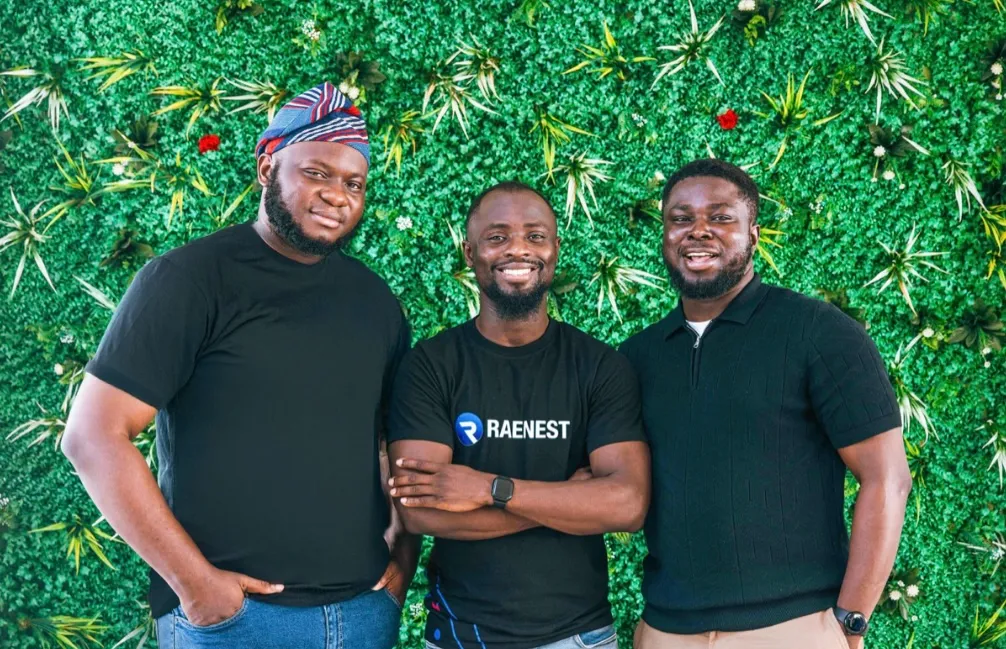
Interestingly, Raenest’s founders Victor Alade, Sodruldeen Mustapha, and Richard Oyome didn’t initially set out to build a fintech platform for freelancers. The company started in 2022 as an Employer of Record (EOR), focused on helping global companies hire African talent while complying with local labor laws and tax regulations.
However, as they worked with international employers, the founders realized that the real challenge wasn’t just compliance—it was getting payments into the hands of African professionals quickly and efficiently.
“A U.S. company might not care if a payment is delayed by five days, but for someone in Nigeria or Kenya, that’s a big deal—especially when converting to local currency becomes another hurdle,” said Victor Alade, who previously worked as a software engineer at Jumia and Andela, two of Africa’s largest tech companies.
Recognizing this pain point, Raenest pivoted to create Geegpay, which quickly gained popularity among African freelancers. As demand grew, businesses also began signing up, prompting the company to expand its offerings under Raenest for Business.
Rapid Growth Amid Shifting Market Dynamics
The timing of Raenest’s expansion into business banking couldn’t have been better. Around the same period, U.S.-based fintech Mercury started restricting business accounts from several African countries, creating a gap in the market. Meanwhile, global EOR platforms like Deel began considering deeper expansion into Africa, increasing competition in the space.
By focusing on multi-currency accounts and business banking, Raenest found a niche that was underserved and quickly scaled its operations. In just two years, the company has processed over $1 billion in payments, representing a 160% increase in transaction volume.
Today, Raenest’s platform serves over 700,000 freelancers who rely on it for payments from platforms like Upwork, Fiverr, and Gusto. Additionally, more than 300 businesses use Raenest to collect foreign payments, pay employees, and raise investment capital.
Competitive Landscape: How Raenest Stands Out
The African fintech space is highly competitive, with multiple startups offering similar services. Afriex, Cleva, Fincra, Grey, Verto, and Leatherback are just a few of the companies providing multi-currency accounts and cross-border payment solutions.
However, Raenest differentiates itself by catering to both freelancers and businesses, whereas most competitors focus on just one segment. This unique positioning allows Raenest to build a holistic financial ecosystem, addressing challenges faced by individuals and companies alike.
Additionally, Raenest’s strong partnerships with U.S. and U.K. banking institutions give it an edge in securing regulatory approvals and providing reliable financial services.
Funding and Future Expansion Plans
The recent $11 million Series A funding round brings Raenest’s total funding to $14.3 million, following a $700,000 pre-seed round and a $2.6 million seed round.
Leading the investment is QED Investors, a global fintech-focused venture capital firm that has been actively expanding its footprint in Africa. QED has previously backed African fintechs such as Moniepoint, Remedial Health, Precium (formerly Revio), and Cedar Money, demonstrating its confidence in the continent’s fintech growth potential.
Other investors participating in the round include Norrsken22, Ventures Platform, P1 Ventures, and Seedstars—all of whom have a track record of investing in high-growth startups in Africa.
Gbenga Ajayi, QED’s partner and head of Africa and the Middle East, expressed enthusiasm about the deal, saying:
“We firmly believe that by bridging the gap between local and global markets, Raenest will unlock new opportunities for African entrepreneurs, freelancers, and businesses, ultimately driving greater economic empowerment across the continent.”
Expansion Roadmap: What’s Next for Raenest?
With this new funding, Raenest plans to expand its presence in Nigeria and enter new markets, including Egypt, Ghana, Kenya, and the U.S.
To support this growth, the company is actively pursuing additional banking licenses in multiple jurisdictions, ensuring compliance as it scales internationally. The goal is to make Geegpay and Raenest for Business a single, unified brand under the Raenest umbrella.
Additionally, Raenest is working on new product offerings aimed at helping Africans earn, invest, and grow wealth globally. While details are still under wraps, the company has hinted at investment tools and wealth management services in the pipeline.
Conclusion: A Major Step Forward for African Fintech
Raenest’s journey from an EOR platform to a major fintech player reflects the evolving needs of Africa’s digital workforce and businesses. By addressing a critical gap in cross-border payments, the company is empowering millions of Africans to participate in the global economy without the traditional financial barriers.
With $1 billion in processed payments, over 700,000 users, and backing from top-tier investors, Raenest is well on its way to becoming one of Africa’s most influential fintech startups. As it expands into new markets and launches innovative financial products, its impact on the continent’s economic transformation is only just beginning.
Ready to take your career to the next level? Join our dynamic courses: ACCA, HESI A2, ATI TEAS 7 , HESI EXIT , NCLEX – RN and NCLEX – PN, Financial Literacy!🌟 Dive into a world of opportunities and empower yourself for success. Explore more at Serrari Ed and start your exciting journey today! ✨
photo source: Google
By: Montel Kamau
Serrari Financial Analyst
12th February, 2025