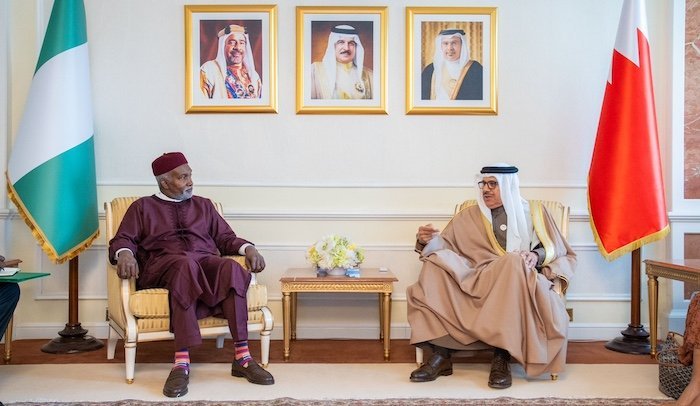
In a historic development, Nigeria and Bahrain have officially signed a landmark trade and diplomatic agreement aimed at strengthening bilateral ties, fostering economic cooperation, and facilitating investments between the two nations. This agreement represents a crucial step in deepening economic collaboration and opening new opportunities for businesses and investors in both countries.
The signing took place during the recent visit of Nigeria’s Minister of Foreign Affairs, Ambassador Yusuf Maitama Tuggar, to Manama, the capital of Bahrain. The high-level diplomatic engagement saw Ambassador Tuggar meet with his Bahraini counterpart, Dr. Abdullatif bin Rashid Al Zayani, to discuss trade, investment, and diplomatic relations, culminating in the official signing of a Joint Communiqué to establish and enhance cooperation between Nigeria and Bahrain.
Strategic Importance of the Nigeria-Bahrain Partnership
The deal is set to unlock vast opportunities in multiple sectors, including oil and gas, trade, investment, and diplomatic training, among others. The significance of this agreement goes beyond immediate economic gains, as it positions both countries to leverage each other’s strengths to drive long-term growth and stability.
For Nigeria, the partnership with Bahrain presents an opportunity to attract Foreign Direct Investment (FDI) and expand access to the Middle Eastern markets. For Bahrain, the deal strengthens its influence in Africa and deepens economic engagement with one of Africa’s largest economies.
Key Highlights of the Nigeria-Bahrain Agreement
- Enhanced Trade and Investment Cooperation
- The agreement aims to boost bilateral trade volumes by removing trade barriers and facilitating smoother business engagements between Nigerian and Bahraini companies.
- Investment incentives are expected to encourage Bahraini businesses to establish a presence in Nigeria and vice versa, particularly in the oil and gas, manufacturing, and finance sectors.
- The deal aligns with Nigeria’s commitment to diversifying its economy beyond oil exports, making Bahrain an important partner in sectors such as banking, logistics, and industrial development.
- Collaboration in the Oil and Gas Industry
- With Nigeria being Africa’s largest crude oil producer and Bahrain having a strong presence in oil refining and petrochemicals, the partnership will enable both countries to collaborate in energy exploration, refining, and production.
- The agreement includes discussions on developing the 8th Train LNG project, which is expected to further boost Nigeria’s liquefied natural gas (LNG) exports.
- Diplomatic and Institutional Training
- The agreement outlines plans to strengthen diplomatic training programs for Nigerian officials, leveraging Bahrain’s expertise in global diplomacy and governance.
- Bahrain will offer specialized programs and capacity-building initiatives to train Nigerian diplomats, fostering greater cooperation in multilateral organizations.
- Multilateral Cooperation
- Both countries will work closely in international and regional organizations to promote their shared interests in global trade, security, and economic development.
- The partnership aims to strengthen diplomatic engagements within institutions such as the United Nations (UN), African Union (AU), and the Gulf Cooperation Council (GCC).
- Economic Diversification and Infrastructure Development
- Nigeria’s commitment to diversifying its economy aligns with Bahrain’s expertise in developing financial services, industrial infrastructure, and logistics.
- The partnership will encourage joint ventures in banking, fintech, and the digital economy, with Bahraini investors expected to explore opportunities in Nigeria’s rapidly growing tech ecosystem.
What This Agreement Means for Nigeria
Nigeria, Africa’s most populous country and largest economy, has been actively seeking new economic partnerships to attract foreign investment and expand trade beyond traditional partners. Bahrain, with its well-established financial markets, advanced oil-refining industry, and strategic location in the Middle East, presents an ideal partner for Nigeria’s growth ambitions.
Boosting Foreign Direct Investment (FDI)
One of Nigeria’s primary goals is to increase foreign direct investment into key sectors, including energy, manufacturing, technology, and infrastructure. The Nigeria-Bahrain agreement is expected to:
- Provide access to Bahrain’s financial markets, allowing Nigerian companies to secure investments.
- Encourage Bahraini firms to set up operations in Nigeria, leveraging its vast consumer market and natural resources.
- Facilitate knowledge exchange in areas like industrial development, economic policies, and investment strategies.
Energy Sector Expansion
Nigeria’s partnership with Bahrain could help the country expand its oil and gas industry, particularly through:
- Technology transfer and expertise sharing in oil refining and petrochemical industries.
- Investment in natural gas production, supporting Nigeria’s ambitions to become a leading LNG exporter.
- Infrastructure development for oil transportation and storage, reducing losses and increasing export capacity.
Strengthening Diplomatic Relations
Beyond economic benefits, the deal positions Nigeria as a key player in Middle East-Africa relations. Strengthened ties with Bahrain could pave the way for deeper engagements with the Gulf Cooperation Council (GCC), creating new avenues for trade and diplomacy.
What This Agreement Means for Bahrain
For Bahrain, the agreement presents an opportunity to expand its economic influence in Africa, a region with immense investment potential. Nigeria’s large and growing economy provides Bahraini businesses access to new markets, particularly in industries like:
- Banking and Finance: Bahrain is known as a major financial hub in the Middle East, and this agreement will allow Bahraini financial institutions to explore opportunities in Nigeria’s banking and fintech sectors.
- Logistics and Trade: Nigeria’s seaports, railways, and road infrastructure development create potential for Bahraini logistics firms to invest in trade facilitation and transportation.
- Technology and Innovation: With Nigeria emerging as a technology hub in Africa, Bahraini firms may find investment opportunities in fintech, e-commerce, and digital services.
Strengthening GCC-Africa Relations
Bahrain’s growing interest in Africa reflects a broader trend within the Gulf Cooperation Council (GCC), where Gulf countries are increasingly looking at Africa for investment and trade partnerships. By solidifying its ties with Nigeria, Bahrain could act as a bridge for stronger GCC-Africa economic cooperation.
Challenges and Future Considerations
While the Nigeria-Bahrain agreement presents significant opportunities, there are also challenges that both nations must navigate:
- Regulatory Differences: Differences in trade regulations, investment policies, and business environments may require further negotiations to ensure smooth implementation.
- Security Concerns: Nigeria has faced security challenges in certain regions, which may impact investor confidence. However, government reforms and improved security measures are expected to address these concerns.
- Logistical Barriers: The distance between the two countries presents logistical challenges for trade, but improved transportation and shipping agreements could mitigate these issues.
Conclusion: A New Era of Nigeria-Bahrain Relations
The signing of this landmark trade and diplomatic agreement marks a turning point in Nigeria-Bahrain relations, setting the stage for increased economic cooperation, investment, and diplomatic engagement.
For Nigeria, the deal aligns with its broader economic diversification strategy and ambition to attract more foreign investments. For Bahrain, the agreement serves as a gateway to expand its presence in African markets, tapping into Nigeria’s economic potential.
The coming months will be crucial in determining how both countries implement this agreement. As discussions continue and new projects take shape, the Nigeria-Bahrain partnership could become a model for future trade agreements between Africa and the Middle East, strengthening ties between these two dynamic regions.
Ready to take your career to the next level? Join our dynamic courses: ACCA, HESI A2, ATI TEAS 7 , HESI EXIT , NCLEX – RN and NCLEX – PN, Financial Literacy!🌟 Dive into a world of opportunities and empower yourself for success. Explore more at Serrari Ed and start your exciting journey today! ✨
photo source: Google
By: Montel Kamau
Serrari Financial Analyst
10th January, 2025