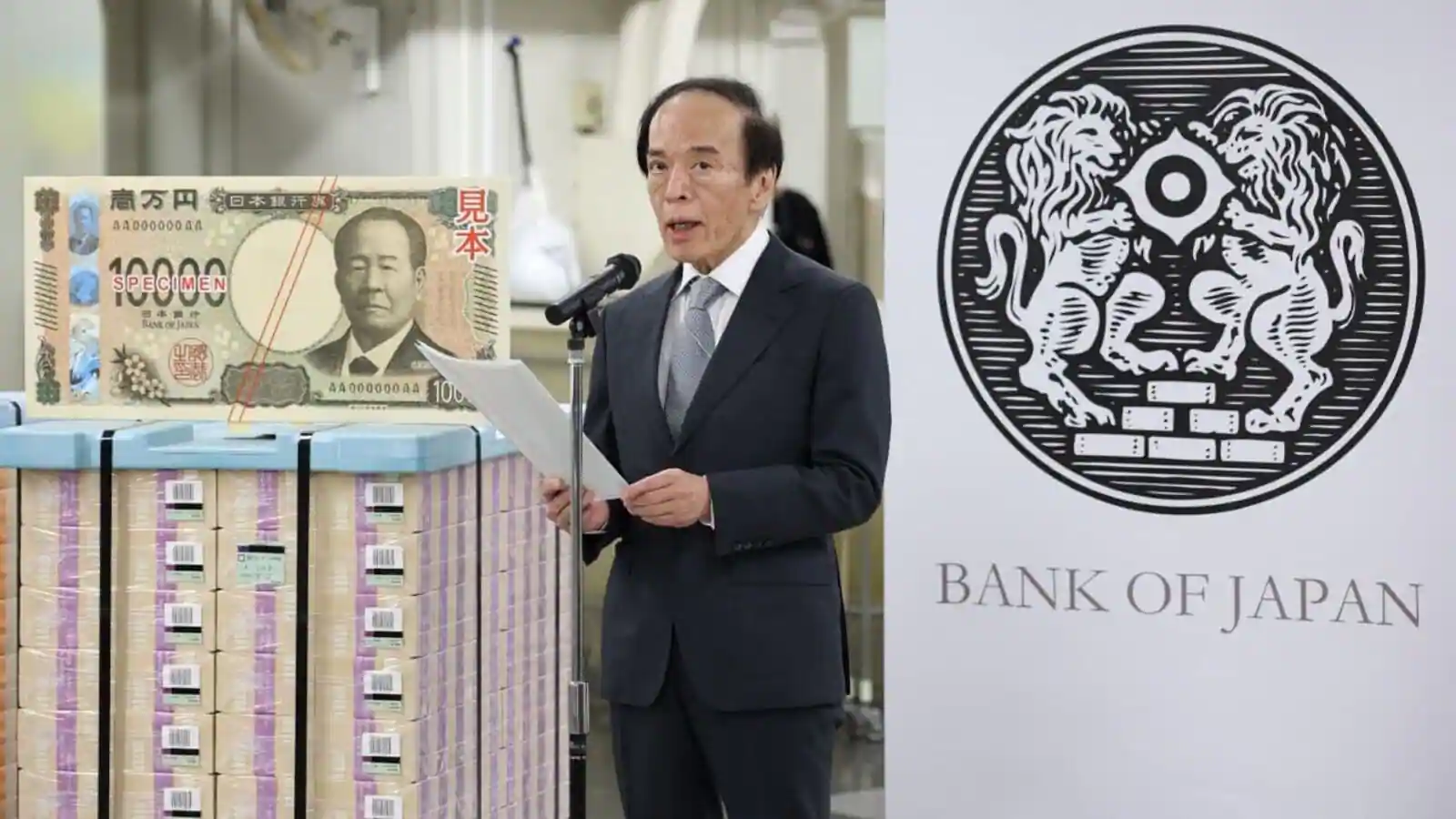
The Bank of Japan (BOJ) made a historic move on Friday by raising its short-term interest rates to 0.5%, the highest level since the 2008 global financial crisis. This marks the second rate hike in under a year and reflects the central bank’s confidence that rising wages and steady inflation will sustain Japan’s economic recovery.
The decision, made in an 8-1 vote by the BOJ’s policy board, comes amid a volatile global economic climate and a weakening yen that has increased import prices. BOJ Governor Kazuo Ueda stressed that the central bank remains vigilant about inflationary pressures while keeping an eye on global developments.
Historic Rate Hike: The Key Details
At its two-day monetary policy meeting, the BOJ decided to raise its short-term policy rate from 0.25% to 0.5%. This move, though widely anticipated, underscores the central bank’s resolve to transition away from ultra-loose monetary policy as Japan moves closer to achieving sustainable inflation around its 2% target.
In its quarterly outlook report, the BOJ revised its inflation forecasts, projecting core inflation to remain at or above 2% for three consecutive years—a significant milestone for an economy that struggled with deflation for decades.
Governor Ueda emphasized that the decision reflects growing confidence in Japan’s economic recovery:
“The likelihood of achieving the BOJ’s inflation outlook has been rising, with many firms committed to raising wages during this year’s annual wage negotiations,” Ueda said.
The Yen’s Reaction and Market Implications
The announcement led to a surge in the Japanese yen, which gained 0.5% against the US dollar to trade at 155.32 per dollar. The two-year Japanese government bond (JGB) yield rose to 0.705%, the highest level since October 2008.
Market analysts see the move as a sign that Japan is ready to normalize monetary policy further. However, the central bank’s path remains cautious. “We have no preset idea on the timing of the next rate hike,” Ueda clarified, noting that decisions will depend on incoming economic data.
Inflation and Wage Growth: The Driving Forces
One of the BOJ’s main arguments for raising rates is the broad-based wage growth taking root in the Japanese economy. Rising wages are becoming increasingly embedded, creating a virtuous cycle where higher pay supports consumption and allows businesses to pass on costs without losing competitiveness.
In fiscal 2025, core consumer inflation is projected to hit 2.4% before stabilizing at 2% in 2026. The BOJ attributed this to intensifying labor shortages, rising food and fuel prices, and the continued depreciation of the yen, which has raised import costs.
Data released earlier on Friday revealed that Japan’s core consumer inflation accelerated to 3.0% in December 2024, marking the fastest annual pace in 16 months.
Policy Shifts and Economic Growth
Since assuming office in April 2023, Governor Ueda has gradually dismantled the radical stimulus program championed by his predecessor, Haruhiko Kuroda. The first rate hike occurred in July 2024, signaling a fundamental shift in Japan’s monetary policy after years of negative interest rates.
The BOJ expects Japan’s economy to grow by 1.1% in fiscal 2025 and 1.0% in 2026. Strong wage growth, steady inflation, and robust domestic consumption are expected to underpin this expansion.
However, risks remain. Trade uncertainties, particularly related to U.S. monetary policy and global geopolitical tensions, could pose challenges. The BOJ also highlighted rising import costs and labor shortages as potential headwinds.
Comparisons to Global Monetary Policies
The BOJ’s cautious yet decisive approach contrasts with other major central banks. The U.S. Federal Reserve and the European Central Bank (ECB) have pursued aggressive rate hikes to combat inflation, but Japan’s situation is unique. Decades of deflation left the BOJ reluctant to tighten policy until inflation and wage growth became firmly entrenched.
Now, with inflation consistently exceeding 2% and wage negotiations yielding significant pay increases, Japan is aligning more closely with global monetary trends.
Matt Simpson, a senior market analyst at City Index in Brisbane, remarked:
“This keeps the door open to another 25 basis point hike by the year-end, with rates potentially reaching 0.75%. The BOJ is taking calculated steps to normalize policy while ensuring economic stability.”
The Broader Economic Context
The BOJ’s decision comes at a critical juncture for Japan, which has been grappling with the long-term effects of an aging population and a shrinking workforce. Rising wages are seen as a way to boost productivity and mitigate some of these structural challenges.
Moreover, Japan’s trade balance has been impacted by higher energy costs and the weak yen, making the country more dependent on imports. By raising interest rates, the BOJ aims to strengthen the yen and reduce the pressure on import prices, providing some relief to households facing rising living costs.
Challenges Ahead
While the rate hike signals confidence in Japan’s economic outlook, uncertainties persist.
- Global Economic Risks: The BOJ must navigate an unpredictable global environment, including the potential for slower growth in major economies like the U.S. and China.
- Trade Tensions: As the global trade landscape evolves, Japan’s export-driven economy remains vulnerable to disruptions, especially in key sectors like technology and automotive.
- Domestic Constraints: Labor shortages and an aging population could limit Japan’s long-term growth potential, even as wage growth supports short-term gains.
- Policy Divergence: With other central banks potentially pausing or reversing rate hikes, Japan’s approach could create divergence in capital flows, impacting financial markets.
Future Outlook
The BOJ’s latest move is a clear signal that Japan is entering a new phase of economic policy. By focusing on sustainable inflation and wage growth, the central bank aims to foster a more resilient economy.
Looking ahead, Governor Ueda and his team will need to carefully balance their commitment to monetary tightening with the need to support economic growth. As Japan transitions away from decades of deflationary stagnation, the BOJ’s actions will have significant implications for global markets and investors.
With the yen strengthening and inflation moderating, the stage is set for Japan to redefine its economic narrative. Whether this new direction proves sustainable will depend on the BOJ’s ability to adapt to both domestic and international challenges.
In Governor Ueda’s words:
“Our goal is to ensure stable inflation while supporting economic growth. We remain committed to achieving this balance as we move forward.”
Ready to take your career to the next level? Join our dynamic courses: ACCA, HESI A2, ATI TEAS 7 , HESI EXIT , NCLEX – RN and NCLEX – PN, Financial Literacy!🌟 Dive into a world of opportunities and empower yourself for success. Explore more at Serrari Ed and start your exciting journey today! ✨
photo source: Google
By: Montel Kamau
Serrari Financial Analyst
24th January, 2025