
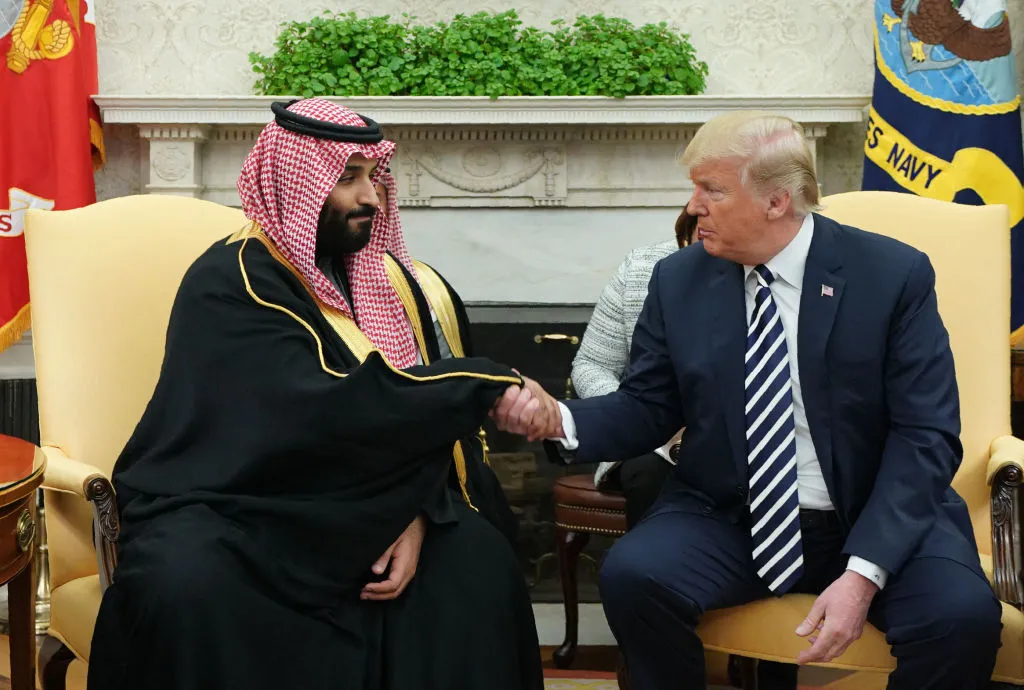
In a significant development underscoring the deepening economic and strategic ties between the United States and Saudi Arabia, Crown Prince Mohammed bin Salman announced the kingdom’s intention to invest $600 billion in the U.S. over the next four years. This pledge, made during a congratulatory phone call to President Donald Trump following his recent inauguration, represents one of the largest investment commitments made by Saudi Arabia to a single country.
The announcement follows a history of close relations between the two nations, particularly during Trump’s first term, when Saudi Arabia made substantial financial commitments during the president’s first international visit to the kingdom. The proposed investment signals a new chapter in U.S.-Saudi relations, focusing on economic collaboration, mutual prosperity, and shared regional goals.
A Renewed Partnership: Building on Historical Ties
President Trump’s inaugural international visit in 2017 to Saudi Arabia marked a historic departure from the traditional choice of the United Kingdom as the first destination for U.S. presidents. The decision emphasized the administration’s prioritization of Middle Eastern partnerships, particularly with oil-rich Gulf states, as a cornerstone of its foreign policy. During that visit, Saudi Arabia committed to purchasing $450 billion worth of U.S. goods and services, including military equipment, infrastructure projects, and energy technology.
Reflecting on this partnership, President Trump recently remarked, “If Saudi Arabia wanted to buy another $450 billion or $500—we’ll up it for all the inflation—I think I’d probably go.” While the president’s statement carried his characteristic humor, it also underscored the significant economic stakes involved in the relationship between the two countries.
Vision 2030: Saudi Arabia’s Economic Transformation
Crown Prince Mohammed bin Salman’s announcement aligns with Saudi Arabia’s Vision 2030, an ambitious initiative launched in 2016 aimed at diversifying the kingdom’s economy beyond its reliance on oil. As global demand for fossil fuels continues to face challenges from renewable energy trends and climate change policies, Saudi Arabia has sought to future-proof its economy by investing in alternative industries.
The Vision 2030 framework includes major projects such as NEOM, a $500 billion futuristic city being constructed in Saudi Arabia’s northwestern desert on the Red Sea. Designed to serve as a hub for innovation, green technology, and cutting-edge urban development, NEOM epitomizes Saudi Arabia’s aspiration to establish itself as a global leader in sustainable economic development. Additionally, the kingdom has announced plans to construct world-class stadiums and infrastructure to support its hosting of the 2034 FIFA World Cup, further showcasing its commitment to diversifying its economy through tourism and sports.
The proposed $600 billion investment in the U.S. reflects Saudi Arabia’s strategy to forge international partnerships that support its economic diversification efforts. By collaborating with American businesses and leveraging U.S. technological expertise, Saudi Arabia seeks to accelerate its transformation into a diversified, innovation-driven economy.
Potential Areas of Investment
Although the specific allocation of the $600 billion has not been disclosed, the scope of Saudi Arabia’s economic ambitions suggests several key areas of focus:
- Technology and Innovation: Saudi Arabia has shown a growing interest in technology, particularly through its Public Investment Fund, which has taken significant stakes in global tech giants. Collaborations with U.S. firms could facilitate the kingdom’s transition to a knowledge-based economy, promoting advancements in artificial intelligence, renewable energy, and digital infrastructure.
- Energy and Petrochemicals: While Saudi Arabia remains a leading oil producer, the kingdom is increasingly looking to invest in downstream industries such as refining and petrochemicals. Joint ventures with American energy companies could enhance both nations’ capabilities in sustainable energy solutions.
- Defense and Security: The longstanding defense relationship between the U.S. and Saudi Arabia could be strengthened further through investments in joint research, development, and production of advanced military equipment. This would enhance regional security while supporting jobs and innovation in the U.S.
- Healthcare and Biotechnology: As part of Vision 2030, Saudi Arabia aims to modernize its healthcare sector. Partnerships with American biotechnology firms and healthcare providers could introduce cutting-edge medical technologies and expertise to the kingdom.
- Infrastructure and Real Estate: Saudi Arabia’s ambitious urban development projects, including NEOM and the 2034 World Cup infrastructure, require expertise in construction, urban planning, and smart city technology. U.S. companies specializing in these areas could play a pivotal role.
Geopolitical and Economic Implications
The $600 billion pledge has significant geopolitical and economic implications. Strengthening economic ties between the U.S. and Saudi Arabia not only fosters mutual prosperity but also reinforces their strategic alliance in addressing regional challenges. From counterterrorism efforts to promoting stability in the Middle East, the two nations have a history of collaboration that extends beyond economic interests.
However, the relationship has not been without controversy. Saudi Arabia’s human rights record, including the 2018 killing of Washington Post columnist Jamal Khashoggi, has drawn criticism from international observers. Despite this, the kingdom has maintained close ties with successive U.S. administrations, emphasizing shared security and economic interests.
For Saudi Arabia, the investment commitment also reflects a desire to diversify its international partnerships and reduce its economic dependence on volatile oil revenues. The kingdom’s budgetary pressures, exacerbated by fluctuating global oil prices and the lingering effects of the COVID-19 pandemic, underscore the importance of pursuing alternative sources of income and growth.
Challenges and Opportunities
While the scale of the proposed investment is unprecedented, its successful implementation will depend on overcoming several challenges:
- Regulatory Complexity: Navigating the regulatory environments in both countries will require careful coordination to ensure compliance with legal, financial, and trade requirements.
- Economic Uncertainty: Global economic conditions, including inflation, interest rate fluctuations, and geopolitical tensions, could impact the feasibility and timing of investment projects.
- Public Perception: Managing public opinion in both nations will be crucial to maintaining political and social support for the partnership. Transparent communication and tangible results will be key to building trust.
Despite these challenges, the opportunities for collaboration are immense. By leveraging each other’s strengths, the U.S. and Saudi Arabia can create a partnership that drives innovation, economic growth, and regional stability.
A Vision for the Future
As Saudi Arabia embarks on this ambitious investment journey, the potential benefits extend beyond bilateral relations. The collaboration could serve as a model for international economic cooperation, demonstrating how nations with diverse strengths can work together to address shared challenges and achieve common goals.
The coming years will be critical in determining how this substantial financial commitment translates into real-world projects and initiatives. If successful, the partnership could redefine the economic and geopolitical landscape, setting a new standard for global collaboration.
With Vision 2030 as its guiding framework, Saudi Arabia is positioning itself as a forward-thinking leader in the global economy. Its partnership with the United States will play a central role in shaping this vision, fostering a future of innovation, resilience, and shared prosperity.
Ready to take your career to the next level? Join our dynamic courses: ACCA, HESI A2, ATI TEAS 7 , HESI EXIT , NCLEX – RN and NCLEX – PN, Financial Literacy!🌟 Dive into a world of opportunities and empower yourself for success. Explore more at Serrari Ed and start your exciting journey today! ✨
photo source: Google
By: Montel Kamau
Serrari Financial Analyst
24th January, 2025