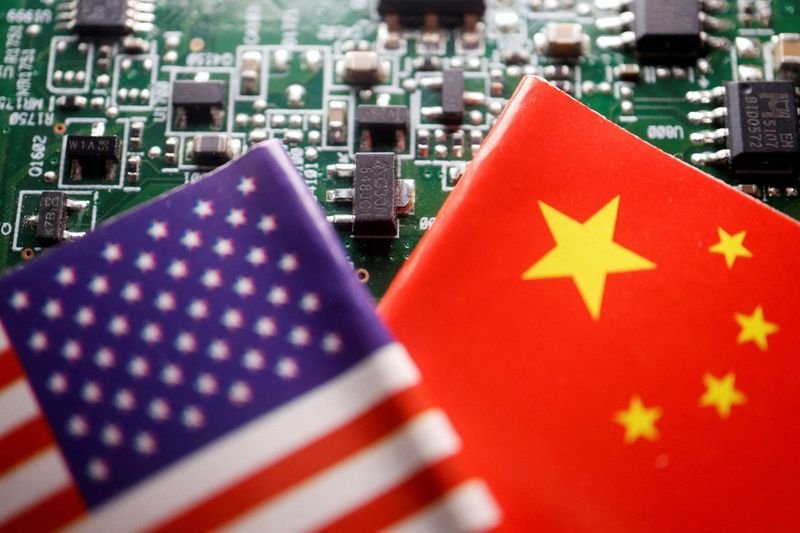
In the latest salvo of the intensifying US-China trade war, Beijing has imposed a ban on the export of critical minerals—gallium, germanium, and antimony—to the United States. This move, coming on the heels of new US restrictions on China’s semiconductor industry, underscores the high stakes of the technological and economic rivalry between the two superpowers.
The Strategic Importance of Gallium, Germanium, and Antimony
Gallium and germanium, essential components in advanced technologies such as semiconductors, fiber optics, and solar cells, are critical to both civilian and military applications. Antimony, meanwhile, is a vital element in ammunition, infrared missile systems, and night-vision technology, as well as in energy storage and photovoltaic systems.
China dominates the global supply of these materials. In 2023, the country accounted for 59.2% of refined germanium production and nearly 99% of gallium production, according to consultancy Project Blue. For antimony, China’s control extends to nearly half of global mined output.
Beijing’s latest restrictions could severely impact US industries that rely on these materials, especially as no immediate alternatives exist. The move also raises fears of broader Chinese export curbs on other minerals like nickel and cobalt, which are critical to the electric vehicle (EV) industry.
A Symbiotic but Tense Relationship
Despite ongoing trade hostilities, the US and China remain deeply interdependent. The US relies on China for refined materials, while Chinese industries benefit from US technological expertise and advanced semiconductors. However, Beijing’s recent actions signal a shift toward reducing this dependency.
The US has ramped up its efforts to “de-risk” supply chains by collaborating with allied nations to secure alternative sources of critical minerals. A White House spokesperson emphasized that Washington is exploring measures to strengthen supply chains and reduce reliance on Chinese exports.
Industry Response: A Call to Localize Supply Chains
China’s export ban has drawn mixed reactions. Todd Malan of Talon Metals, a US-based company exploring nickel reserves, remarked, “China has been signaling for some time that it’s willing to take these steps. When is the US going to learn its lesson?”
The US is now exploring partnerships to develop domestic sources of critical minerals. However, the process of establishing mines, refining facilities, and supply chains domestically or with allies is costly and time-consuming. For instance, the only operational nickel mine in the US is expected to deplete its reserves by 2028.
The Cost of Retaliation
China’s announcement follows Washington’s third major crackdown in as many years on China’s semiconductor sector. New restrictions target 140 Chinese companies, limiting their access to advanced US technology. These measures have hit China’s ability to manufacture high-performance chips, a critical component for military and AI applications.
Peter Arkell, chairman of the Global Mining Association of China, described the situation as “a trade war that has no winners,” highlighting the growing costs to industries and global economic stability.
Prices for antimony trioxide, a refined product of antimony, have soared 228% this year, reflecting growing uncertainty in global supply chains. This mirrors a broader trend where geopolitical tensions drive up the cost of raw materials and disrupt industries reliant on stable imports.
A Broader Retaliation Strategy
China’s response is not limited to mineral exports. Several industry associations representing 6,400 Chinese companies in sectors like telecommunications, semiconductors, and the digital economy have issued advisories urging members to reduce reliance on US-made chips.
The Internet Society of China, one of the key associations, called for the exploration of alternatives from non-US sources and encouraged domestic companies to prioritize chips made locally or by foreign firms operating within China.
Although no detailed explanation was provided, the advisories claimed US chips were “unsafe or unreliable” and accused US export controls of causing “substantial harm” to China’s internet industry.
The Broader Context: A Global Tech War
The US-China dispute extends far beyond raw materials and semiconductors. Both nations are vying for technological supremacy, with a particular focus on AI, 5G, and renewable energy technologies.
The US has leveraged its position as a leading developer of high-performance chips to restrict China’s access to critical technologies. For its part, China has accelerated investments in domestic chip production, aiming to reduce its reliance on Western suppliers.
However, China’s domestic chip industry faces significant hurdles. Despite extensive government subsidies, it lags behind the US in producing high-performance chips essential for AI, military, and space applications.
Impact on Global Markets
The escalating conflict has sent ripples through global markets. European and Asian nations, many of which are heavily reliant on US and Chinese technologies, are caught in the crossfire. Countries like Japan and South Korea, both major semiconductor manufacturers, have sought to navigate these tensions delicately while expanding their own chip industries.
The European Union, through its “Chips Act,” has pledged billions to boost domestic semiconductor production. Similarly, India, aiming to position itself as a neutral player, is investing in chip manufacturing and critical mineral processing facilities, hoping to attract businesses from both sides.
The Road Ahead: A Fragmented Global Order
The ongoing trade war is emblematic of a larger trend: the fragmentation of the global economy into competing blocs. The US and its allies, through initiatives like the CHIPS and Science Act, are aiming to build a self-sufficient supply chain for critical technologies. Meanwhile, China is doubling down on its “dual circulation” strategy to reduce dependency on external markets.
The key question is whether these strategies will lead to a stable equilibrium or further economic decoupling. For now, the risks of a prolonged and deepening trade conflict remain high, with significant implications for industries and consumers worldwide.
Conclusion: Who Wins, Who Loses?
As the US and China exchange retaliatory measures, the collateral damage extends far beyond their borders. Industries dependent on stable supply chains for critical minerals and semiconductors face rising costs and uncertainties.
While both nations justify their actions in terms of national security and economic resilience, the broader impact on innovation, economic growth, and global cooperation is less clear.
In a world increasingly defined by technological and economic competition, the stakes of the US-China rivalry have never been higher. For now, the battle for dominance in critical minerals and semiconductors continues to intensify, with no clear resolution in sight.
Ready to take your career to the next level? Join our dynamic courses: ACCA, HESI A2, ATI TEAS 7 , HESI EXIT and NCLEX – RN !🌟 Dive into a world of opportunities and empower yourself for success. Explore more at Serrari Ed and start your exciting journey today! ✨
photo source: Google
By: Montel Kamau
Serrari Financial Analyst
4th December, 2024