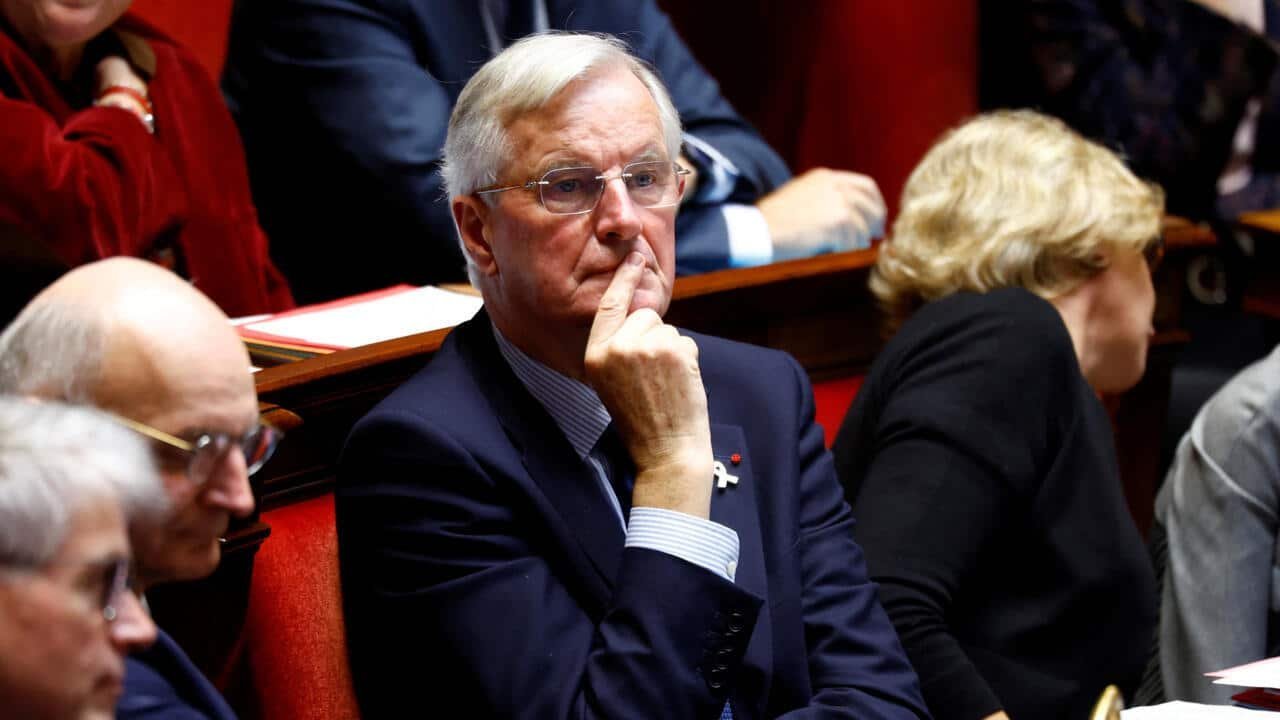
The government of French Prime Minister Michel Barnier is on the brink of collapse as political opposition from both the far-right and left unites against his contentious budgetary decisions. With a no-confidence vote looming, France’s political and economic stability is at stake.
The Political Deadlock
Prime Minister Barnier, appointed in September by President Emmanuel Macron, has faced a turbulent tenure. His administration, composed of a fragile coalition of centrists and conservatives, lacks a parliamentary majority. This precarious setup has made it difficult to push through critical reforms, including his proposed 2025 budget, which aims to address France’s burgeoning deficit by implementing €60 billion in tax hikes and spending cuts. The budget targets reducing the deficit to 5% of GDP by 2025, aligning with European Union fiscal rules by 2030.
However, invoking Article 49.3 of the French Constitution to bypass parliamentary approval has provoked widespread backlash. This controversial mechanism enables the government to pass legislation without a vote but simultaneously allows lawmakers to trigger a no-confidence motion. Both the left-wing coalition and Marine Le Pen’s far-right National Rally (RN) have seized this opportunity to challenge Barnier’s government.
Opposition From Left and Right
Left-wing politicians accuse Barnier of undermining democratic processes. Mathilde Panot, a prominent left-wing figure, described the use of Article 49.3 as a “power grab” and criticized Barnier for imposing austerity measures that disproportionately affect vulnerable populations. Meanwhile, Marine Le Pen has argued that Barnier’s concessions, such as shelving electricity price hikes and limiting healthcare access for undocumented migrants, fail to address her party’s broader demands. She stated, “The French people are tired of being ignored and mistreated.”
Both factions have pledged their support for a no-confidence motion, which is expected to be debated and voted on by Wednesday. If successful, this would mark the first time a French government has been ousted by such a vote since the establishment of the Fifth Republic in 1958.
Economic Ramifications
France’s budget deficit, projected at 6.1% of GDP in 2024, far exceeds the EU’s limit of 3%. Financial markets have reacted nervously, with borrowing costs for French government debt approaching levels associated with economically unstable nations like Greece. Prime Minister Barnier warned of a potential “fiscal storm” if his government falls, predicting severe market turbulence that could impact investor confidence in the eurozone’s second-largest economy.
Political instability has also raised concerns about France’s ability to manage its fiscal obligations. Some analysts fear a crisis similar to the eurozone turmoil of the early 2010s, exacerbated by a sluggish German economy and trade tensions with the United States. A government collapse would further delay necessary economic reforms, increasing uncertainty for both domestic and international stakeholders.
Implications for President Macron
President Emmanuel Macron, who remains in office until 2027, faces a weakened mandate following July’s snap elections, which resulted in a hung parliament. While Macron himself is not directly at risk, the failure of Barnier’s government would force him to appoint a new prime minister or call for another coalition government. Macron’s options are limited, as no general election can be held within 12 months of the previous vote, meaning any new administration would likely face the same legislative gridlock.
What’s Next?
If the no-confidence motion succeeds, Barnier’s government would transition to a caretaker role until Macron appoints a replacement. Potential scenarios include the formation of a technocratic government to temporarily manage affairs or another attempt to broker a coalition deal with opposition parties. In either case, the political uncertainty risks undermining France’s ability to navigate pressing domestic and international challenges.
Conclusion
France is at a pivotal moment, grappling with political fragmentation, economic strain, and a polarized electorate. The outcome of this week’s no-confidence vote will not only determine the fate of Michel Barnier’s government but also set the tone for France’s political and economic trajectory in the years ahead. With markets watching closely and citizens growing increasingly disillusioned, the stakes could not be higher.
Ready to take your career to the next level? Join our dynamic courses: ACCA, HESI A2, ATI TEAS 7 , HESI EXIT and NCLEX – RN !🌟 Dive into a world of opportunities and empower yourself for success. Explore more at Serrari Ed and start your exciting journey today! ✨
Photo source: Google
y: Montel Kamau
Serrari Financial Analyst
3rd December, 2024