

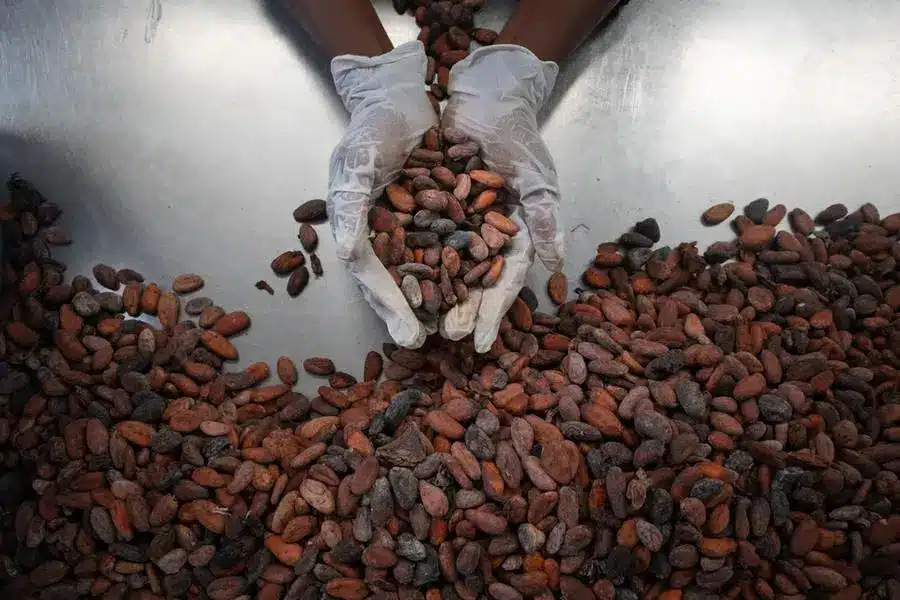
International cocoa buyers have injected over half a billion dollars in upfront payments into Ghana’s state marketing board, Cocobod, to secure cocoa supplies and mitigate further financial challenges. This shift marks a pivotal moment in Ghana’s cocoa marketing system, following the abandonment of traditional syndicated bank loans in favor of private sector-led financing. The decision is seen as a response to Cocobod’s financial struggles amid declining production and failed harvests in recent years.
A Transformative Shift in Cocoa Financing
For three decades, Ghana’s Cocobod relied on syndicated loans from international banks to fund cocoa purchases. These loans, typically secured against future cocoa contracts, have played a critical role in stabilizing the market. However, financial strain, attributed to overselling contracts and declining crop yields, led Cocobod to forego its usual $1.5 billion syndicated loan this season.
Instead, the regulator has mandated international buyers to prepay 60% of their contracts and finance licensed buying companies (LBCs) responsible for purchasing cocoa from farmers. This overhaul is projected to save $150 million in interest payments annually. While Cocobod touts this as a win, industry stakeholders remain skeptical about the model’s sustainability given Ghana’s volatile cocoa output and its critical role in the global chocolate supply chain
.
Declining Yields and Rising Risks
Cocoa production in Ghana, the world’s second-largest producer, has faced significant setbacks. Factors include erratic weather patterns, outbreaks of diseases such as black pod, and rampant smuggling of beans into neighboring Ivory Coast, where farmgate prices are often higher. Cocobod estimates that smuggling accounted for the loss of over one-third of Ghana’s cocoa output during the 2023/24 season
To address these issues, Cocobod increased the farmgate price for cocoa by nearly 45% this season, making it the highest in West Africa. This move aims to curb smuggling and incentivize farmers, but it also raises concerns among traders about the additional financial strain on the industry
Cocoa Futures and Market Uncertainty
The international cocoa market has seen record-breaking price hikes. In April 2024, cocoa futures reached all-time highs due to failed harvests in both Ghana and Ivory Coast. Currently, cocoa futures remain elevated, driven by persistent supply constraints and an uncertain crop outlook.
Industry experts warn that Ghana’s reliance on private sector financing exposes both Cocobod and international traders to significant risks. Traders have expressed concerns about Cocobod’s ability to fulfill contracts, given that up to 350,000 metric tonnes of cocoa from last season remain undelivered, costing companies an estimated $1 billion
Balancing Old and New Contracts
To manage its financial exposure, Cocobod has implemented a strategy blending old, lower-priced contracts with new contracts priced at near-record highs. This approach ensures that traders pay an average price of around $5,000 per tonne for cocoa, offsetting losses from last season’s unfulfilled contracts. However, this pricing model relies heavily on a robust production rebound, which analysts doubt will materialize.
To meet contractual obligations, Cocobod would need to achieve a harvest of approximately 900,000 tonnes—far exceeding its current production forecast of 650,000 tonnes. This gap raises fears of continued rollovers into future seasons, further destabilizing the market
Local Impacts and Farmer Sentiments
The new funding model has sparked mixed reactions among farmers and smaller traders. While larger companies with established supply chains may benefit, smaller players face increased risks, as they must provide cash upfront to unknown buyers. Farmers, on the other hand, have welcomed timely payments but remain apprehensive about potential delays caused by limited funding for LBCs.
The new system has also highlighted the vulnerabilities in Ghana’s cocoa supply chain. With limited resources to combat diseases and enforce anti-smuggling measures, farmers are concerned about their ability to meet production targets. Additionally, the model’s success hinges on political stability, particularly with Ghana’s upcoming elections, which could influence policy decisions and investment in the sector
The Road Ahead
Despite these challenges, Ghana remains optimistic about its cocoa sector. Cocobod officials have reported increased deliveries this season, indicating a potential recovery. However, experts caution that long-term success requires structural reforms, including investments in sustainable farming practices, enhanced disease management, and improved farmer incentives
For international buyers and traders, Ghana’s new cocoa marketing model presents both opportunities and risks. While it offers a chance to secure long-term cocoa supplies, it also underscores the need for greater transparency and collaboration between Cocobod and industry stakeholders. Failure to address these issues could push buyers to source cocoa from other regions, threatening Ghana’s position as a global cocoa powerhouse.
In the face of unprecedented challenges, the resilience of Ghana’s cocoa industry will ultimately determine its ability to adapt and thrive in an evolving global market.
Ready to take your career to the next level? Join our dynamic courses: ACCA, HESI A2, ATI TEAS 7 , HESI EXIT and NCLEX – RN !🌟 Dive into a world of opportunities and empower yourself for success. Explore more at Serrari Ed and start your exciting journey today! ✨
photo source: Google
By: Montel Kamau
Serrari Financial Analyst
29th November, 2024