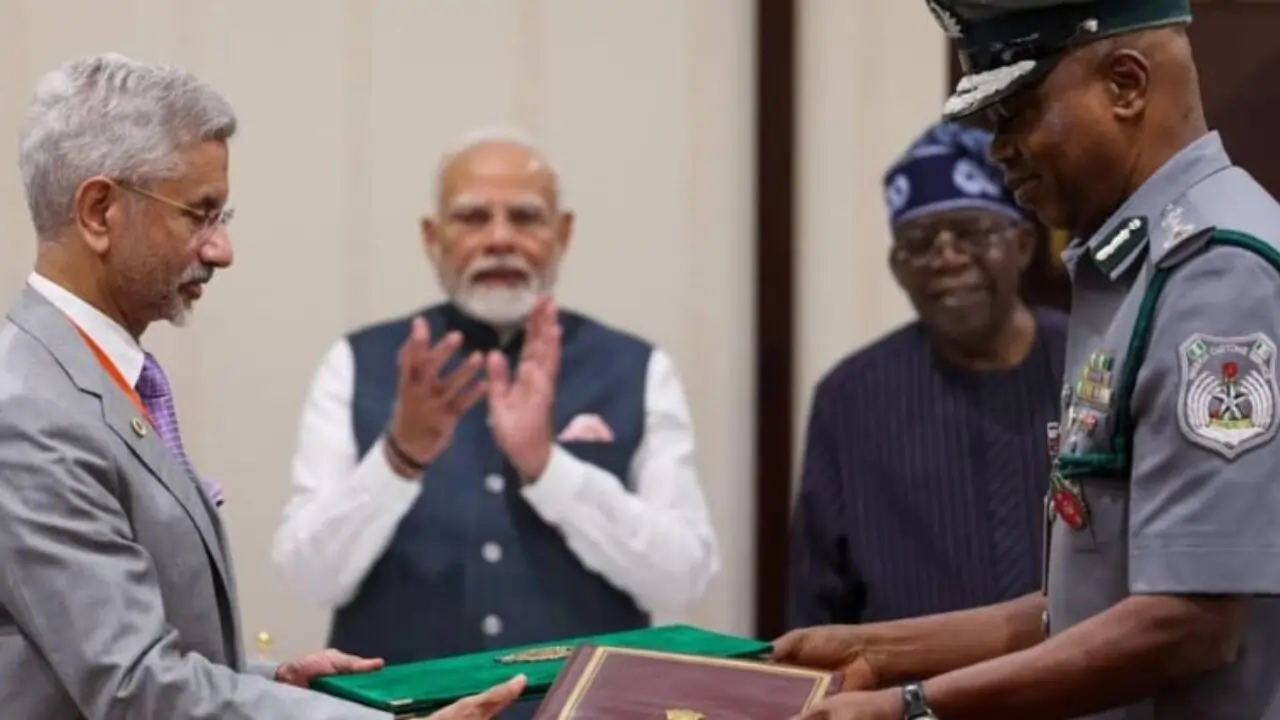
Nigeria and India have taken a significant step toward strengthening bilateral ties with the signing of a Customs Mutual Administrative Agreement (CMAA). The agreement, which reflects growing economic and diplomatic relations between the two nations, aims to facilitate trade, enhance customs enforcement, and promote economic development.
A Landmark Partnership
The signing ceremony, held at the Ministry of Foreign Affairs in Abuja, was attended by top officials, including Nigeria’s Comptroller-General of Customs (CGC), Adewale Adeniyi, and representatives of the Indian Customs administration. This milestone event coincided with the official state visit of Indian Prime Minister Narendra Modi to Nigeria on November 17, 2024, a visit that further underscored the importance of bilateral cooperation between the two countries.
CGC Adeniyi highlighted the importance of the CMAA, describing it as a culmination of negotiations that began in 2016. He noted:
“The agreement is expected to enhance collaboration between customs administrations, streamline border clearance processes, and curb customs-related offenses. By facilitating the swift clearance of goods and reducing trade costs, the CMAA is set to bolster cross-border trade development and improve the enforcement of customs laws.”
Key Provisions of the Agreement
The CMAA includes several critical provisions designed to streamline customs operations and foster international trade. These provisions include:
- Enforcement of Customs Laws: Ensuring the accurate imposition of duties and taxes, facilitating proper classification and valuation of goods, and verifying the origin of imports and exports.
- Prevention and Investigation of Customs Offenses: Establishing mechanisms to combat smuggling, undervaluation, and other customs-related crimes.
- Information Exchange: Creating robust communication channels for sharing data and intelligence between Nigeria and India to improve the efficiency of customs operations.
- Mutual Assistance: Offering mutual support in customs enforcement, including the provision of expert witnesses in legal proceedings.
- Trade Facilitation: Reducing administrative bottlenecks to promote faster clearance of goods and lower trade costs, ultimately increasing trade volumes between the two countries.
Enhancing Nigeria-India Trade Relations
This agreement is a testament to the growing economic partnership between Nigeria and India. Both nations have enjoyed a longstanding trade relationship, with India ranking as one of Nigeria’s top trading partners. In 2023, bilateral trade between the two countries reached $14.9 billion, driven primarily by Nigeria’s oil exports to India and India’s export of pharmaceuticals, machinery, and textiles to Nigeria.
The CMAA is expected to further diversify trade by addressing non-oil trade barriers and creating opportunities in sectors such as agriculture, manufacturing, and technology.
Addressing Common Challenges
Customs inefficiencies and cross-border trade issues have long posed challenges for Nigeria’s economic growth. With its reliance on oil exports, Nigeria has struggled to diversify its trade portfolio. By entering into this agreement with India, Nigeria hopes to resolve some of the bottlenecks hindering trade, including:
- Smuggling and Contraband: The CMAA will enhance collaboration to combat smuggling and the illegal importation of goods.
- Delays in Goods Clearance: Improved processes will reduce clearance times at ports and borders.
- Tax Evasion: Shared data and mutual verification systems will ensure accurate duty collection.
For India, the agreement opens doors to a growing African market, providing opportunities to strengthen its presence in Nigeria, which serves as a gateway to the West African region.
Global Implications
This agreement is not only significant for Nigeria and India but also reflects broader trends in global trade partnerships. As countries grapple with protectionism and trade uncertainties, bilateral agreements like the CMAA play a critical role in fostering mutual growth and economic resilience.
The CMAA aligns with Nigeria’s National Trade Facilitation Roadmap, which emphasizes the modernization of customs practices and adherence to international trade standards. For India, it represents a strategic move to expand its economic footprint in Africa, a region increasingly recognized as a key player in global trade.
Nigeria’s Customs Modernization Drive
The CMAA is part of Nigeria’s broader efforts to reform its customs and trade systems. The Nigerian government has been implementing measures to modernize its ports and borders, including the adoption of digital customs platforms, automated cargo tracking systems, and electronic payment systems for duties and taxes.
These initiatives aim to improve Nigeria’s ranking in the World Bank’s Ease of Doing Business Index, where it currently faces challenges related to trade across borders.
India’s Africa Strategy
India has been deepening its engagement with African nations through investments in infrastructure, healthcare, and technology. The CMAA with Nigeria is part of India’s broader strategy to strengthen ties with Africa, which is poised to become a significant growth market in the coming decades.
Indian Prime Minister Narendra Modi, during his state visit to Nigeria, emphasized the importance of partnerships that go beyond trade to include:
- Capacity Building: Training programs for customs officers and government officials.
- Infrastructure Development: Supporting projects such as ports and transport networks to facilitate smoother trade.
- Technology Transfer: Sharing expertise in digital trade platforms and customs automation.
Economic Impact
The CMAA is expected to have a profound impact on both nations:
- Boosting Nigeria’s Non-Oil Exports: With improved customs processes, Nigeria can increase its agricultural and manufactured goods exports to India, reducing its dependence on oil.
- Increasing Trade Volumes: Lower trade costs and faster clearance times are likely to encourage more trade, benefiting businesses in both countries.
- Attracting Foreign Investment: A more efficient trade environment enhances Nigeria’s appeal to foreign investors, particularly in sectors like manufacturing and logistics.
Expert Opinions
Economic analysts have praised the agreement as a significant step toward strengthening Nigeria-India relations. According to Dr. Chukwuma Eze, an economist at the Lagos Business School:
“The CMAA demonstrates Nigeria’s commitment to reforming its trade ecosystem. For India, this is a strategic move to solidify its position as a major player in Africa’s economic transformation.”
Similarly, Indian trade expert Ananya Deshmukh noted:
“This agreement reflects India’s long-term vision for Africa. As Africa’s largest economy, Nigeria is a crucial partner in India’s efforts to build stronger South-South trade relations.”
Conclusion
The Customs Mutual Administrative Agreement between Nigeria and India represents a milestone in their bilateral relations, reflecting a shared commitment to enhancing trade, fostering economic development, and tackling mutual challenges. By streamlining customs operations and facilitating trade, the agreement has the potential to unlock new economic opportunities for both nations, setting a precedent for future collaboration.
As Nigeria and India continue to deepen their partnership, the CMAA stands as a symbol of their shared vision for a more interconnected and prosperous future.
Ready to take your career to the next level? Join our dynamic courses: ACCA, HESI A2, ATI TEAS 7 and HESI EXIT !🌟 Dive into a world of opportunities and empower yourself for success. Explore more at Serrari Ed and start your exciting journey today! ✨
Photo source: Google
By: Montel Kamau
Serrari Financial Analyst
20th November, 2024