
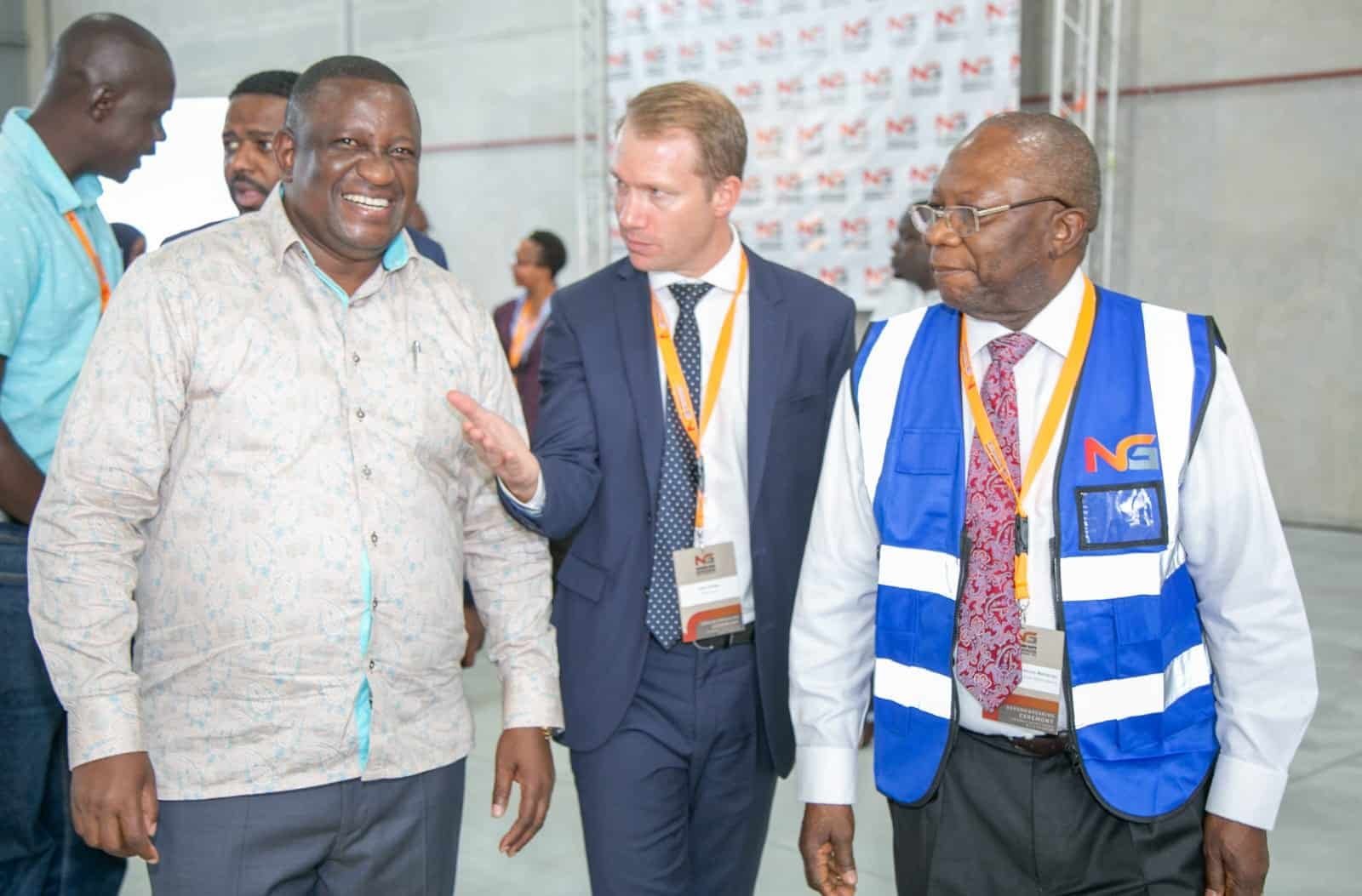
Nairobi Gate Industrial Park, a leading logistics and warehousing hub located along Nairobi’s Eastern Bypass, has committed Sh903 million (around $7 million) to expand its industrial capacity. This new phase of development adds 130,000 square feet of modular warehouse units designed to support Kenya’s growing light manufacturing sector, including agro-processing and textiles. The industrial park, spanning 103 acres, aims to further its impact on Kenya’s industrial sector by providing essential infrastructure for local and international businesses.
Supporting Light Manufacturing and Key Industries
The expansion of Nairobi Gate Industrial Park is aligned with Kenya’s long-term strategy to bolster its manufacturing industry. The additional modular warehouse space targets high-growth sectors like agro-processing and textiles, both of which are critical to Kenya’s economy. Agro-processing, a sector with substantial export potential, provides value addition to Kenya’s agricultural outputs, ranging from tea and coffee to fruits and flowers. Textiles, on the other hand, benefit from Kenya’s access to international markets under agreements like the African Growth and Opportunity Act (AGOA), allowing duty-free exports to the United States.
By providing state-of-the-art warehouse units, Nairobi Gate caters to companies in these industries that need efficient storage, distribution, and light manufacturing facilities. This development also helps address the infrastructure gap that many businesses face in sub-Saharan Africa, where limited access to quality industrial space hinders scalability and efficiency.
A Proven Model: Building on the Success of Previous Phases
The latest investment builds on the successful launch of Nairobi Gate’s earlier phase, which opened in November 2023 and quickly reached a 90% occupancy rate. The park currently hosts 17 businesses, eight of which operate as Special Economic Zone (SEZ) enterprises, benefiting from customs and tax incentives provided by the Kenyan government. These SEZ incentives have been instrumental in attracting foreign direct investment (FDI) to Kenya, as they reduce operational costs for companies engaged in export-oriented industries.
With a 23% development rate across its 103-acre property, Nairobi Gate has already built over 550,000 square feet of logistics facilities, creating 434 permanent jobs. These numbers are expected to rise as the industrial park expands, with new companies bringing additional job opportunities, skills training, and economic activity to the area.
Boosting Foreign Direct Investment and Infrastructure
Nairobi Gate’s expansion aligns with Kenya’s Vision 2030 initiative, which emphasizes industrialization and infrastructure development as pillars of economic growth. By providing high-quality industrial spaces, Nairobi Gate is actively encouraging foreign companies to invest in Kenya. This foreign direct investment (FDI) is crucial for Kenya, as it not only brings in capital but also introduces advanced manufacturing techniques, technology, and managerial expertise that contribute to the development of local skills and industries.
Kenya’s strategic location in East Africa, with well-established trade routes to regional and global markets, makes it an attractive destination for logistics and manufacturing businesses. Additionally, the country’s improving infrastructure—including the Standard Gauge Railway (SGR) and expanded road networks—provides efficient connectivity from Nairobi Gate Industrial Park to Kenya’s main ports and neighboring countries. As such, Nairobi Gate’s investment helps position Kenya as a manufacturing and logistics hub for the wider East African region.
Impact on Employment and Local Communities
The industrial park’s expansion promises a positive impact on the local job market. With the creation of 434 permanent jobs, Nairobi Gate Industrial Park has already provided opportunities in roles ranging from logistics management to warehouse operations. As the park expands, additional jobs in construction, logistics, and administration are anticipated, benefiting surrounding communities by boosting household income levels and economic stability.
Job creation also extends to skills development, as employees working within the park gain exposure to advanced manufacturing processes, logistics management, and quality control. This skills transfer not only improves productivity but also enhances the employability of Kenyan workers, aligning with the government’s objective to build a skilled labor force capable of driving industrial growth.
Advantages of the Special Economic Zone (SEZ) Incentives
The SEZ framework has proven crucial for Nairobi Gate’s ability to attract businesses, particularly international firms looking for cost-effective manufacturing locations. Kenya’s SEZ policy offers customs and tax breaks to companies that commit to establishing and operating within these zones, making it an attractive proposition for exporters. By reducing import and export tariffs and providing corporate tax relief, SEZ incentives significantly lower operational costs for manufacturers and logistics companies.
The eight SEZ enterprises already operating within Nairobi Gate are able to streamline their import-export processes and reduce expenses, making them more competitive on the global stage. SEZs also enable Kenya to diversify its industrial base, moving from traditional agriculture and tourism toward value-added manufacturing and logistics sectors.
Infrastructure Development: Expanding Bulk Infrastructure and Utility Access
Beyond warehouse expansion, Nairobi Gate Industrial Park has ambitious plans to further develop bulk infrastructure, including access to reliable utilities like electricity, water, and telecommunications. Efficient utility access is critical for attracting international companies, as these facilities ensure the smooth running of manufacturing and logistics operations.
Investments in power infrastructure, in particular, are crucial for industrial parks, as inconsistent power supply remains a challenge for many manufacturers in sub-Saharan Africa. By investing in bulk infrastructure, Nairobi Gate can offer reliable utilities, minimizing downtime and reducing operational costs for its tenants.
Nairobi Gate’s Role in Kenya’s Economic Growth Agenda
Nairobi Gate’s expansion supports Kenya’s broader economic goals, aligning with government initiatives to increase the contribution of the manufacturing sector to the national GDP. Currently, manufacturing contributes about 7.7% to Kenya’s GDP, with the government aiming to increase this share to 15% by 2030. Industrial parks like Nairobi Gate are integral to achieving this target, as they create conducive environments for manufacturing and logistics businesses to flourish.
Through its investments, Nairobi Gate also aligns with the African Continental Free Trade Area (AfCFTA) agreement, which aims to boost intra-African trade by reducing trade barriers across the continent. By providing a base for export-oriented industries, the industrial park supports Kenya’s ambition to become a key player in AfCFTA, promoting trade within Africa and beyond.
Environmental and Social Governance (ESG) Initiatives
Nairobi Gate Industrial Park places a strong emphasis on environmental and social governance (ESG) practices, aligning with the growing global focus on sustainability. The industrial park integrates eco-friendly practices, such as efficient water usage, waste management, and green building materials, into its development plans. By adopting these practices, Nairobi Gate demonstrates its commitment to minimizing environmental impact while fostering industrial growth.
In addition, Nairobi Gate has initiated community engagement programs that support education, healthcare, and small business development in nearby areas. By working closely with local communities, Nairobi Gate aims to ensure that its growth benefits the surrounding population, creating a symbiotic relationship between the park and local stakeholders.
Challenges and Future Outlook
While Nairobi Gate’s expansion offers numerous opportunities, challenges remain. One significant challenge is ensuring reliable access to power, as Kenya’s manufacturing sector is often hampered by high energy costs and intermittent power supply. To address this, Nairobi Gate is exploring options for renewable energy sources, such as solar power, which could provide a sustainable solution to meet its tenants’ energy needs.
Another challenge lies in competition from other industrial hubs across Africa, such as Ethiopia and Egypt, which also attract international manufacturers. By continuing to develop infrastructure, offering SEZ incentives, and ensuring efficient utility access, Nairobi Gate aims to differentiate itself as the preferred location for industrial and logistics operations in East Africa.
Looking forward, Nairobi Gate’s future expansions are likely to include additional facilities such as cold storage, further enhancing its appeal to agro-processing companies that require temperature-controlled environments. As Kenya’s agricultural exports, including fresh produce and flowers, continue to grow, such facilities could become key drivers of FDI.
Conclusion: Nairobi Gate as a Catalyst for Kenya’s Industrial Growth
Nairobi Gate’s Sh903 million investment in expanding its industrial park marks a significant step toward strengthening Kenya’s manufacturing and logistics sectors. By providing high-quality infrastructure and SEZ incentives, Nairobi Gate positions itself as a catalyst for industrial growth, supporting Kenya’s Vision 2030 agenda and the broader objectives of AfCFTA.
As the park continues to grow, it not only attracts foreign investment but also provides valuable employment opportunities, skills development, and infrastructure improvements for Kenya. Through its commitment to ESG practices and community development, Nairobi Gate Industrial Park sets a standard for sustainable industrialization in Kenya, paving the way for a prosperous, industrial-driven future.
Ready to take your career to the next level? Join our dynamic courses: ACCA, HESI A2, and ATI TEAS 7! 🌟 Dive into a world of opportunities and empower yourself for success. Explore more at Serrari Ed and start your exciting journey today! ✨
Photo source: Google
By: Montel Kamau
Serrari Financial Analyst
31st October, 2024