Kenya is reportedly on the verge of finalizing a deal with the United Arab Emirates (UAE) for a $1.5 billion loan. This financial agreement is aimed at bolstering Kenya’s fiscal position as the country grapples with a budget shortfall exacerbated by rising debt costs, political unrest, and economic pressures. According to Bloomberg, citing sources familiar with the matter, negotiations between Kenya and Abu Dhabi have advanced to a critical stage, with an agreement expected to be reached soon.
The impending loan comes at a crucial time for the East African nation, which has been experiencing a severe cash crunch due to ballooning domestic debt, public expenditure obligations, and international debt servicing costs. Kenya’s debt situation is further complicated by inflationary pressures, a depreciating currency, and social unrest driven by discontent over proposed tax reforms. The loan from Abu Dhabi, with an interest rate of 8.2%, will provide Kenya with much-needed fiscal space to address its budget deficit, which is projected to widen to 4.7% of GDP in the fiscal year ending June 2025.
Kenya’s Debt Crisis: A Growing Concern
Kenya’s debt situation has been a growing concern in recent years, with government borrowing escalating to fund large-scale infrastructure projects and support essential services amid revenue shortfalls. By the end of 2023, Kenya’s debt-to-GDP ratio surged to 72%, up from 67% in 2022. This was largely driven by the depreciation of the Kenyan shilling, which has weakened significantly against major international currencies, increasing the cost of servicing foreign debt. According to Fitch Ratings, Kenya’s debt-to-GDP ratio is expected to remain elevated, albeit with a slight decline to 65.6% by 2026.
In addition to currency depreciation, Kenya’s external debt service burden has become a significant challenge. For the fiscal year 2025 (FY25), the country is expected to pay $4.4 billion in external debt service, a slight improvement from $5.4 billion in FY24. However, this reduction is not enough to fully ease Kenya’s debt woes, particularly in light of domestic political instability and international market conditions that have made borrowing more expensive.
The Impact of Political Instability and Economic Challenges
Kenya’s domestic political landscape has been marked by increased instability in recent years, contributing to its economic difficulties. Violent social unrest, sparked by proposed tax hikes and growing dissatisfaction with the government’s economic policies, has created a volatile environment that risks further undermining investor confidence and economic growth. The protests, led by opposition parties and civil society groups, have called for reforms aimed at reducing the cost of living and addressing income inequality.
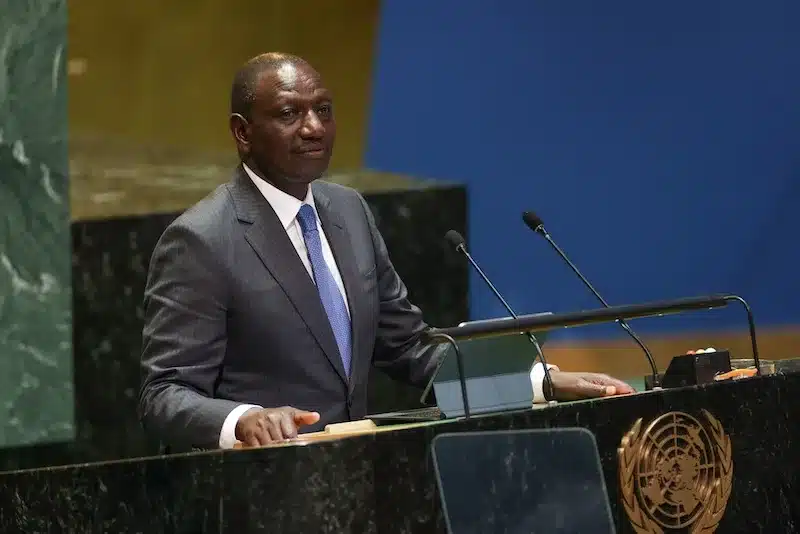
Kenyan President William Ruto’s administration has been under intense pressure to balance fiscal consolidation with maintaining public support. Ruto’s government has introduced austerity measures and tax reforms to address the fiscal deficit, but these initiatives have been met with widespread resistance. In an effort to raise revenue, the government proposed increasing taxes on basic goods and services, but the measures were withdrawn following public outcry. This has left the government with fewer options to raise revenue, leading to a widening fiscal deficit and the need for external borrowing.
The fiscal deficit for the current financial year is projected to reach 4.7% of GDP, higher than the government’s initial target. This shortfall is driven by increased public spending on social programs, higher debt servicing costs, and the withdrawal of key revenue measures. Kenya’s fiscal deficit, coupled with the country’s rising debt obligations, has raised concerns about the long-term sustainability of its public finances.
The Strategic Importance of the UAE Loan
Kenya’s efforts to secure a $1.5 billion loan from Abu Dhabi come at a time when the country is exploring all available avenues to close its budget-financing gap. The loan, which is expected to carry an interest rate of 8.2%, represents a crucial lifeline for Kenya as it seeks to navigate its current fiscal challenges. The UAE has emerged as an important financial partner for Kenya, with the two countries forging closer ties in recent years.
In addition to the loan negotiations, Kenya and the UAE have signed several agreements to enhance cooperation in areas such as energy, trade, and institutional capacity building. In 2023, Kenya extended an oil supply deal with the Abu Dhabi National Oil Company (ADNOC) and the Emirates National Oil Company (ENOC), which allows these companies, along with Saudi Aramco, to supply oil to Kenya on favorable credit terms. This shift from an open tender system to longer credit terms has provided Kenya with much-needed relief in managing its fuel import bill, which has been a significant contributor to the country’s current account deficit.
Earlier this year, Kenya and the UAE signed a Memorandum of Understanding (MoU) to enhance governance and institutional capabilities between the two nations. This agreement has paved the way for increased cooperation in various sectors, including energy, infrastructure development, and financial services.
The UAE has also become a key player in Kenya’s economic development through direct investments and partnerships. The close relationship between the two countries has positioned the UAE as a critical source of financial support for Kenya as it seeks to stabilize its economy and attract foreign direct investment.
Implications of the Loan for Kenya’s Economy
The $1.5 billion loan from Abu Dhabi is expected to provide temporary relief for Kenya’s fiscal challenges, but it will not solve the country’s long-term debt sustainability issues. While the loan will help bridge the budget-financing gap and support government spending on essential services, it will also add to Kenya’s already substantial debt burden.
One of the key risks associated with increased borrowing is the potential for a debt trap, where the country becomes increasingly reliant on external financing to meet its debt obligations. This could lead to a situation where a significant portion of government revenue is directed towards servicing debt, leaving fewer resources available for critical investments in infrastructure, healthcare, and education.
To mitigate these risks, Kenya must focus on implementing structural reforms that promote economic growth and reduce the reliance on external borrowing. This includes improving tax collection, curbing wasteful government spending, and enhancing the efficiency of public service delivery. Additionally, the government should prioritize investments in sectors that have the potential to generate long-term economic growth, such as manufacturing, agriculture, and technology.
Another important aspect to consider is the impact of the loan on Kenya’s relationship with international financial institutions such as the International Monetary Fund (IMF) and the World Bank. These institutions have been closely monitoring Kenya’s fiscal situation and have provided financial support through programs aimed at stabilizing the country’s economy. The UAE loan may offer some immediate relief, but Kenya will likely continue to rely on assistance from these multilateral organizations in the medium to long term.
Conclusion
Kenya’s pursuit of a $1.5 billion loan from the UAE underscores the country’s urgent need for financial support as it grapples with rising debt, political instability, and economic challenges. While the loan is expected to provide temporary relief, it also highlights the broader issues facing Kenya’s public finances. To achieve long-term fiscal sustainability, Kenya must implement structural reforms that promote economic growth, reduce the reliance on external borrowing, and improve the efficiency of government spending. As Kenya continues its negotiations with Abu Dhabi, the outcome of this deal will have significant implications for the country’s economic future.
photo source: Google
By: Montel Kamau
Serrari Financial Analyst
26th September, 2024