
Sri Lanka’s presidential election, scheduled for Saturday, is set to be a crucial event that could shape the nation’s future trajectory, both politically and economically. The election has raised concerns about the ongoing economic recovery and its long-awaited debt restructuring deal with bondholders. As the nation grapples with lingering economic challenges, the outcome of this election could either solidify the progress made under President Ranil Wickremesinghe or potentially reverse it, depending on the policies adopted by the incoming president.
Background: Economic Crisis and Recovery
Sri Lanka has been facing severe economic difficulties over the past few years. The country’s financial woes were exacerbated by a series of external and internal shocks, beginning with the devastating Easter Sunday suicide bombings in 2019, which significantly damaged its vital tourism industry. The bombings crippled one of the nation’s largest revenue sources, leading to a sharp decline in foreign exchange reserves and further straining the already fragile economy.
The onset of the COVID-19 pandemic in early 2020 worsened Sri Lanka’s financial situation. Global lockdowns and restrictions on movement brought the tourism sector to a standstill, further reducing foreign earnings. Additionally, the pandemic-induced global food and fuel price hikes, along with rising interest rates, pushed Sri Lanka’s economy to the brink.
In April 2022, Sri Lanka defaulted on its foreign debt for the first time in its history. This triggered widespread protests against then-President Gotabaya Rajapaksa, eventually leading to his resignation. The political unrest and economic instability plunged the island nation into a period of uncertainty.
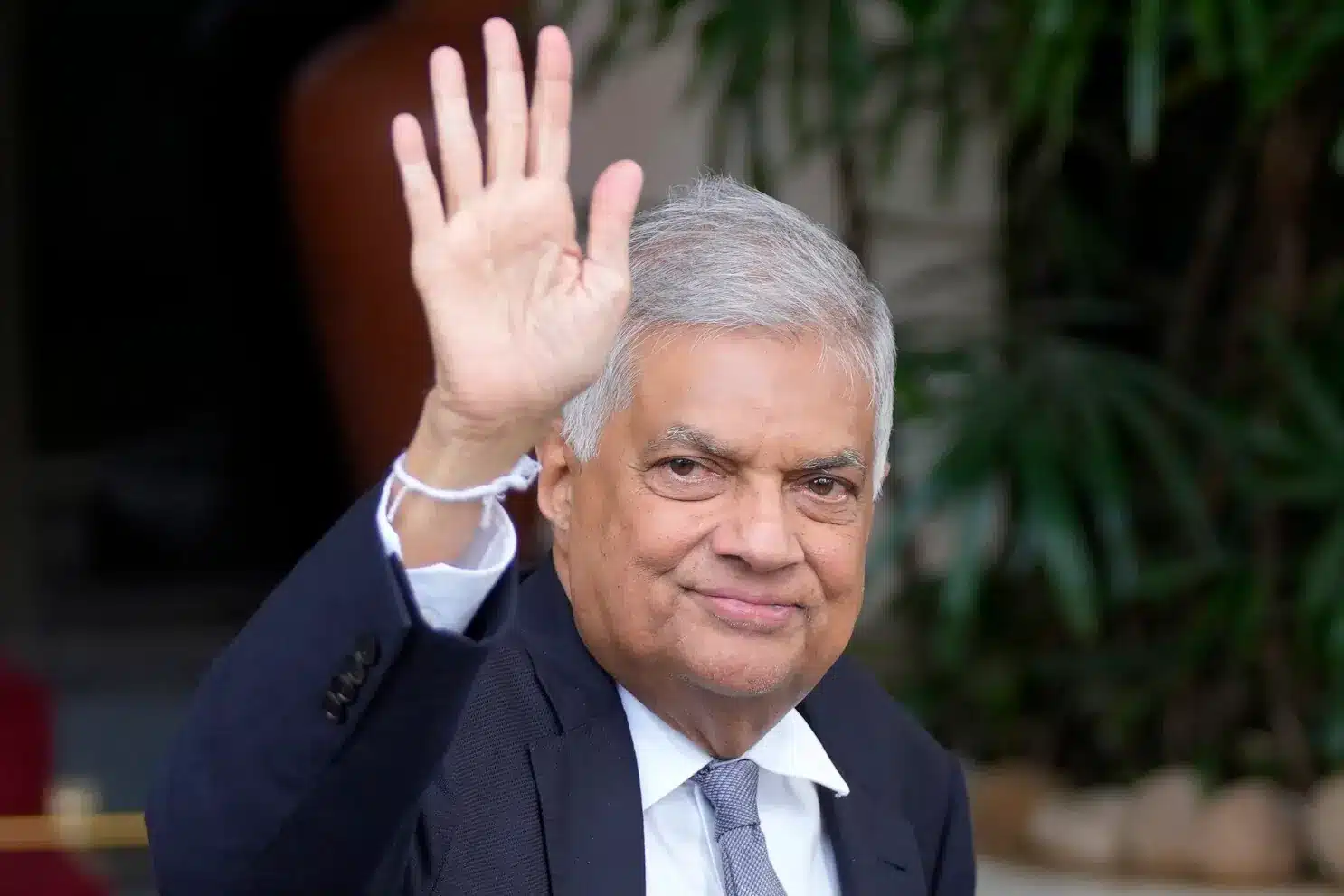
However, following the appointment of Ranil Wickremesinghe as president in mid-2022, Sri Lanka has made some headway in stabilizing its economy. A pivotal moment in this recovery was the approval of a $2.9 billion International Monetary Fund (IMF) bailout package, which has served as the foundation for the country’s ongoing economic reforms.
Economic Green Shoots Under President Wickremesinghe
Under President Wickremesinghe’s leadership, Sri Lanka’s economy has shown signs of recovery. The country’s GDP is expected to grow by 3% in 2024, a significant reversal from the contraction experienced in the previous year. Inflation, which peaked at a staggering 70% in September 2022, has been successfully brought under control, dropping to 0.5% by August 2024. This reduction in inflation has provided some relief to the citizens, who have been grappling with high living costs.
In addition to managing inflation, Wickremesinghe’s government has overseen a remarkable recovery in foreign reserves. At one point, the country’s reserves were so depleted that it faced acute shortages of essential goods, including fuel and medicine. As of September 2024, Sri Lanka’s foreign reserves have rebounded to $6 billion, thanks in part to the IMF’s financial support and prudent economic management.
Moreover, the government has been outperforming its fiscal targets. Analysts like Patrick Curran from Tellimer note that Sri Lanka has exceeded the expectations set by the IMF program. This has created a sense of optimism about the country’s economic future, though much of this progress is contingent on the continuation of the current policies.
Presidential Election: The Contenders and Their Economic Agendas
The upcoming presidential election, however, has raised questions about the sustainability of the current economic recovery. Among the 38 presidential candidates, two frontrunners, opposition leader Sajith Premadasa and Marxist-leaning parliamentarian Anura Kumara Dissanayake, have both expressed intentions to rework Sri Lanka’s IMF bailout program.
Premadasa, leader of the Samagi Jana Balawegaya (SJB) party, has called for adjustments to the IMF program and proposed tax reforms to ease the burden on citizens. His campaign has focused heavily on reducing the cost of living, which remains a significant concern for many Sri Lankans despite the recent drop in inflation. Premadasa’s platform emphasizes creating a more equitable economic system that does not place undue hardship on the lower and middle classes.
Dissanayake, who heads the National People’s Power party, takes a more radical stance. He has proposed renegotiating Sri Lanka’s debt with bondholders and reworking the IMF deal entirely. Dissanayake’s policies lean towards economic nationalism and self-sufficiency, which could pose challenges to the country’s existing agreements with international creditors and multilateral institutions like the IMF.
While both Premadasa and Dissanayake have garnered substantial support, their proposed economic policies have raised concerns among investors and analysts. The fear is that any significant deviation from the current IMF program could derail Sri Lanka’s fragile recovery.
Risks of Renegotiating the IMF Deal
Reopening negotiations with the IMF could be a risky move for Sri Lanka. The country’s $2.9 billion bailout package is contingent on meeting specific economic targets, such as fiscal consolidation, debt restructuring, and structural reforms. Any attempt to modify these targets could lead to delays in the release of further tranches of the bailout funds.
According to Clifford Lau, a portfolio manager at William Blair, “All this [economic recovery] could only happen with the IMF deal being at the centerpiece of revamping the country.” Lau and other analysts believe that renegotiating the IMF program could create significant disruptions to Sri Lanka’s economic recovery. The uncertainty surrounding such a move could also deter foreign investment and strain the country’s access to global capital markets.
Citi analysts have pointed out that a victory for Dissanayake could result in delays to IMF reviews and an increased probability of debt renegotiation. This would likely prolong Sri Lanka’s default status, as the country remains officially in default until a comprehensive debt restructuring deal is reached. Without access to global capital markets, Sri Lanka’s ability to finance its recovery would be severely constrained.
The Debt Restructuring Challenge
Sri Lanka’s debt restructuring process has been one of the most critical aspects of its economic recovery. In June 2024, the country signed a $10 billion debt rework agreement with official creditors, including Japan, China, and India. However, Colombo is still in the process of finalizing a $12.5 billion debt restructuring deal with its bondholders.
The ongoing negotiations have hit several roadblocks, with bondholders and the IMF raising concerns over the “upside” scenario of a macro-linked bond. This debt instrument would reward investors if Sri Lanka’s economy outperforms expectations, but it has faced pushback from official creditors who view it as too favorable to private bondholders.
Wickremesinghe has expressed confidence that the debt restructuring talks are nearing completion. At a rally on Wednesday, he announced that government officials would meet with bondholders the following day to finalize the deal. He has promised to make an announcement on the debt restructuring agreement before September 21.
However, the uncertainty surrounding the election has cast a shadow over these negotiations. A new government could seek to renegotiate or scrap the existing deal in favor of a more favorable arrangement. This could further delay Sri Lanka’s exit from default and prolong its economic struggles.
Conclusion: A Fragile Recovery at Stake
Sri Lanka’s presidential election comes at a critical juncture for the nation. The economic green shoots that have begun to appear under President Wickremesinghe’s leadership are fragile and could be easily disrupted by a change in policy direction. The IMF program has been the linchpin of Sri Lanka’s recovery, and any attempt to rework it could have far-reaching consequences.
While the election will determine the future of Sri Lanka’s political leadership, it will also have significant implications for the country’s economic trajectory. The next president will face the daunting task of balancing the need for economic reforms with the demands of a population that has endured years of hardship. As Sri Lanka navigates this delicate period, the international community and investors will be closely watching to see whether the country can maintain its path to recovery or if it will face renewed economic turmoil.
photo source: Google
By: Montel Kamau
Serrari Financial Analyst
20th September, 2024