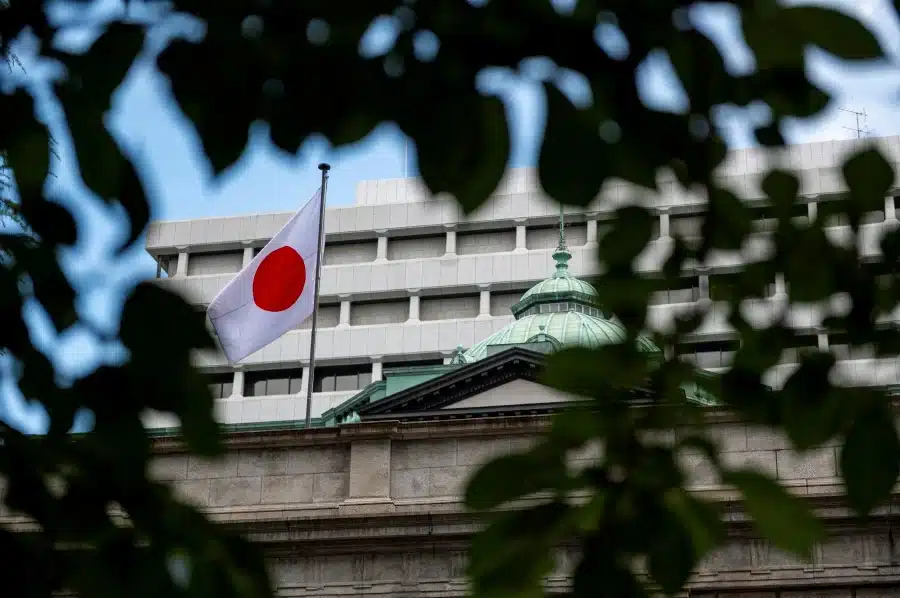
Japan’s economy grew at a slightly slower pace than initially reported in the second quarter of 2024, with downward revisions in corporate and household spending signaling potential challenges for sustained growth in the latter half of the year. The revised figures underscore the delicate balance the Bank of Japan (BOJ) must maintain as it navigates the complex path of exiting its decade-long ultra-loose monetary policy.
Revised Growth Figures and Their Implications
The Cabinet Office of Japan announced on Monday that the nation’s gross domestic product (GDP) expanded by an annualized 2.9% in the April-June quarter, down from the preliminary estimate of 3.1%. This revision was slightly below economists’ median forecast of 3.2%, indicating that the world’s third-largest economy is facing more headwinds than initially thought.
In quarterly terms, Japan’s economy grew by 0.7%, a notch lower than the 0.8% growth reported last month. This deceleration was primarily driven by weaker-than-expected capital expenditure and private consumption, both critical components of Japan’s domestic demand.
Capital expenditure, a key indicator of corporate investment and private sector confidence, rose by 0.8%, revised down from the initial estimate of 0.9%. This suggests that businesses are becoming more cautious about spending amid uncertainties in the global economic environment.
Private consumption, which accounts for more than half of Japan’s GDP, also saw a downward revision, growing by 0.9% instead of the previously reported 1.0%. This softer-than-expected consumer spending reflects the challenges faced by households in the wake of rising living costs, despite efforts by the government to stimulate demand through various fiscal measures.
External and Domestic Challenges
Japan’s economic outlook is clouded by several external and domestic challenges. Externally, the slowdown in the U.S. and Chinese economies—two of Japan’s largest trading partners—poses a significant risk to Japan’s export-driven growth model. The July household spending data, which showed a weaker-than-expected performance, further highlights the fragility of domestic demand.
“The economy as a whole has been stagnant since the second half of 2023, although it had finally rebounded in April-June,” said Kengo Tanahashi, an economist at Nomura Securities. “The possibility that the momentum of private consumption in the July-September period will be weaker than expected has been increasing.”
This caution is echoed by the external demand component of GDP, which remained unchanged from the preliminary reading, subtracting 0.1 percentage point from growth. This suggests that Japan’s trade balance is still under pressure, likely due to slower global demand and ongoing supply chain disruptions.
On the domestic front, while inflationary pressures have moderated, underlying inflation remains a concern for the BOJ. The central bank raised its key interest rate to 0.25% in July, marking its first hike in over a decade, as part of its efforts to normalize monetary policy. However, the path forward is fraught with uncertainty.
BOJ’s Policy Dilemma
The BOJ faces a challenging environment as it attempts to strike a balance between supporting economic growth and curbing inflation. The recent GDP revision, coupled with softer consumption data, complicates the central bank’s decision-making process.
While the revised GDP figures are unlikely to trigger an immediate policy shift, they add to the growing list of concerns for the BOJ. The central bank’s next policy-setting meeting on September 19-20 is expected to provide further clues on its approach to interest rates.
“While underlying inflation has been moderating since the start of the year, we expect this trend to reverse in response to strong wage growth and resilient activity,” said Benjamin Shatil, an economist at JPMorgan Securities. “We continue to expect the BOJ to deliver its next rate hike in December.”
This sentiment is shared by other economists who believe that the BOJ will proceed with caution, gradually raising rates barring any major disruptions in growth or inflation. However, the recent data on household spending and the overall economic outlook suggest that the BOJ may need to remain flexible in its approach.
Wage Growth and Labor Market Dynamics
One of the key factors that the BOJ is closely monitoring is wage growth. The government has been pushing for higher wages to spur domestic consumption, but progress has been uneven. While there have been increases in nominal wages, much of this has been tied to temporary factors such as bonuses, rather than sustained increases in base pay.
“The July household spending data was disappointing, to say the least, and the (real) wages bump in June and July were anchored by summer bonuses rather than by an increase in basic salaries,” Tanahashi noted.
For the BOJ, sustained wage growth is crucial to achieving its inflation target and ensuring that the economy can withstand higher interest rates. The central bank has repeatedly emphasized the importance of a virtuous cycle of higher wages leading to increased consumption, which in turn would support businesses and drive further investment.
However, the path to achieving this cycle is fraught with challenges. Japan’s labor market, while tight, has not yet translated into the kind of broad-based wage increases that would significantly boost household incomes. This has been a longstanding issue for the Japanese economy, where deflationary pressures have kept wages stagnant for much of the past two decades.
Global Economic Uncertainties
Japan’s economic trajectory is also heavily influenced by global economic conditions. The U.S. Federal Reserve’s monetary policy, the ongoing economic slowdown in China, and the geopolitical tensions in East Asia all play a significant role in shaping Japan’s economic outlook.
The potential for a slowdown in the U.S. economy, driven by high interest rates and tightening financial conditions, could have spillover effects on Japan’s export sector. Similarly, the Chinese economy, which has been grappling with its own set of challenges including a property market slump and weak consumer demand, poses a risk to Japan’s trade and investment ties.
In this context, the BOJ’s policy decisions will not only be guided by domestic considerations but also by the broader global economic environment. The central bank’s ability to navigate these challenges will be critical in determining Japan’s economic performance in the coming quarters.
Looking Ahead
As Japan enters the second half of 2024, the economy faces a mixed outlook. While there are signs of resilience, particularly in corporate investment and some areas of consumer spending, the risks are skewed to the downside. The BOJ’s gradual exit from its ultra-loose monetary policy will need to be carefully managed to avoid derailing the fragile recovery.
Economists will be closely watching the upcoming BOJ meeting for any signals on the future direction of interest rates. The central bank’s actions will be critical in shaping market expectations and ensuring that Japan’s economic recovery remains on track.
In the meantime, policymakers will need to address the structural challenges facing the economy, including the need for higher wages, increased productivity, and a more dynamic domestic market. These efforts will be essential in ensuring that Japan can achieve sustainable growth in the years ahead.
As the global economic environment remains uncertain, Japan’s policymakers will need to remain vigilant and responsive to both domestic and international developments. The road ahead may be challenging, but with careful management, Japan’s economy can continue to navigate these turbulent waters.
photo source: Google
By: Montel Kamau
Serrari Financial Analyst
9th September, 2024